Superbloques
2010
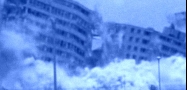
In 2002, I started investigating the Pruitt Igoe housing projects, demolished in 1972 due to complex outcomes. The building was declared by Charles Jenks as the end of modern architecture and the beginning of postmodernism in architecture. The product of this research was a work called Boom Boom Boom, a large-format heliograph with the image of the demolition of the projects and debris scattered on the ground. From that, I worked on the images of modernism in design and architecture, on the idea of utopia and failure, and frustration toward architecture, art, and design as tools to change the world.
This is a key piece that gathers much of the recurring topics in my work, such as the interest in modern architecture and its interconnection with the Latin American experiences, the interest in popular music. The work received the Bogotá Visual Arts Biennial Prize, which created a much important boost in my work.
My work is interspersed with diverse concerns around the idea of modernity and utopia since 2000, topic that today I believe to be recurring in the more recent production of many artists, by means of a sudden interest in this period in the history of art and architecture. In my work, there is an unresolved ambiguity between a feeling of nostalgia toward the ideas that wanted to change the world through the forms of building it, an ironic view which sees repeated failures around an excessive faith in technologies, and a conviction that much of modernity’s ideas still bear an uncharted potential, waiting better times to flourish.
Luis F. Ramírez Celis in a statement to PLATFORM:VB (january 2017)
Superbloques, 2010 | Video, 5’37"
Luis F. Ramírez Celis
Koyaanisqatsi (1982) | Godfrey Reggio
El Super Bloque | Simon Diaz
Evidently, cinema and architecture in the film Koyaanisqatsi by Reggio and Minoru Yamasaky’s Pruitt Igoe projects, Carlos Raúl Villanueva’s modernist Venezuelan architecture, the song “El Superbloque” by Simón Díaz, the life and work of my uncle, the architect Carlos Celis Cepero, through his testimonies, his encounter with Le Corbusier, his modernist feat in Venezuela, his collaboration with Carlos Raúl Villanueva.