Queer Archives Institute
2016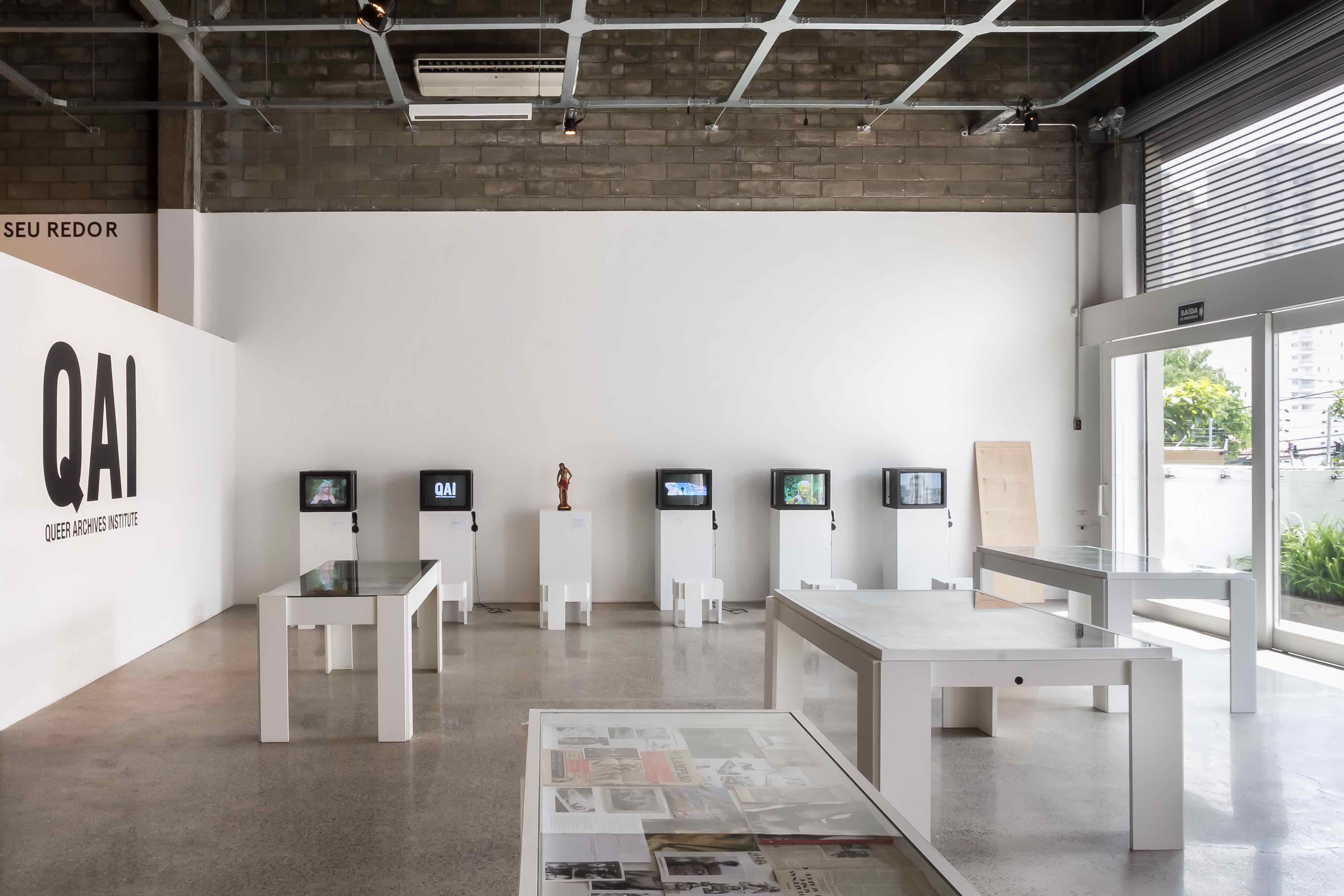
“In a private apartment in Warsaw in 2005, I opened my solo exhibition titled Fags, which was my artistic coming-out and, at the same time, the first openly homosexual exhibition in Poland. Of course, some gay themes had appeared in the works of other Polish artists before, but never in such a direct and conspicuous manner. In the same year, I began publishing an irregularly-issued DIK Fagazine. It is the first, and so far the only, art magazine from Central and Eastern Europe devoted entirely to the subject of masculinity and homosexuality in the broad context of culture and art, with particular focus on the region. For a long time, in Poland, as well as in many other post-socialist States, homosexuality remained taboo after the political transformation; and it was often treated as something that ‘had arrived from the West’. For example, in Ukraine, which is trying to acquire European Union membership, it is not unusual to hear arguments against this accession saying that as a result the country would turn into a ‘Sodom’. This argument is largely present in the region, especially in those countries still under strong influence of the Roman or Orthodox Catholic Church. On the opposite end of the spectrum, Warsaw hosted ‘Europride’ in 2010. This could be perceived as an element of a ‘rainbow colonisation’, in which ‘Western gays’ brought their rainbow flag to Eastern Europe, while a conference accompanying the event was devoted to so-called ‘pink money’ – the purchasing power of the exclusive gay community. As a result, I concluded that there was a serious need to prove that queer culture existed in Poland already during the socialist era, that we were ‘queer before gay’. Consequently, my goal has been to recover this aspect of the past as part of Poland’s cultural history in general, not just as an element of queer history.
My primary method was conducting interviews with older people and consulting their private archives (photographs, personal writings) which had usually never been shared before. My work rarely involves visits to libraries; I prefer to focus on direct contact with the witnesses to events and gather their memories. Typically, I would first meet local activists, who would give me information about people I could potentially talk to, and they often suggested new avenues where I could find further material. Thus obtained and recorded audio or video interviews become documents, and the beginnings of an archive.
This work has expanded from the initial highly local, Polish, context, to the gradual inclusion of neighbouring countries in search for commonalities, and the current attempt to reach a broader perspective. Travelling to Brazil and exploring the question of Brazilian queer archives, I found some similarities with the results of my research conducted so far. The particularly topical subject of the ‘global South’ repeatedly overlaps, criss-crosses and dovetails with the ‘global East’. What emerges is a story of a ‘global province’, timidly trying to discover its own language and create its own independent identities. There have been previous projects comparing Eastern Europe with Latin America, for example the recent exhibition Transmissions: Art in Eastern Europe and Latin America, 1960–1980 at the Museum of Modern Art in New York in 2015, that focused on parallels and connections among artists. However, so far I have not come across any similar attempt to assemble queer archives in a specific given context. Such juxtapositions seem to me to be an interesting experiment. What I concentrate on is rather a similar context, certain limitations, as well as often a vestigial character of (hi)stories that are yet to be told.
It is to subject matter of this kind that I would like to dedicate my newest project, Queer Archives Institute (QAI), established on 15 November 2015, that is to say on the thirtieth anniversary of Operation Hyacinth in Poland. Its official inauguration was in the exhibition held in April 2016 in Videobrasil, São Paulo. On one hand, it is intended to sum up my practice so far, and, on the other, to try and establish permanent co-operation with partners (such as artists, activists, academics, and local non-governmental organisations). The aim of the project is to gather queer archives from various geographic regions, especially those which are ‘peripheral’, either literally or symbolically colonised, and make them accessible as well as subject to artistic interpretation. QAI's main platform will be website gathering digitised materials ranging from scans of archival photographs, magazines and publications, through audio and video interviews, to texts analysing related concepts and methodologies. Owing to the entirely private character of the initiative, at first, by necessity, the scale of the undertaking is limited; however, eventually it is meant to be more far-reaching.
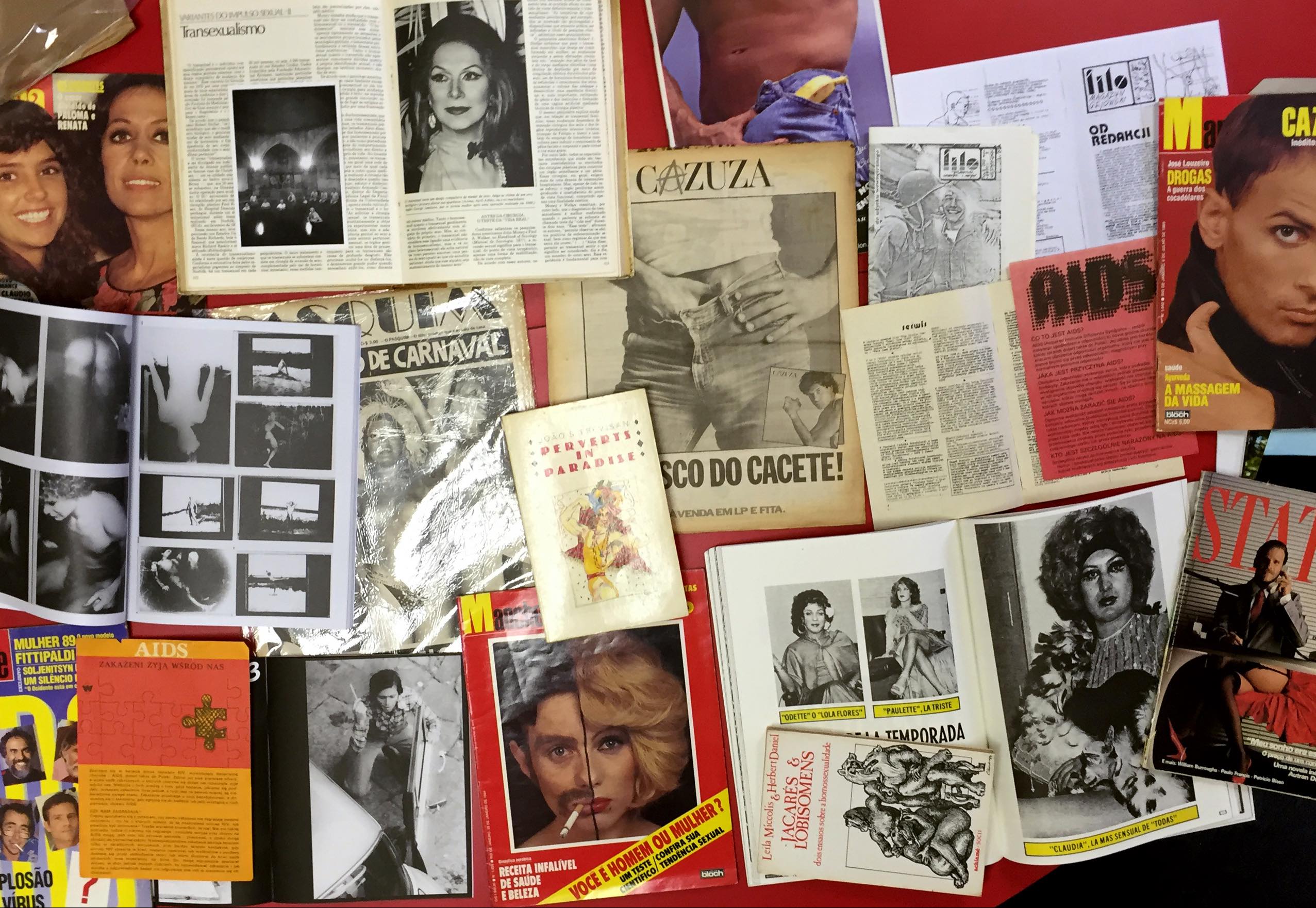
Importantly, in addition to the process of cataloguing and geographical/ chronological ordering, is the creation of a system to enable thematic searches which forms multi-level hypertextual connections between materials from geographically distant places. Thus the digital dimension of QAI needs be complemented by a “material” one: by organising or co-organising exhibitions presenting the collected materials, sometimes with the participation of invited artists. On a smaller scale, I used such strategy in the QAI inaugurating exhibition at Videobrasil where archival visual materials, such as voyeuristic photographs from very different beaches, are juxtaposed side by side. Similarly, I have showcased the first LGBTQ (Lesbian, Gay, Bisexual, Trans and Queer) publications to be issued in various countries, or artefacts (posters, leaflets, graphics, books) related to the beginning of the AIDS epidemic.”
Karol Radziszewski in a statement to PLATFORM:VB (March 2016) / Based on the text "In Search For Queer Ancestors” published in the L’Internationale EPUB “Decolonising Archives” (February 2016)
Queer Archive Institute, 2016 | Installation
Karol Radzizewski
Karol Radzizewski's website
Karol Radzizewski's blog
Queer Archives Institute's website
Access to the digitalized editions of the journal Lampião da Esquina, one of the reference materials from the Queer Archives Institute
Conceptual landmarks | Videobrasil Collection:
O Profundo Silêncio das Coisas Mortas | Rafael França
Temporada de caça | Rita Moreira