Mecânica, versão negra
2012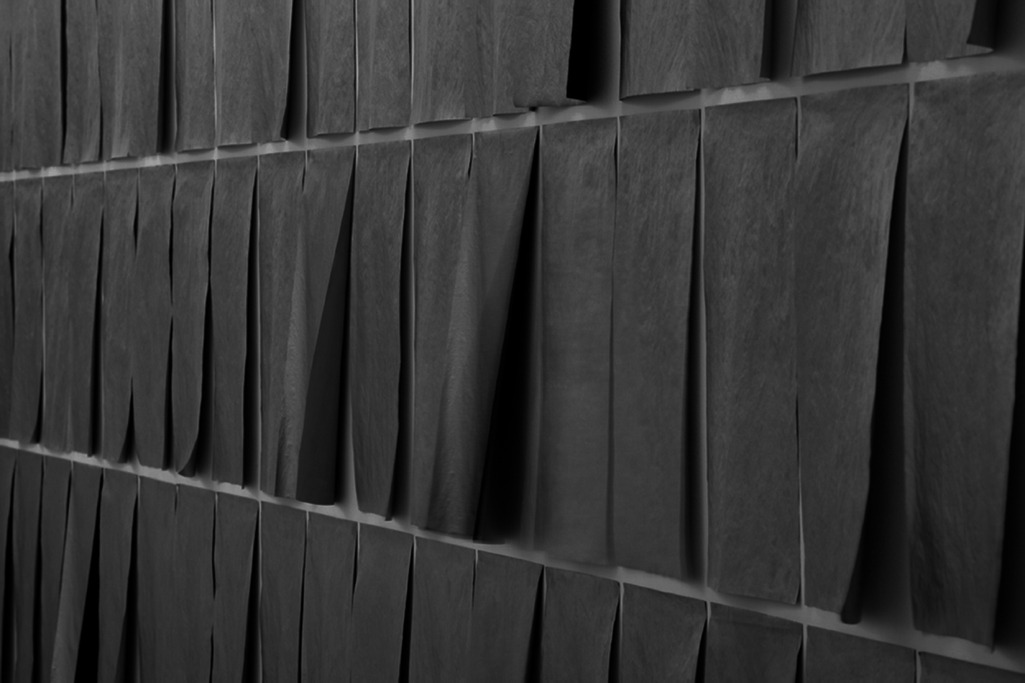
Mecânica, black version (2012/2013)
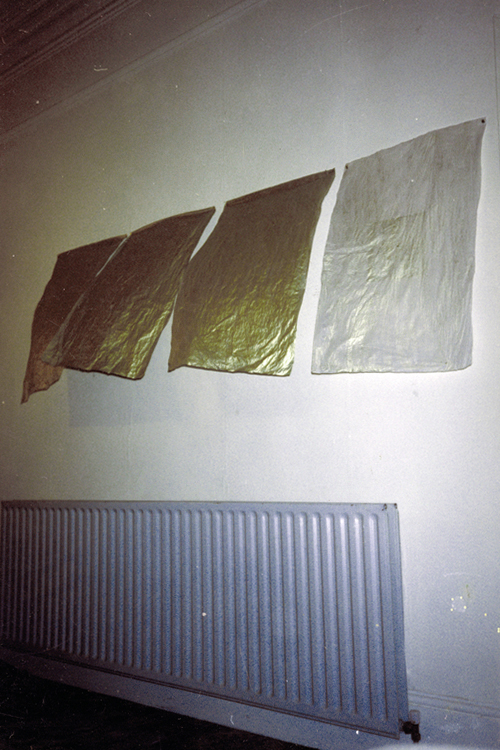
"Upon attaching a few sheets of bronze powder-coated silk paper onto the wall, I did not account for the heating equipment underneath it." Artist's studio, London, United Kingdom (1992)
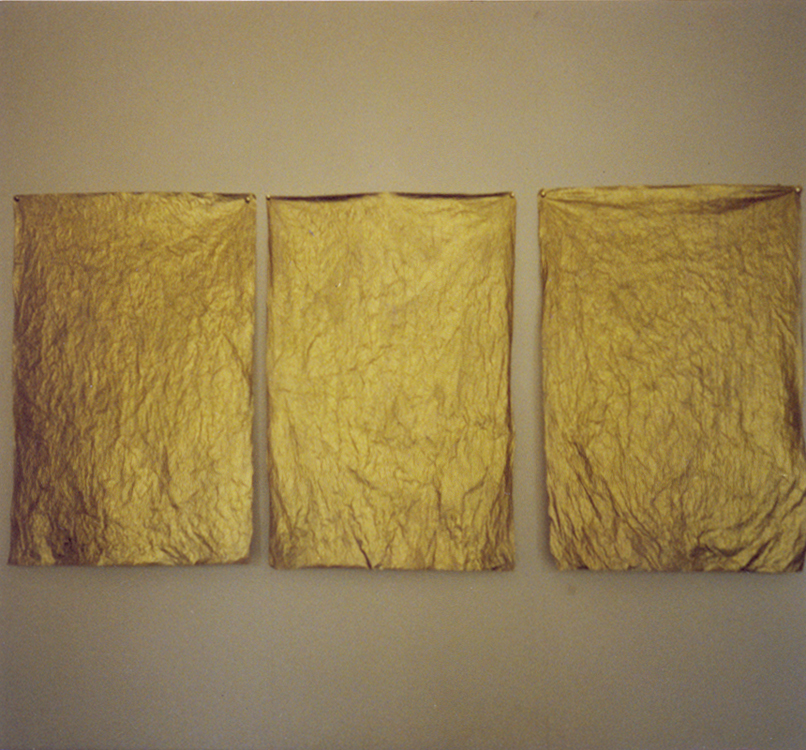
Artist's studio, London, United Kingdom (1992)
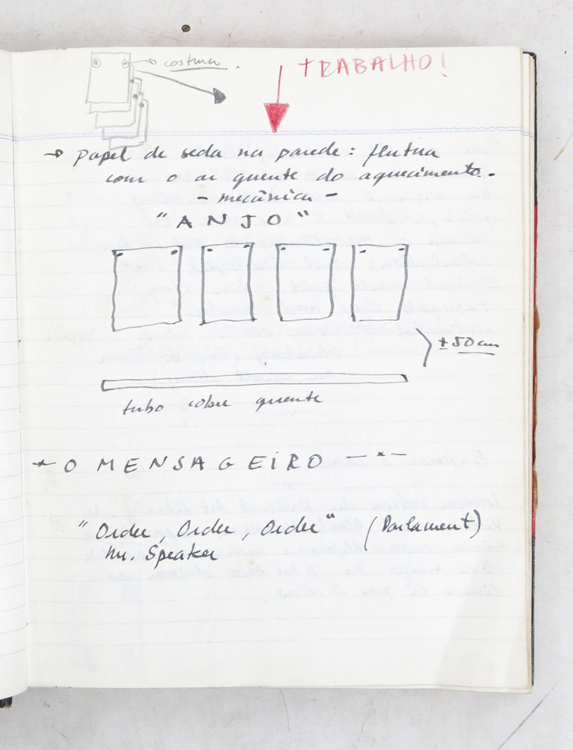
Sketchbook, London, United Kingdom (1992). "Although that was not what Mecânica was meant to be, I considered naming that piece Mecânica dos Anjos (Mechanics of Angels)", explains the artist.
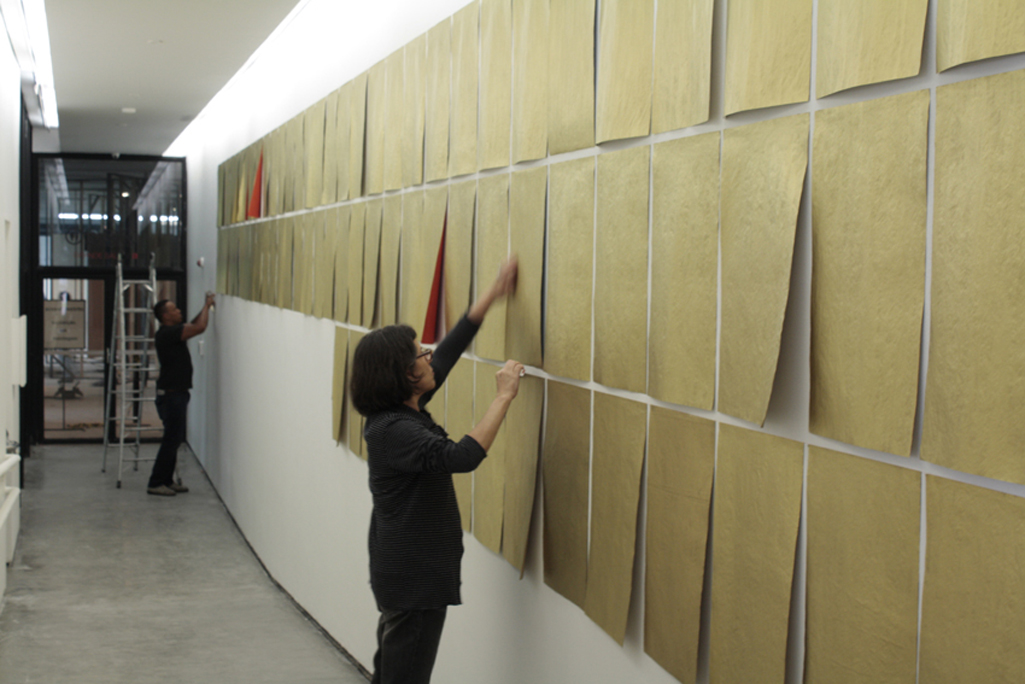
"Nineteen years after those first experiments in London, I ended up proposing a golden version of Mecânica for Projeto Parede at MAM-SP." MAM-SP, São Paulo, Brasil (2012)
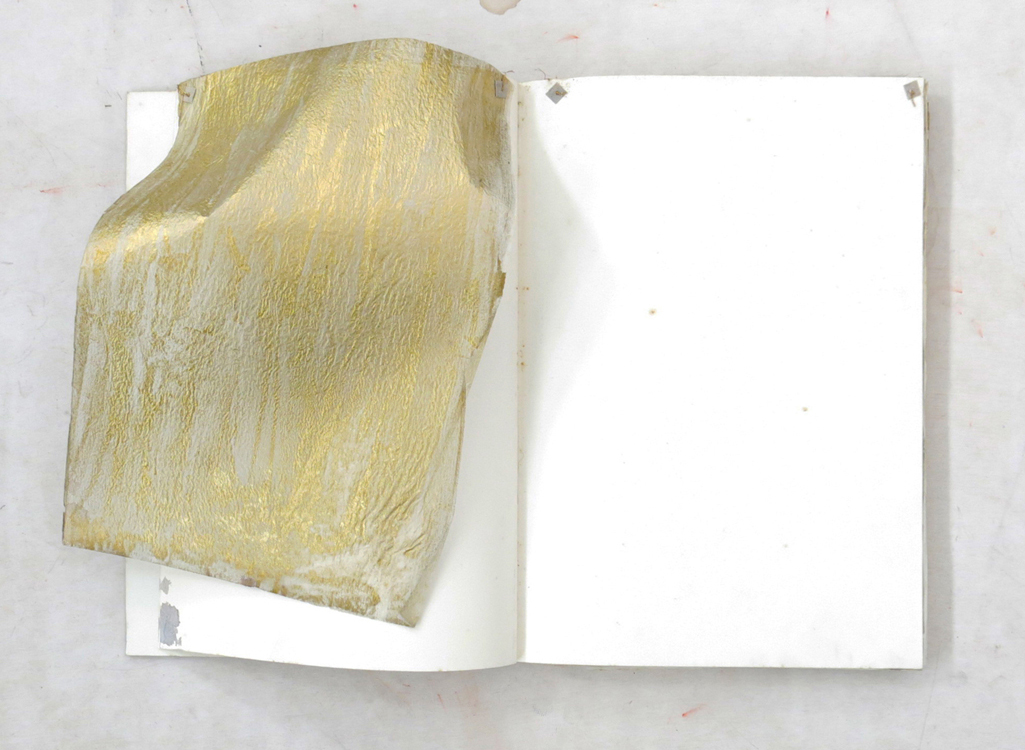
First studies for the book Mecânica, London, United Kingdom (1992)
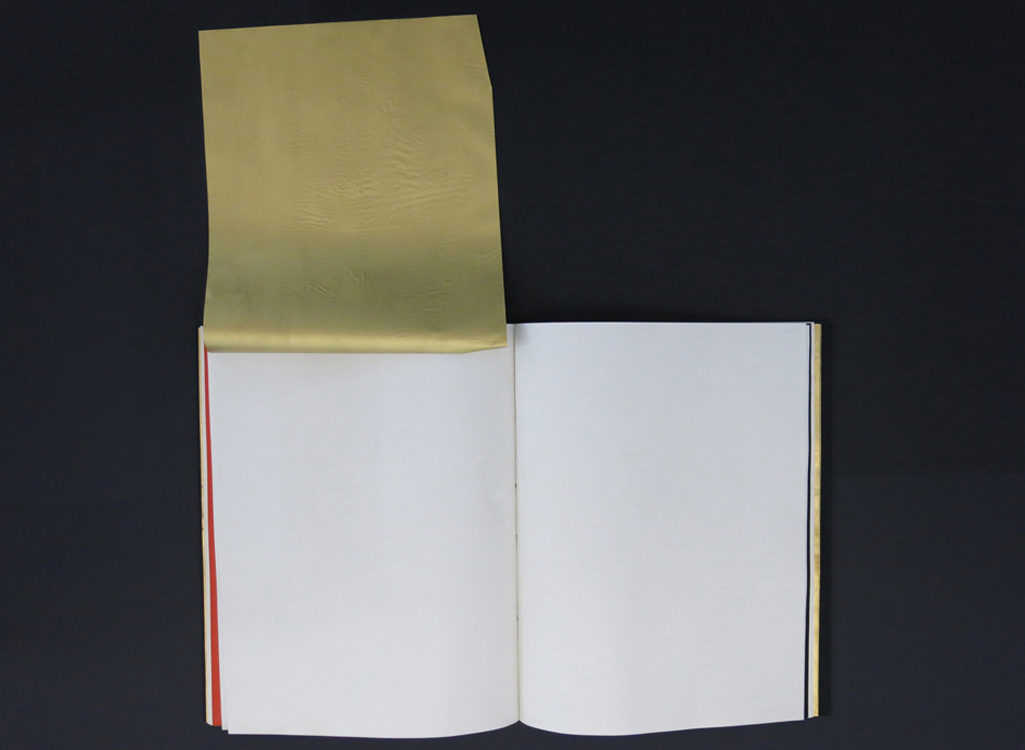
Mecânica (2013), video still, a video that, according to the artist, "addresses the same issues, but on a smaller scale."
"The very first thoughts and experiments that led me to Mecânica came up in 1992, as I spent a year as an artist-in-residence in London. During that period, I started a series of pieces in silk paper.
The qualities of this paper, combined with chance, converged with some of my interests at that particular moment. Upon attaching a few sheets of bronze powder-coated silk paper onto the wall, I did not account for the heating equipment underneath it. It was full winter, the heating was turned on, and the hot air caused the sheets to move and project themselves into space. Although that was not what Mecânica was meant be, I considered naming that piece Mecânica dos Anjos (Mechanichs of Angels). I believe that was partly due to the fact that I was then reading Saint Augustine.
Since the 1980s, I have been concerned with the boundaries between 2D and 3D. After noticing that the displacement of air would cause the papers to project into space, I created a few series, such as Frágeis (1995) and Corpos Associados (1997). These series consisted of double sheets of silk paper; the front sheet had a bronze powder drawing on it, and the back sheet had a nankeen drawing. On moving and projecting into space, the sheets would move apart from one another, causing the focus of the nankeen drawings to change.
Upon observing audiences and their reactions to the paper sheets at shows in which these pieces were exhibited, I became increasingly interested in how they pointed to relationships between the body and space, and between one body and another.
Nineteen years after those first experiments in London, I ended up proposing a golden version of Mecânica for Projeto Parede at the Museu de Arte Moderna de São Paulo (MAM-SP). The wall of a museum hallway seemed like a good place for the piece to be placed on. At that moment, it became clear that only colors printed onto both sides of the sheets would do the trick, bringing about the notion of mechanics more directly (associated with the behavior of systems, like the movement of bodies submitted to some type of force). This way, the medium becomes a constituent element of the piece; it becomes an object.
Mecânica is a piece of work that indirectly attempts to point out the relationships between the body and space, and between the body and other bodies. It is the audience in motion, passing through, who activates the piece. A namesake book (2011-2012) addresses the same issues, though on a smaller scale, because the displacement of air that projects the golden sheets in the book is produced solely by the action of the hand as it turns the pages. The manipulation of the book activates the piece. Due to the impossibility of manipulation of the book by the audience, I also ended up making a video, that opened up new possibilities for my work. This series of short videos is underway at this time."
Flávia Ribeiro in a statement to PLATFORM:VB (October 2013)
Mecânica, versão negra (2012/2013) | Flávia Ribeiro
Installation | Silkscreen on greaseproof paper, variable dimensions
Mecânica, black version (2012/2013) details and setup at the exhibition space of the 18th Contemporary Art Festival SESC_Videobrasil
Testimony Flávia Ribeiro | 18th Festival
The artist describes the two versions of her piece Mecânica, featured in the 18th Festival