El Museo Imposible de Las Cosas Vivas. Departamento de Integración PanContinental (Área de Contacto Triangular)
2014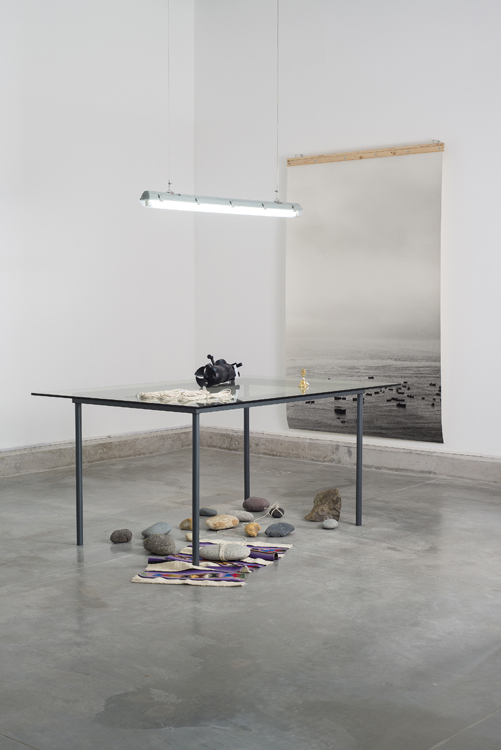
Installation detail
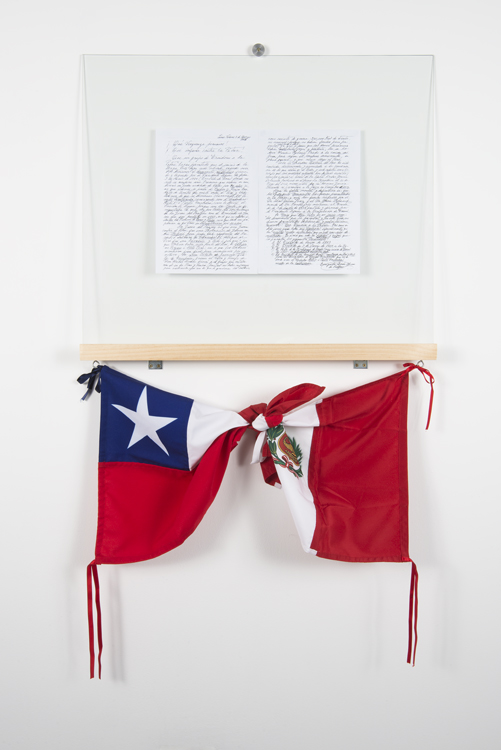
Installation detail
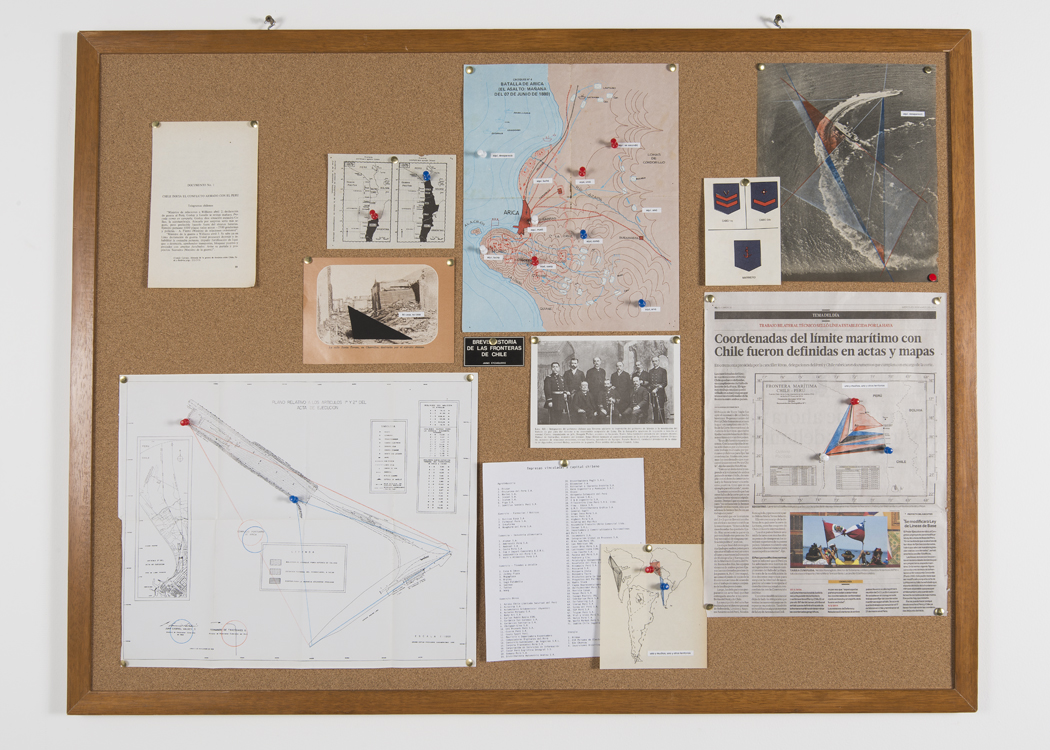
Installation detail
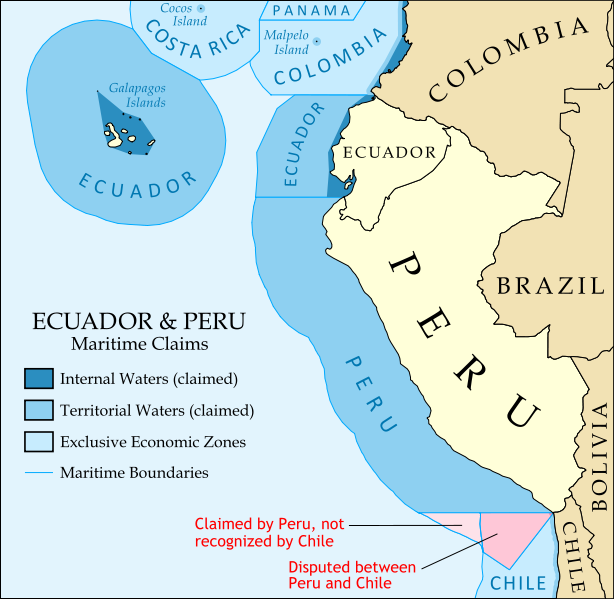
Map of the maritime claims of Ecuador, Peru, and surrounding countries, including internal/archipelagic waters, territorial waters, exclusive economic zones (EEZ), and disputed areas.
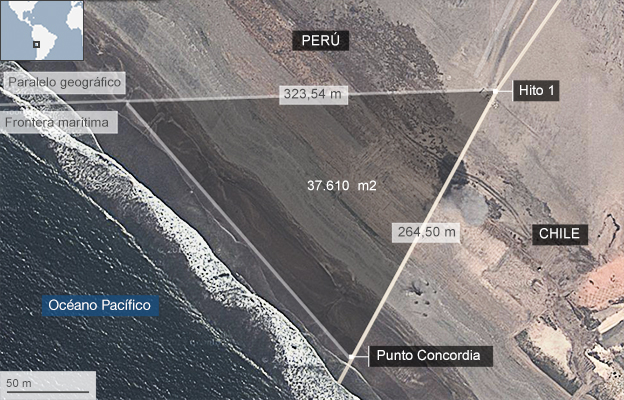
The International Court of Justice in The Hague ended, on 27 January, several years of dispute between Peru and Chile by defining their maritime boundaries, but to set the benchmark for the oceanic border left the table set for another controversy. Only this time it's not about thousands of square kilometers of sea area rich in fish, but just 3.7 hectares of sand with a few algae and some mollusks.
The territorial dispute between Chile and Peru did not end with the decision of The Hague on 27 January. Today the dispute continues over a triangle of land with 300 meters of coastline.
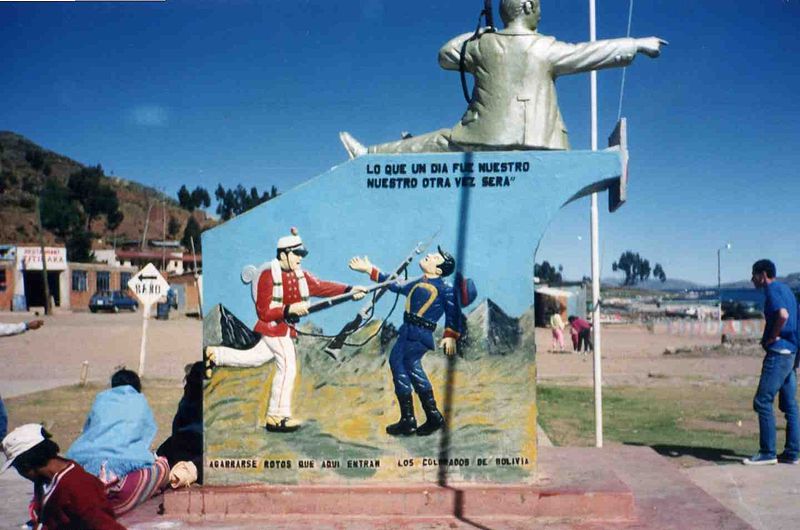
Bolivia, 1992. Quote: "Lo que un día fue nuestro, nuestro otra vez será" (What once was ours will be ours again) and "Agárrense rotos (Chilenos), que aquí entran los Colorados de Bolivia” (Hang on broken [Chilean], here are the Colorados of Bolivia)
“This Impossible Museum interaction unfolds as an intricate objectual narrative of the recent maritime border dispute between Chile and Peru, which culminated with the changing of hands of a triangle-shaped territory spanning almost 37,000 square meters. The installation amasses and intervenes on pictures and objects (through graphic elements and assemblages) as a form of register that evokes the current status of this territorial, political and cultural situation.
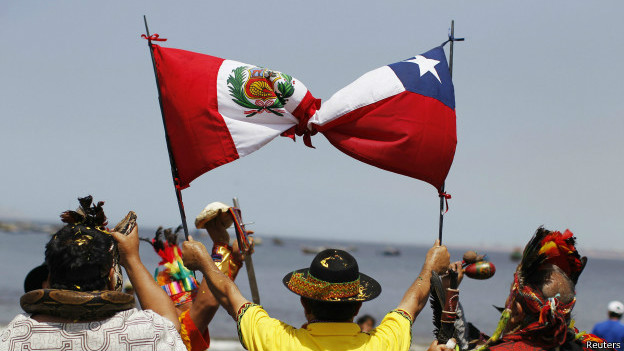
The project got its name from how the dispute is currently referred to on the news. A picture from the media showing the chiefs of local tribes celebrating the dispute’s resolution (at The Court of The Hague) sparked interest in the situation. Thus, the mediation forums that shape public opinion — and their media spinoffs — were crucially important in defining the actions developed under the project, which combines preexisting images and objects from distinct social, cultural and temporal layers.
Photographs and print materials are combined with artifacts and objects to conjure alternative chapters, side effects and other aspects of that event. Each of the elements in the installation bears labels with (at times fictional) details about them. The project also contemplates a few historical events relating to the case, harking back to the War of the Pacific (19th century), as a means of evoking a hypothetical archaeology of the reoccurrence of this real situation.
Alluding to the implicit invisibility of the artifacts involved in the case, the construction of these hypothetical objects (understood as artifacts produced from local, run-of-the-mill materials found in daily life in Lima) can also be indirectly linked to moments of sociocultural and political (in)visibility involved in this long-standing dispute. These moments at once reverberate imperialist regimes and colonialist logic, strangely executed between ‘neighboring’ peoples with similar histories.
The whole installation operates conceptually through moments and situations connected with an area of dispute, acting as a framework for exhibition of ‘docu-fictional artifacts’ that enables reflection on the continent’s convoluted political relations and their memories.”
* The project is the outcome of a month-and-a-half long process of intense research, including twenty days spent in Peruvian territory doing field research and work that led to the project’s current format.
Beto Shwafaty in a statement to PLATFORM:VB (July 2015)
El Museo Imposible de Las Cosas Vivas. Departamento de Integración PanContinental (Área de Contacto Triangular), 2014 | Installation
Beto Shwafaty
“I am interested in creating an artistic process that will become a field composed of documental, poetical, aesthetical and political aspects. A process that allows the approach of a given reality through contact points, conjunctions of meanings and moments not entirely connected at first. I seek a convergence of different times and spaces in my work, in order to bring up new aspects of something that is partly known and commonplace, but which perhaps warrants a different, deeper gaze to uncover aspects overshadowed by time.
The installation becomes a device formed by various levels of appropriation, which causes a series of conflict issues to collide and emerge, while not requiring a literal evocation of the historical fact. Certain procedures and characteristics present in museography and installations also bring to the fore a certain tradition linked to the strategies that undermine, or at least cast suspicion upon the historical discourses enforced by museums’ regimes. Works like those by Fred Wilson, Hans Haacke and Marcel Broodthaers are landmarks in the questioning of said discourses.”