Des Deux Côtes
2010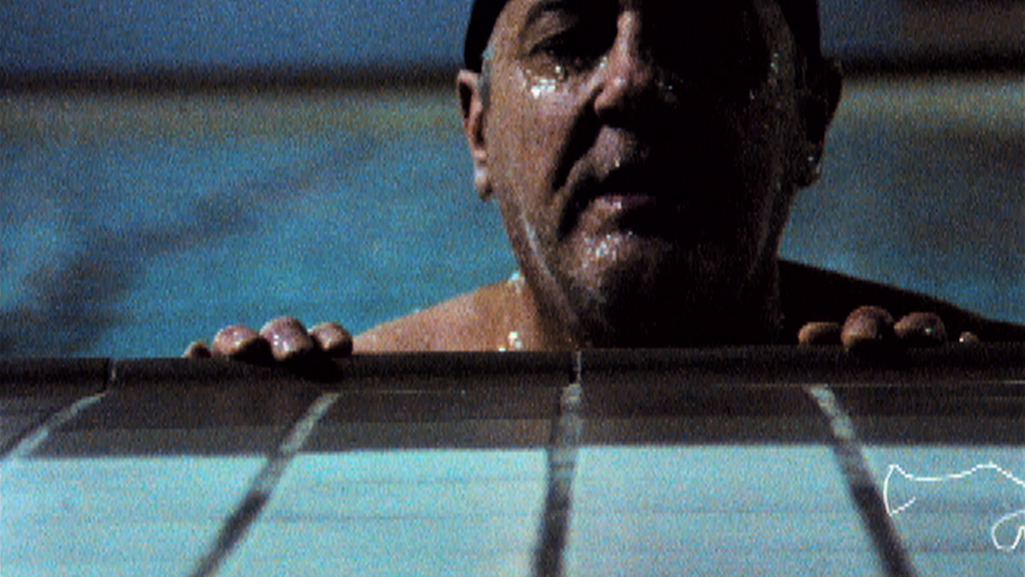
Des Deux Côtes (2010), video still
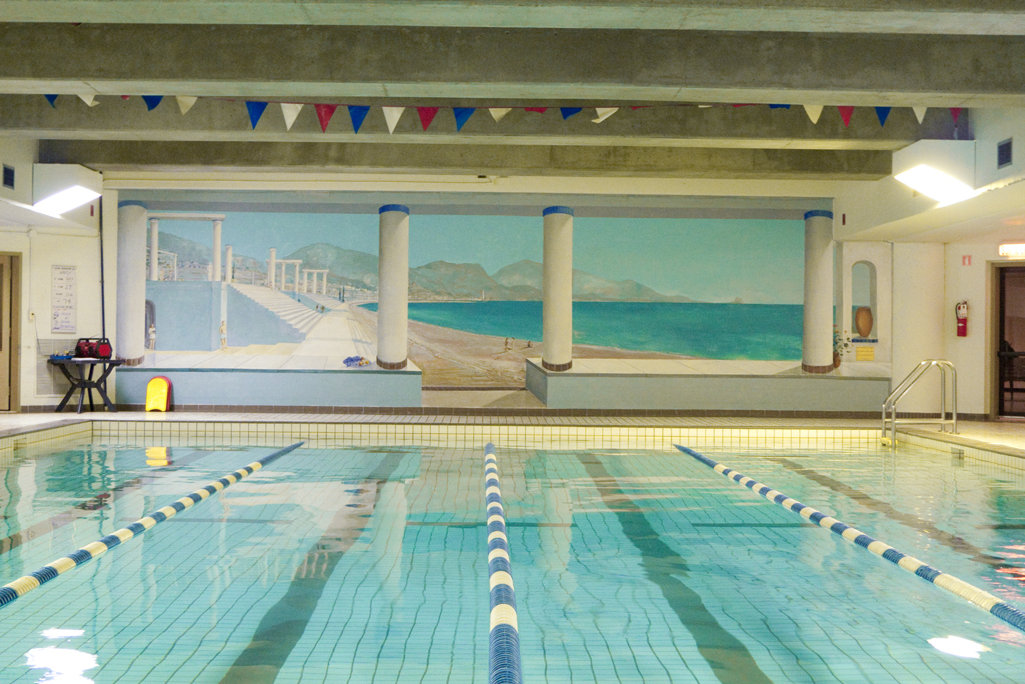
“The starting point of Des Deux Côtes was an underground swimming pool I discovered during one of Montréal’s freezing cold winters."
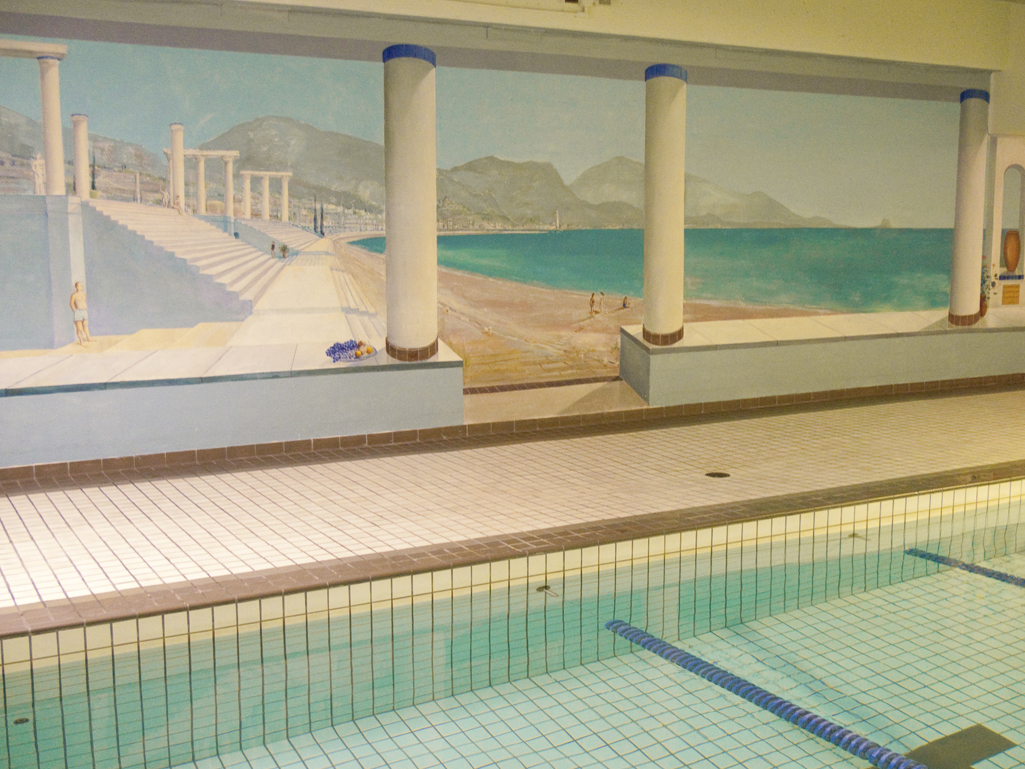
"There was this huge mural depicting a section of the Mediterranean coastline hand-painted onto one of the walls."
“The starting point of Des Deux Côtes was an underground swimming pool I discovered during one of Montréal’s freezing winters.
It was something like −13 °C outside, and I walked downstairs from the dry cold weather of the street into this humid underground recreation complex. On one of the walls, there was a huge hand-painted mural depicting a piece of Mediterranean coastline. There was something really fascinating about the presence and placement of that mural. In a way, it was a totally inhuman environment - the fluorescent light and the chlorinated water inside the underground chamber without any windows - but, at the same time, it was still quite intimate. There was all this skin exposed - the swimmers - and this inadequate reminder of what bathing can be like, or what it should be like, soaked under the sun, in a windy Mediterranean coastline.
I loved swimming in that pool, largely because of the mural. It evoked a particular kind of simulation, whereby you’d look at that image which made swimming in an urban, landlocked pool strangely uplifting. Even though you’re aware that it’s a simulation, you feel something different – something that extends just beyond the reality of the situation.
So, I suppose the research behind this film – the starting point - consisted most concretely of just going swimming that day in Montréal and encountering a space that elicited two opposing feelings simultaneously. The stimulus of the experience produced a kind of push-and-pull effect - an immediate example being the conscious synthesis that occurred to me when I thought about temperature. Water temperature and colour temperature; the warm underground pool below the cold city streets; the warm painted hues beneath the cool fluorescent light. I started thinking about hot and cold at the same time - imagining a fire burning on a field of snow.
Fire and water. Burning and freezing.
Sensory experiences that occur in everyday life – like the one I lived in the underground swimming pool - can be simple and immediate, but they’re also very often tied up in more complex ideas, emotions and thought processes.
There were many references feeding the creation of this piece: the language of narrative cinema, philosophy of perception, chance encounters, perceptual science, ‘The Binding Problem’ and cerebral processes are some examples. But a guiding thread throughout the development of the work was an observation of the relative interaction between opposing limits that persists at a given moment of comprehension. For instance, knowing and not knowing, desire and repulsion, male and female, wet and dry, hot and cold, light and absence of light.
The comprehension of such opposites derives from the capacity of the intellect to reflect and conceptualize; yet, direct experience has its base predominantly in the sensory field, without necessarily depending on active conscious reflection. In other words, we seem to possess a sensitivity towards the persistent interaction between opposing ideas and elements – a sensitivity that forms itself in sensory experience without the necessity of active conceptualization. It’s difficult to articulate or reproduce this capacity, but artworks are capable of furnishing people with such an experience.”
Andrew de Freitas in a statement to PLATFORM:VB (October 2013)
Des Deux Côtes (2010) | Andrew de Freitas
Video | 3’58”, super 16mm / 8mm, BetacamSP, digital transfer, stereo, color, 16 : 9
Testimony Andrew de Freitas | 18th Festival
The New Zealand artist discusses his Des Deux Côtes video and his creative process