A Idade da Pedra
2013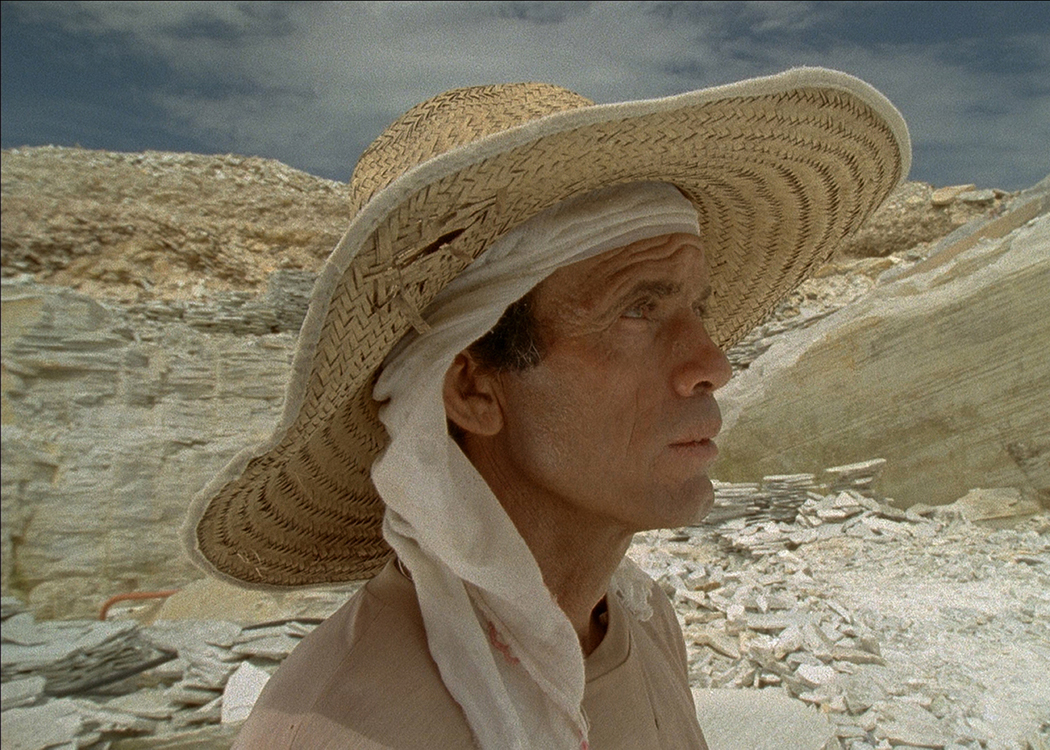
A Idade da Pedra video still
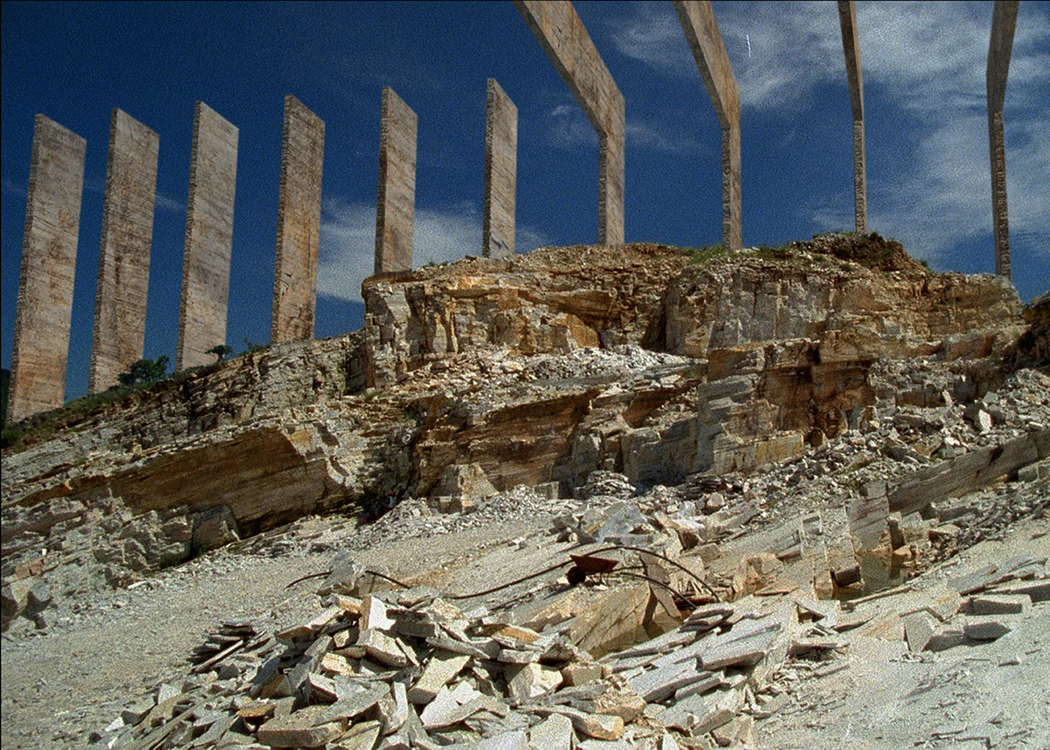
A Idade da Pedra video still
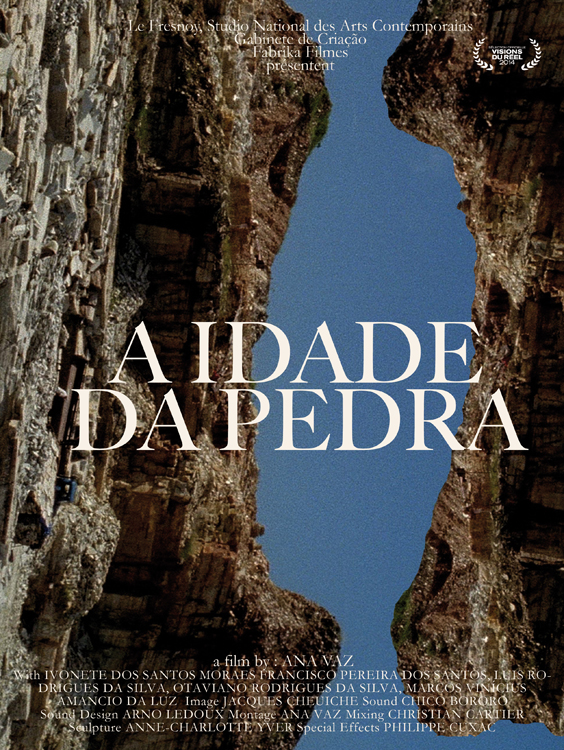
A Idade da Pedra (2013) poster
First study for the film's entropic structure (2012)
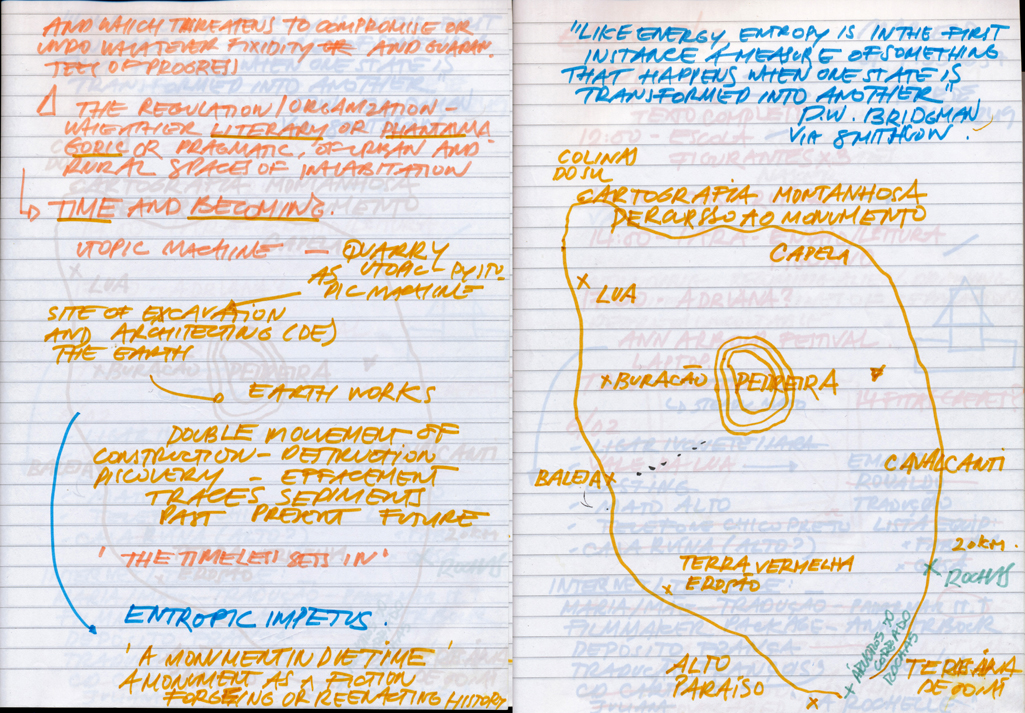
Notes and fictitious cartography for the filming route, Goiás (2013)
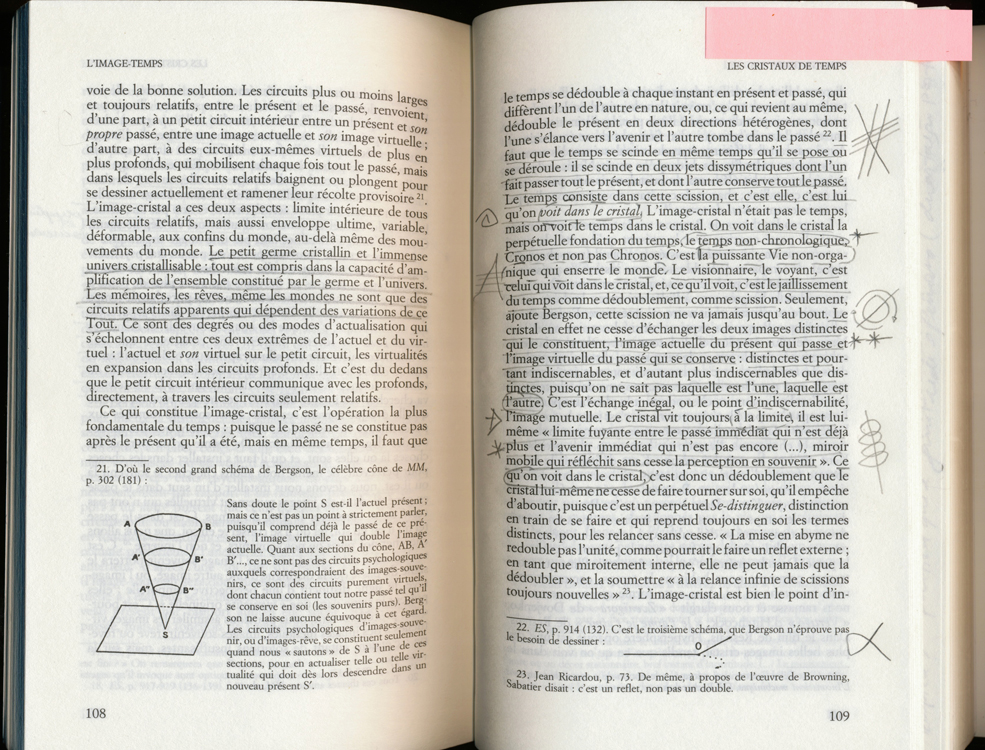
Notes on Gilles Deleuze's L'Image Temps (2013)
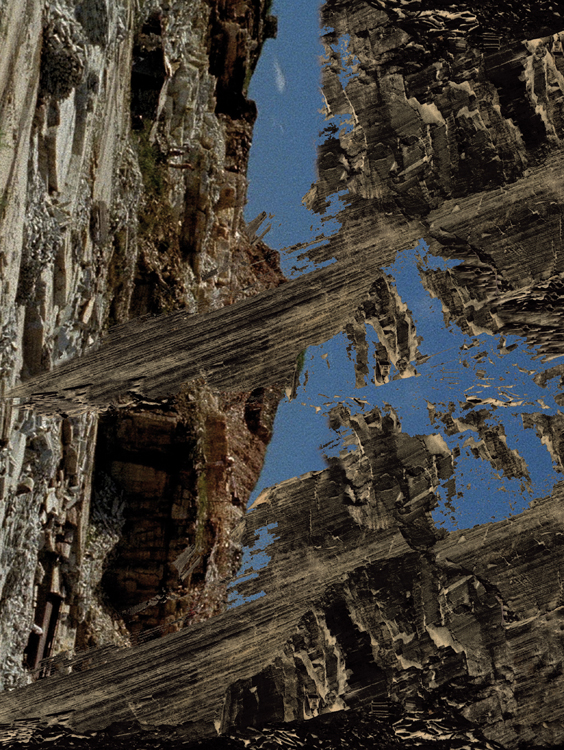
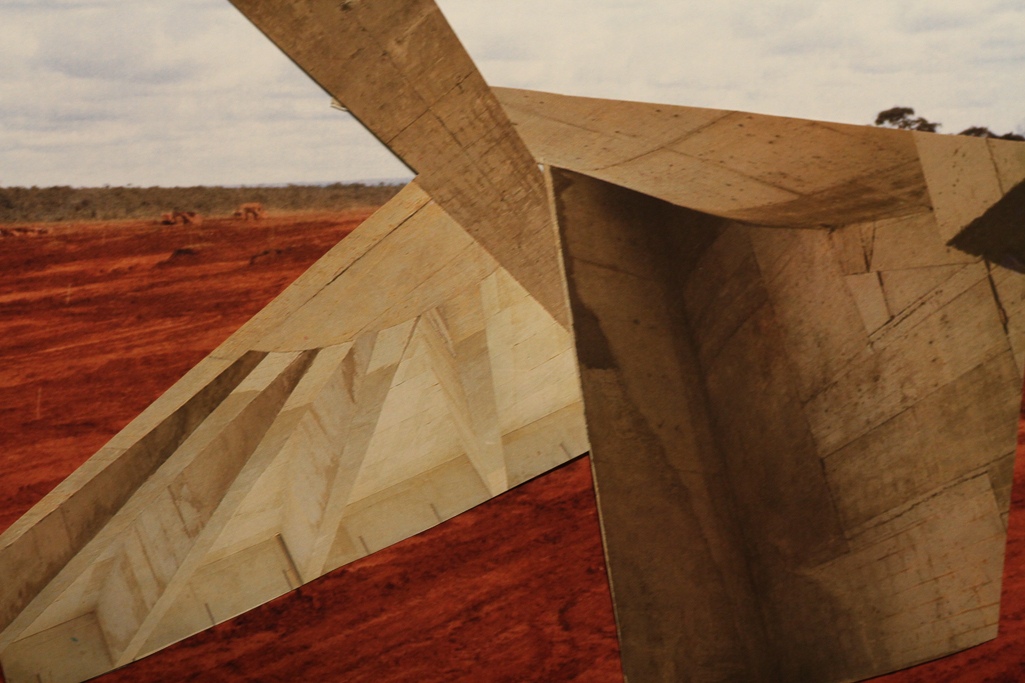
Collage, texture study (2013)
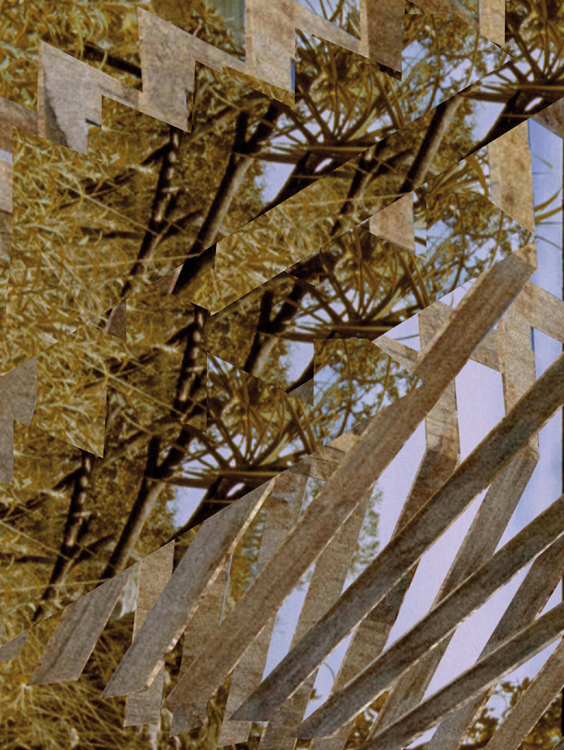
Collage, tone study (2013)
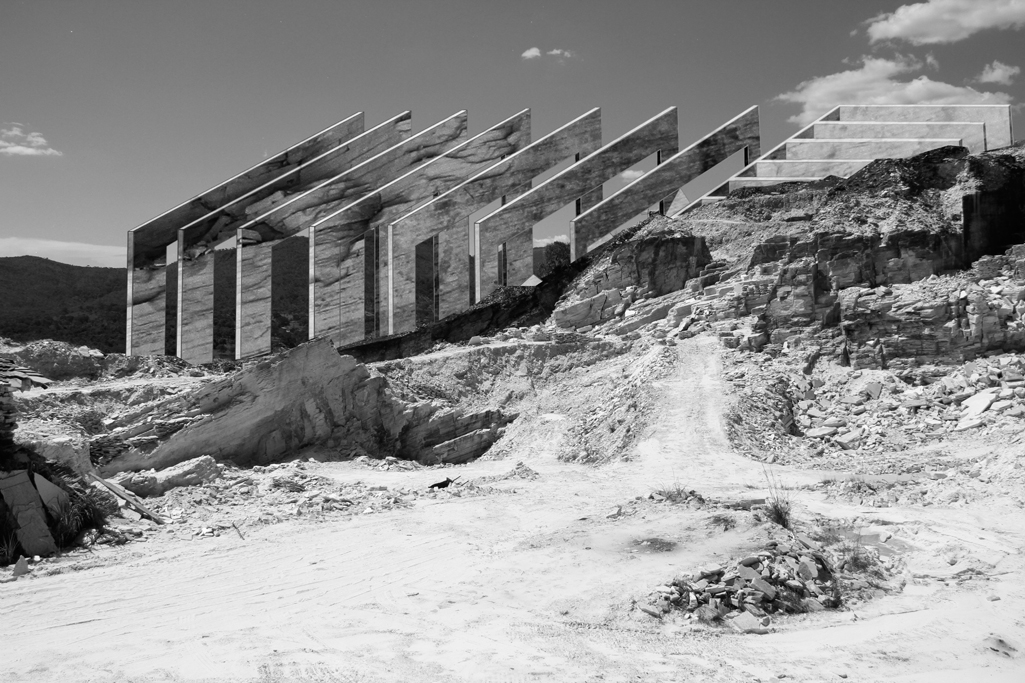
Model for 3D sculpture, by Anne-Charlotte Yver (2013)
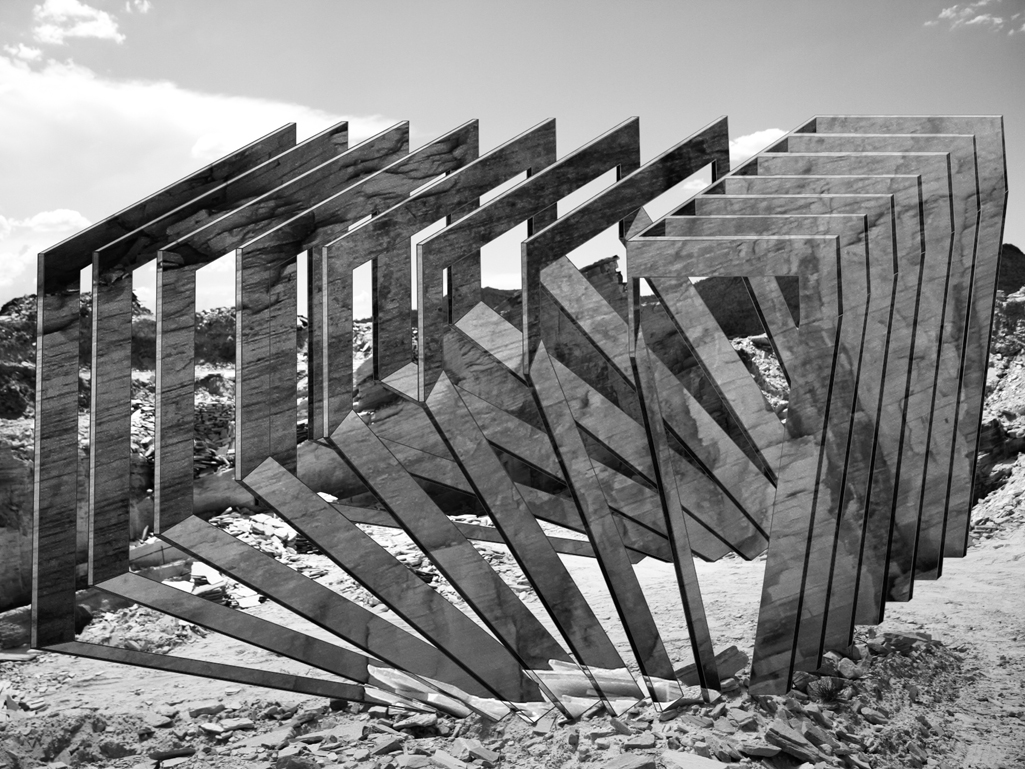
Model for 3D sculpture, by Anne-Charlotte Yver (2013)
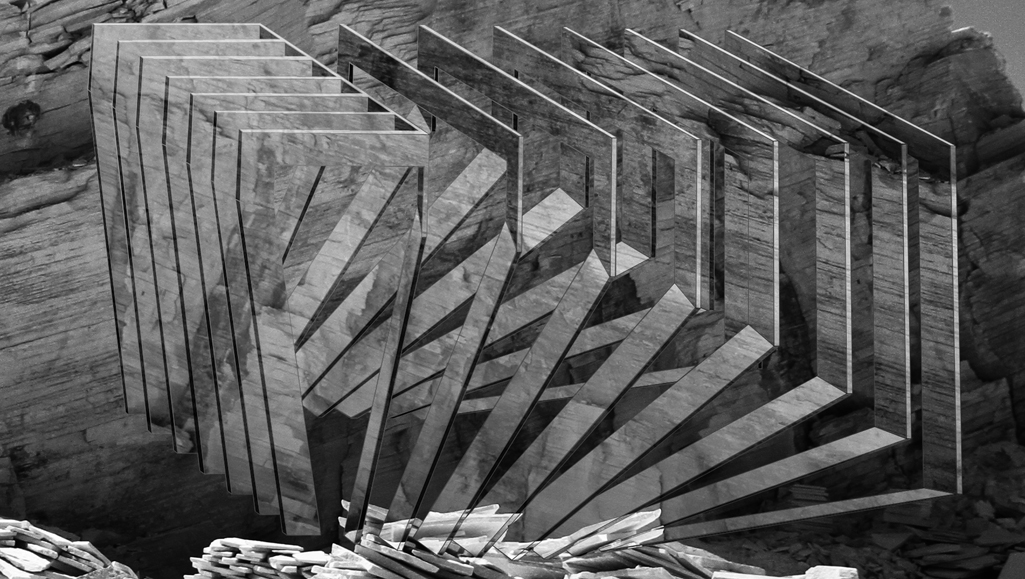
Model for 3D sculpture, by Anne-Charlotte Yver (2013)
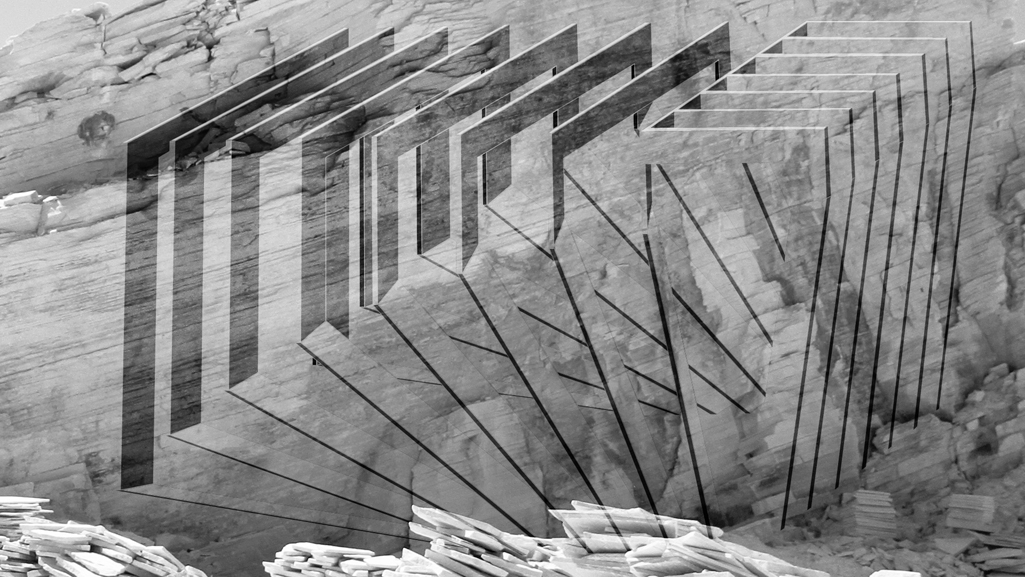
Model for 3D sculpture, by Anne-Charlotte Yver (2013)
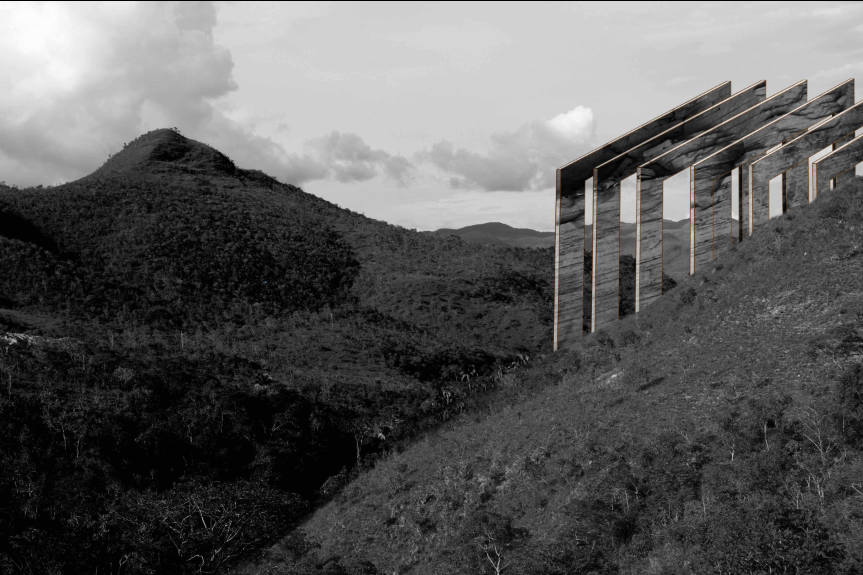
Composition study (2013)
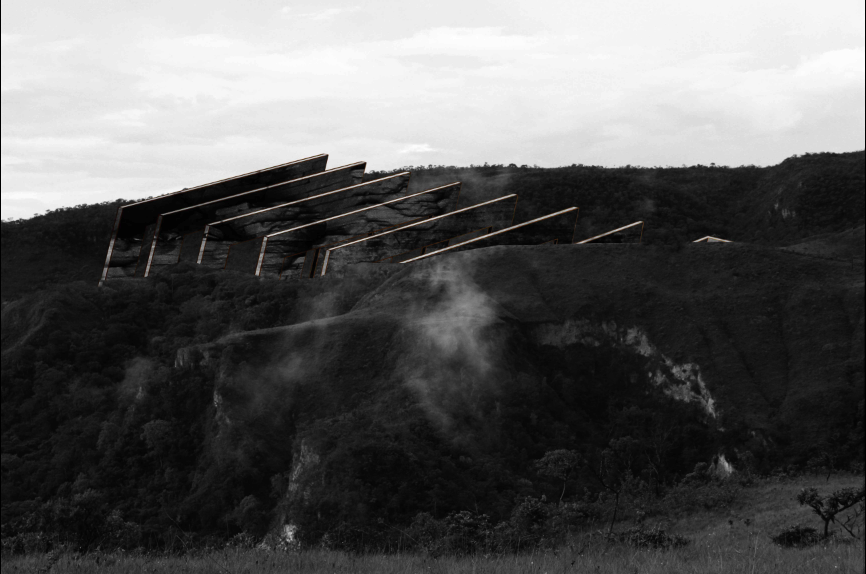
Composition study (2013)
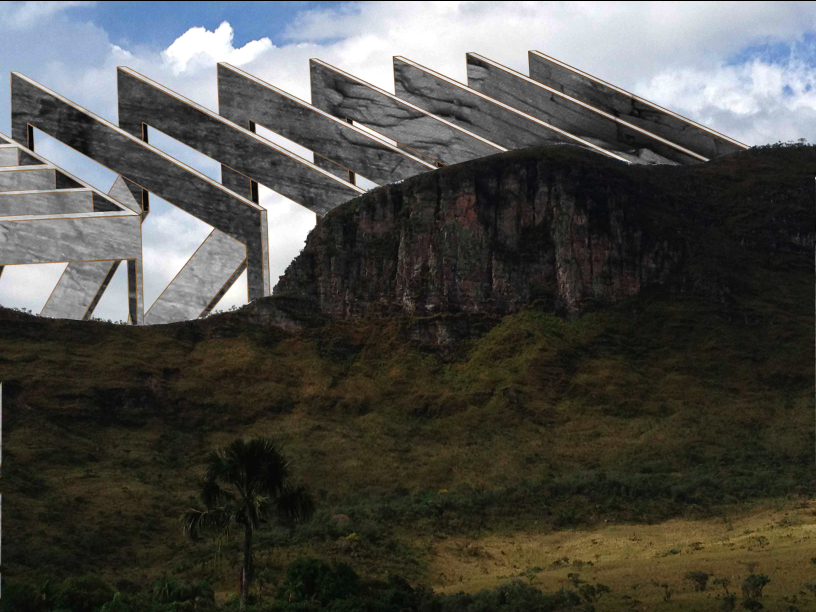
Composition study (2013)
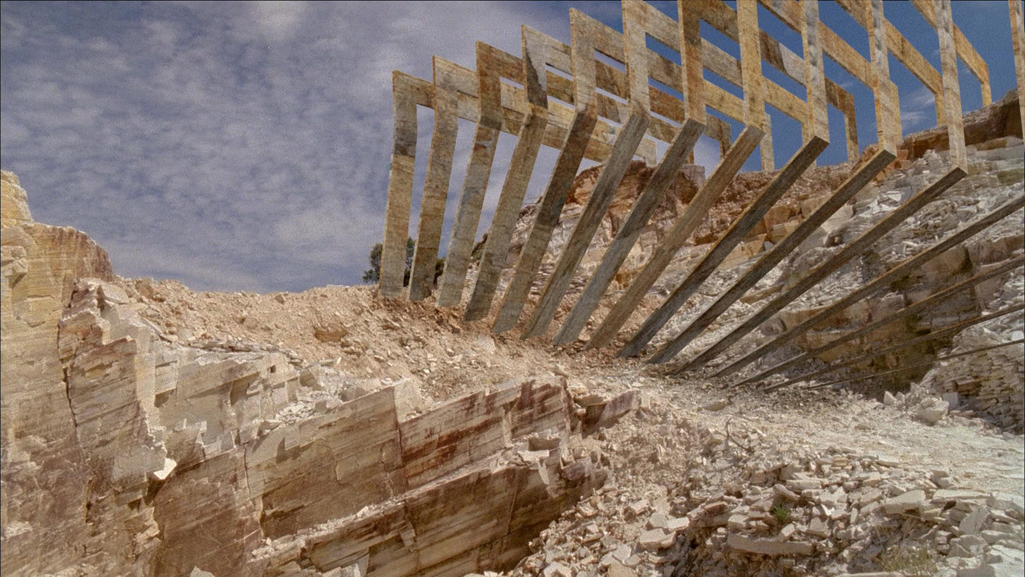
First fouling, by Philippe Cuxac (2013)
“A Idade da Pedra (The Stone Age) came about from a textual and imagetic cosmology outlined between geo-ontology and uchronia, between matter and history, between utopia and its unfailing dystopian potential. A trip to the central Brazilian flatlands where the Capital epopee unraveled, the film is a stratigraphy of that same epopee. As Clarice Lispector said in her text about Brasília, 'the time in the future has passed', and here the beginning marks an ending, and the ending, a new beginning. A Idade rejects linear chronology and insists on a movement between geological and historical time, mythical and prosaic.
In A Idade, Brasília becomes the Frankenstein-monument of an archaic future — something that builds itself in its own undoing. It becomes the whole of which I remove only one part, a situation to be undone. The film sets out to replace utopia with entropy, the rigid with the porous, plenitude with partiality.
In this process, I strive towards equivalence between man and his environs, between the uttered-word and the word-plane, between artifice and the natural — binarities that seek dissolution. The film proposes a premonitory reflection about issues relating to the Anthropocene, the geological denomination where man recognizes himself as a transformative force of the Earth’s surface. It has been said that the dawn of the Anthropocene was the arrival of Columbus in the Americas, the moment capitalism started picking up steam, the hyper-exploration of resources, and the period when death became a mass phenomenon. A Idade recounts a fictional version of the delirious, astonishing epopee of exploratory labor, colonial and missionary, carried out in multiple, terrible versions throughout the history of the Americas.
The film looks to deform history in order to reveal what it conceals. Luis Cruls's notebooks, which record an exploratory trip to the place that would eventually become Brasília, transform into prehistoric vestiges; the now-absent explorer-narrator is at a loss for words, all he has is his gaze — learning to see should be the true work the an explorer. Lispector’s text, Brasília, unfolds in long takes, in suspended times, in words said by a heroic mestizo woman who disrupts the film’s ethnographic vision by confronting the camera. Who does the Earth think it is?, by Deleuze and Guattari, becomes an action, a cinematic instruction. The camera seeks to sculpt geological phrases, as it runs through the natural and artificial strata of this exploratory trajectory, believing that all things speak — the Earth speaks to man, in a furious retort.
A Idade ushers the beginning of a reflection about the crisis on Earth. It bears the mark of a post-end or of a post-beginning world. The film endeavors to read the Earth’s history on its surface, connecting man to nature, the Anthropos to ecology, and a desire to level out the human and non-human elements in the imminence of an ecological desert. It was completed in 2013, at a point in time when protests rekindled riotously in Brazil. Thus, all of the reflections inherent in the film — about the country’s pyramid-like state, the seductive rigidity of a stratified system — seemed to have turned into a 'molecular revolution'. The images were precise: bodies scattered over the squeaky white monuments of the Capital, fire in the Foreign Ministry building, masked faces, the confirmation of Brazil’s military state, the congruence between modern lines and fascist lines. A Idade da Pedra seemed to me like a premonition, a type of anachronistic nightmare, an intuitive delirium that something was rotten in the kingdom of (dis)utopia.”
Ana Vaz in a statement to PLATFORM:VB (July 2015)
A Idade da Pedra, 2013 | Video, 29’
Ana Vaz
A Idade da Pedra (2013) trailer | Ana Vaz
Excerpt from the film A Idade da Terra, O Câncer do Capitalismo (1980) | Gláuber Rocha
Reference to the artist
La Région Centrale (1971), fragment | Michael Snow
Reference to the artist
Zabriskie Point (1970), final sequence | Michelangelo Antonioni
Reference to the artist
Interview with John Smith on Blight (1996)
Reference to the artist
"The film is also built around a series of affinities and collaborations: Anne-Charlotte Yver, the sculptor who created the entropic sculpture at the heart of the film’s narrative; Jacques Cheuiche, the director of photography; Ivonete dos Santos Moraes, the anti-ethnographic heroin; the direct sound by Chico Bororo; the graphic work of Philippe Cuxac; and the dialogues with Laura Huertas Millán, Louis Henderson, François Bonenfant, Maíra Gadelha, Nicolas Moulin, João Vieira Torres and Miguel Gomes, intrinsic to the film. All these dialogues are conflations and affections that the liquid, continuous process in this and all of my works require; I believe we can only do true work in a constant immanence with all our different tribes."