Zoo
2014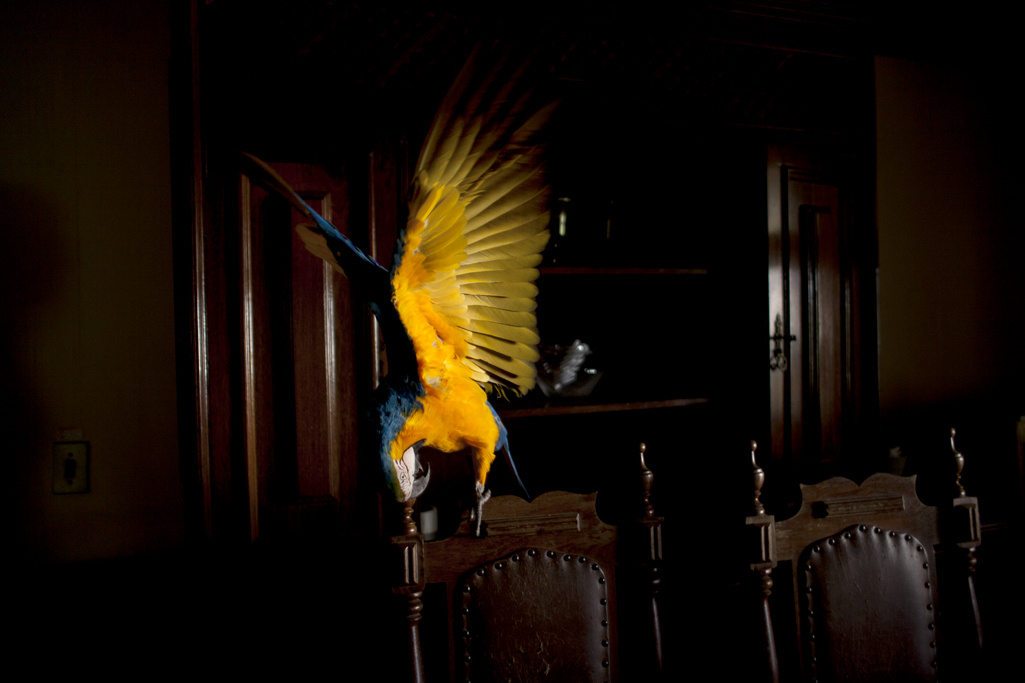
Photograph from the series Zoo, 2014
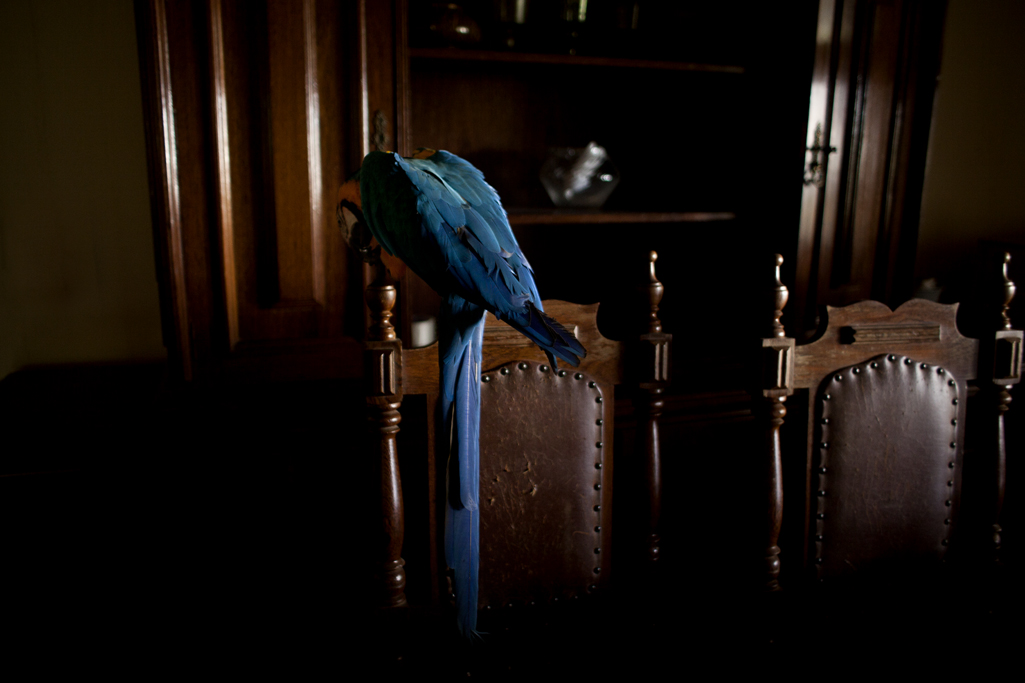
Photograph from the series Zoo, 2014
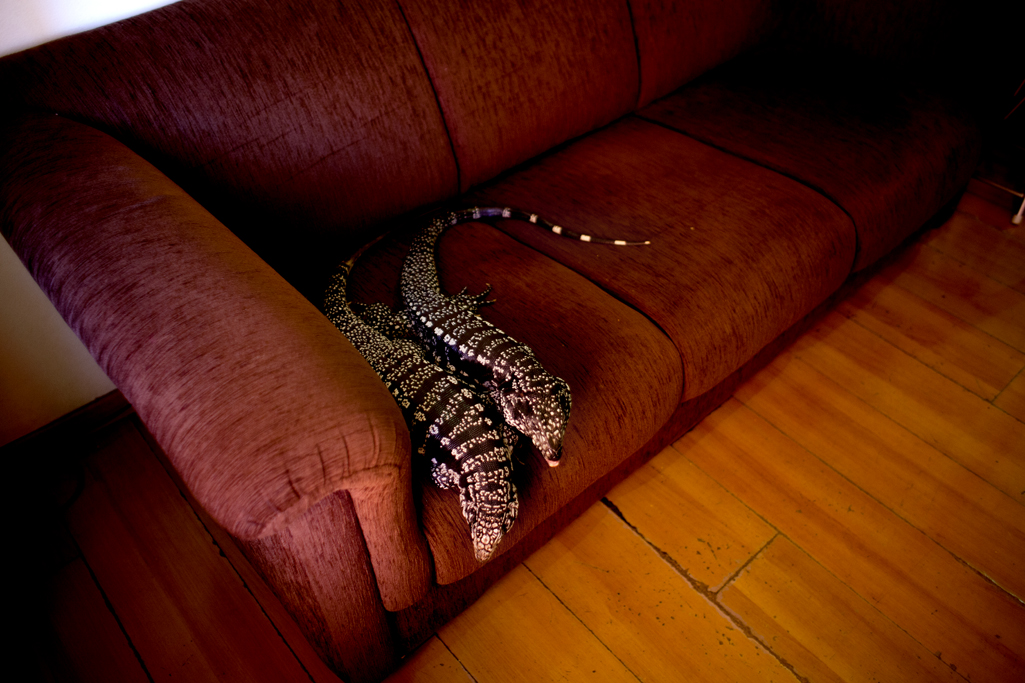
Photograph from the series Zoo, 2014
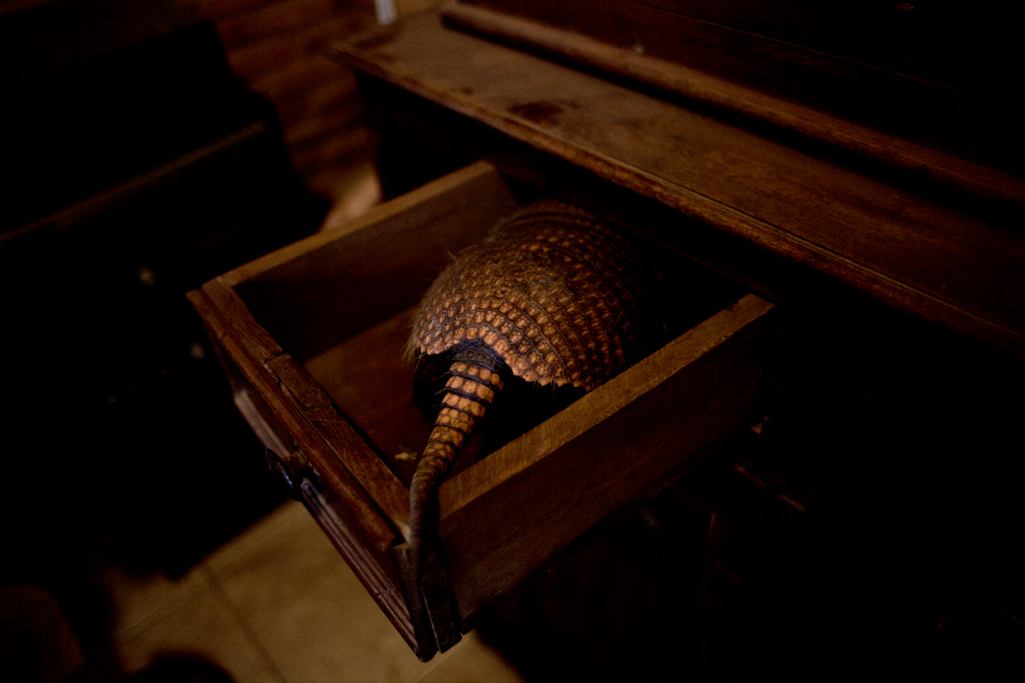
Photograph from the series Zoo, 2014
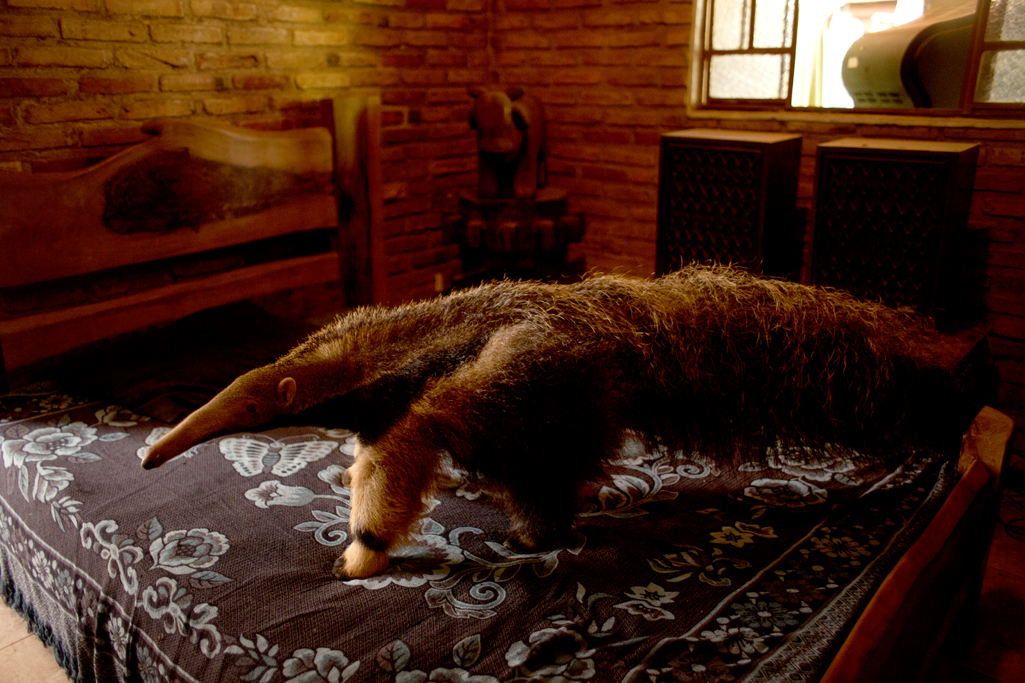
Photograph from the series Zoo, 2014
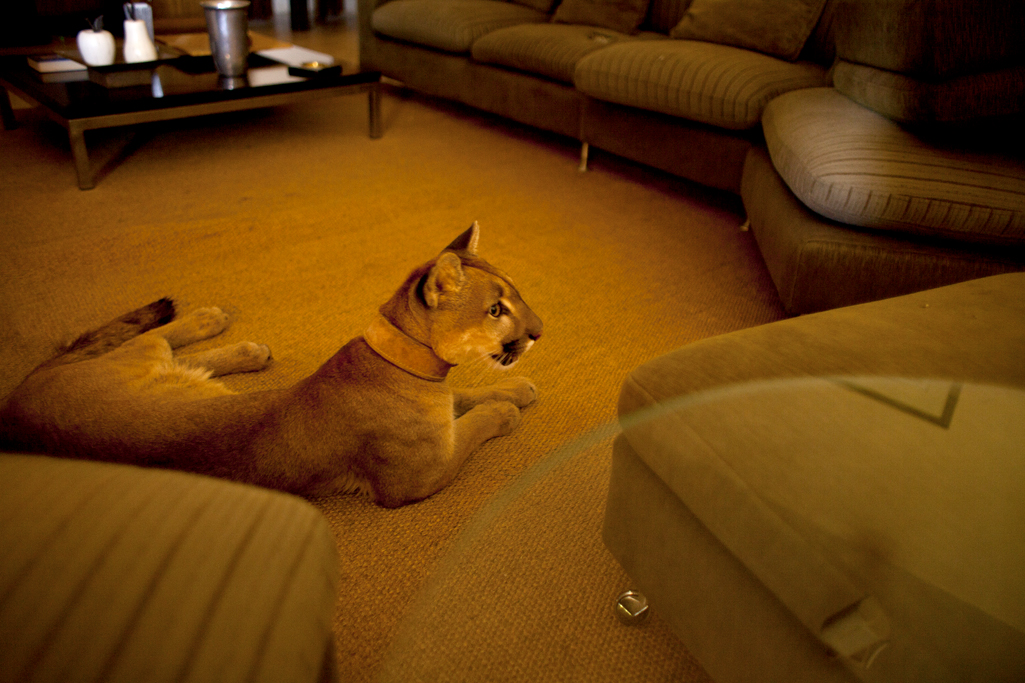
Photograph from the series Zoo, 2014
“Zoo deals with friction and philosophical issues. It is intended to scramble up positions and borders that become stagnant at times. The animal’s displacement from its natural habitat enables this, a short circuit on reality. We say: this is the place of man, that is the place of the animal. We radically oppose this displacement. But why is it this way? Aren’t we animals too? What brings us together? What is there of them in us? And don’t animals also carry much of the human mystery?
The matter of the animal, and more specifically of animality, has intrigued artists, writers and philosophers for quite some time. Therefore, it isn’t a private question; it’s a philosophical problem. We have Kafka, Bataille, Deleuze, Coetzee, Derrida, Guimarães Rosa and so many others dealing with it. I was interested in bringing the animal, in this case a wild, indigenous animal, into a domestic setting, where humans would potentially be more at ease. The purpose was to discuss, through image and the act it originates from, where we place ourselves as men and animals.
This was my first time working with a larger structure, with a team. With research, production and the like. However, I guess many of the issues at play in Zoo were there in earlier works like Metamorfose (2012), Vade Retro (2013) and Redemunho (2006). The operational form is quite different, though.
Our research and production work took us to a few breeding farms. Most of the photographs were taken in Minas Gerais, and our biggest problem was to find an animal that could be taken to a location and photographed safely. And this issue is not species-dependent, it’s case-dependent, because sometimes this monkey can be photographed and that one can’t. The ones who know the animals best are the breeders; therefore, this piece was done with their assistance.
Of course, there’s always a good dose of risk involved, and this is important for the work. Although these animals have some degree of contact with humans, they don’t live in households. This displacement completely shifts the axis of our instinct, and this also applies to the animal. How man and animal will behave in this situation is unpredictable.
The piece is therefore the attestation of an action. For me, it’s really important that the animal and I are present, facing each other, interrogating one another in silence, as if saying: now what? Being face to face with an animal takes us back to something primitive, ancestral, and maybe, who knows, for a brief moment, we turn into a jaguar, an armadillo, a tamandua.”
João Castilho in a statement to PLATFORM:VB (July 2015)
Zoo, 2014 | Photograph
João Castilho
O Futuro Avança Para Trás (2014) | João Castilho
O Futuro Avança Para Trás (The Future Moves Backward), solo exhibition by João Castilho (Celma Albuquerque Galeria de Arte, Sept 2014)
Zoo was one of the projects that won the first edition of the ZUM/IMS Photography Grant (2013) [pt]