WYSIWYG – What You See Is What You Guess
2012
WYSIWYG – What You See Is What You Guess (2012)
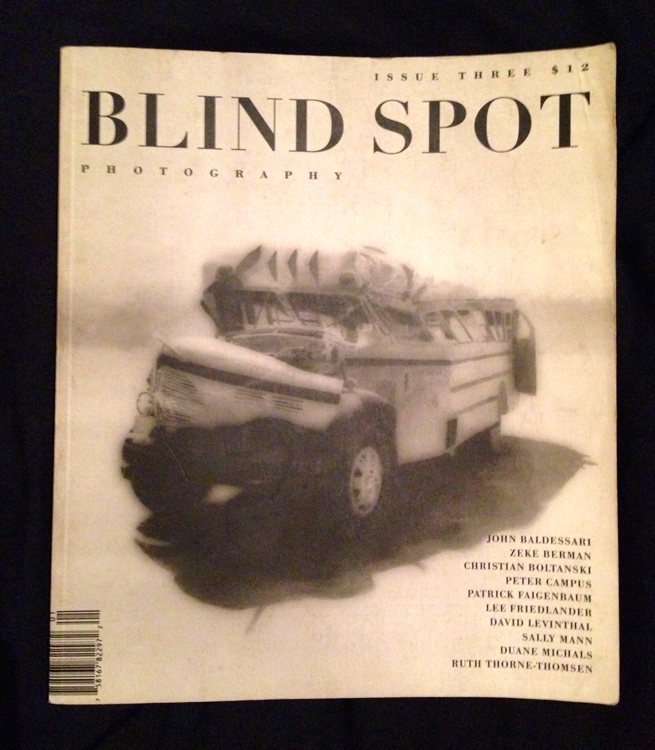
Artist's reference: the work What Is Erased: A conversation between John Baldessari and Christian Boltanski, from the magazine Blind Spot Photography (1994)
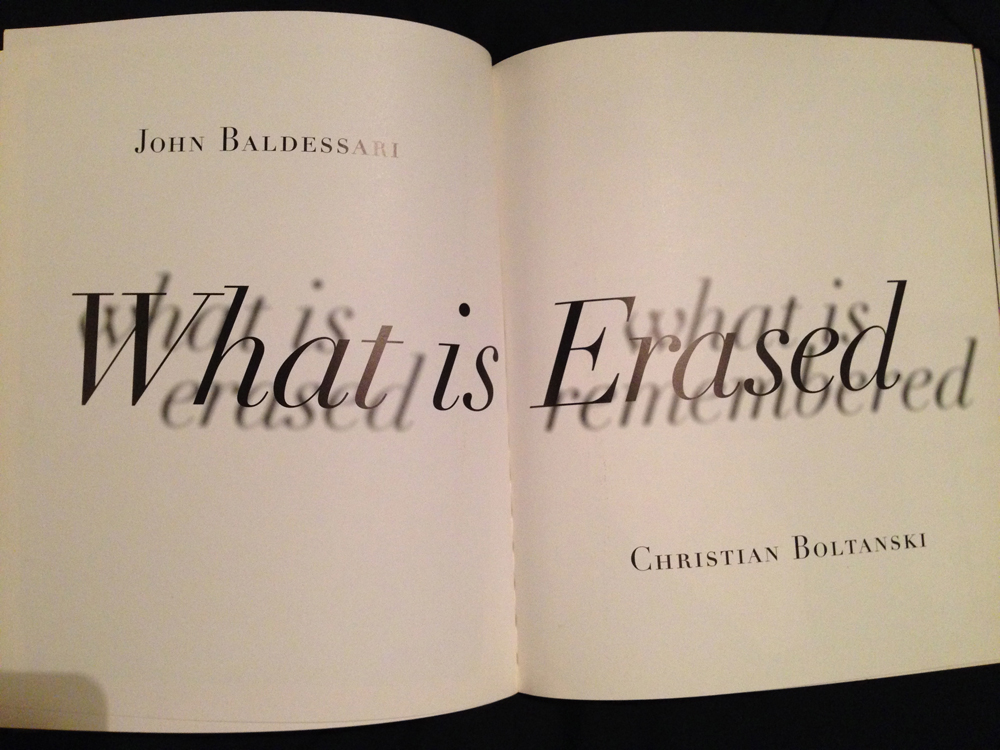
Artist's reference: the work What Is Erased: A conversation between John Baldessari and Christian Boltanski, from the magazine Blind Spot Photography (1994)
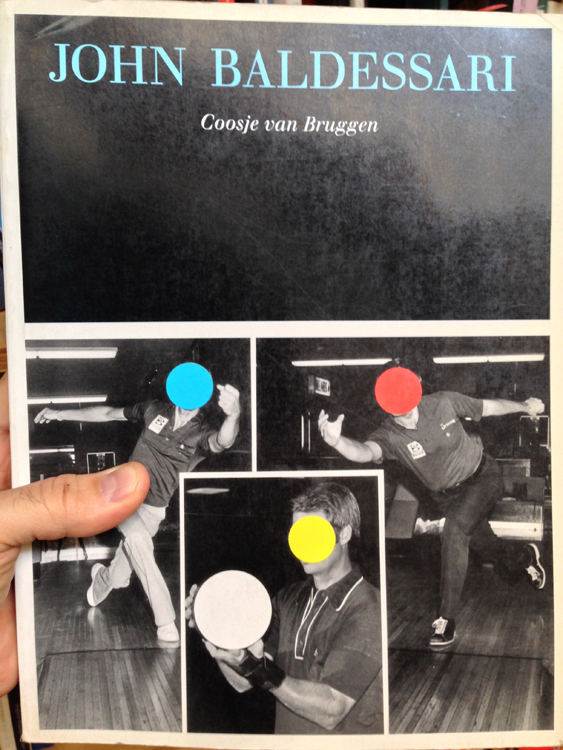
Artist's reference: the book John Baldessari (1990), Coosje-van-Bruggen
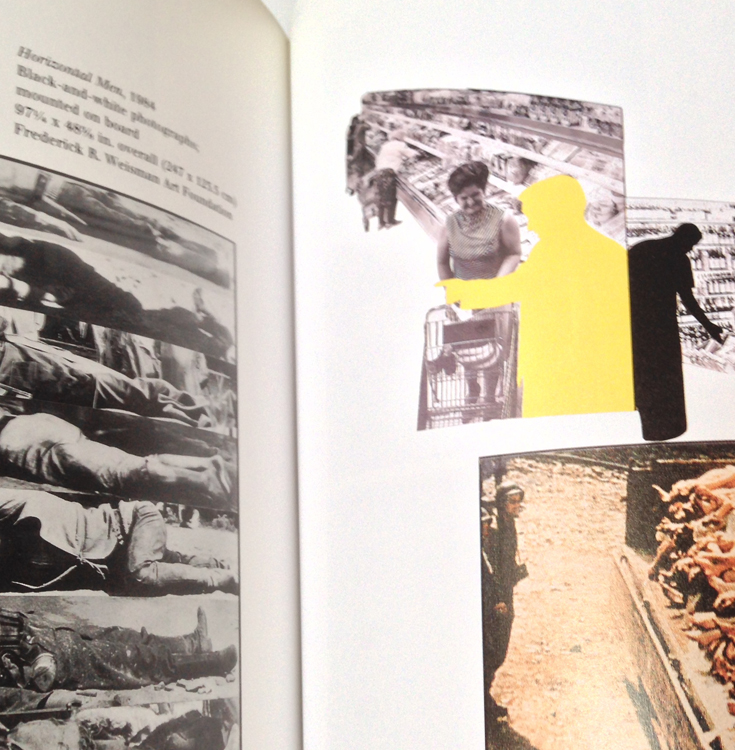
Artist's reference: the book John Baldessari (1990), Coosje-van-Bruggen
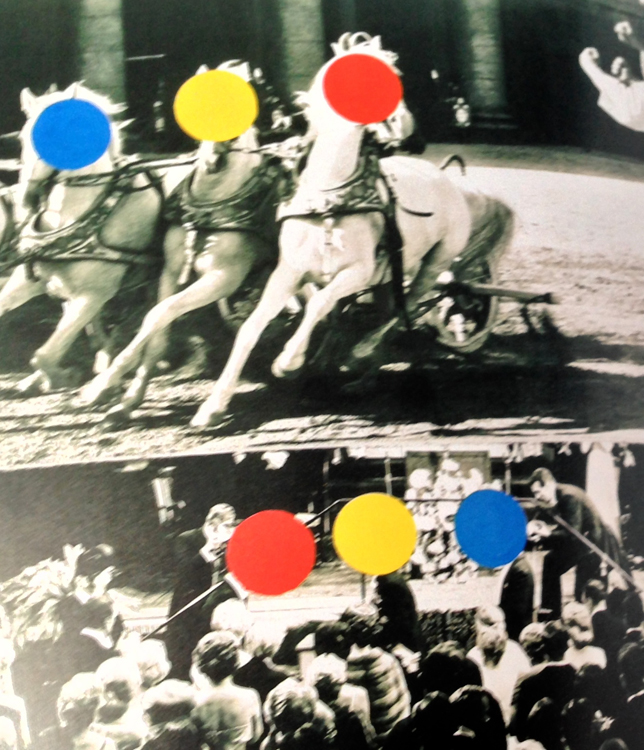
Artist's reference: the book John Baldessari (1990), Coosje-van-Bruggen
"The video was made during a residence in Utrecht, Netherlands. I sought to reflect on the theme of the 2011 Impakt Festival, which was The Right to Know, focusing on new nuances of the concept of privacy in times of WikiLeaks and ubiquitous communication systems.
I think there is an oscillation of values or choice whenever a discussion takes place regarding issues related to privacy, the boundaries between the public and private spheres, individual and collective freedom of expression, and information of common interest. This is an approach I developed in past projects, like the net art piece meta4walls (2001), the video Aqui de Novo (Here again) (2004) and the installation 4 Paredes (4 Walls) (2004). But whereas these prior works focused on privacy and its cultural, social and political implications, WYSIWYG is open to subjective interpretations.
I recorded the footage very freely, seeking a pictoriality which I considered atypical of commonplace notions associated with the Netherlands. The idea was to endow the images with a greater subjectivity, reflecting shifts in the cultural perception of landscapes. I filmed in peripheral neighborhoods – predominantly populated by immigrants –, where relationships are tenser and evidence a certain cultural ‘ghettoization’. In some situations, I began to feel rather bothered, as I was another curious eye invading the privacy of the inhabitants. This situation was inverted in other circumstances, where I was the immigrant; someone who didn’t speak Dutch and behaved differently from the locals. An alternation of intrusions takes place, and it ultimately reveals a relationship of oppression.
Perhaps the piece falls into a category that deals with the manipulation of perception. I tried to make the certainties in the scenes oscillate between the visible and the imagined, through details subtracted or added to the images. Some are explicitly manipulated, while other manipulations take place below the surface. In this regard, the photographic work of John Baldessari – where parts of the images are hidden with paint – was an important reference.
But it was as a result of the theme of the Impakt Festival itself – featuring graphical works which reproduced this process of subtracting elements from a photograph – that I began hiding portions of the image in motion, or adding situations that were not originally part of the recorded scene.
All the operations of erasing or obstructing portions of the image in the video were meant to emphasize issues relating to access to information and its perception, reiterating the oscillating fashion in which we ‘read’ and interpret the images. It is a process that involves different resources, at times subtle, and at others with graphical interventions.
I believe that, this way, the issues addressed by the video are equally evidenced, with greater or lesser clarity. This oscillation interests me, because it illustrates the operations of erasure or obstruction conducted within the piece. It is a truly experimental work, in the sense that I look for language configurations that clash with those in most of my previous videos."
Lucas Bambozzi in a statement to PLATFORM:VB (October 2013)
WYSIWYG – What You See Is What You Guess (2012) | Lucas Bambozzi
Video | 20’, stereo, color, 16 : 9
WYSIWYG – What You See Is What You Guess (2012)
Testimony Lucas Bambozzi | 18th Festival
The artist from Minas Gerais – featured in the 18th Festival’s Southern Panoramas – gives a statement on occasion of the event’s 30th anniversary celebrations
Eye Myth | Stan Brakhage (1967)
WYSIWYG – What You See Is What You Guess (2012)´s reference
What Is Erased: A conversation between John Baldessari and Christian Boltanski (Blind Spot Photography, # 3, 1994) [eng]