Vuon Bau Xanh Tuoi (How Green The Calabash Garden Was)
2016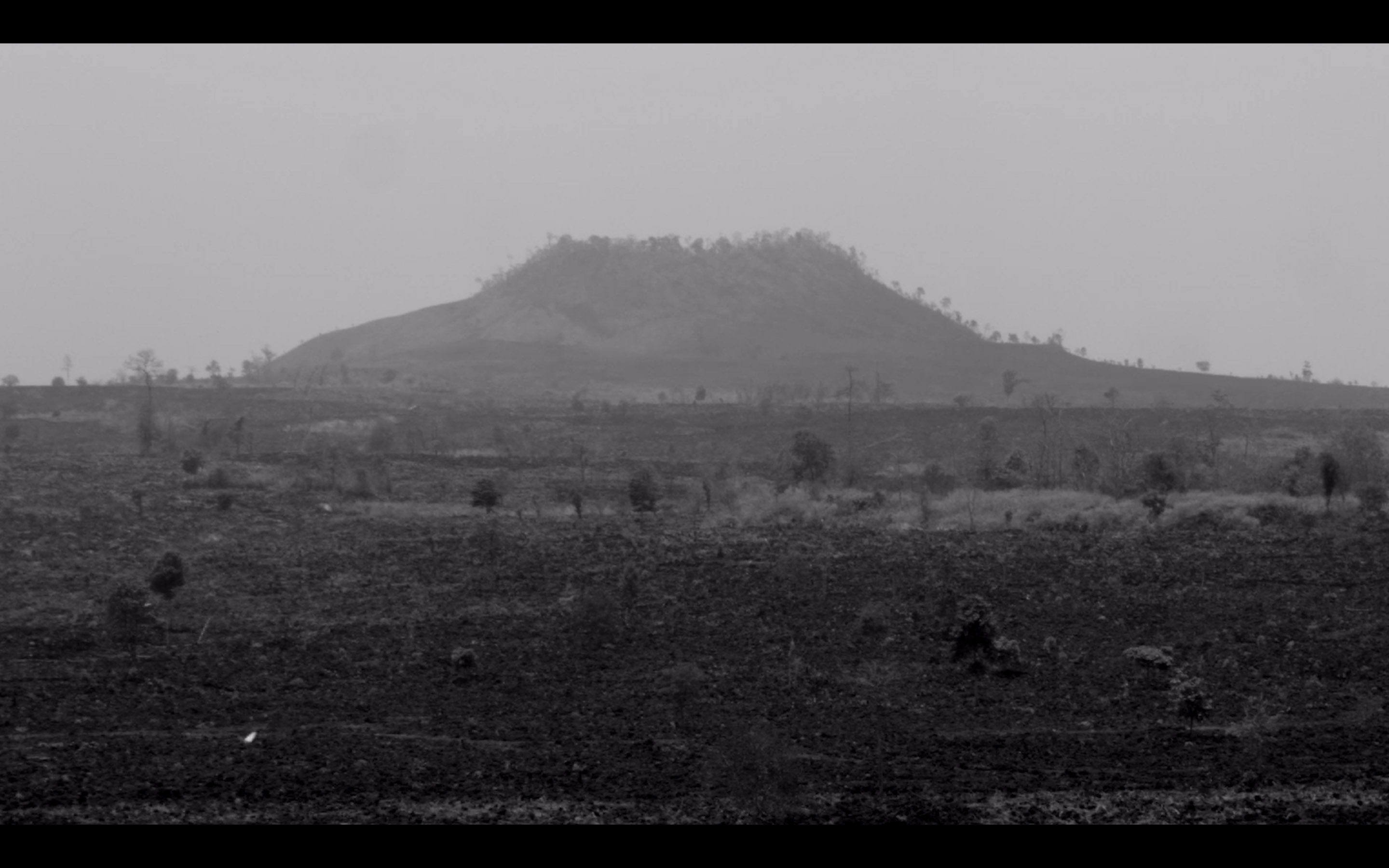
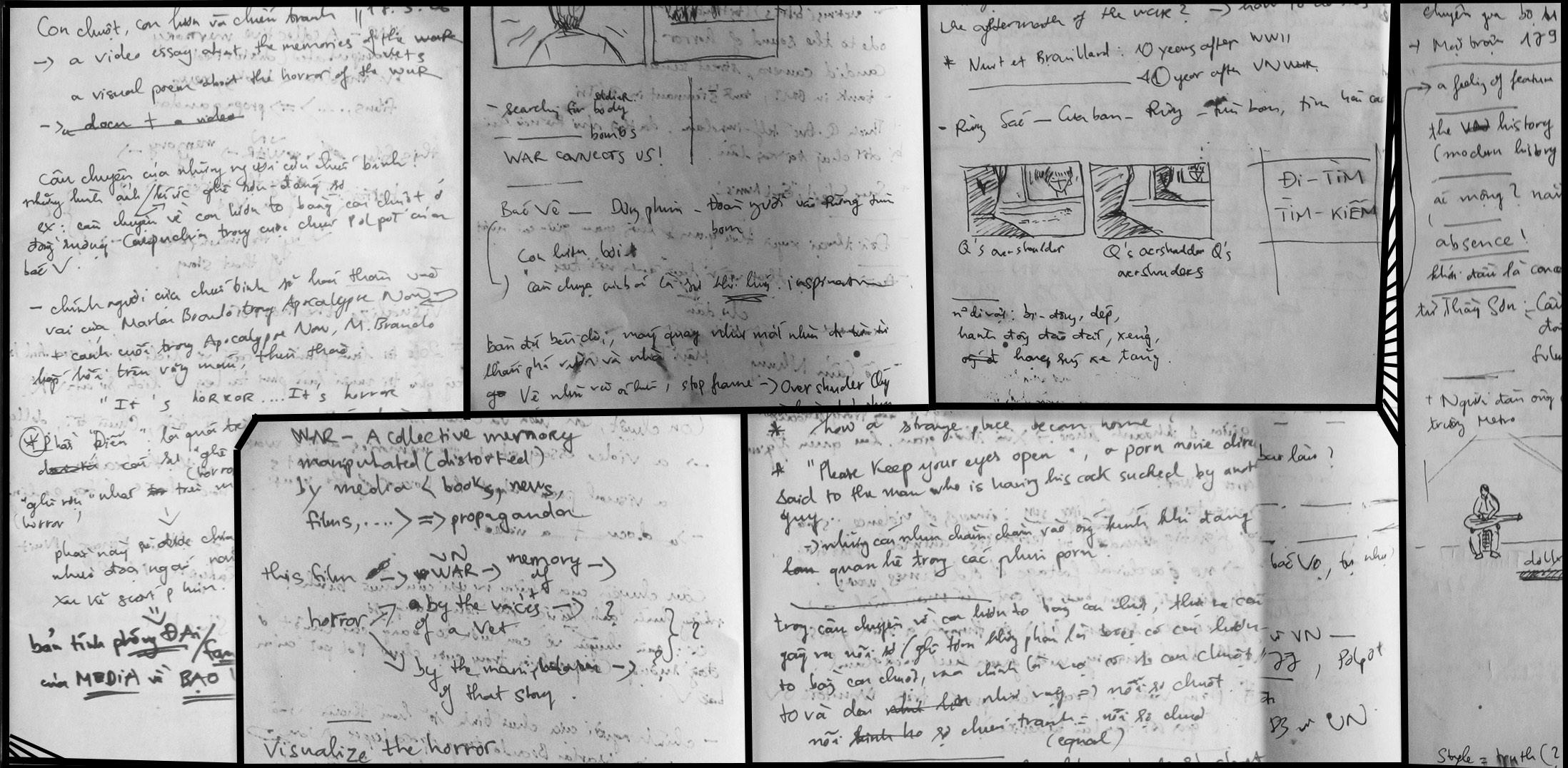
Most of my films are from and about my personal memories. In this aspect, we could say it is the research into one’s own inner world. By making moving images, I build a different world, which is interfused with reality. This is why I always consider my films not only as fictions, but more of documentaries.
How Green the Calabash Garden Was could be seen as my first “real” documentary, with a real character, a Vietnamese veteran who fought in the war against the Khmer Rouge. The veteran, Tran Xuan Ve, is a friend of my father’s. Once when we were drinking at his farm, he briskly told us about the genocide’s killing scenes he saw in the war that affected him so much he didn’t dare eat the foods later. I was fascinated to hear that, so a year later, in 2016, I came back to his farm and made the film with him, to try to visualize what he has seen and felt in his past.
With this film I have extended the realm of my filmmaking, from one of personal stories to one on the collective history—that is to say, war memories. As a filmmaker, I always question my true ability to capture this very elliptical matter of the human memory. Even though this film clearly touches on the historical issues, I still tried to bridge the gap between what is personal for me as a filmmaker and what is out there that has already happened.
Together, my moving images form a process of discovering my inner self in relation to cinema, my family, and the outside world. Childhood memories are the very source of my creativity. Poetically speaking, the act of making films for me is like the search for the lost home. Home as the very shelter for our memories.
Quy Minh Truong in a statement to PLATFORM:VB (June 2017)
Vuon Bau Xanh Tuoi, 2016 | Video, 15'
Quy Minh Truong
Shoah (1985) | Claude Lanzmann
First part of the documentary
Nuit et Brouillard [Night and Fog] (1955) | Alain Resnais
In making How Green the Calabash Garden Was, I think there are two films that inspired me much more, which are Alain Renais’s 1956 Nuit et Brouillard and Claude Lanzmann’s 1985 Shoah.
In Nuit et Brouillard, made just ten years after the Second World War ended, Resnais asks for the responsibility of the generations to come not to let this history fall into oblivion. Asking this implies a fear about the weak ability of human beings to remember. It is said that time will heal everything, but to heal and to forget are different things, yet we often confuse these two. The veteran in my film says, “The soldiers’ memories are quite interesting. But there are some things that we don’t pay any attention to anymore, because they doen’t apply to life in a practical way.”
Shoah impressed me because of the filmmaker’s decision not to show the archival images of the War—and the Holocaust particularly. What we can see is purely what is present at the moment in front of our eyes: the remnants of the concentration camps, a green forest that once used to be a killing field, etc. We see all these images upon hearing the survivors’ voices telling their stories, so we have to imagine our own images and versions of the past that are now absent; by imagining we are already involved, and thus being responsible for what we imagine. This idea of juxtaposing image and voice is what I truly learnt from this masterpiece.