The Night of The Moon Has Many Hours
2011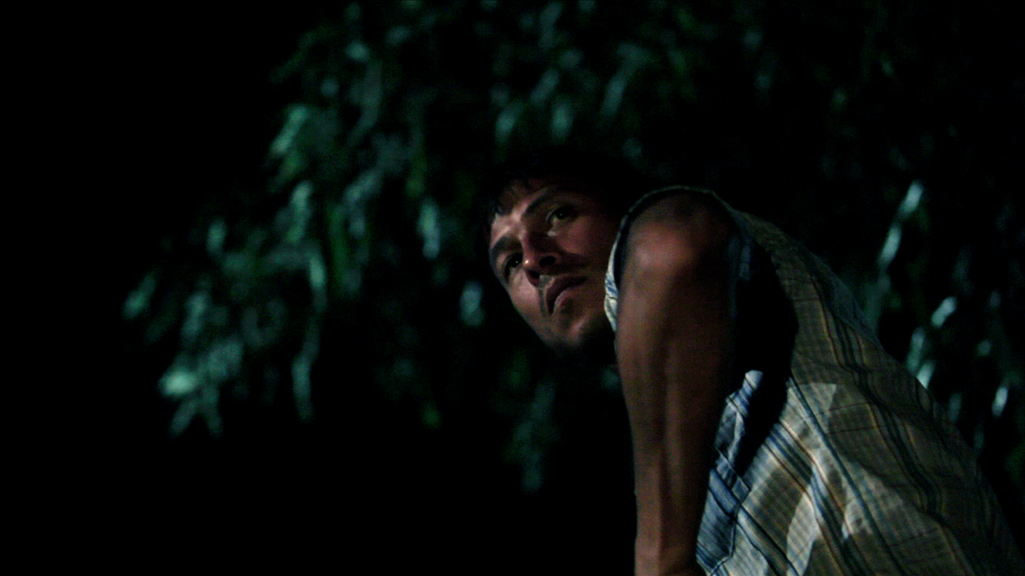
The Night of the Moon Has Many Hours (2011), video still
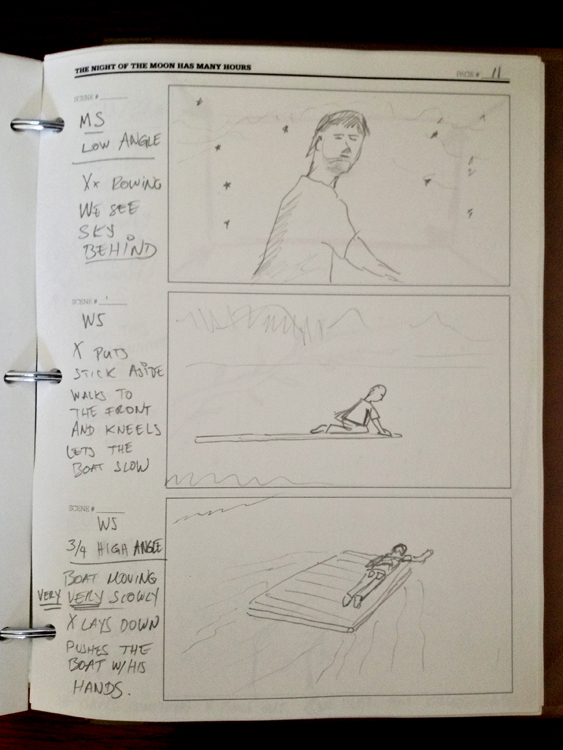
The Night of The Moon Has Many Hours storyboard
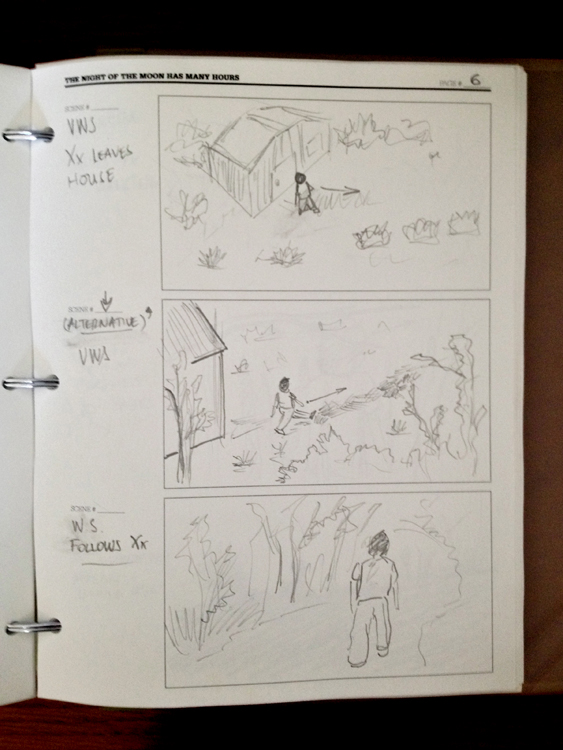
The Night of The Moon Has Many Hours storyboard
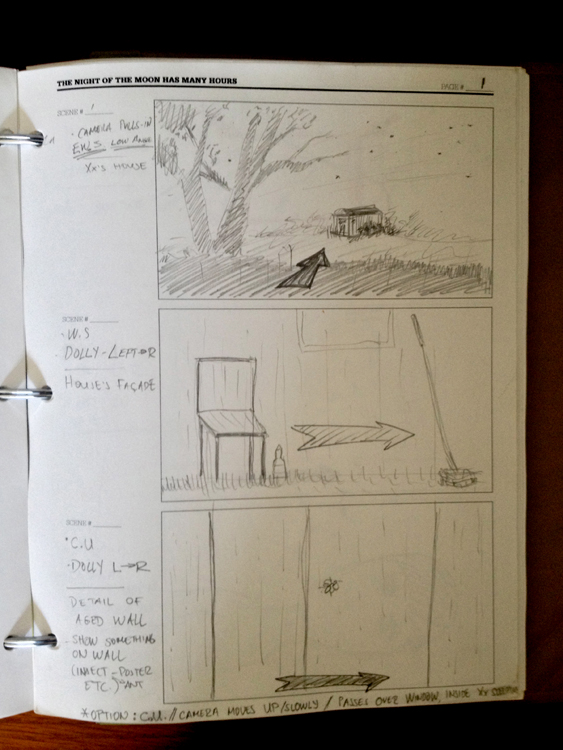
The Night of The Moon Has Many Hours storyboard
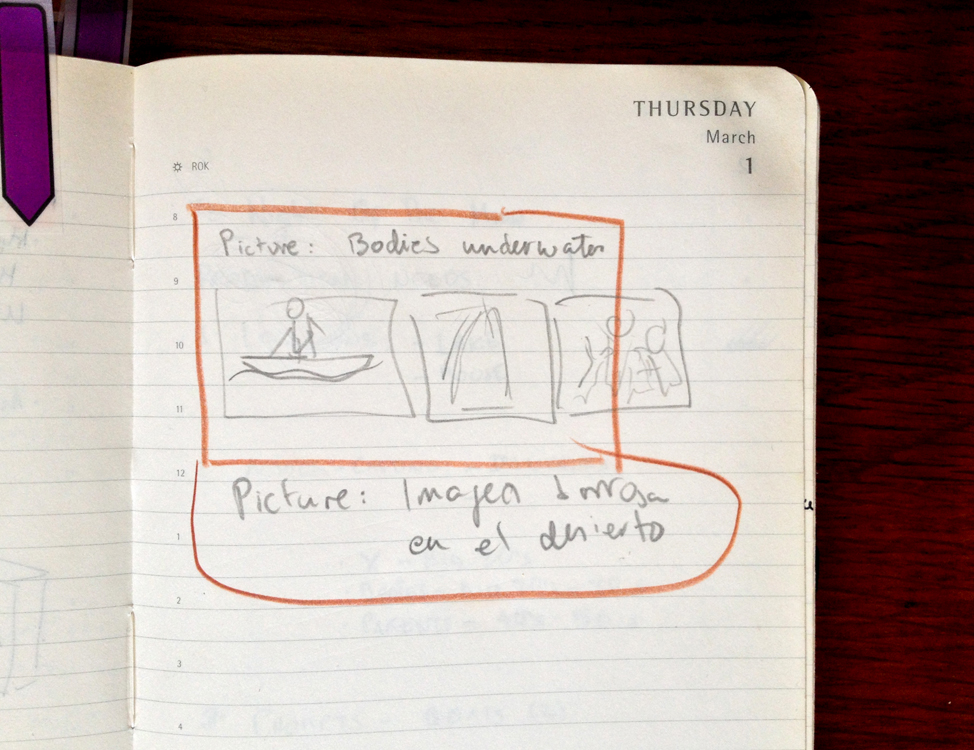
Sketches for The Night of The Moon Has Many Hours
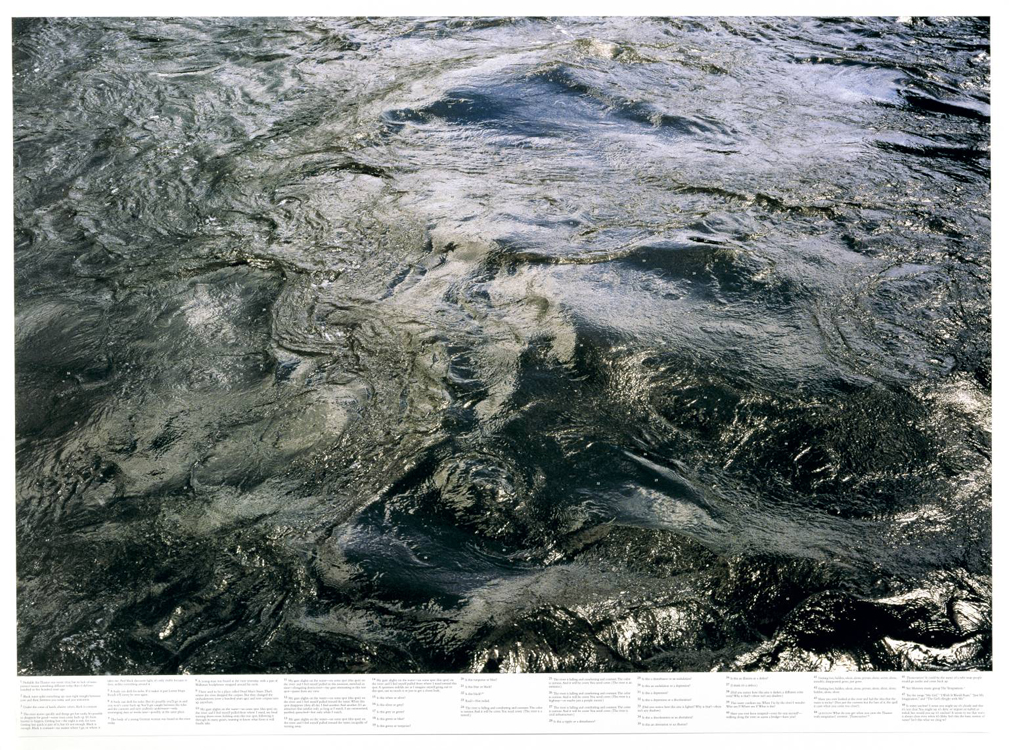
Reference of the artist: Another Water (2000), Roni Horn
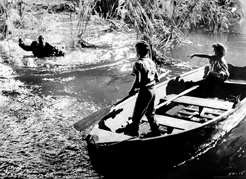
Reference of the artist: Night of the Hunter (1955), Charles Laughton
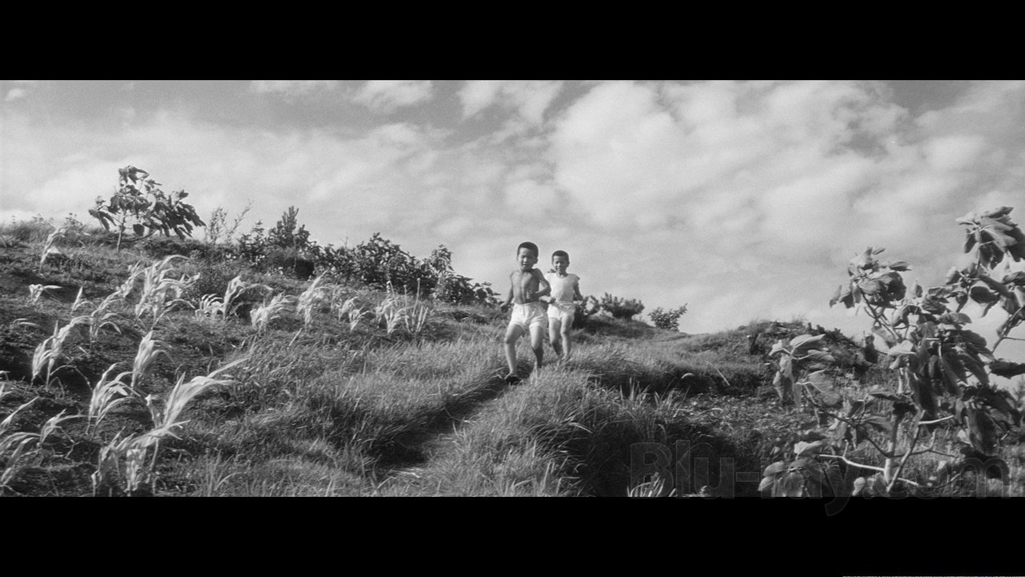
Reference of the artist: The Naked Island, (1960), Shindo Kaneto
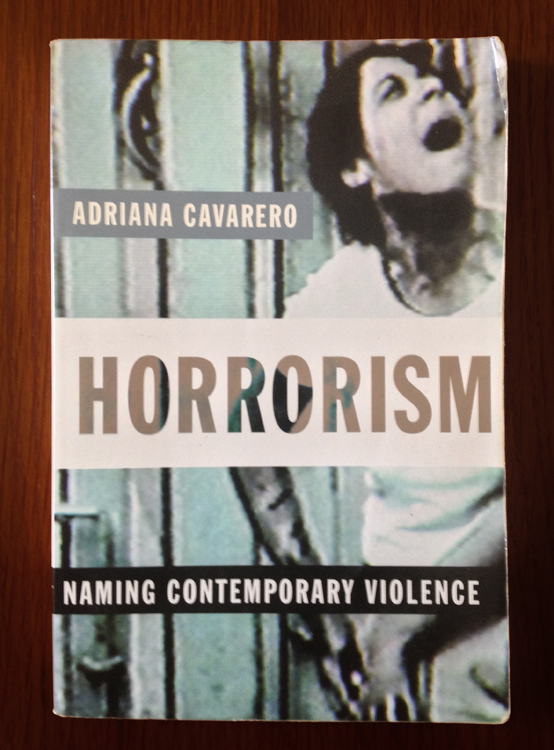
From the artist's library: Adriana Cavarero's Horrorism, Naming Contemporary Violence (2009).
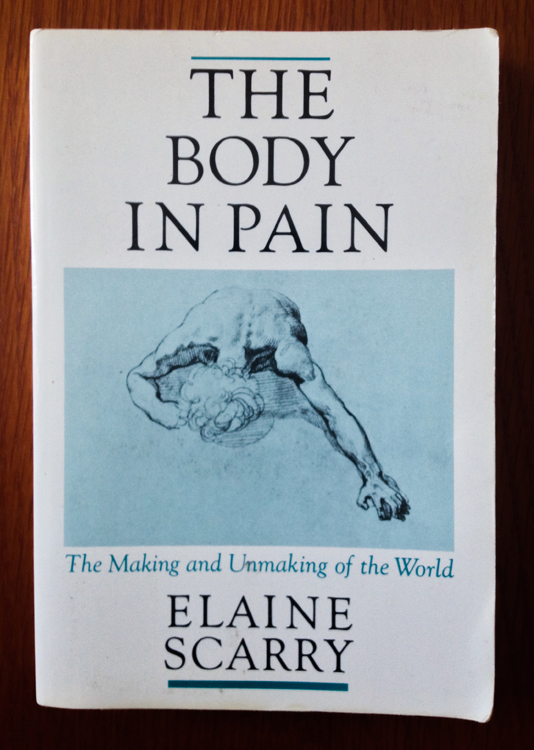
From the artist's library: Elaine Scarry's The Body in Pain (1985)
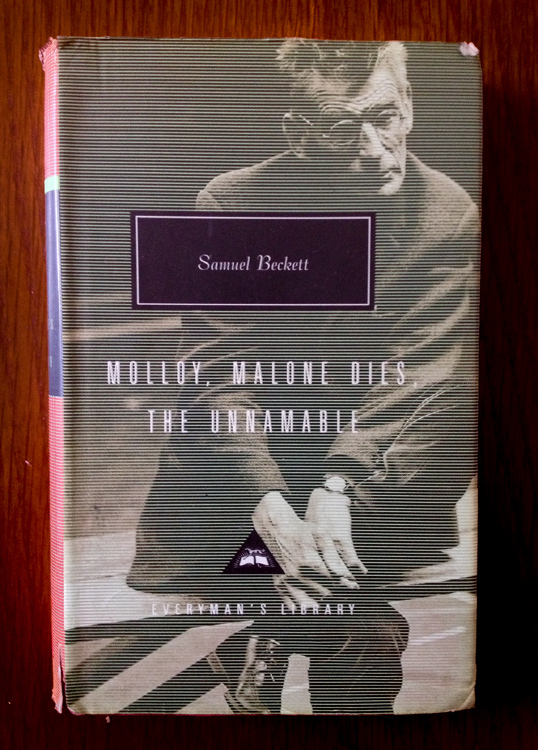
From the artist's library: Samuel Beckett's trilogy Molloy, Malone Dies and The Unnamable (1959)
"I have been concerned with the history of violence, that for many decades has swept Colombia, my home country. I have always felt that what has taken place there hasn’t received the needed attention and understanding. This is why I have dedicated to reading and studying anything related to this history and its current developments.
Before I started working on The Night of the Moon Has Many Hours, I was learning about the extraordinary number of people – of all kinds, but mostly poor farmers from the Colombian periphery – who had disappeared. What struck me was to realize that this tragedy engulfs not just the person that is missing but also all those whom they leave behind: relatives, friends and loved ones. In the accounts I read, they describe how they spend weeks, months and years waiting for any news. Some even dedicate all their energy traveling from town to town, searching for any clue that may lead them to the whereabouts of the missing person.
I read about other countries that have undergone similar experiences. Aldo Bolaños, for instance, from the Peruvian Institute of Anthropology, says that, in these situations, each body that is returned closes a wound. Pastora Mira Garcia’s testimony, back in Colombia, whose daughter went missing, echoes that though: 'when one gives birth to a child and something bad happens, a song starts playing… This song only ends when you are able to bury the child. But in my case, the song I hear, it just keeps playing and playing and playing.'
I kept researching and found reports where paramilitary leaders confessed that, in order to eliminate traces of their crimes, they would get rid of the executed bodies by throwing them in rivers. This practice was so widesprad that Semana, a weekly Colombian magazine, wrote that ‘if the rivers could talk, hundreds of crimes by the paramilitaries would be solved.’
At first, I meant to create still images that, on a metaphorical level, could speak of what I was reading. On some of these tableaus, I imagined an underwater scene where we would see bodies in the depths of a river. On another tableau, we would see a man on a boat, quietly navigating dark waters. I kept sketching other stills and at some point I realized that, with them, I had the building blocks for a narrative. It was then that I decided to make a film.
When I produced the film, I did not have the intention of doing a direct interpretation of the issues I was investigating. Besides, one of the challenges I faced was how to speak about a certain type of extreme violence without recreating it all over again. This is why there is an allegorical element mediating the world depicted in the film.
I think that, in general, my work has been marked by an element of quietness and simplicity; my personal ideal would be to reach a certain level of eloquence through total economy of formal means.
For me, mediating things, changing them and deviating a little from what is known to be an established fact is a way to acknowledge both my subjectivity and that of the spectator. This is a way to accept that the work itself does not bear any truth and that it only resembles my subjective relation to the issues I research."
Mauricio Arango in a statement to PLATFORM:VB (October 2013)
The Night of The Moon Has Many Hours (2011) | Mauricio Arango
Video | 12’, stereo, color, 16 : 9
Excerpt fromThe Night of The Moon Has Many Hours (2011)
Testimony Mauricio Arango | 18th Festival
The Colombian artist discusses the connections between the history of his country and violence, themes of his piece. According to Arango, his work does not address this cruel past in documentary-like fashion, but fictionally
Shindo Kaneto’s Naked Island (1960)
The Night of the Hunter (1955) | Charles Laughton
"At the outset of this project, I was reading Samuel Becket’s trilogy (Molloy, Malone Dies and The Unnamable,1959). The characters in Samuel Becket's books seem to fail to rise to a height from which a fall would be possible. Throughout the seemingly little that happens to them, there is also a symbolic coming to terms with our fragility and our finitude. And those are important references for me."
"Elaine Scarry’s The Body in Pain (1985) and Adriana Cavarero’s Horrorism, Naming Contemporary Violence (2009) helped me understand the political implications of pain and horror."
"I was also looking closely at Roni Horn's photographic project Another Water (2000)."
"William Kentridge always haunted me because of the way he dealt with his native South African past."