The Mapping Journey Project
2011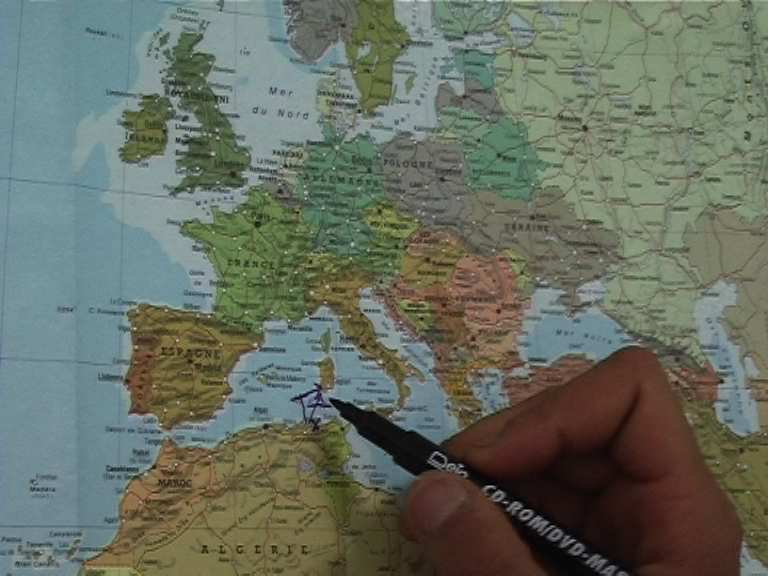
Video still
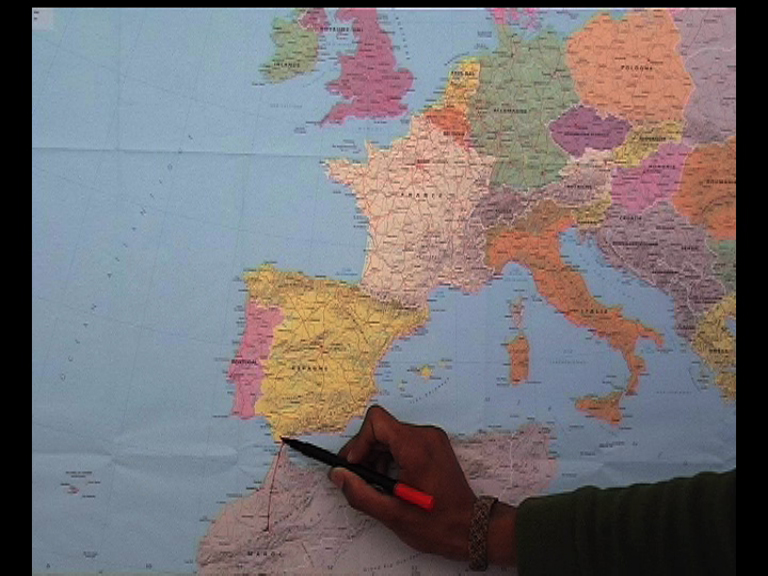
Video still
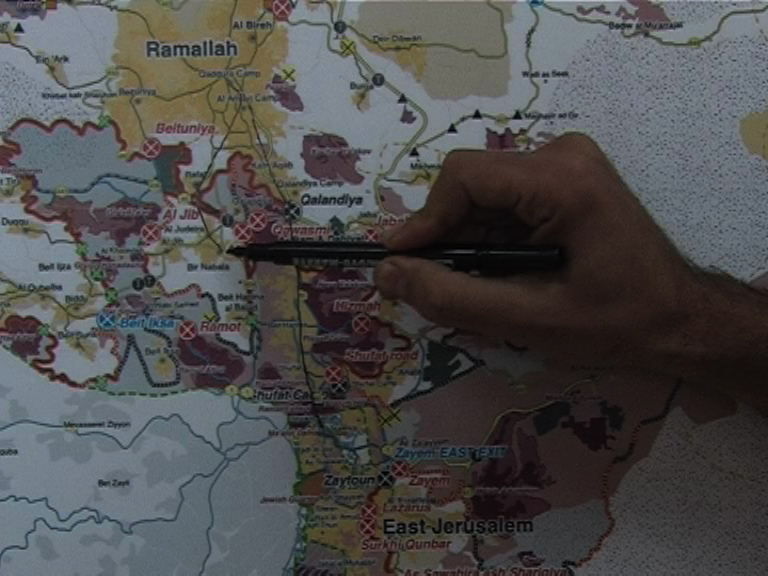
Video still
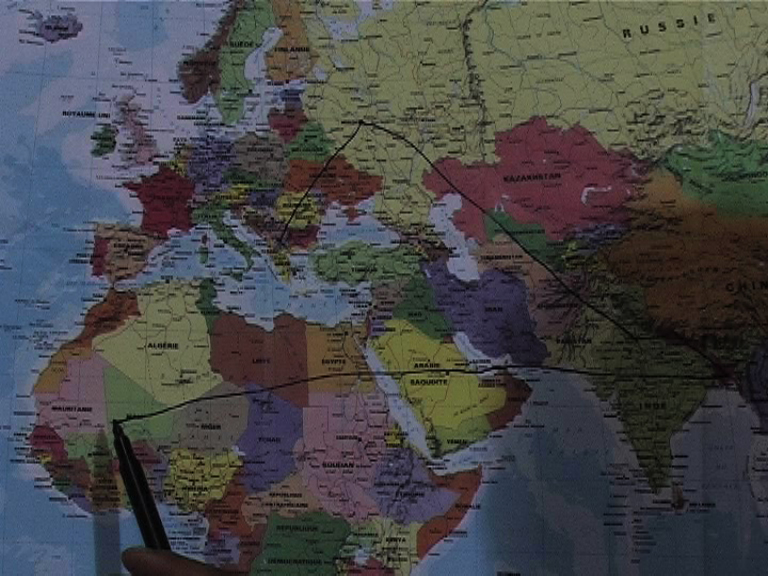
Video still
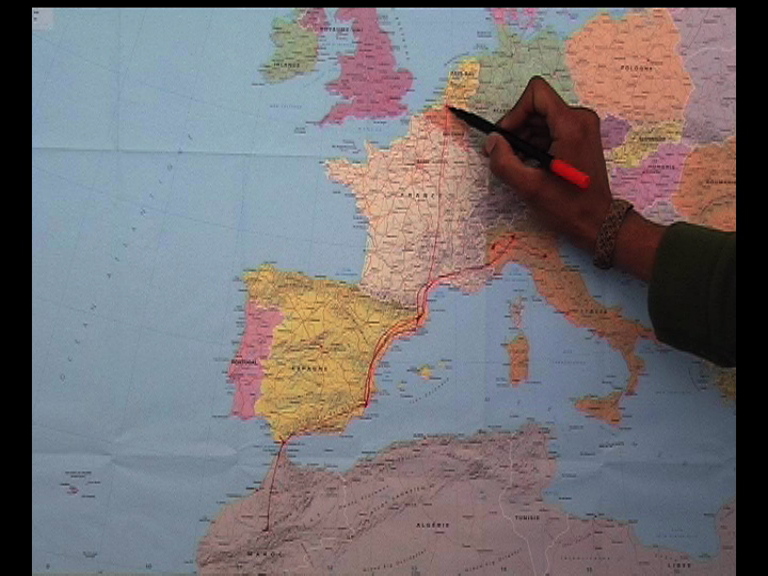
Video still
“The Mapping Journey Project focuses on individuals forced to travel clandestinely, and more specifically on the discourses, the strategies and the tactics of resistance they developed as narrated by themselves, with their own words and their own languages.
Filmed in six cities – Marseille, Ramallah, Rome, Barcelona, Istanbul – each of the videos shows political maps of the Mediterranean, on which are drawn undocumented journeys by subjects that experienced them, to reveal a hidden cartography of resistance.
Alfred Korzybski said that ‘The map is not the territory’. But working on The Mapping Journey Project, I thought that a map could be a territory, at the condition that it would not be produced from the perspective of the power but by human voices, subjective human experience and gestures.
Using maps, I aimed to reflect on the articulation between geography and singular paths, asking myself: How to reverse the vocation of mapping as a tool of power and control, by giving this power to people who struggle against arbitrary borders? Is cartography able to generate narratives? Can the map also be, literally, the page on which – or from which – a discourse of resistance can be elaborated? Ultimately, it’s certainly what The Mapping Journey Project is about: how a human being is still able to resist though he/she is trapped in the nets of arbitrary power.
There are also aesthetic issues at stake defined by Edward Said such as ‘exile, immigration and the crossing of boundaries (as) experiences that can provide us with new narrative forms and other ways of telling’. And in my case, it consists more specifically in interrogating myself on how to produce an image of what is arbitrarily confined to margins? What is the status of orality and language in relation with these issues? How orality participates in an empowerment process? How orality participates in an image? Those questions form a constant investigation throughout my work, which one can also identify in recent pieces of mine as The Speeches Series (Video trilogy, 3 digital films, 2012-2013), and Garden Conversation (Digital Film, 2014).
Ultimately, what I aim to investigate is how discourses and gestures of resistance meet poetry. This is somehow what The Constellations (8 silkscreen prints, 2011) that forms the closing chapter of The Mapping Journey focuses on. By translating the drawings shown in The Mapping Journey Project into constellations of stars as in use in sky maps, The Constellations blurs the limits between the sky and the sea, in favor of a space liberated of terrestrial boundaries.
From this perspective, The Mapping Journey Project and its Constellations can be seen – to quote Michel Foucault and his Life of Infamous Men (1979) – as an ‘anthology of singular lives (...) which have become, through I know not what accidents, strange poems’.”
Bouchra Khalili in a statement to PLATFORM:VB (August 2014)
The Mapping Journey Project (2008-2011) | Bouchra Kalili
Four-channel video installation
Testimony Moacir dos Anjos | Unerasable Memories, 2014
The curator Moacir dos Anjos elaborates on Four Selected Videos From The Mapping Journey Project