The Loudest Muttering is Over | Documents From The Atlas Group
2003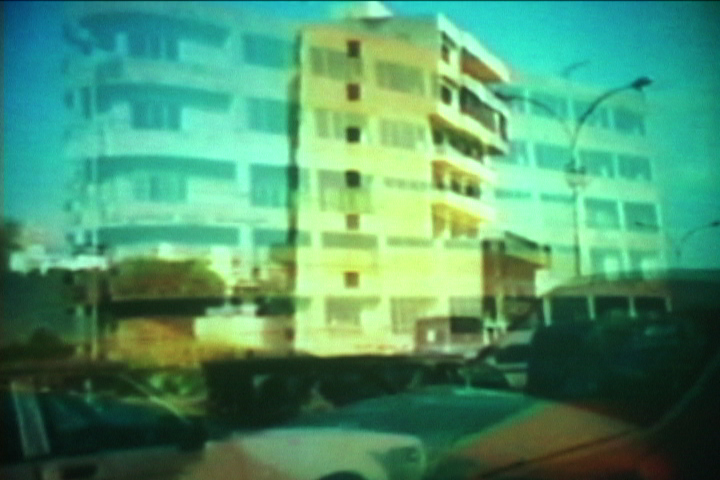
Performance documentation (2003). Photo © André Finotti
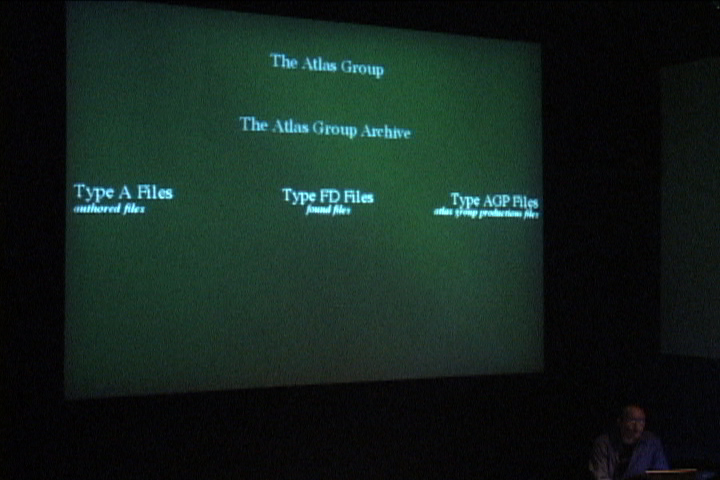
Performance documentation (2003). Photo © André Finotti
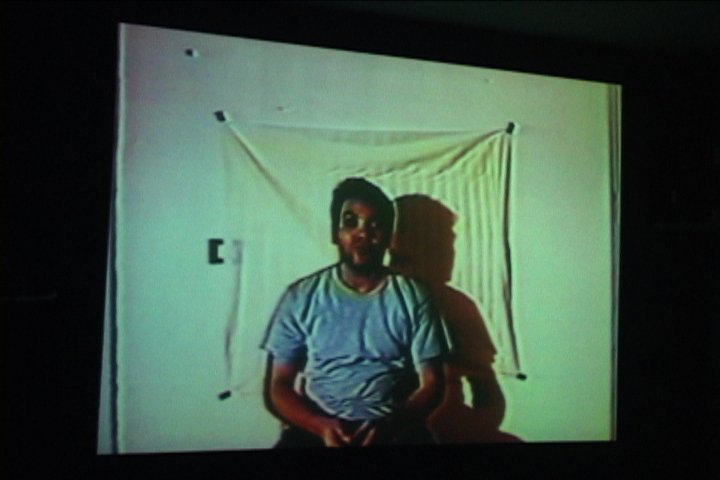
Performance documentation (2003). Photo © André Finotti
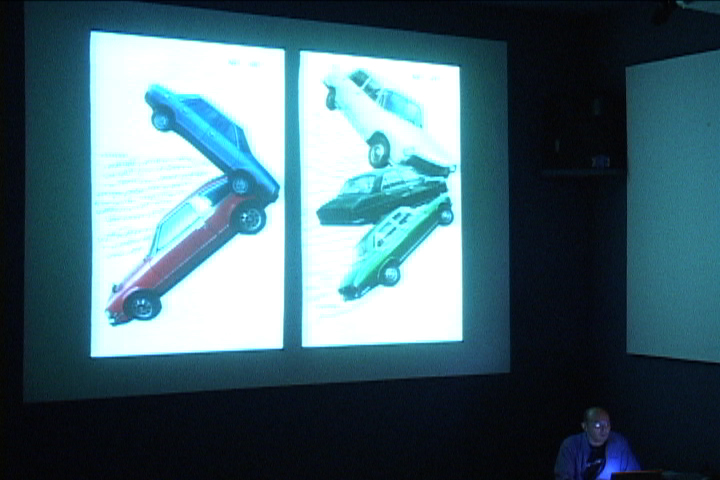
Performance documentation (2003). Photo © André Finotti
“The Loudest Muttering Is Over: Documents from The Atlas Group Archive is a lecture/presentation that features some documents from The Atlas Group Archive. It is an ongoing, always-in-progress 70-minute lecture/presentation that looks and sounds like a college lecture, an academic conference presentation, or an artist talk. I sit behind a rectangular table facing the audience, show slides and videotapes on a screen to my left and speak into a microphone. There are a glass of water, a notebook, a pen, and a lamp on the table. I wear a light shirt and dark dress pants. I encounter technical difficulties and I am interrupted by people I have planted in the audience, who also ask questions during the question and answer period.
In different places and at different times I have called The Atlas Group an imaginary foundation, a foundation I established in 1976, and a foundation established in 1976 by Maha Traboulsi. In Lebanon I stated, ‘The Atlas Group is a nonprofit foundation established in Beirut in 1967.’ In New York and in Beirut I stated, ‘The Atlas Group is an imaginary foundation that I established in 1999.’ I say different things at different times and in different places according to personal, historical, cultural, and political considerations with regard to the geographical location and my personal and professional relation with the audience and how much they know about the political, economic, and cultural histories of Lebanon, the wars in Lebanon, the Middle East, and contemporary art.
I also always mention in exhibitions and lectures that The Atlas Group documents are ones that I produced and that I attribute to various imaginary individuals. But even this direct statement fails, in many instances, to make evident for readers or an audience the imaginary nature of the group and its documents. This confirms to me the weighty associations with authority and authenticity of certain modes of address (the lecture, the conference) and display (the white walls of a museum or gallery, vinyl text, the picture frame), modes that I choose to lean on and play with at the same time.
The Atlas Group produces and collects objects and stories that should not be examined through the conventional and reductive binary of fiction and nonfiction. We proceed from the consideration that this distinction is a false one—in many ways, not least of which is that many of the elements that constitute our imaginary documents originate from the historical world—and does not do justice to the rich and complex stories that circulate widely and that capture our attention and belief. Furthermore, we have always urged our audience to treat our documents as ‘hysterical documents’ in the sense that they are not based on any one person’s actual memories but on ‘fantasies erected from the material of collective memories'.
It is impossible to reconstruct a history of the Lebanese Civil Wars from this project. It is evident in Lebanon and elsewhere that ‘The Lebanese Civil War’ refers to an abstraction. We proceed with the project from the consideration that this abstraction is constituted by various individuals, groups, discourses, events, situations, and, more importantly, by modes of experience.
It is also important for us to note that the truth of the documents we research does not depend solely on their factual accuracy. We are concerned with facts, but we do not view facts as self-evident objects that are already present in the world. One of the questions we find ourselves asking is, How do we approach facts not in their crude facticity but through the complicated mediations by which they acquire their immediacy?”
Edited from the interview to Alan Gilbert (BOMB Magazine, n. 81, 2002)
The Loudest Muttering is Over: Documents from the Atlas Group Archive (2003) | Walid Raad
Video | 1h13'18"
Performance recording
Testimony Akram Zaatari and Walid Raad | 14th FESTIVAL
Eduardo de Jesus, Marcio Harum | Unerasable Memories, 2014
Marcio Harum and Eduardo de Jesus give an overview of the participation of Lebanese artists in Festival editions, highlighting the works of Akram Zaatari, Rabih Mroué and Walid Raad