The Disquiet
2013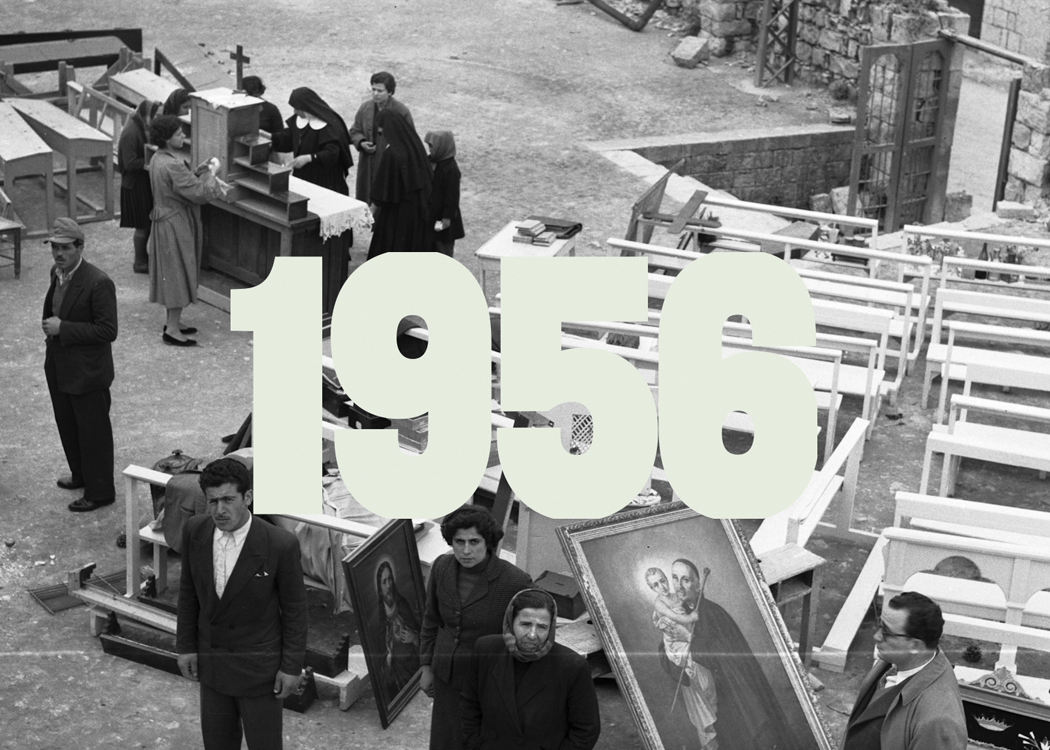
Video still
Video still
Video still
Video still
"Every now and then we hear news about a light earthquake in Lebanon. Sometimes the residents feel the tremors, sometimes they're just recorded on seismographs, but no one really feels them. I got more and more interested in what’s happening beneath our feet. I wanted to explore the seismic history of the country and the region, and understand the real threats.
When I started searching for archive images from previous earthquakes, mainly those of 1952 and 1997, I was struck by how much the images of destruction resembled the images of war-torn Lebanon during the 17 years of civil war. This parallel between the two types of destructions, one 'natural' and one man-made, made me question what these two catastrophes had in common. What, in essence, make them alike?
In my work, I don’t dissociate the subject from the form, as they are usually tied together. In The Disquiet, I wanted to play with the aesthetics of the documentary, to move away after that to a more contemplative way of narrating and filming. While the subject of the film seems to be steaming from a scientific quest to understand the seismic history of Lebanon, the urge behind this work is to look at the political unrest that shakes the country and the region.
I wanted to turn to science. Science is supposed to give us facts, answers, numbers. I thought, if our continuous political catastrophes seem incomprehensible, maybe it’s easier to 'understand' our natural catastrophes. I wanted to observe seismographs and computer screens registering the movements of the earth plates.
Earthquakes, tremors, vibrations, vacillations, wiggles, wobbles and other movements, when registered on the screen of the seismograph or in the body’s memory, make of us their witnesses. We can perceive the difference between natural disasters—an earthquake or a tsunami, something unpredictable, to which we have no choice but to submit—and those made by man—an act of terrorism, the failure of a security system in a nuclear power plant or a financial crash. All of these events have their place on the spectrum of risk, but disaster itself, in all its forms, is always the same. If disaster, in its very etymology, refers to the idea of being born under a 'bad star' (dis-astro), proclaiming a doomed, sealed fate, catastrophe also turns back on itself (kata-strophê). It is not only a reversal, but also something that comes back, that repeats itself endlessly, stubbornly, irrevocably.
Far from apocalyptic representations, what I wish to make visible, poetic, is the chaos of a world in decline, its movements, its tremors and vacillations, its falls. The words of Walter Benjamin in his text The Destructive Character resonate throughout this attempt: 'What exists he reduces to rubble — not for the sake of rubble, but for that of the way leading through it.' [Reflections: Essays, Aphorisms, Autobiographical Writings (1986), by Walter Benjamin]"
Ali Cherri in a statement to PLATFORM:VB (July 2015)
The Disquiet, 2013 | Video, 20’
Ali Cherri