Sympathy for the Devil
2011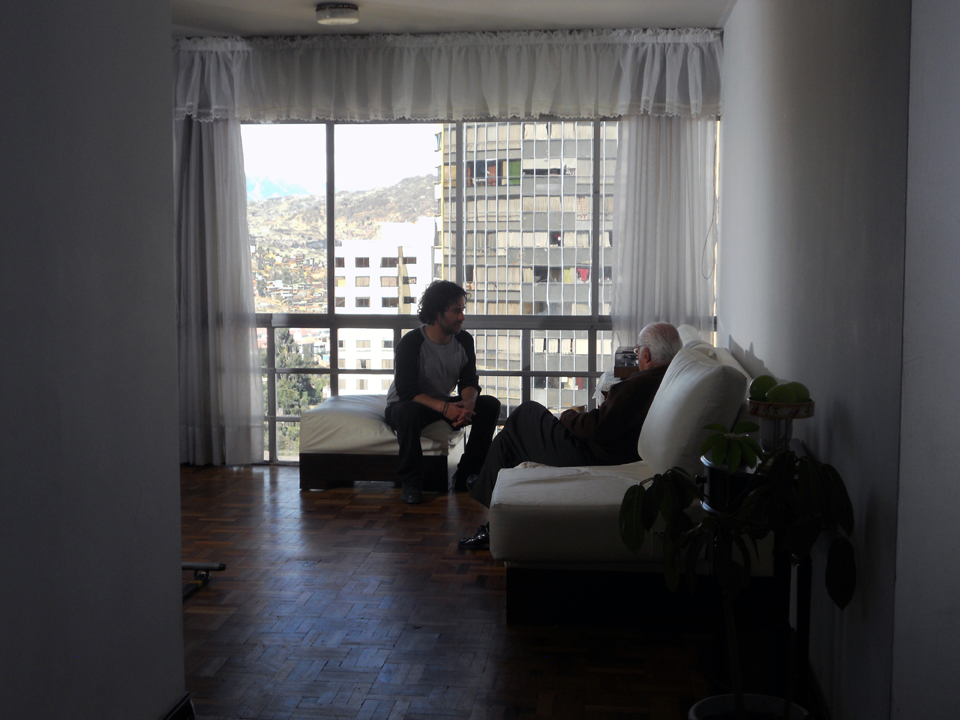
Sympathy for the Devil (2011), video still
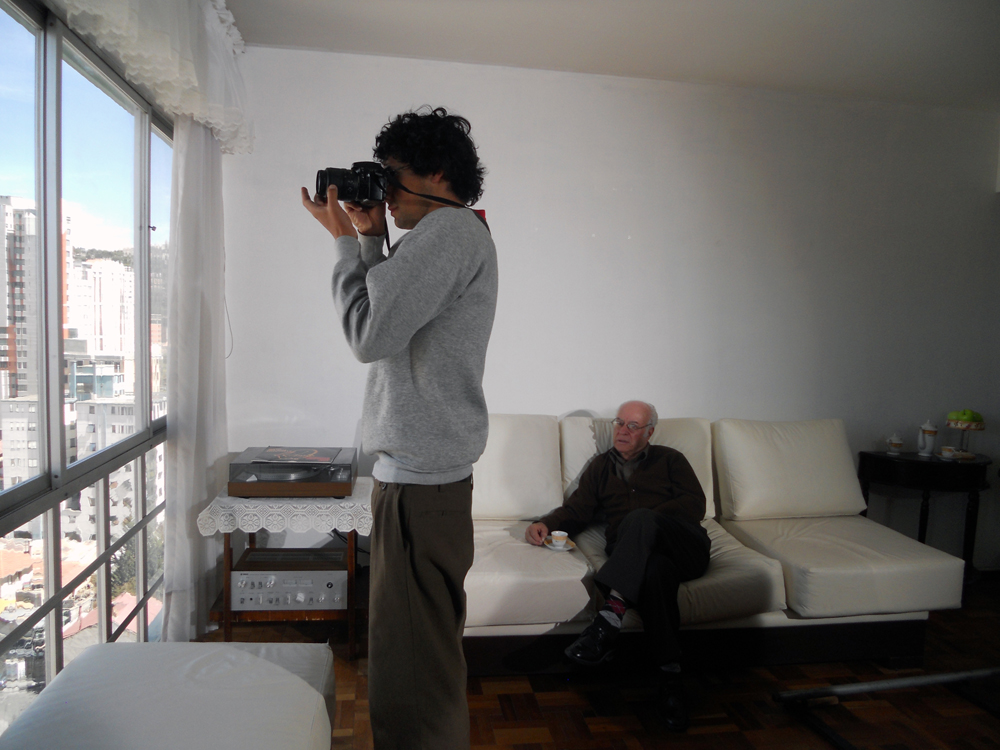
Production of Sympathy for the Devil
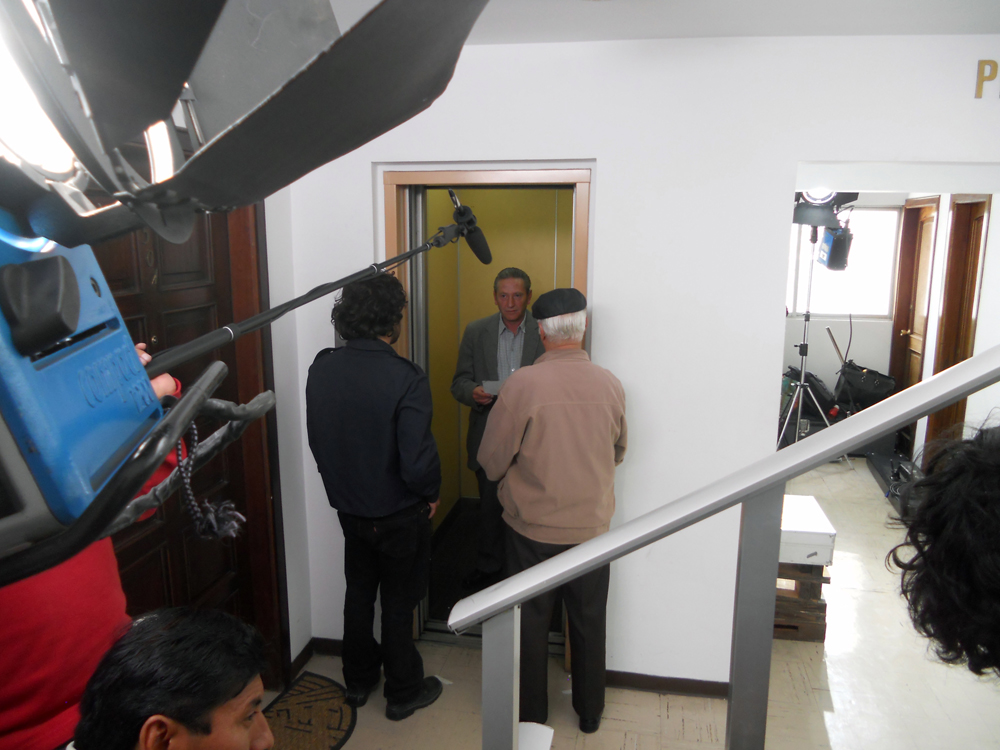
Production of Sympathy for the Devil
“Sympathy for the Devil uses an anecdote told by a relative and my own memories of Bolivia in the 1970s. The idea was to recount the daily encounter between a Polish Jewish refugee and his upstairs neighbor, former Nazi Klaus Barbie (who lived under another identity), in a building, in the city of La Paz. Both men lived parallel lives as neighbors and as Europeans in exile in Bolivia, mutually aware of each other's presence, meeting daily in the elevator.
The simple interaction depicted in this video highlights a recurring situation in Bolivia and Latin America during the postwar period, when the region offered asylum to both persecuted Jews and Nazi Germans.
In relation to the rest of my work, which looks at certain moments of the Bolivian history and how they intersect with global history, this piece is the most personal one, as it looks at how history and chance encounters affect familial memory.
Like the rest of my work, Sympathy for the Devil is an amalgam of references to film and art history, as well as popular culture. The song by The Rolling Stones that serves as title and soundtrack for the piece, on the surface, may seem like almost a cliché if one takes it at face value and ascribes the ‘devil’ literally, in reference to a Nazi officer. But if you actually listen to the lyrics, you will realize that they mine large part of atrocities in the history of mankind, from the killing of the Kennedys to the Russian Revolution. It's also a reference to Jean Luc Godard’s film Sympathy for the Devil, about the recording of a song that became a reflection on democracy, freedom and the end of a turbulent decade.
The figures depicted in most of my videos are significant, for they have re-imagined the Bolivian landscape in popular consciousness. Upon mention of the word 'Bolivia' abroad, some may associate it with the infamous capture of Che Guevara, a very romantic historical figure but an outlaw nonetheless. It may bring to mind the movie Butch Cassidy and the Sundance Kid (1969), with Robert Redford and Paul Newman, which portrays the Bolivian landscape as liminal. And Bolivia, with its own history fraught with military dictatorships and drug lords, can be one of these figures: a romantic outlaw, elusive in its representation, with unattainable beauty and hard to pin down, hence, reinterpreted and watered down in popular culture.
The landscape and built environment are the main characters in all my work, as are the video’s structural elements. My work looks at historical events that have taken place on Bolivia’s landscape, and how they have been ingrained in our collective memory through their mediated reproductions.
It all comes together to tell a story, not in the mainstream meaning of the word 'storytelling'. The intention is to heighten the awareness of the viewer, to let the viewer know that he is experiencing a construct, and that the story is not just about what is being recorded, but also about HOW it is being recorded. Focusing on the lapses in narrative that are formed when events are mediated through technology, I hope that the viewer’s gaze is directed from the events depicted on the screen to the physical movement of the camera through space, and to movement in an imaginary cinematic space."
Claudia Joskowicz in a statement to PLATFORM:VB (October 2013)
Sympathy for the Devil (2011) | Claudia Joskowicz
Video installation | 2 channels, 8’, sound 3.1, color, 16 : 9, loop
Sympathy for the Devil (2011)
Testimony Claudia Joskowicz | 18th Festival
The artist discusses her piece. The video installation tells a true story that occurred in Joskowicz’s family, as a Polish Jew and a former Nazi officer live in the same building in La Paz, after World War 2
Butch Cassidy and the Sundance Kid (1969) | George Roy Hill & William Goldman
Butch Cassidy and the Sundance Kid trailer [eng]
Sympathy For The Devil (1968) | The Rolling Stones
Sympathy For The Devil (1968) | Jean Luc Godard
Jean Luc Godard's Sympathy for the Devil trailer [eng]