Sitiado
2012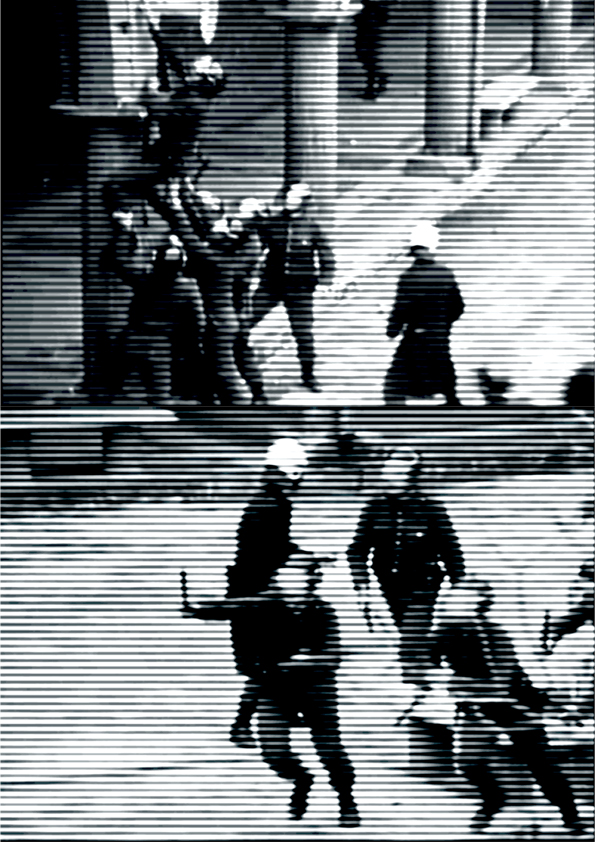
Sitiado (2012), video still
"I’ve been interested in Latin American history, particularly from the 20th century, while trying to understand the present and past of my own country, Colombia. I think that I may comprehend what happened in my society if I look at the past of my region. In these processes, I’ve been looking for war situations where art was involved.
I like to look at the past and learn from it. I also like to copy and remix the images that have been already made. Update the time by placing these old images in the present . Thus, I locate the conception of this piece in relation to these interests: history, remixes and montage.
Sitiado is based on a scene taken from the film State of siege (1972), by Costa-Gavras. In the scene, a police squad tries to silence the song Hasta siempre comandante, composed by Cuban musician Carlos Puebla in 1965. This song came from a link to a playlist that I made over the last few years, searching for music that has been censored by military regimes.
This video is under permanent construction. To make it, I gather declassified documents, such as the COMFER archives, which include music and artists that were forbidden during the last Argentinean dictatorship, online databases from the last Brazilian dictatorship and researches from Chile. The video gets longer as the investigation goes on.
As a citizen, I'm interested in the way art has been involved with political situations, how art became a political fact in certain situations, being also a poetic tool used by the artists. I agree with Godard´s quote: 'the problem is not to make political films but to make films politically'. In this case, I’m searching for specific situations where art has been a political instrument, which incites society to react and helps people to defend their territory (bodies, minds, lives), occupied by the armed forces.
In my country, I have experienced different situations related to the political war we have lived for many decades. From my family to my friends and art colleagues, to everyday news, it’s impossible not to feel the need to make something that suggests an explanation to our lives. The political context not just interferes with the development of the work but it’s a response to it.
I think that this piece reflects my feelings, a need to create a visual map of my horizon."
Carlos Guzmán in a statement to PLATFORM:VB (October 2013)
Sitiado (2012) | Carlos Guzmán
Video | 14’30”, stereo, color, 4 : 3, loop
Sitiado (2012)
Estado de Sitio (1973) | Costa-Gavras
Hasta siempre Comandante Che Guevara (1965) | Carlos Puebla
Carlos Guzmán sought the poetic use of musical language in political projects, such as The New Song Movement.
Jose Alejandro Restrepo and his studies about archives, images and Colombia’s visual history are also an important reference for the artist.