Mauser & Cia
2015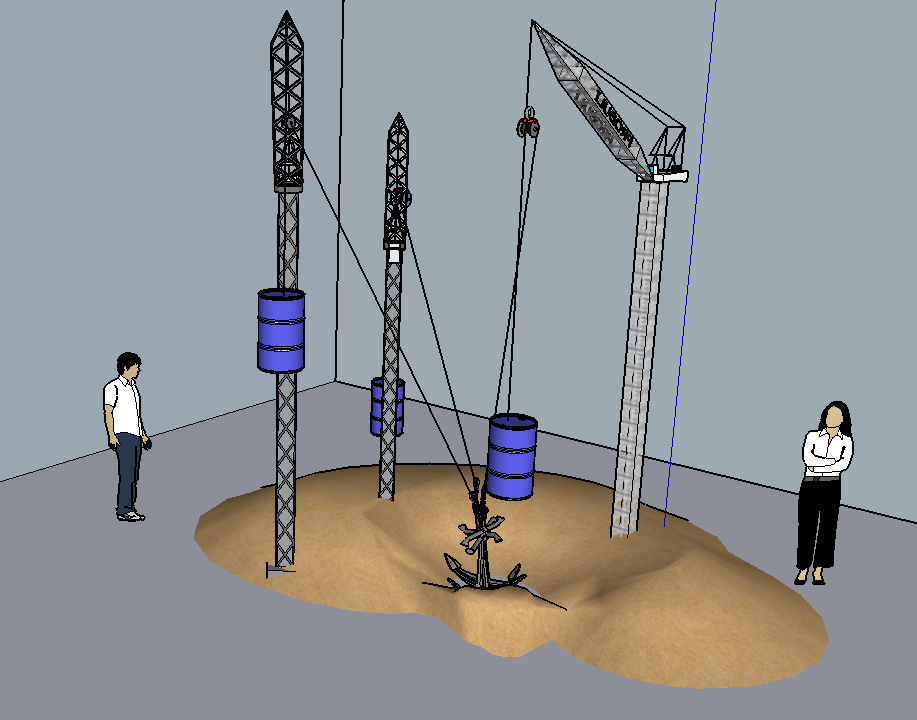
Sketches for development of the piece
Sketches for development of the piece
Sketches for development of the piece
Sketches for development of the piece
Sketches for development of the piece
Sketches for development of the piece
Bernardo José de Souza: The representation of the world and the resignification of our material culture are issues that stand out in your art, whether in the way you explore two‑dimensional images of the natural landscape or in the construction of sculptural volumes that challenge our perception of the forms found in nature or in the urban sphere, itself inherently artificial and technological—and I’m referring here to every apparatus whose function is subverted by the logic of re‑appropriation that runs through your work. The organic and industrial sometimes fuse in hybrid bodies, while culture and nature operate at the same time in conflict and symbiosis. How do you see the traumatic relationship that Western culture has maintained with nature since at least the time of the great sea voyages and the early modern age?
Rodrigo Matheus: I think this trauma you speak of is caused by what we might call Western culture, or Judeo‑Christian culture, the kingpost of which is the separation of men and nature. The belief that man was created in God’s image and therefore stands apart from nature justifies this “subject/object” relationship (between men and nature) and determines, on the cultural level, a utilitarian vision of nature as inexhaustible source of raw materials for the production of material goods. At school, I was taught that nature is fauna, flora, earth, fire, water, and air, and that it’s our task, as external agents, to understand and master nature. This fragmented vision not only justifies colonization, which, theoretically, civilizes backward cultures and peoples (which define nature in other terms), but also serves as the basis for the unfettered developmentalism that fuels Western culture to this day.
BJS:It is interesting that you mention religion because one thing your more recent exhibitions have brought to mind is the presence of sculptural works with a high religious charge. Totems, talismans, structures that evoke a certain mysticism, or which are built in the likeness of forms and images reminiscent of religiosity. However, the elements you club together to create these images are, individually and in principle, bereft of any aura, elevation, rare attribute, or transcendental quality; I would go so far as to say that they are banal, cheap elements, “imitation jewels” in a sense; plastics and things that have functions but are not, at least not at first sight, endowed with any sophistication or deeper, time‑forged symbolic value. The industrial materials, commodities, material culture of our society, when appropriated by and for art, don’t seem to be there just to represent themselves (like Duchamp’s urinal), but are present as a set of prior critical readings that flow from their original functions and impacts on the world. For example, the plastic netting you’ve been using is not just plastic netting, but a symbol of the world of work, of industry, of the use of oil, the exhaustion of natural resources, and so on.
RM: For me, these constructions don’t refer to any particular religion or practice, but merely strive to bring to bear the capacity of narrative synthesis or representation that these images possess. I think belief in these symbols, or in the supposed “powers” certain cultures may project upon and through them, can serve as a pretext for discussing the idea of a “greater truth” emanated by these structures; a truth that is not subject to the decisions of reason, or indeed to discussion. I think that these symbols, when built out of materials that do not belong to their worlds, can open doors onto other belief systems, outside the religious sphere, or onto other creeds, voluntary or otherwise. These cheap, banal components perhaps reveal that touch of authoritarianism in our routines, the stuff we refuse to discuss, because, for us, it’s become unimpeachable truth. From the way you mention the plastic netting, one thing that becomes clear, and is undeniable, is the symbolic efficiency of the materials and the layers of meaning deposited on them by our experience—in both public and private space. If we think of the projected nature of each object/ material in our midst, we can understand that the fundamental premise of this project is, over and above the production of any individual, material thing, an action in or on the world. As such, that’s the certainty many of my works “play” with, and I say play because I think my appropriations and constructions are a little like when a kid turns a sweeping brush into a horse or a bucket into a helmet. We live in a world that is entirely conceived, designed, and determined—from the slightest detail to the biggest construction. And, to go back to your first question, what is nature anyway? Is it everything that hasn’t been determined? Is it everything that hasn’t been designed? I feel the mandalas and totems my work returns to now and then are capable of subverting and questioning the totalitarian aspect of design—and thus of broadening the cultural experience of the objects that comprise it.
BJS: In the context of the present exhibition, your work points toward a world in ruins, in transition, in which the vestiges of material culture make up a sort of archeological haul; it’s something that could be the product of our age or of a near or distant future, in which the human form is secondary or even inexistent. The idea that nature might survive man, or that elements of our culture might survive nature (if we consider, for example, how long it takes plastic to biodegrade), creates a strange sensation that we live in a world in which technology and material goods have enormous autonomy; that they are entities that may far outlive us. There’s a capitalist logic (the invisible hand of the market?) that seems to operate regardless of our will. How do you see our relationship with time (past, present, and future) at the dawn of the 21st century, given the virtual impossibility of predicting less precarious scenarios for the future?
RM: I get the feeling that the very exercise of predicting future scenarios is, in principle, co‑opted by the logic of the market and the production of goods. Whether we’re critical of the capitalist world or not, we are always placed in direct relation to it. Based on predictions, we are powerless before the rise and fall in the value of material and immaterial goods which we may understand or may not. Like time, I think all this speculation about the future is very abstract and pervaded with interests that are not those of the common good. We live in a time of dense fog, in which technology and an excess of information keep us endlessly entertained—and, for me, that’s what interferes with our perception of time. If we insist on understanding the past in terms of the values of today, I think that makes understanding the contemporary world from a historical perspective a very difficult task. I get the impression that this heavy flow of events and the media glut we have today trigger a chain of inflections in the way the facts are divulged. There’s a vast mass of historical facts to be understood, and that’s only counting last week. I see time today as struggling to keep up with the accelerated flow of history. Hours, days, and months have become increasingly fragile as units of time, overwhelmed by the sheer volume of occurrences and the burden of man’s expectations for the future.
BJS: How do you see the relationship between your work and a geopolitical context in mid‑transformation? Do you think it still makes sense to speak of a geopolitical South, as a notion that subsumes the output of such different places as Asia, Africa, Latin America, and Eastern Europe, all of which bear the past and even present marks of the colonizing lust of European powers?
RM: My work circulates in a context that I prefer to call Western, a context of places that share similar cultural values that dialogue with and reaffirm each other regardless of economic or social conditions. I think a perspective like that is possible on one level, but rather questionable on another. The Northern powers are now being colonized right back by their former colonies; so there’s a lot of the South in the North, and a lot of the North in the South. With the exception of the natives, all other peoples, Northern or Southern, colonized the Americas either voluntarily or by force. The old world fringes have now organized their own economic and cultural hubs; the internationalization of Brazilian art, for example, is a result of this.
BJS: In the exhibition Southern Panoramas | Selected Works, the result of an open call to artists from the geopolitical South, what became crystal clear was an underlying concern with the body, architecture, and the idea of ruin, issues that reach this edition of the Videobrasil Festival buoyed by a rather strange atmosphere. Solidity and instability seem to be walking hand‑in‑glove. How do these questions echo in your work?
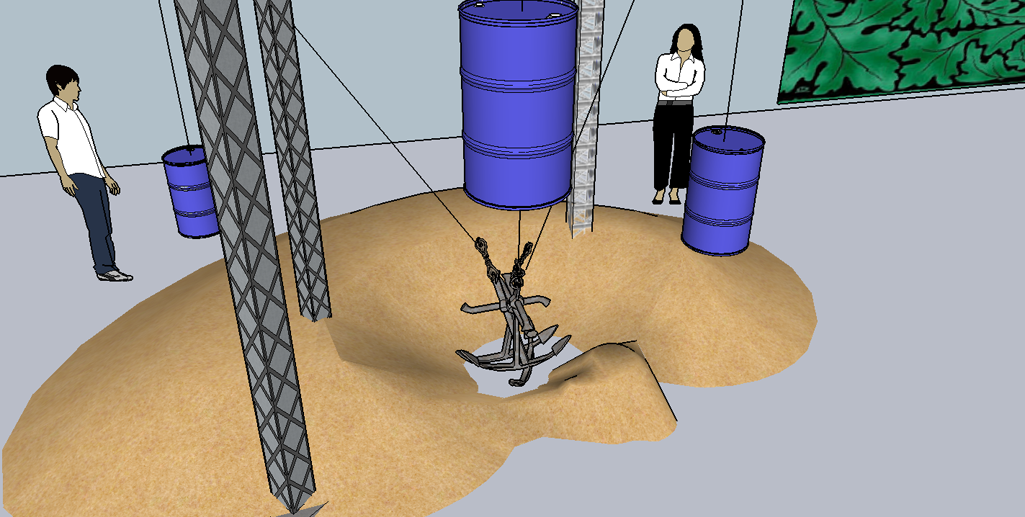
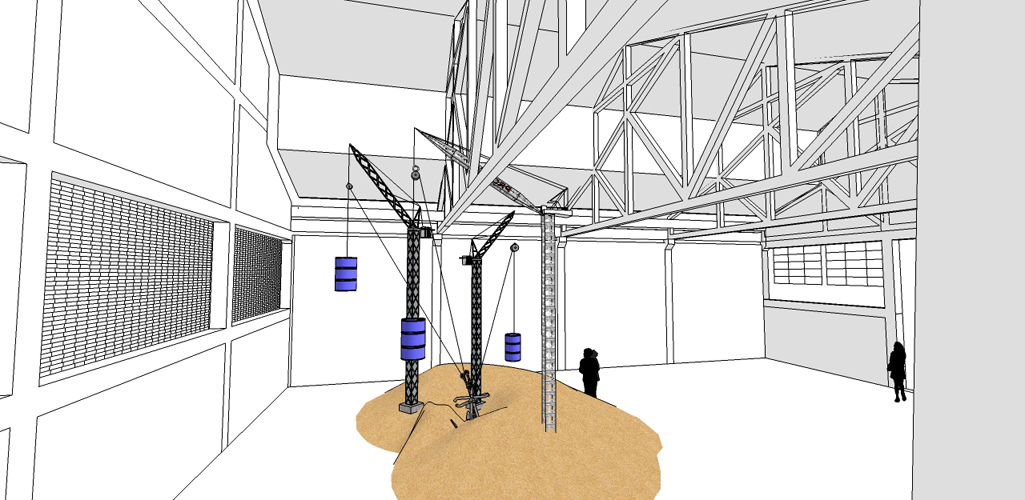
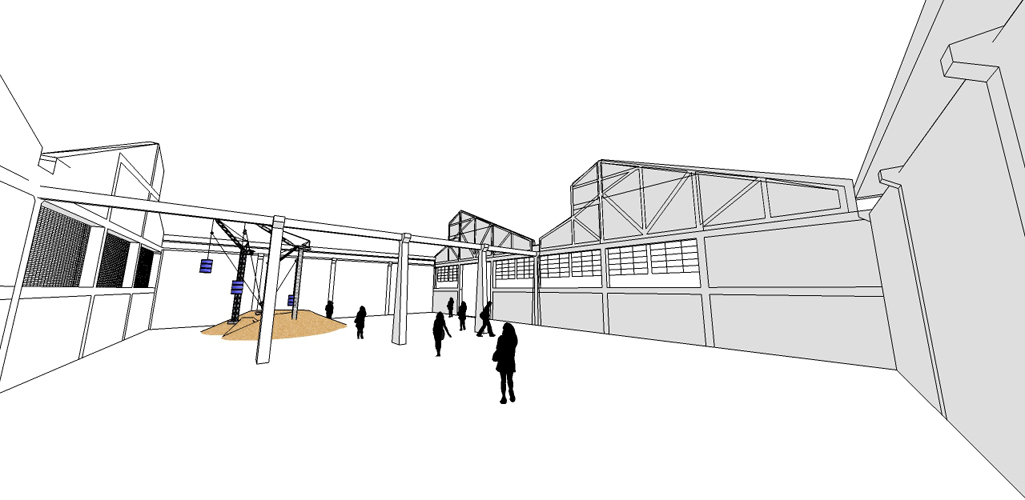
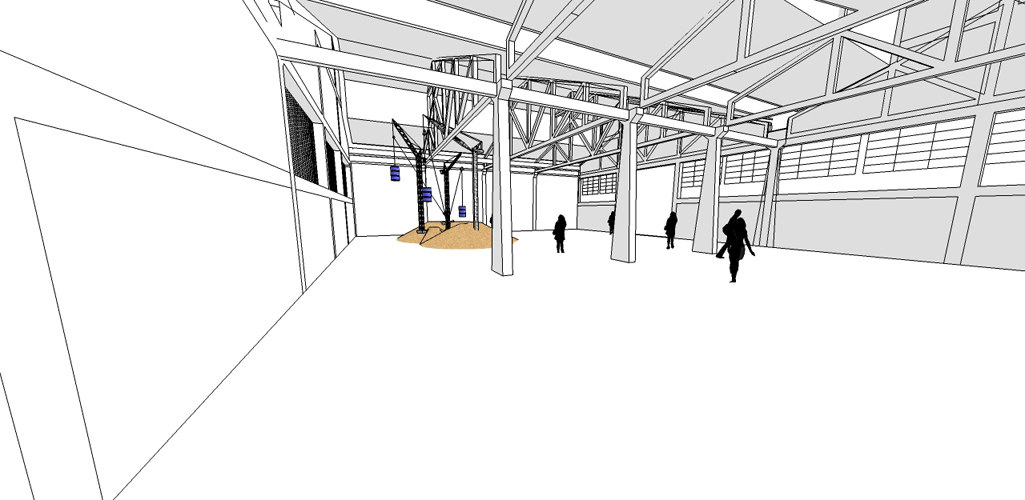
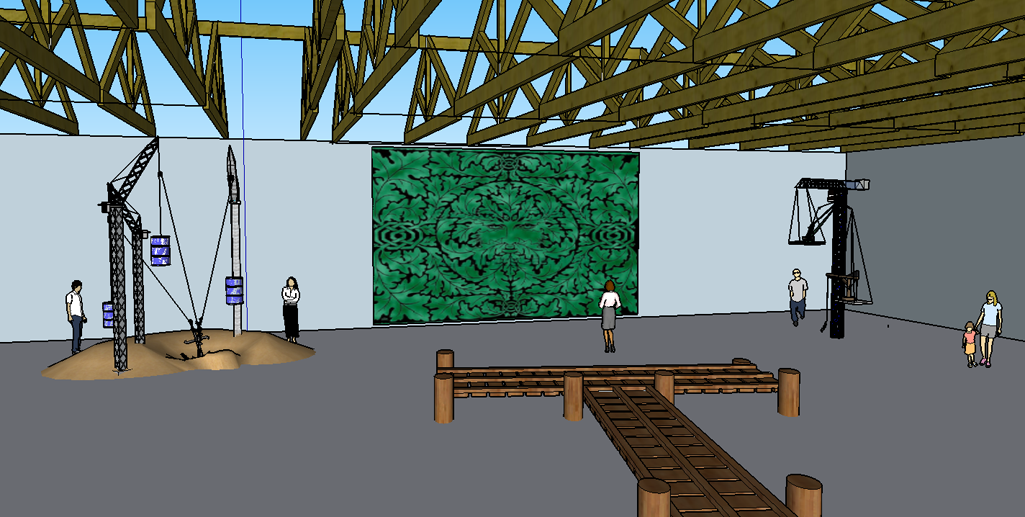
RM: Of course, the work I developed for this edition of the Festival clearly touches upon some of these issues. The project was inspired by the factory warehouse that is now Sesc Pompeia. This set of warehouses was built by a German company in the 1930s to serve as a drum factory. It was perfectly located in the day, near Avenida Água Branca and the old Sorocabana and Santos‑Jundiaí railroads. In 1935, a fire destroyed the warehouses, along with the whole stock and equipment. The Mauser family, which owned the property, abandoned it during World War II when they returned to Europe. The compound was put under embargo and used by a refrigerator manufacturer, but the company had gone out of business by the time Sesc bought the property in 1971. In a sense, my work returns to the warehouses something of the ruins of their history, which certainly has a lot to do with the brutal process of industrialization, urbanization, and ruination their host city has endured over the last hundred years.
Interview with Bernardo José de Souza on occasion of the 19th Festival (July 2015)
Mauser & Cia, 2015 | Installation
Rodrigo Matheus