Rabeca
2013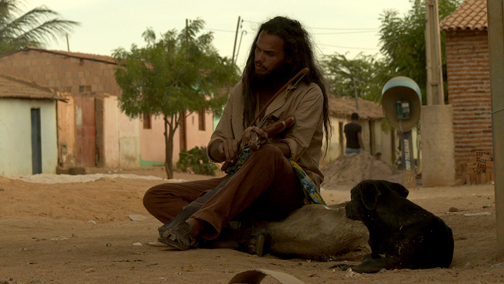
Rabeca (2013), video still
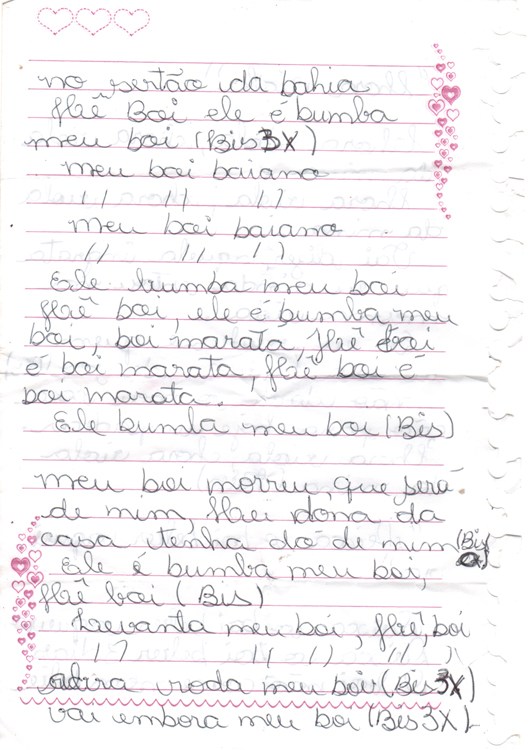
Lyrics to the song written by Dona Nita, singer and songwriter from Reinado de São Pedro, Xique-Xique. "Because she is blind, I am not sure whether she wrote it herself", explains Caetano.
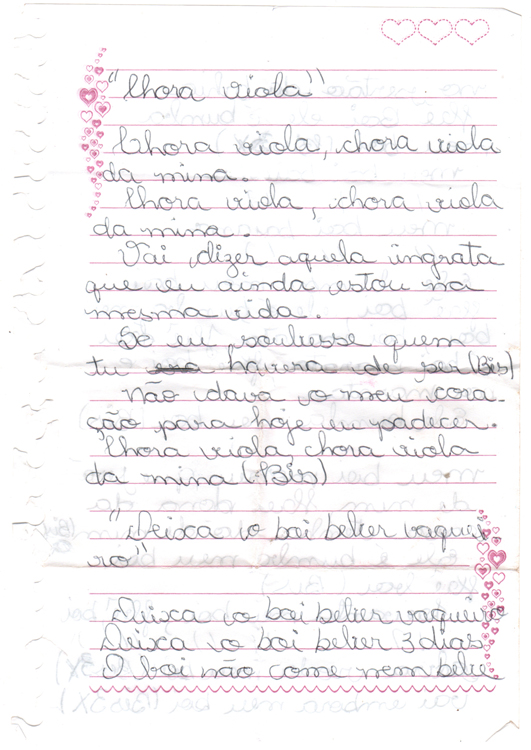
Lyrics to the song written by Dona Nita, singer and songwriter from Reinado de São Pedro, Xique-Xique.
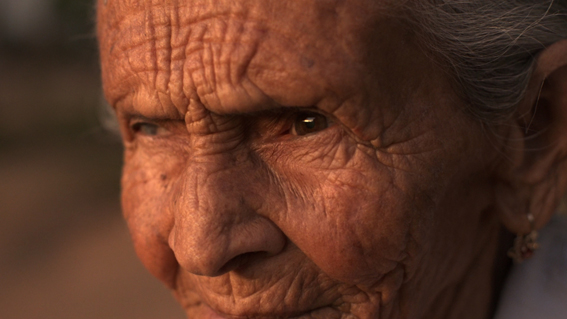
Dominga da Rabeca, Correntina (2012)
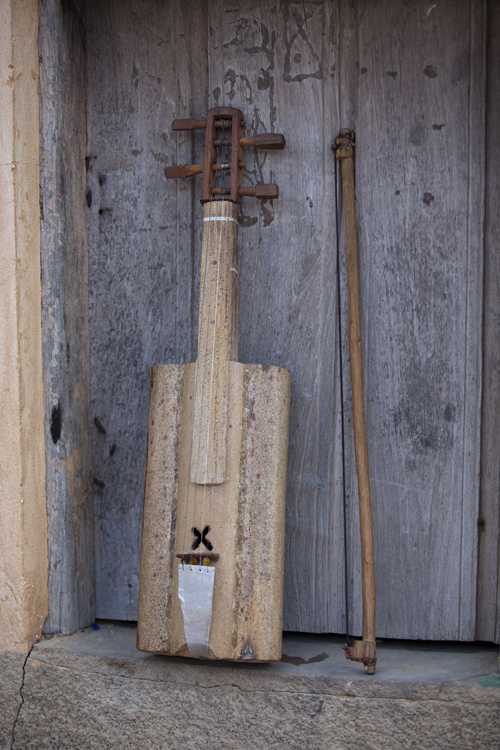
Fiddle made with burity peel belonging to Adriano, Correntina (2012)
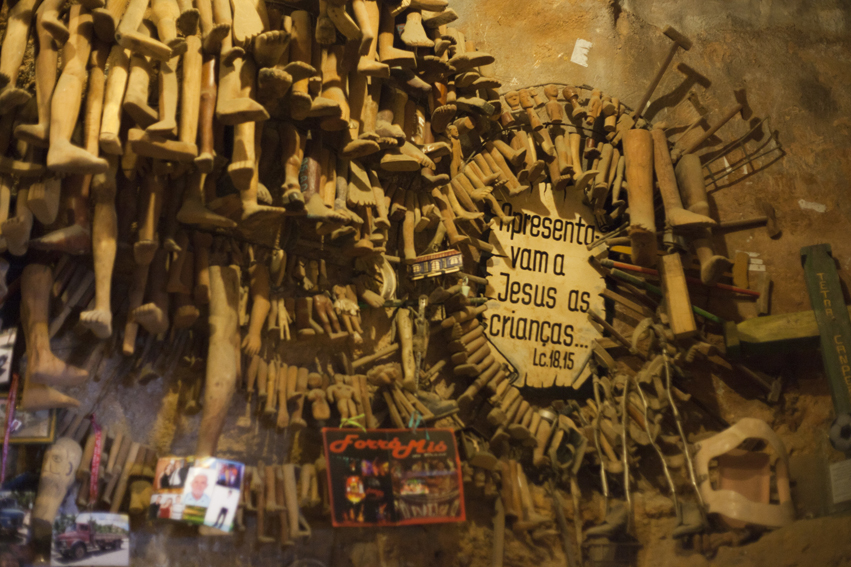
Lapa's grotto (2012)
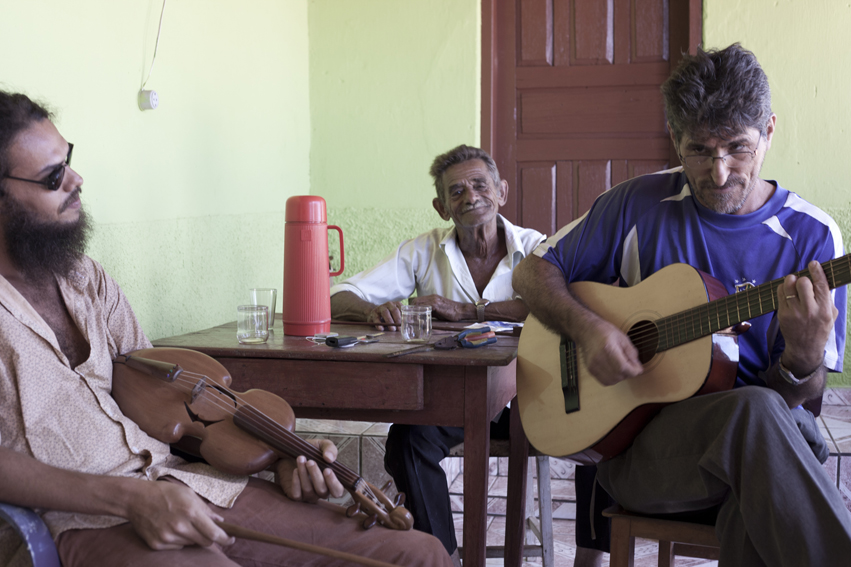
Eder, Tonho Piaba and Paulo de Abreu, local producer, Correntina (2012)
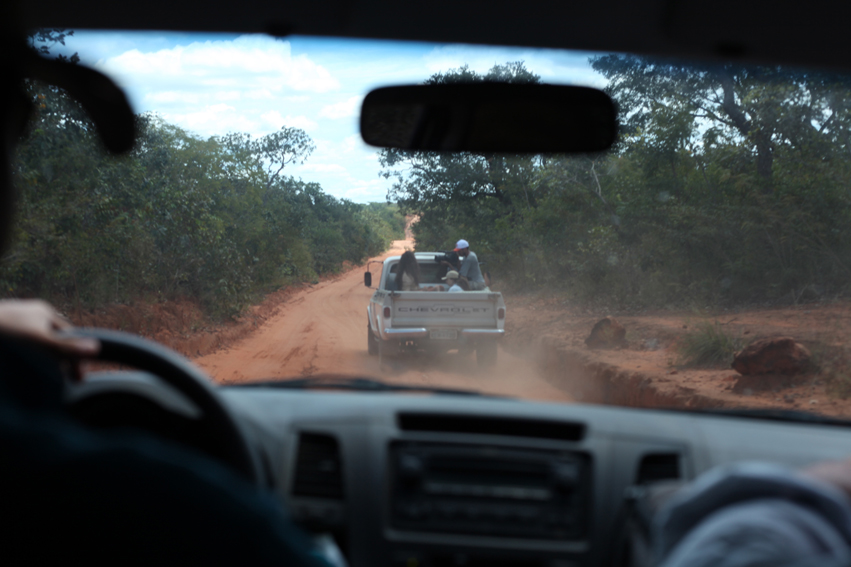
"Filming on the road, moments before meeting the Mulher que anda para trás (Woman who walks backward)." Correntina (2012)
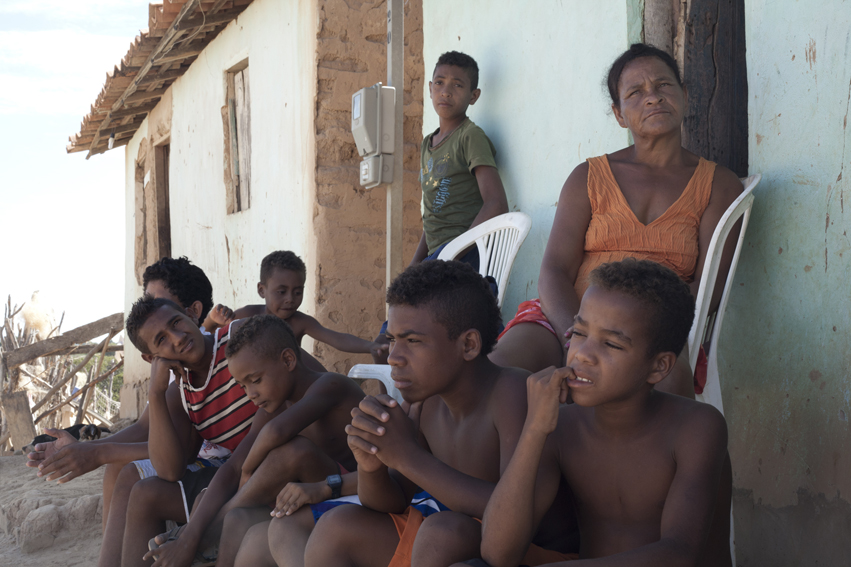
Children at Paulista, Barra do Rio Grande (2012)
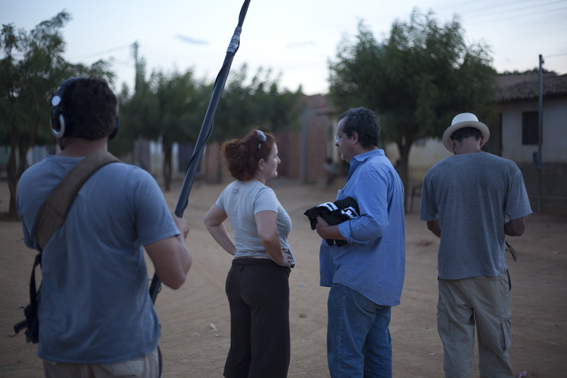
Guadêncio lagoon, Lapão (2012)
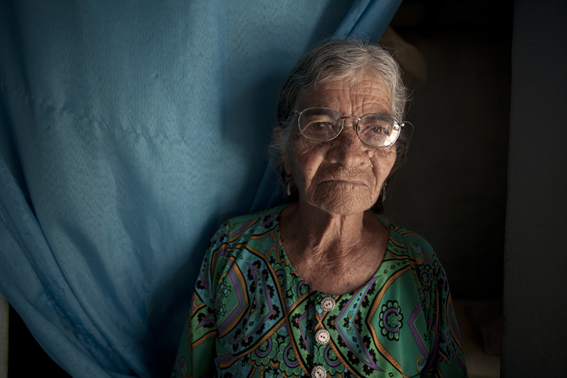
Celina, Dudu da Rabeca's wife, Hidrolândia (2012)
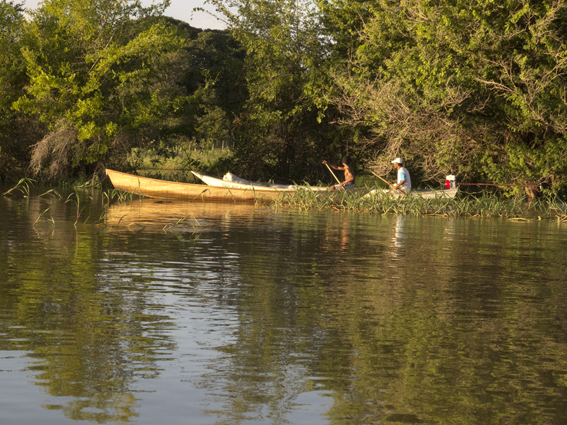
"On our way to the Paulista village", San Francisco River, between the towns of Barra do Rio Grande and Xique-Xique (2012)
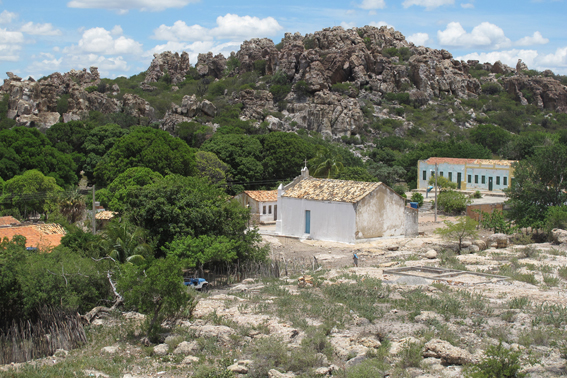
Santo Inácio, Chapada Diamantina (2012)
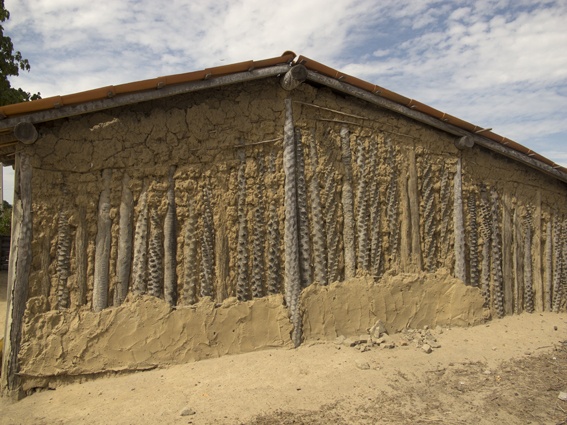
House built with carnauba logs, Capão do Saco de Xique-Xique (2012)
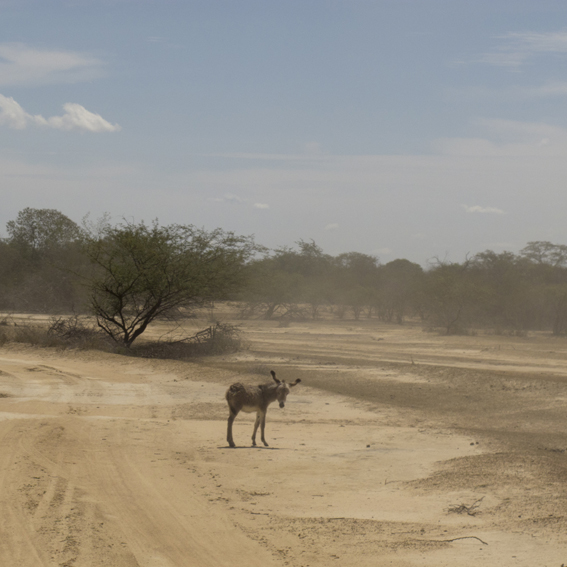
Track for Capão do Saco de Xique-Xique (2012)
"In order to make Rabeca (Fiddle), I searched the web for fiddle players in Bahia and there was virtually no record, apart from two major exceptions: Eder Fersant and Dona Dominga da Rabeca. He, a young musician with some classical training. She, an 86-year-old lady who plays a fiddle brought to her from Goiás by her father in the year of 1943.
Based on the little information I could glean from the Internet about Dona Dominga and Eder, and also based on my field research, I wrote a draft script. It was an ambitious project in which I let my childhood memories speak out in Bahia's countryside. As a child, I witnessed many fiddle players in the cities I lived in. I wanted a narrative that was part memory, part objective recording of events, and part fantastic realism.
During pre-production, I travelled with a small team (Leonardo Campos, Cláudia Pôssa and Eder Fersant) for nine days through the sertão (countryside) of Bahia, immersed in many stories, meeting characters worthy of Fellini. We looked for fiddle players wherever we went to. It was one of the most amazing trips I have ever taken! The film allowed us to experience a Bahia that Bahia itself does not see. We all came back changed by that process. We spent little time together, but great affection grew between us. The production per se took 15 days of filming with a 9-strong team, a new 'marathon' through Bahia's countryside, rich of new discoveries.
Rabeca is a hybrid work, between fiction, documentary and video art. An arid, contemporary baroque reminiscent of the aesthetical strangeness of Guimarães Rosa, updated. It is a document about the fantastic imagery of that region, its stories, customs and myths.
It follows up things I have done, like the short film 1978 – Cidade Submersa, in which I approach the memory of a vanished city. I have always liked crossings of concepts that lead to strangeness. The film is yet another attempt at expanding on that idea. The documentary functions as a conscience that takes place through hallucinations, where nearly everything is real, documental.
Nothing is more universal than ancient legends and myths, and Rabeca seeks out the atavic, that which takes place in the bone of the soul, and thus always returns; the iron of the word, discovering what is actually the bone, just as iron is the bone of the verb, which marks, wounds, corrodes, swells, dilates.
I sense that Bahia is undergoing a process of erasure, and this film is perhaps a chance to resume our dialogue with our sertões. The film is an attempt at conversing with something deep that is on the verge of being forgotten in the innards of the sertão.
Making Rabeca has been an act of guerilla, of cultural resistance, both due to its subject matter and its budget.
It is no longer appropriate to separate fiction from documentary, contemporary narratives from historical ones; I think the hybridization of experiences will always be more stimulating. In Rabeca, things happen today, even though old men or instruments brought by Portuguese Moors during colonization do appear. It is a silent film about the sounds of a contemporary sertão with rituals that update themselves. This is not past history, it is present and contemporary. It was all already there: the turbo-donkeys, the woman dancing on the yard, the fiddler…"
Caetano Dias in a statement to PLATFORM:VB (October 2013)
Rabeca (2013) | Caetano Dias
Video | 71’, digital 5.1, color, 16 : 9
Testimony Caetano Dias | 18th Festival
The artist goes back to the genesis of his piece, Rabeca, and discusses the role played by nature in his work. Born out of an exercise in scriptwriting for the film Água Brusca
O Voo Meditativo da Semente do Carrapicho | Eder Fersant
Teaser of Rabeca (2013) | Caetano Dias
Teaser RABECA from Caetano Dias on Vimeo.
The way in which the work of Marina Abramović tackles her own history or the history of her place of origin is a reference to Caetano Dias.