How heavy is a cloud?
2016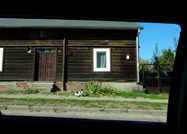
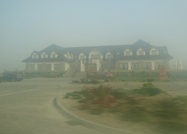
This project only came to me after making my first trip to Poland. I had never been there, I had never thought of going there, and I did not have the courage to do so. Upon my arrival at Poland, I discovered I was reaching a place I had no reference of, although my entire family has a Polish and Jewish origin — they came to Brazil right after the First World War. It was a hiatus; they never spoke about it, never commented it. It was not a conventional process for me. In general, when I am making images, I have already drawn a process in my mind, and as soon as I am able to set a title, the work emerges. In this case, it was completely different, as I had not thought of the images beforehand; they were created in a way similar to a state of hypnosis, as I was capturing and photographing them. When I returned to Brazil, I initiated a spiritual, conceptual and visual “download” of the experience, and the title came up after I concluded the first cut of one of the parts of the project, the video Quanto pesa uma nuvem? [How much does a cloud weigh?].
The shape of the work kept deriving itself from questions. On one hand, I went through an experience from a state of non-image to a state of immersion into images, without knowing what would come of it; on the other hand, the whole trip was followed by a multiplication of questions, which I kept taking note of and formed a brief logbook. These questions conducted the theme of the work, which later gave way to the phantasmagoria of the video Quanto pesa uma nuvem? and the postcards of the piece Perturbadoramente familiar [Disturbingly familiar]. Our decision to work with stamps was a subsequent decision, and it features a double reference. On one hand, there is an extremely violent reference, impossible to erase, strongly related to this trip’s entrails — that is, the process of tattooing the body, a painful experience one can never delete. On the other hand, one can witness the disassembly of Nazi controlling bureaucracies and technologies, a relentless reference due to the artifice of offering people the possibility of stamping my existential issues on various surfaces, from their own bodies to the postcards. In short, the artwork Perturbadoramente familiar was the “downloading” process of this trip. In this work, the narrative is mixed with processed, edited, isolated and recombined images, following an almost foucaultian rhythm. Foucault used to say that, for documents to be understood, they must be treated as monuments, and they must be dismembered, disorganized and rebuilt untill their meaning gains voice without the need of a text to explain them beforehand. In this case, I believe the photos were my document-monument process, whereby I left the realm of this colorful, two-dimensional surface, deconstructed it and reorganized it with the fragments of my stories and fidings.
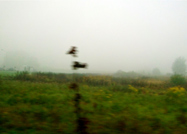
When I handed the first version of the video with a title to Ana Prado, curator of the exhibition, she gave me a text written by Vilém Flusser, in which he narrates a foggy day (“Natural:mind – several accesses to the meaning of nature”). From that moment on, I decided we were to adopt the idea of a journal being narrated, an audio piece about the trip. In this process, I completely detached myself from Flusser’s text. Actually, I must mention two other authors throughout this saga: one is Hal Foster, and the other one is Andreas Huyssen, for some matters brought up by them have impacted me greatly. One issue is the capitalization of design, which keeps “revitalizing” things and exterminating any memory experienced with them, and the other one is a passage I have always struggled to understand, by Huyssen, who is certainly one of the best experts in ruins. In the passage, he said the 20th century was not able to produce ruins, only debris, which I came to understand literally after going to Poland.
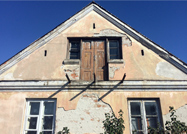
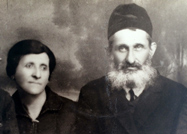
I went to many distinct places. I did not make a conventional trip, as I went to cities related to my family’s history. Each of my grandparents came from a different place. My paternal grandmother was from Warsaw, and my maternal grandparents were from a small town called Przemyśl. My paternal grandfather was from another tiny town, Dęblin. I went to Warsaw, then I went to Krakow, a city proteceted as heritage and a place people use as a starting point on their way to Auschwitz, which I also visited, for unfortunately it is one of my family’s cities. In Przemyśl, my grandmother’s hometown, I had a guide who descended from Jews, who took me to a completely nonsense walk, in which he showed me places and said, “this used to be”, “there used to be”, so I asked him: “How does it feel to live in a place where everything used to?”. The cemeteries were sacked by the Nazis, who used the tombstones to pave roads, even though they were ancient cemeteries. However, what impressed me the most at Przemyśl’s cemetery was not the destruction of the ancient tombs, but the subsequent graves, for they had no names, they belonged to corpses that have never been recognized; nobody knows who they are, which disturbs me a lot. I went to my grandparent’s town, Dęblin, a tiny place and one of the strangest locations I have ever visited. We went there on a Sunday, and there was not a single soul on the streets apart from a drunk beggar. The area of the old ghetto now is practically stuck in time. In spite of being a populous town, the streets remains unpaved, the houses are made of wood, and I ran into an unprecedented blue sky. It made me wonder if there is such a thing as an emptiness blue. So each place kept suggesting transversal issues and disturbances and questions. After the trip, I even wondered if Jews were Poland’s Africans, if Poland is our Africa, because despite this strangeness, that is what the work is also about; it addresses physical and cultural belonging, and the belonging of references, which somehow were already within me and brought about this African feeling, a feeling of diaspora. However, unlike the African case, whereby people were kidnapped and conquered, this is a diaspora without possible return; no one wants to go back.
It is the first time I personally place myself within my work. I still feel a great strangeness due to this way of capturing images, because they never show people. I am struggling to reach an abstraction level in my framework that suppresses people. Thus, placing people, myself and everything in first person is a unique experience. I am resuming a work methodology I created with Ana Pato at the 3rd Bahia Biennial, which was a big turning point for my art, when I ended up working with an audio recorded by myself narrating the story of a place. That was something Ana wanted back in this project, my voice cointained in the events. She challenged me to give myself a voice.
Aesthetically, the fact that the images are so inaccurate, as if they were part of a continuous process of self-deletion, takes palce through the dialogue with this (hi)story that bears no traces, which I keep telling and discovering through the trip. I think it is important to highlight that I am no photographer or filmmaker, and I am not used to video production as a videographic language. It seems to me that, for years, I have dedicated myself to making images. For me, this practice is a territory I explore in several ways, be it through somehow palpable images, as an interactive process, or through fixed or moving images, as an imagistic territory. Furthermore, the confusion among limits interests me. Did I take a picture and animate it? Did I animate and deconstruct it? Or did I capture and produce the still image? This loss of reference is a noise I mean to explore.
How heavy is a cloud?, 2016 | Video, 4’40”; Fotography, 120 x 210 cm
Giselle Beiguelman
Disturbingly familiar, 2016 | Audio, 25’; Postcards
Giselle Beiguelman
Ask the Stones [3rd Series], 2016 | Stamps
Giselle Beiguelman
Warsaw | Warsaw (1978)
Artist's reference music
Love will tear us apart | Joy Division (1980)
Artist's reference music
Fog Scene - Il Deserto Rosso | Michelangelo Antonioni (1964)
Artist's reference scene
Several non-fictional essayists served as references for this project, such as Hal Foster and Andreas Huyssen, mainly. I faced a huge disappointment during this project, concerning my relationship with the British band Joy Division, which used to be my favourite band. I came upon this discovery when a friend reminded me that, before having that name, the band was called Warsaw, as well as the main song of their debut album. When I heard it and grasped the lyrics, it was horrible, because I realized it was a tribute to Rudolf Hess, Hitler’s secretary, one of the last Nazis to die, who tried to make a peace treaty with England and ended up being expelled from the political party. After the war, he was convicted and arrested by the Nuremberg Trial. The opening song consists of someone calling his registration number as a convict. David Bowie also has a song called “Warsaw”, which inspired Joy Division before being Joy Division.
Do pedestal aos porões: exposição mostra trajetória de monumentos paulistanos. Theo Monteiro. Arte Brasileiros (2016) [port]
Possible Futures – Interview with curator Giselle Beiguelman (2012), [eng]
Hal Foster, Design and Crime. In: Design and Crime (And Other Diatribes), Londres: Verso, p. 13-26 (2003) [eng]
Andreas Huyssen, Culturas do passado presente: modernismo, artes visuais, políticas da memória, Rio de Janeiro: Contraponto (2014) [port]
Andreas Huyssen, Políticas de memória no nosso tempo, Lisboa: Universidade Católica Editora (2014) [port]
Michel Foucault, A arqueologia do saber, Rio de Janeiro: Forense Universitária (2008) [port]
Cesar Baio. Na zona de risco. Portfolio – Giselle Beiguelman, Revista ECO Pós. UFRJ, n. 18, v. 1, p. 167-181 (2005) [port]