Purgatorio
2014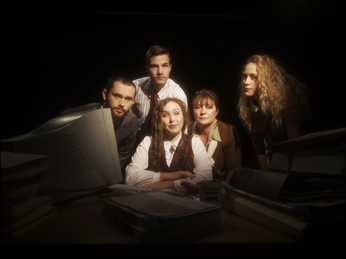
Video still
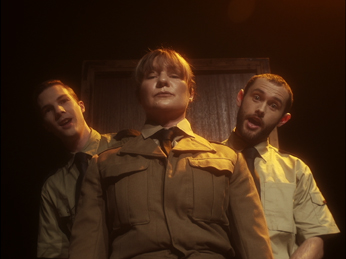
Video still
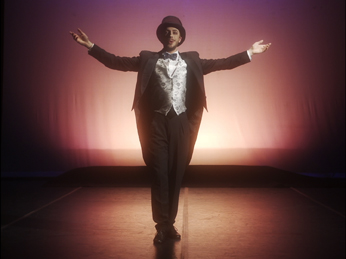
Video still
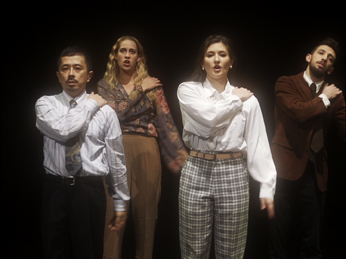
Video still
Video still
Video still
Video still
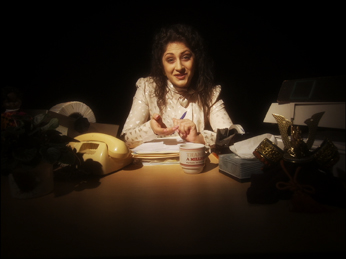
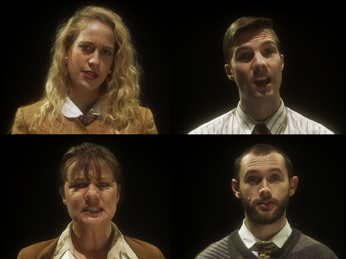
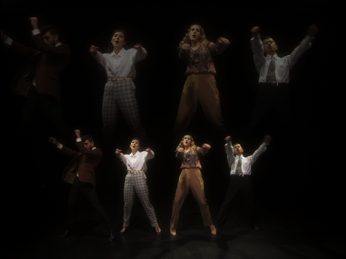
"Purgatorio came about as a political piece that was developed through extensive interviews with the Macarthur Diversity Services Initiative, asylum seekers on bridging visas, refugees and refugee advocates, the staff from the UNHCR, and from the public relations division for the Australian Department of Immigration and Border Protection. The piece was created during a residency at the Campbelltown Arts Centre, Western Sydney, in 2014. Among the many original songs included in the work, some are based on the 842 form for the Global Special Humanitarian visa, and one of them was taken from documents and statements on the then minister of immigration, Scott Morrison’s website.
Since 1992, Australia has had varying types of immigration policies, which involved a period of detention for asylum seekers who came to their shores. The current iteration involves indefinite detention on the Pacific islands of Nauru and Manus (off the coast of Papua New Guinea) for anyone arriving by boat, seeking asylum. There have been various reports of sexual, mental, and physical abuse in these centers. What makes matters worse is that new legislation demands that arriving boats are no longer reported to the press; and the identities of those asylum seekers are withheld — furthering the dehumanization policy of the current government. The most frightening part is that this policy is supported by a large portion of the Australian population.
Musicals and operas are heightened formats that allow the viewer to connect with difficult subject matters in a non-threatening and engaging way. With this in mind, I made an Orwellian musical retelling of Dante’s Purgatorio, from The Divine Comedy — relating not only to the current Australian asylum seeker policy, but also to global issues regarding the notion of ‘processing people’. The work focuses on the Kafkaesque bureaucracy that ensues, and how it runs in a loop; so, the character of the ‘Applicant’ (or Dante) is fated to relive his musical interrogations over and over again. All the research for the piece was siphoned into Dante’s narrative, and the libretto was written as a collation of interviews and texts, translated into music by my recurrent collaborator, composer Ash Gibson Greig.
A difficult part of the project, though, was finding asylum seekers willing to share their stories. Most of them asked to remain anonymous as they felt that a link to a political artwork might affect their application process. Also, no one at the detention centers on Nauru or Manus Islands could be reached directly, due to the current laws, so I was only able to speak to the people who had arrived in Australia before July 2013, when the laws were changed. I also consulted refugee advocates, lawyers, and undertook text-based research.
Through my interviews, I heard some difficult and traumatic stories that I wasn’t sure I was qualified to tackle directly in my work. However, I found my way into the work by focusing on the way my interviewees were dealt with by the Australian immigration system — from their interactions with border security; the immigration department; and with their case workers. As my own family immigrated to Australia from Argentina in the late 70s, and I am currently in the process of trying to partly base myself in the Netherlands, I felt I could tell these aspects of their stories with at least some level of authenticity."
Pilar Mata Dupont in a statement to PLATFORM:VB (July 2015)
Purgatorio, 2014 | Video installation
Pilar Mata Dupont
Die Dreigroschenoper (The Threepenny Opera) | Berliner Ensemble 2012
Reference for the artist
Dogville (2004), Prologue | Lars Von Trier
Reference for the artist
Marat/Sade (1967) | Peter Weiss/Peter Brook
Reference for the artist
Sweeney Todd (1979) | Stephen Sondheim
Reference for the artist
Color and Light, of Sunday In The Park With George (1986), Mandy Patinkin & Bernadette Peters | Stephen Sondheim
Reference for the artist
Museum Songspiel: The Netherlands 20XX (2011) | Chto Delat
Reference for the artist
“During the development of Purgatorio, I spent a lot of time with Brecht and Weill’s Threepenny Opera, as well as with other texts by Brecht. Franz Kafka’s Before the Law, Lars Von Trier’s film Dogville, and the film of the Weiss play, Marat/Sade, directed by Peter Brook, were also big references. I also love Chto Delat’s Museum Songspiel: The Netherlands 20XX.
For the aesthetics of the work, I studied the recordings of the 1980s/90s original Broadway casts of Sweeney Todd, Sunday in the Park with George, and Into the Woods, which are all musicals by Stephen Sondheim, whom I love and have watched for years.”