O Sangue da Terra
1984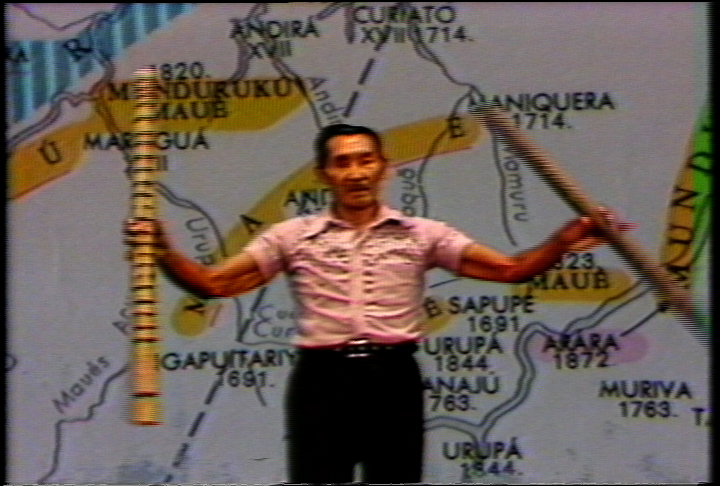
Video still
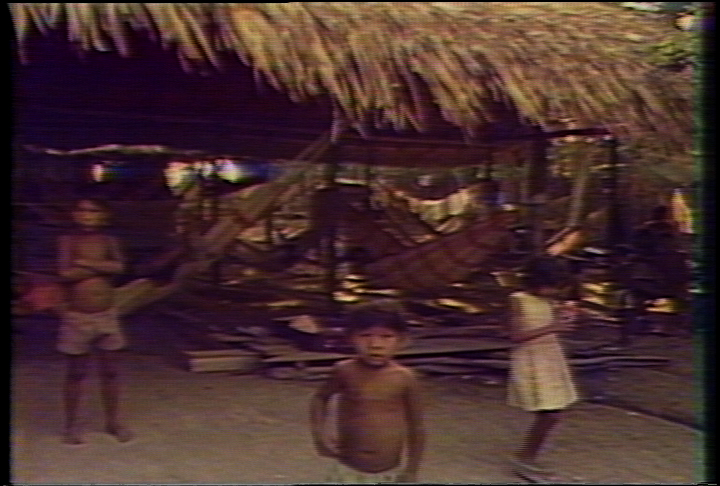
Video still
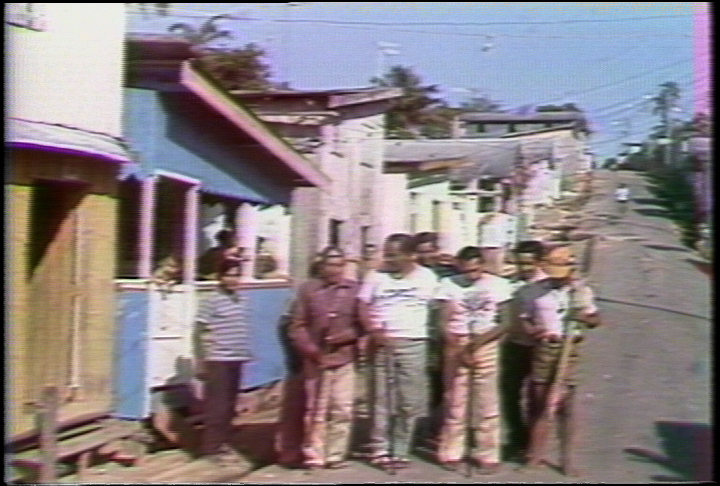
Video still
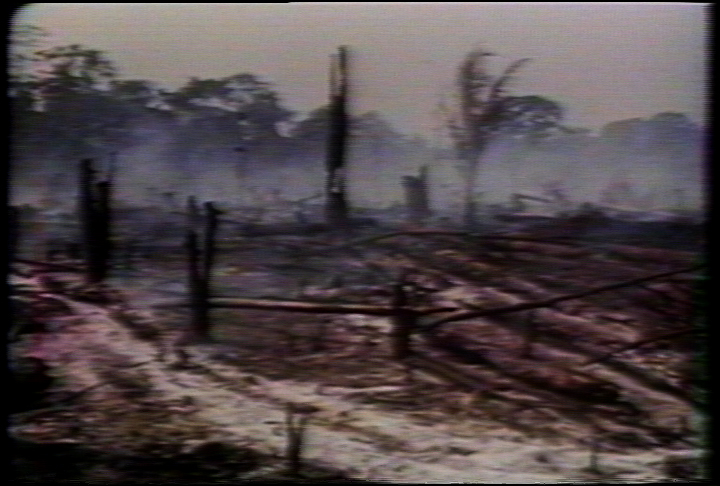
Video still
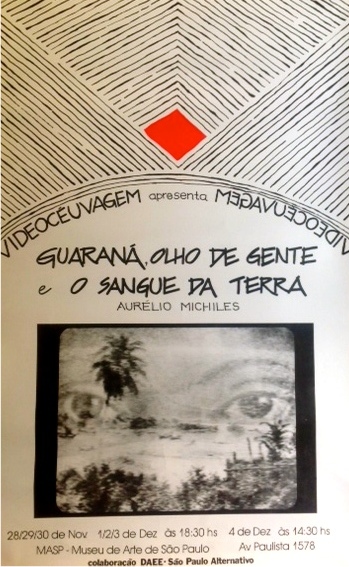
Poster of Guaraná, olho de gente and O Sangue da Terra, by Aurélio Michiles.
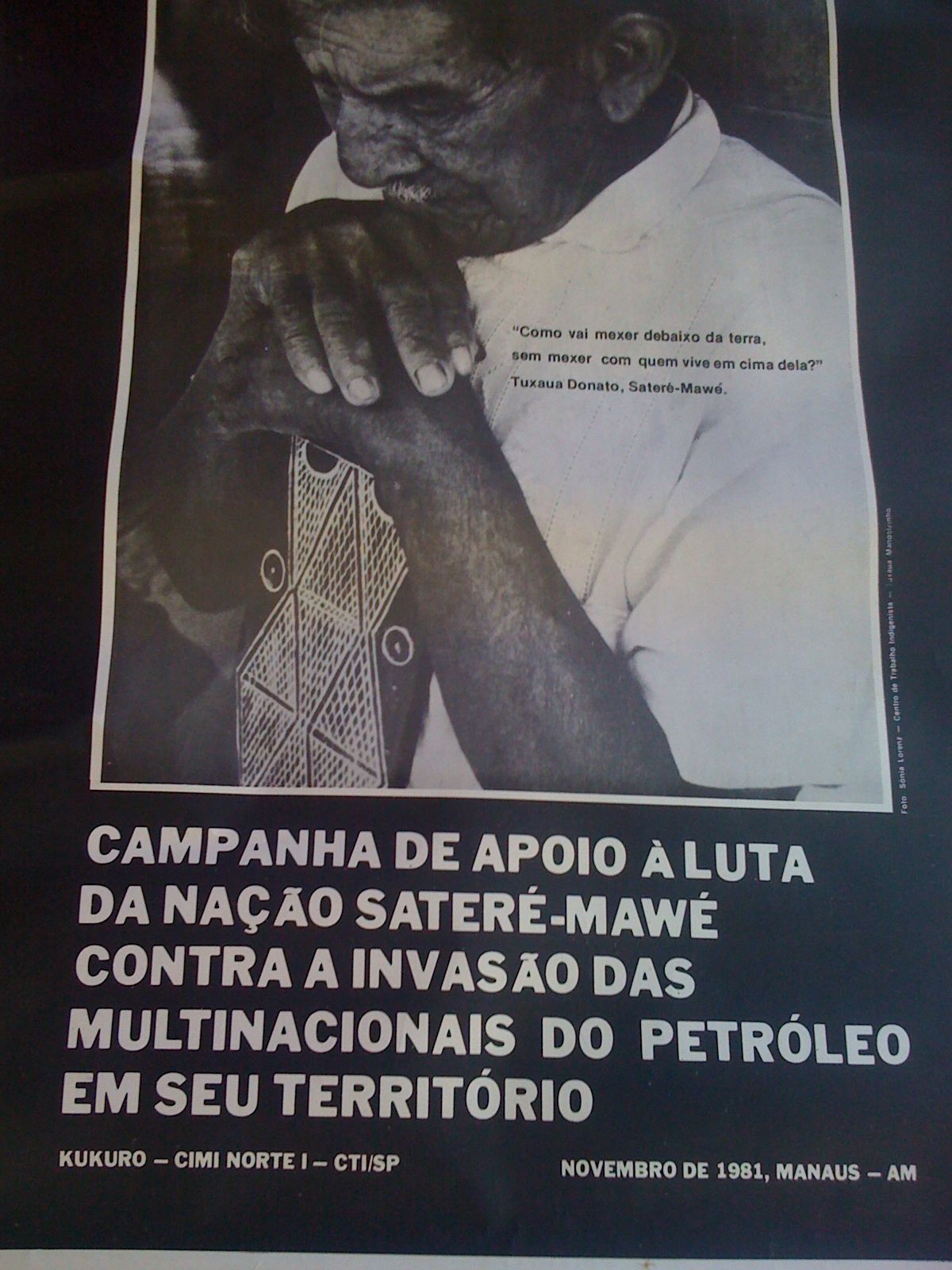
Poster from the campaign supporting the Sateré-Mawé resistance.
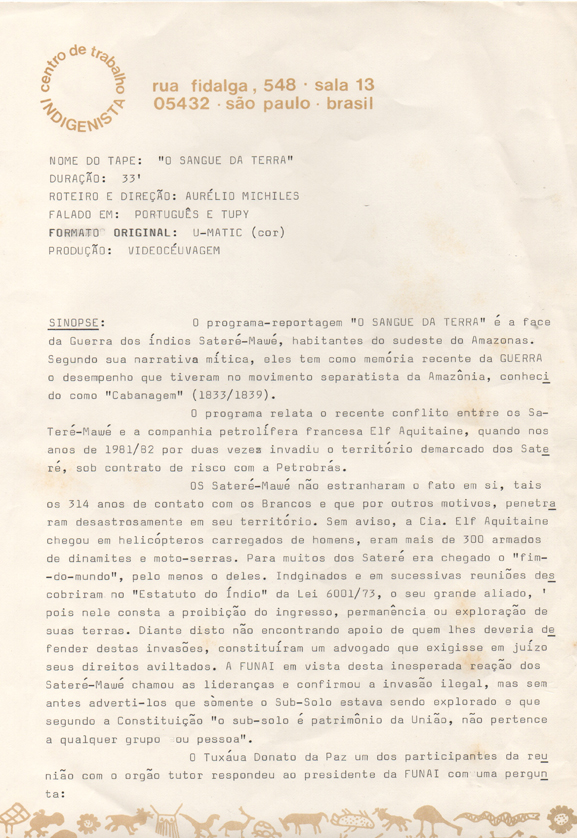
Synopsis manifesto written for the first screen of O Sangue da Terra, in São Paulo. [page 1]
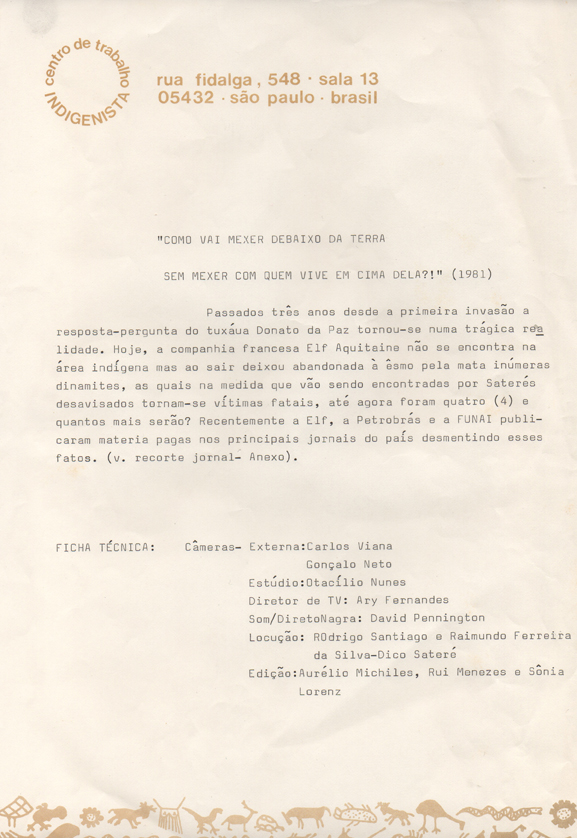
Synopsis manifesto written for the first screen of O Sangue da Terra, in São Paulo. [page 2]
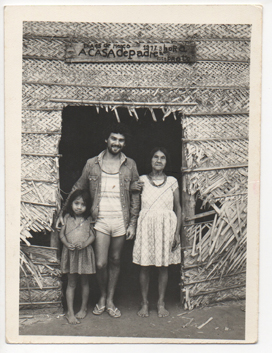
Aurélio Michiles among the Sateré-Maué.
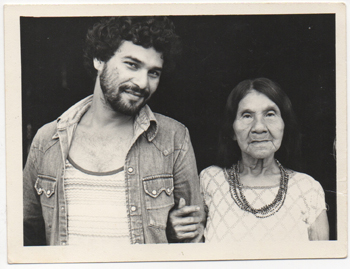
Aurélio Michiles among the Sateré-Mawé.
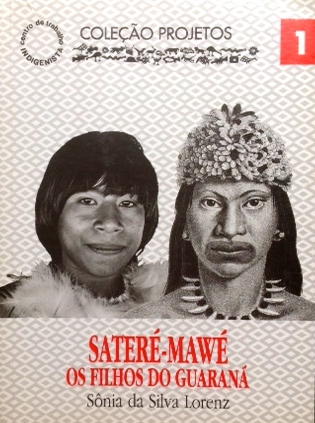
Book cover of Sateré-Mawé – Os filhos do guaraná, by Sônia Lorenz
"I was born in Manaus. I grew up watching the meeting of the Negro and Solimões Rivers’ Waters (Amazonas) arousing my imagination. The black and yellow waters apparently never mix, like the negative and positive in the kinetic elucidation of image. More than an image, it was an existential question about the relationship between opposites. The city was a ludic stew, surrounded by forest on all sides – the backyard of my house.
My formative years took place in a bookish, radiophonic, storytellers’ universe. This is because in Manaus, for instance, television only arrived in 1970. My parents, who were from the countryside, told many stories about their family and life in Maués, a place that I would encounter again later in my life. And when I went to study architecture at the UnB, we thought about Brazil from the prism of the connection between the Atlantic and the Amazonian forest, a connection made by Brasília. This formative concept hit us in a brutal way and forced us to ponder a lot about the Amazon and Brazil.
In 1979, I won a FUNARTE grant to make a documentary on ‘Guaraná Farming by the Sateré-Mawé Indians’. It was my return to Amazonas, my parents’ place of birth. My idea was not only to do research on guaraná farming, but also find clues to my ancestors in Maués. I found out that the guaraná my father used to grate and drink every morning was in fact part of a bigger truth, the cosmogony of a people – the Sateré-Mawé. The habit had been incorporated by Amazonian society. Getting to the city was easy; the difficult thing was connecting and winning the Sateré’s trust. Eventually I did it, and Tuxaua Emílio said to me: ‘you want to tell our story, but there is a story going on right now: the thieves are coming in through the window of our house.’
He was referring to the invasion of his tribe’s territory by the French oil company Elf Equitaine, via a ‘risk contract’ with Petrobras. If they found oil, the two companies would explore it together, and one of the chosen drilling sites was in Sateré-Mawé territory. They went and stormed the forest, hundreds of men with bombs whose chemical composition contained ‘agent orange,’ the defoliant used by the USA in the Vietnam War. The bombs were in colorful bottles that appealed to the playful side of the Sateré-Mawé. Tuxaua Emílio said: ‘How are you going to tamper with the underground and not tamper with those who live on the ground? Petroleum is the earth’s blood.’ Hence the name of the documentary about that episode; they believed that if the oil was removed, the earth would perish.
In that sense, I had to shoot two documentaries at once instead of one. But documenting the events on a daily basis proved impossible. The initial plan was to capture the images in 16mm. The new developments forced me to give up that medium in favor of what I had in hand: video tape, then a brand new product. TV Cultura-AM gave me access to the material, but due to logistical limitations I chose to make a collage – texts, drawings, photos, films and newspaper clippings. Since I did not have a camera of my own, I would make up news stories and thus create my own archival material to use in the film. I had to take the footage and edit it fast, usually on Sundays. Another tool I used in order to overcome the limitation of on-site recording was filming in the studio, where I could use chroma key.
These efforts originated two documentaries. The first one, Guaraná, Olho de Gente, about guaraná farming by the Sateré-Mawé, was made in 1982. The second one, O Sangue da Terra is about the struggle for protection, compensation and demarcation of Indian land, and dates from the following year.
These two documentaries were and still are a reference source to the Sateré themselves. They watch the films in order to remember, for instance, the story of the Porantim, a sacred object represented by a cudgel with Sateré historic inscriptions on it. One side of the cudgel tells the story of their origin, their genesis, and the other side tells the story of war, the age-old war for land, since always and leading up to their encounter with the ‘civilized world.’"
Aurélio Michiles in a statement to PLATFORM:VB (August 2014)
O Sangue da Terra (1982-1984) | Aurélio Michiles
Video | 33'53"
O Sangue da Terra (1982-1984)
Testimony Aurélio Michiles | Unerasable Memories, 2014
The filmmaker and documentarian from Manaus comments on his O Sangue da Terra (Earth’s Blood, 1984) video, featured in the 2nd Festival’s competitive show
GUARANÁ, OLHO DE GENTE (1982) | AURÉLIO MICHILES
Documentary made by Aurélio Michiles while making O Sangue da Terra. [Part 1] [pt]
[Part 2]
[Part 3]
"O Sangue da Terra converses with several films about the Indian issue. For instance, the films by Adrian Cowell (1934-2011), an amazing documentation of the period of expansion of farming-mining frontiers that added to the disorder in Amazon land occupation."
The article O som direto e o tuxaua Manoelzinho (Manaus, 2000), by David Pennington, discusses the use and the importance of direct sound in Guaraná, olho de gente and O Sangue da Terra. Pennington, today a professor at Universidade de Brasília, was the sound operator of both films.
The book Sateré-Mawé: Os filhos do guaraná (São Paulo, 1992) by Sônia Lorenz, studies deeply the Sateré culture.
Number 7 of the collection Caros Amigos – Revoltas Populares no Brasil (São Paulo, 2014) presents the Sateré-Mawé struggle to maintain their native lands.