Oo, a preview
2013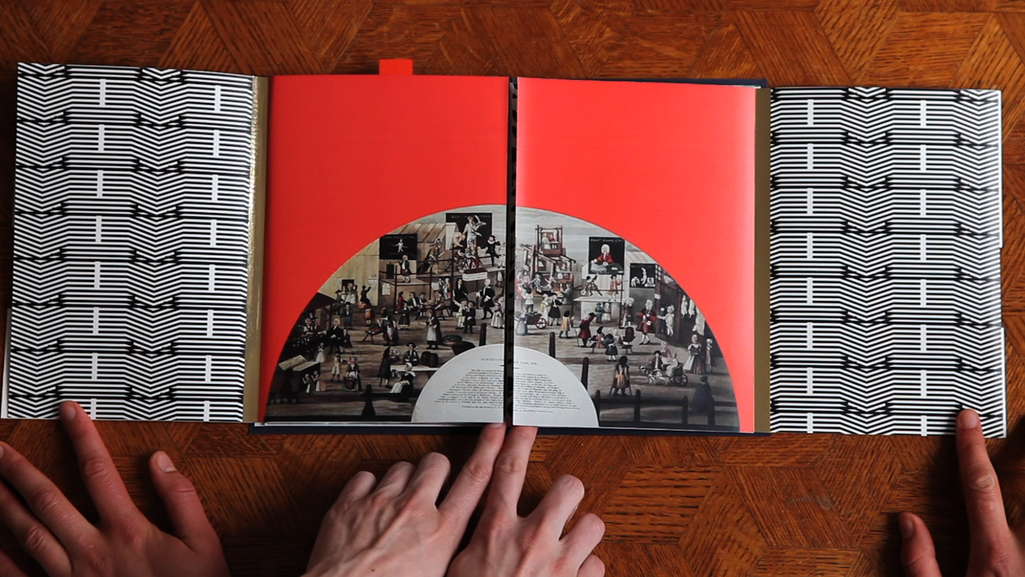
Oo, a preview video still
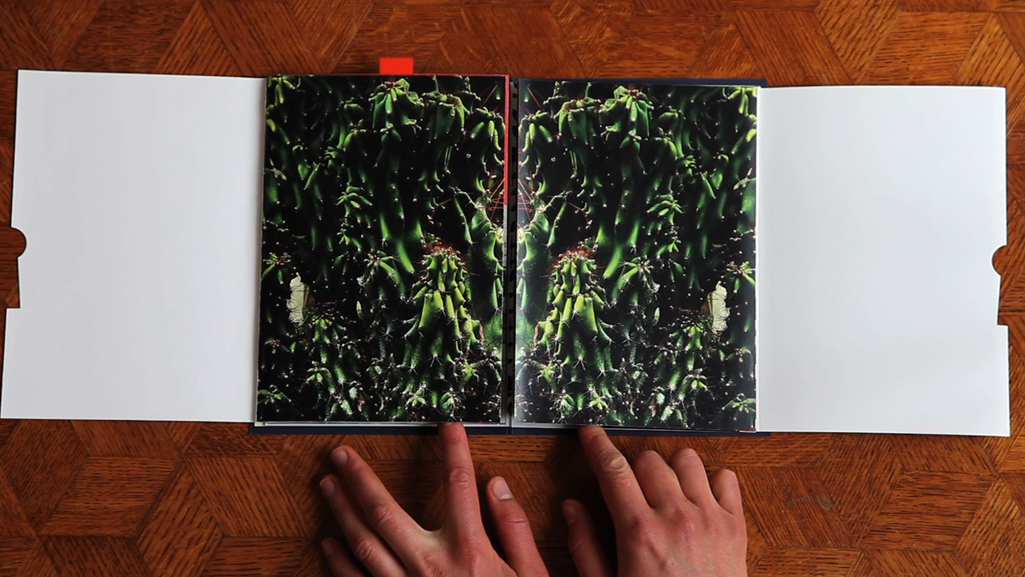
Video still
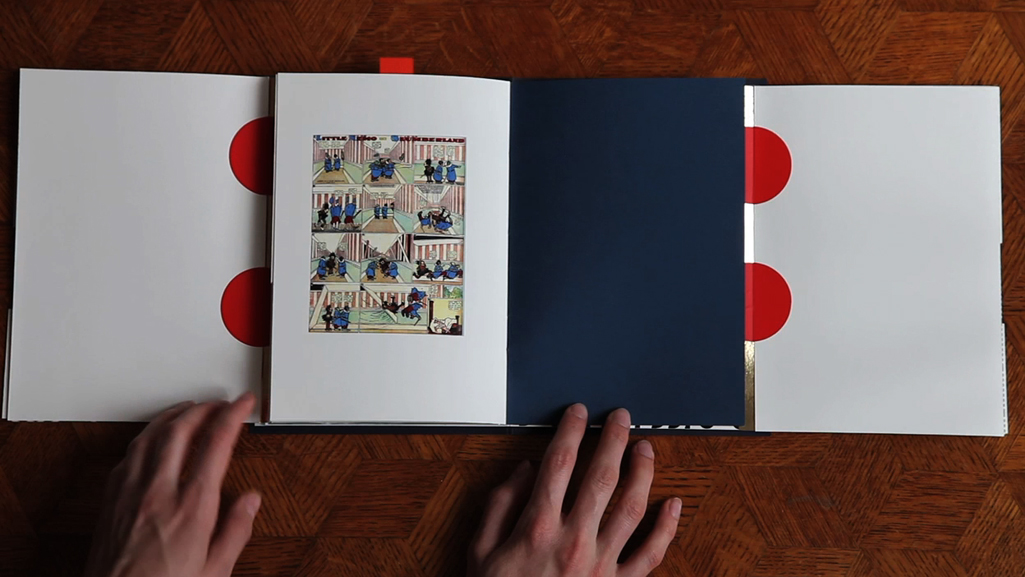
Video still
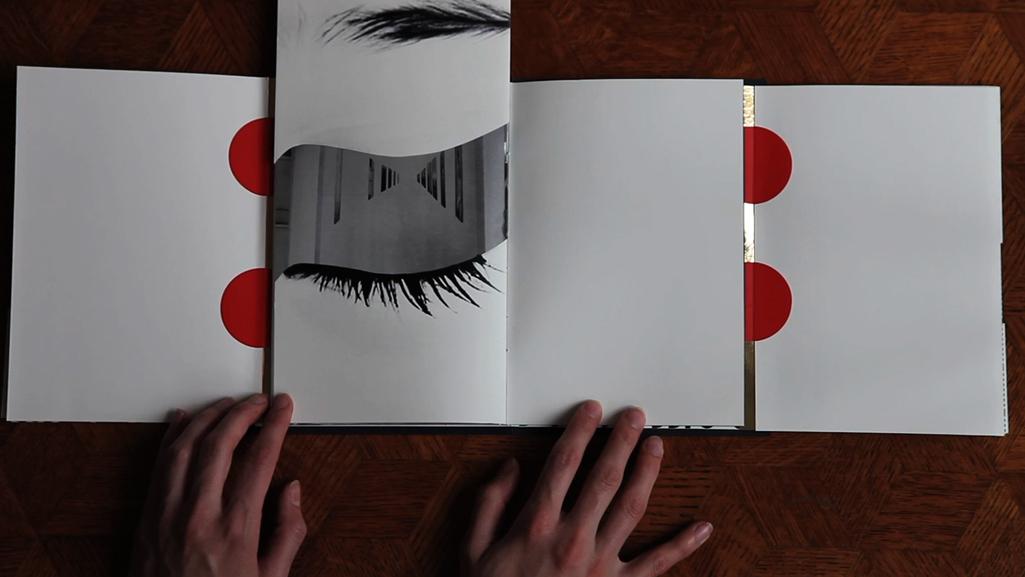
Video still
“I started to work with Oo exhibition when Raimundas Malasauskas, curator of the Lithuanian-Cyprus pavilion at the 55th Venice Biennial, asked me how I would imagine architecture for light, to which I replied that it could be a transparent plastic bag floating in the air. From there on, we lost track of our mind's sequence and tried to recollect it in the Oo, a preview book. The result was a hypnotic dance of images and colors, maybe Venetian colors.
The idea of the Oo, a preview video book was suggested by Malasauskas. He proposed to document a year-long correspondence among the participating artists at the pavilion in the format of a unique book, previewed only in a video. The book itself is a sequencer of minds and stories; it features simultaneous events taking place in different spaces. Its structure was greatly inspired by the artist Marcos Lutyens' short hypnotic notes. The mouth swallowing the exhibition and the eye that sees the future show are the structural interpretations of Marcos' hypnotic letters to the curator of the pavilion. When Marcos Lutyens saw the video, he kindly agreed to make a voice-over for it.
I locate the concept of the piece in relation to my own poetics, like a particle of oxygen that was just floating in open space and travelled through the blood vessels to your brain. It addresses experiences, collective subconsciousness. It unravels the backstage of a pavilion that was projected in Antanas' dreams (Lithuanian artist) and made its way to the most unexpected space in Venice, a 1970's brutalist sports hall. The book acts as an analogue sequencer of ideas that were exchanged around the mystery of Oo. It wraps up the conversations that happened in different places and time. The structure of the book itself suggests that everything is looped and stuck inside the time machine.
Concerning the references that have driven the creation of the piece, I was mostly thinking about the awareness of different spaces around us. Even though I believe this work is something that I could call a trial performance for architecture, I was more interested in spaces that are not visible to the naked eye, or are impossible to be directly perceived — the acoustic space and the clean signal that measures the depth of the sound of every space or hidden architectural patterns, which can be decoded in the message. That is why it was also important to have Marcos' hypnotic voice and text over the video, which transport the viewer to the mental spaces of this work.”
Viktorija Rybakova in a statement to PLATFORM:VB (July 2015)
Oo, a preview, 2013 | Video, 3’30”
Viktorija Rybakova
“The technical part of the book was inspired by19th century keepsakes — books that represented salon culture, memento albums and printed matter that were made for the sake of pleasure for writers and artists, to provide the text with an aesthetic appearance. Various components of the book were made according to the library's binding standards. The title is embossed in golden foil lettering, the spine is made with plastic material, and the endpapers decorated in a unique pattern.
The pattern for the endpapers of the book started as I discovered Dominican monk Sébastien Truchet's tiling. He was the one who started to examine encoded ancient Arab patterns and morphing tiles. Inspired by Arabs, he invented a simple method with which you can create endless pattern variations using a square grid system and a tile divided into two triangles of contrasting colors. Regardless of the way you choose, you will have a system, and you can invent your own destination, your own codes, as did another scientist, Cyril Stanley Smith, using the Truchet method and a quarter circle. However, instead of the Truchet diagonal, he used a quarter circle to study the structure of crystals. Smith wrote The tiling patterns of Sebastien Truchet and the topology of structural hierarchy and later invented nuclear fission — he was one of the scientists behind the Manhattan project (the first atomic bomb). I tried Smith's pattern technique using a quarter circle and a semicircle. The tile was randomly placed on the grid, thus generating oO's image.”