Morte súbita + O Brasil
2014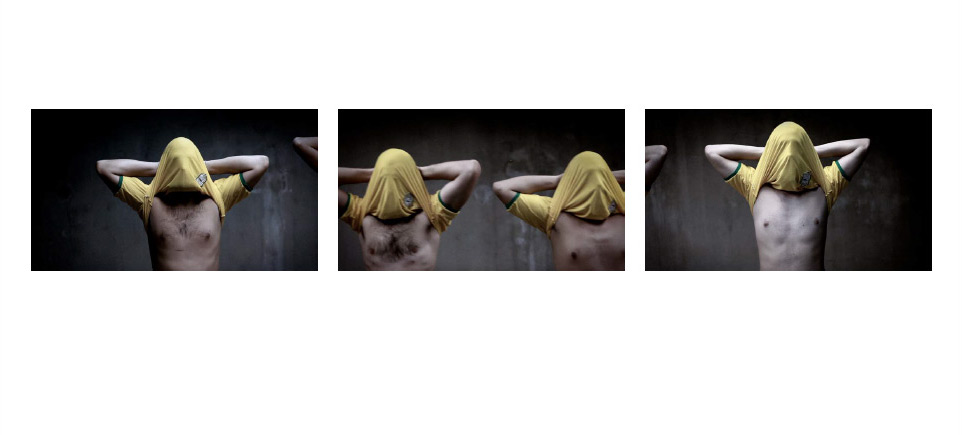
For the videos O Brasil [Brazil] and Morte Súbita [Sudden Death], I used as a research trigger the 1970 FIFA World Cup, held between May 31 and June 21, 1970 in several cities in Mexico, and the political and social reverberations that this event had in the Brazilian historical and social process. Considered by many to be the greatest of all time, the 1970 Brazilian soccer team finally won the Jules Rimet Cup, taking on the glory of a heroic feat in an unprecedented live broadcast on Brazilian TV. With a broad coverage in the news outloets of the time, the victory of the Brazilian team in 1970 was used as an instrument of propaganda for the military regime. The campaign for the “Canarinho team” began in 1969, the same year that General Emílio Garrastazu Médici's presidential term began, considered by many the harshest period in the Brazilian military dictatorship. Médici was known for murdering and torturing thousands of Brazilians, and also for using the achievements of the Brazilian soccer team to promote the heroism of the Brazilian people.
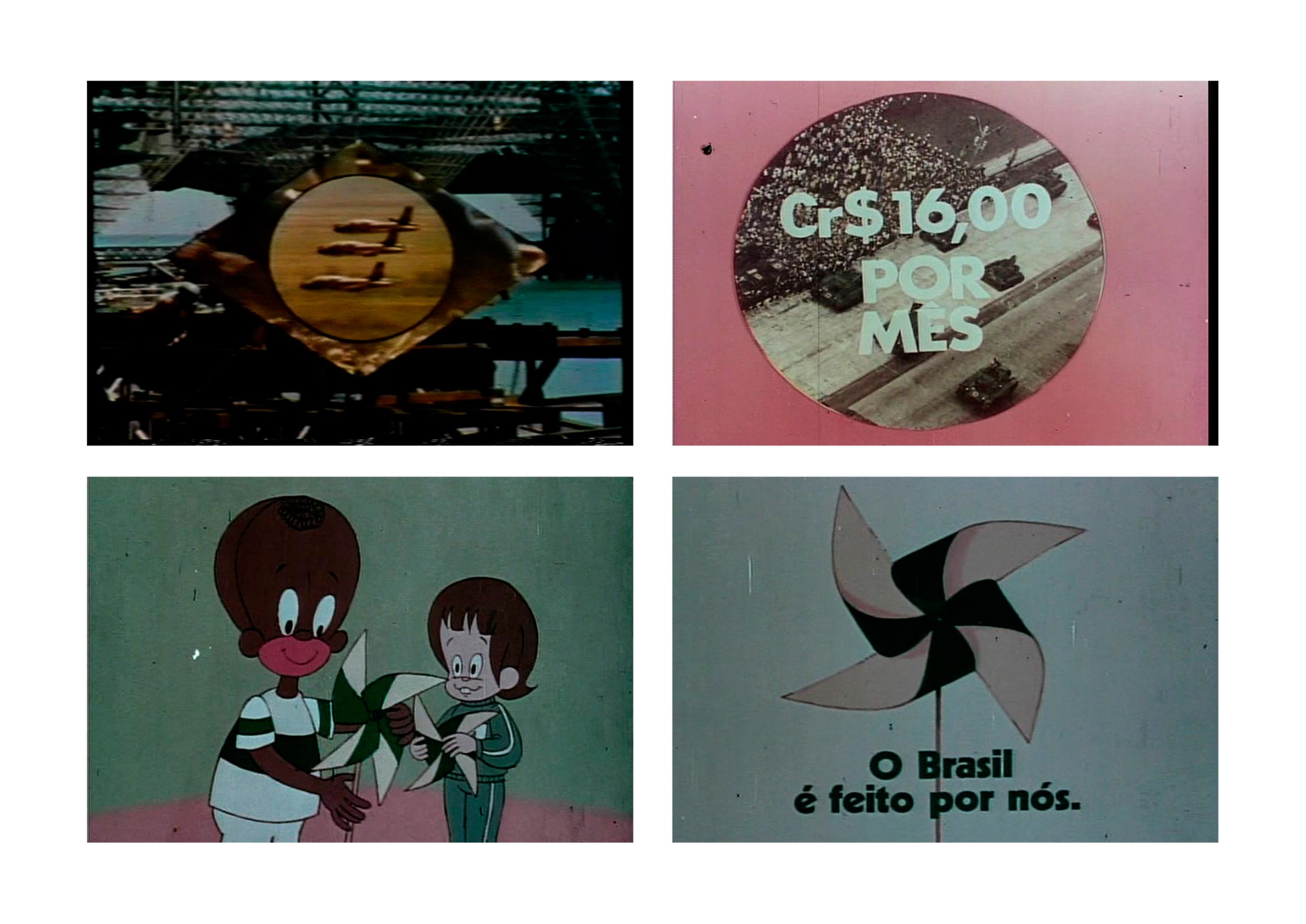
O Brasil consists of an audiovisual essay on the appropriation and use of national symbols (flag, hymn, soccer, racial diversity, etc.) as instruments for the propagation of the ideologies of the Brazilian military dictatorship. The video is composed of the combination of historical materials found in the National Archives and articles from the main newspapers in the years of 1964 and 1969 with the purpose of demonstrating how the Brazilian military dictatorship used marketing strategies to build a national identity that would bring dictatorship and society closer in order to cover up the genocides committed by their dictators.
Morte Súbita, in turn, consists of a video projection with people covering their faces with a replica of the jersey worn by the 1970 Brazilian soccer team. The soundtrack mixes sounds of soccer stadiums (shouts, clapping, fireworks) with sounds of protests and demonstrations (bombs, shots, shouts, and so on); the soundtrack also features the reading of the names of dead and missing persons in 1970, collected in reports of organizations against human rights violations, such as Grupo Tortura Nunca Mais.
The videos presented at the 20th Contemporary Art Festival Sesc_Videobrasil represent a very important period in my artistic production, because the execution of both of them took place at a time when I sought to deepen my research strategies and work development. Until the early 2013, when I began my research for the videos, all of my work dealt with quick responses to events occurring only in the present time. That is, the works that I had developed until then did not intend to investigate Brazil’s historical past of in order to understand events in the present time. As of O Brasil and Morte Súbita, my work began to investigate Brazil’s past, or rather, the specific aspects of Brazilian history, attempting to investigate some moments of State violence that still echo in the construction process of the Brazilian society. Since then, much of my work use this strategy, of asking the past about the problems of the present in order to construct their narratives. The starting point for the construction of the videos stemmed from the idea of the artist as a historian who proposes other narratives about the obscure facts of the past. For that, I researched contemporary art works created from the practice of the artist-historian. For the most part, these works do not focus their research solely on the creation of new archives; on the contrary, many of them re-signify existing facts and archives to thus operate a direct intervention in History. Some artists-historians base their work on the research of forgotten, nearly invisible, or marginalized characters in History, that is, they seek to give visibility, through their productions, to “parallel histories,” thus showing how the paths followed by the great narratives go through the interconnection between personal and collective histories. Other artists-historians use historical facts to create fictional narratives in their works, that is, these artists produce a kind of “speculative history,” in which the truth is questioned at all times, since, by operating a fictional reading, they reveal the possibility of the existence of other pasts concealed within History. The videos O Brasil e Morte Súbita do not focus their investigation on only one of the practices of the artists-historians; on the contrary, both videos move between fiction, documentary, and essay.
Jaime Lauriano in a statement to PLATFORM:VB (August 2017)
Morte súbita, 2014 | Video, 24' 51"
Jaime Lauriano
O Brasil, 2014 | Video, 18' 56"
Jaime Lauriano
I would rather not mention references for the construction of my works, as I would surely make the mistake of forgetting important people who influenced other choices that are not directly evident in specific works. This is why I would like to state that my influences are diverse, ranging from contemporary Brazilian art, to masks of the Dogon people of Mali, through football and their social and political histories.