Not Every Day Is Spring
2016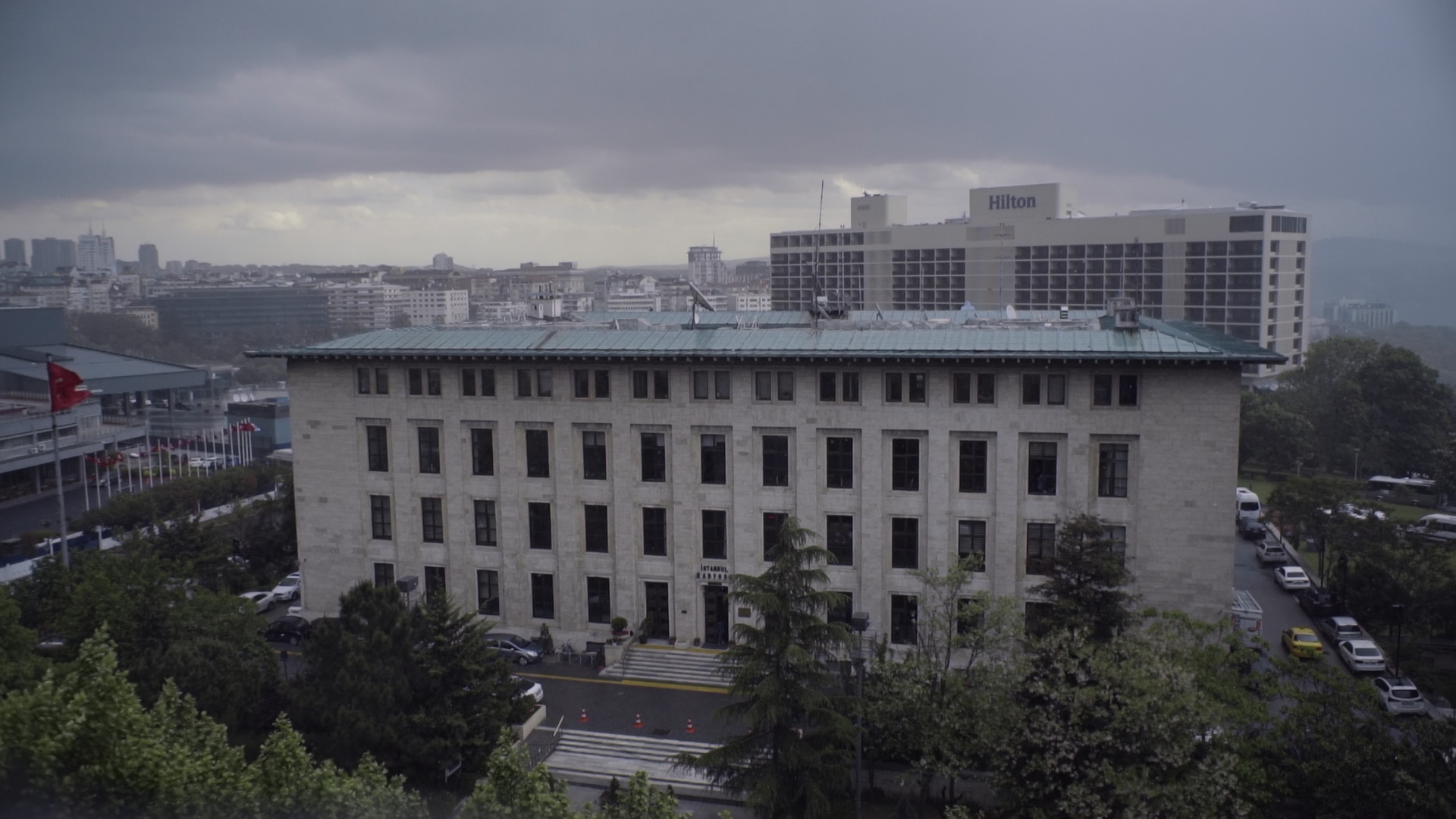
This work had a long research process, which took some twists and turns. I started off with an interest in a musician called Udi Hrant Kenkulian, a blind, old Armenian Turkish player, merely because I liked his music. Upon beginning the research, I quickly realized that Kenkulian lived in a period of great upheaval in music in the Ottoman region. This took me to Istanbul, where most of the research occurred.
The project became a reflection on the history and contemporary state of modal oriental music after the dismantling of the Ottoman Empire and the rise of nationalisms during the various drives towards modernity at the turn of the 20th century.
In this period, ethnomusicologists collected and arranged rural folklore pieces, which they disentangled from one another in order to construct out of them new musical repertoires meant to reflect so-called pure national identities.
In the place of Kurdish, Armenian, Greek, Arabic influences, Modern Turkish music, for instance, turned towards western notations, polyphonic harmonies and so on.
The research included conducting interviews with historians, ethnomusicologists and musicians; collaborations with church chorists and instrument makers, research in libraries and archives and visits to the radio stations of Istanbul and Ankara. I also took some singing lessons, sifted through record collections, visited cemeteries, churches, mosques, zawyas. I read, and then I met people to have them explain what I was reading, or point me to what I was not reading.
This work is similar to my other works in that it combines various scales of narrative, from micro to macro, or from the personal to the historical: going from the lyrics of a love song to this larger moment of modernity in modal music in the Middle East. The project also excavates the politics in something that is not necessarily present on the surface. The main difference with this piece, I would say, has to do with the fact that this was the first project where I dealt with an overtly historical moment, and where much of the research had to do with pre-modern practices and how they shift with the advent of modernity. Regarding the film, particularly, this was also the first film that I made that is not a video essay and one that includes little to no found footage.
In Not Every Day is Spring, I tried to create a sensory experience using textures, sounds and images, which become the bearers of historical resonances, also contained in the musicians’ bodies, the bellies of their instruments and in the materials of the buildings that house them. The project at large (which includes sculpture, drawing, performance), and the film in particular, seek to capture these often inaudible resonances by reflecting on displacements and amnesias, as well as resiliencies and remembrances in the face of the ailments that continue to flood the region today. Looking at the historical intertwining of the region’s musical traditions, I actually seek to reflect on the violence exerted by borders on the one hand, and on the other their inability to curb waves of sound and human migrancy and culture.
Haig Aivazian in a statement to PLATFORM:VB (August 2017)
Not Every Day Is Spring, 2016 | Video, 46'
Haig Aivazian
We Are Sick, But We Are Alive, Haig Aivazian in conversation with Rayya Badran (Ibraaz, 2017) [eng]
Film/Art | News from Anywhere, Nowhere, Home: Notes on the BNLMTL, by Andrea Picard (Cinema Scope) [eng]