Myth of Modernity
2014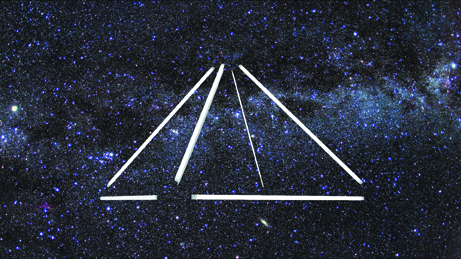
Video still
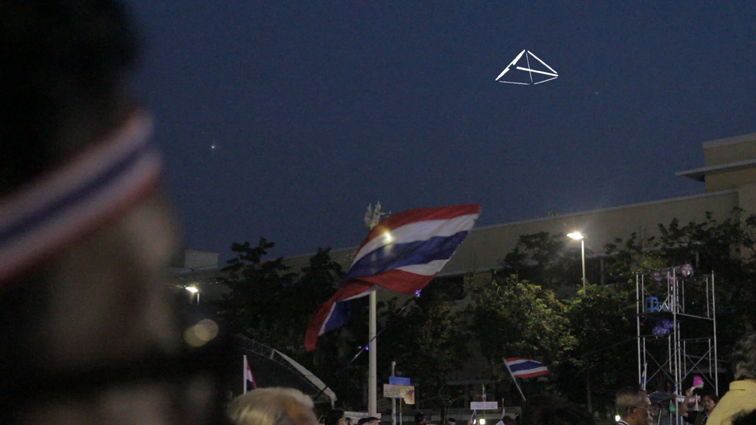
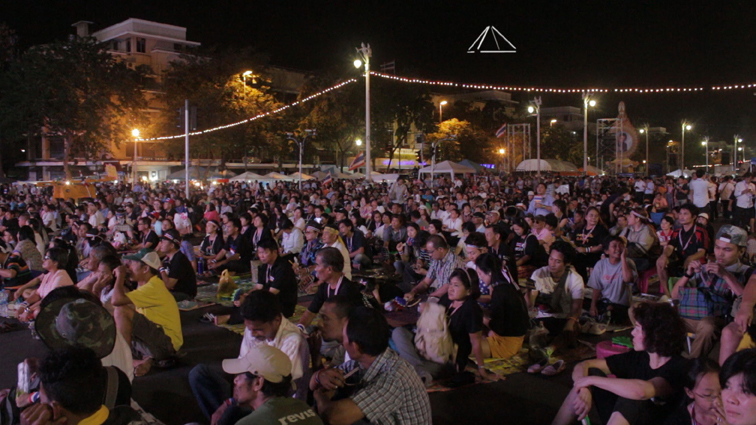
Video still
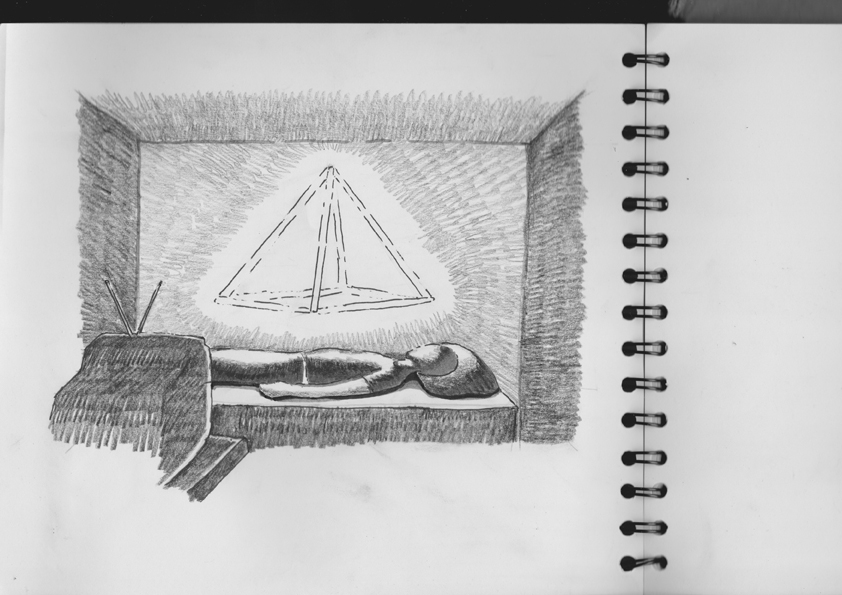
Production design for the piece, 2014
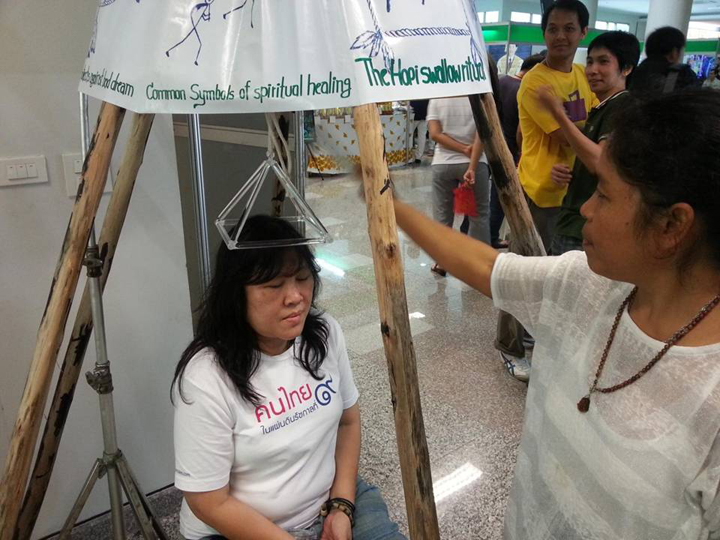
Research for the piece. 22nd International conference of spiritual science, Bangkok, Thailand, 2013
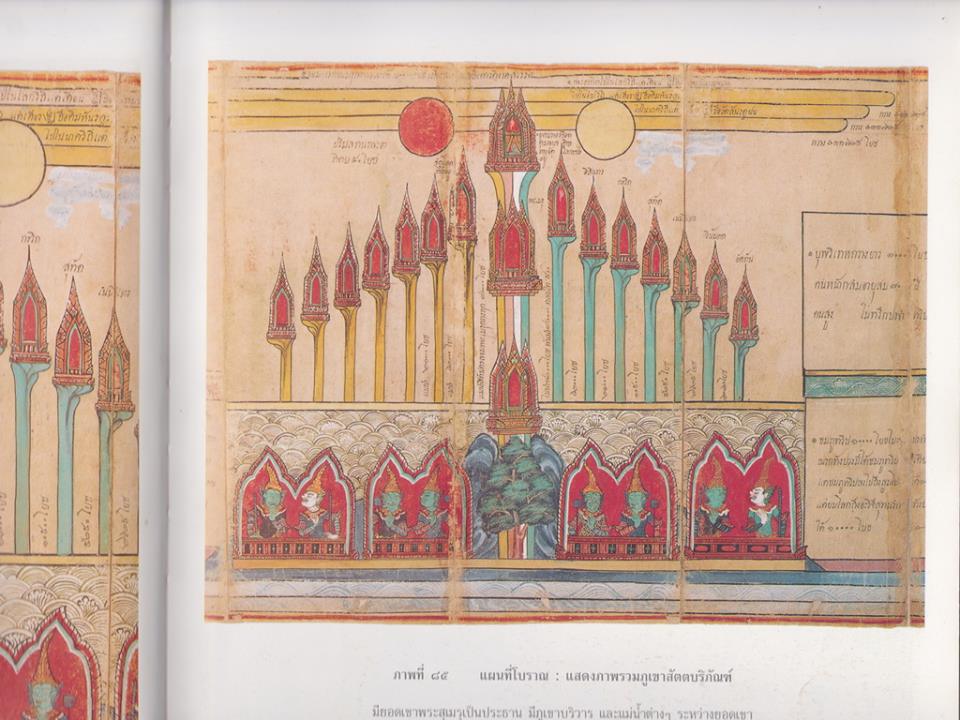
Research for the piece. Sumeru mountain, Singapore. Illustration of Tribhumi from the Ayutthaya and Thonburi period, 1776 (reprint in 1999)
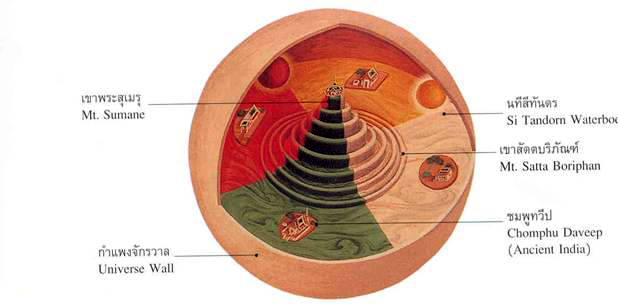
Research for the piece. Diagram of heaven and the human world in 3D
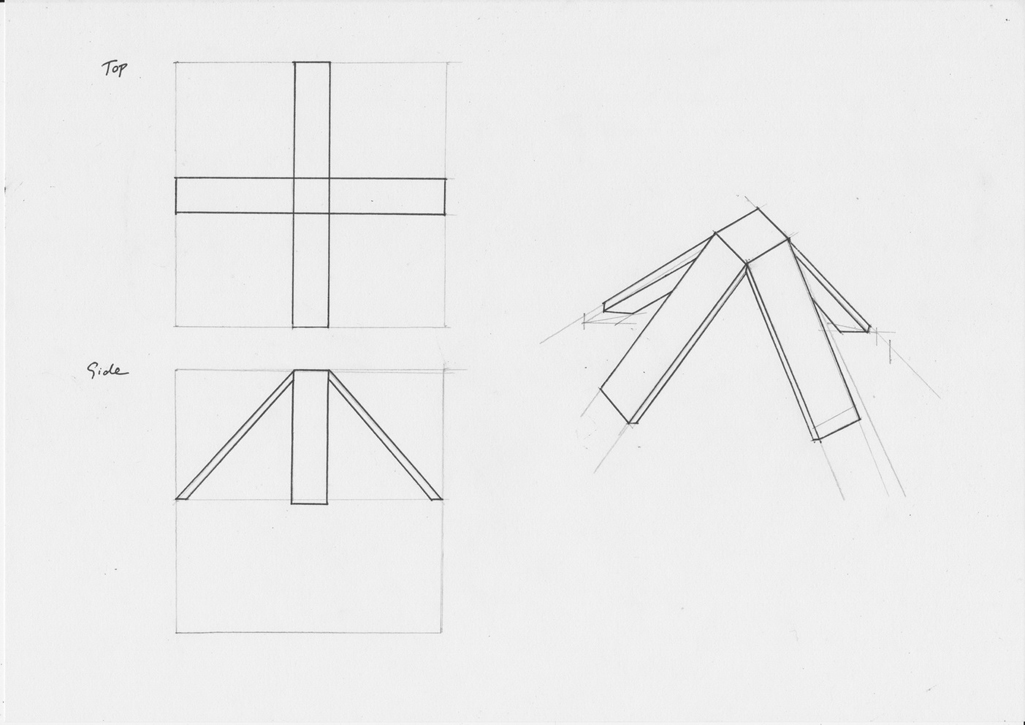
Design of joint for the fluorescent pyramid, 2014
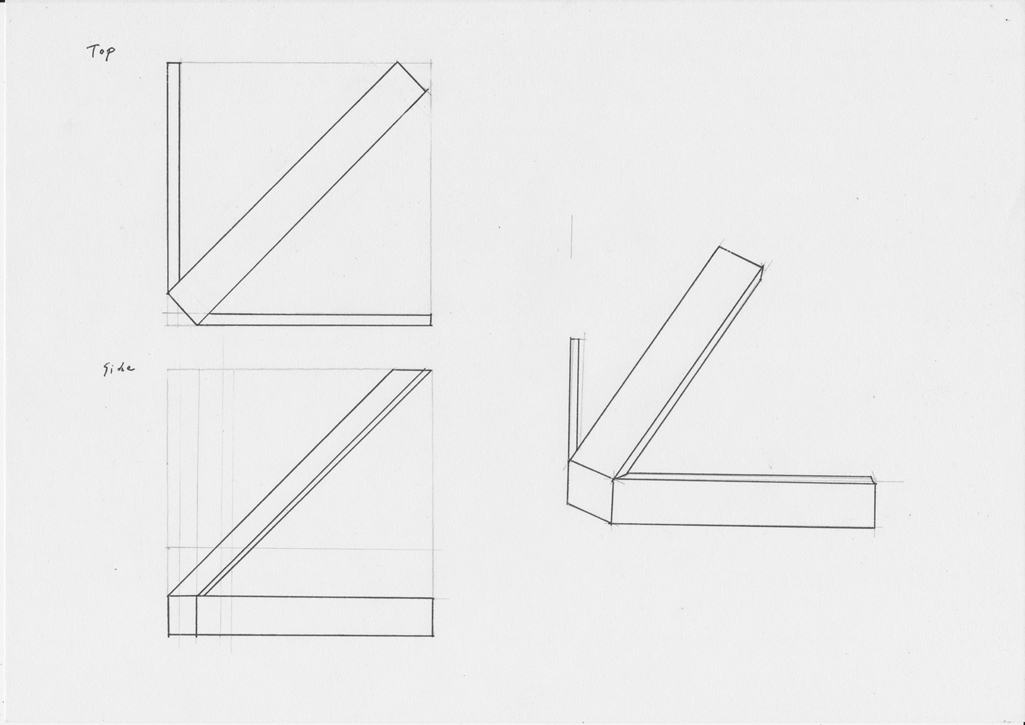
Design of joint for the fluorescent pyramid, 2014
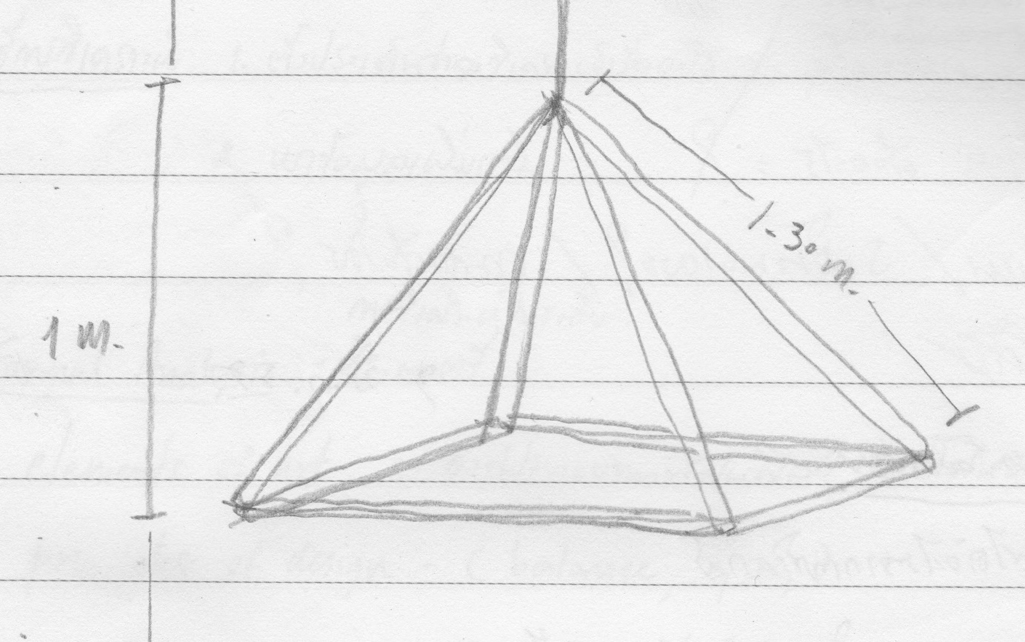
Sketch for the installation FAITH and FAIRY TALES: New Media Art for Thailand (ADM Gallery, Nanyang Technological University, Singapore, 2014)
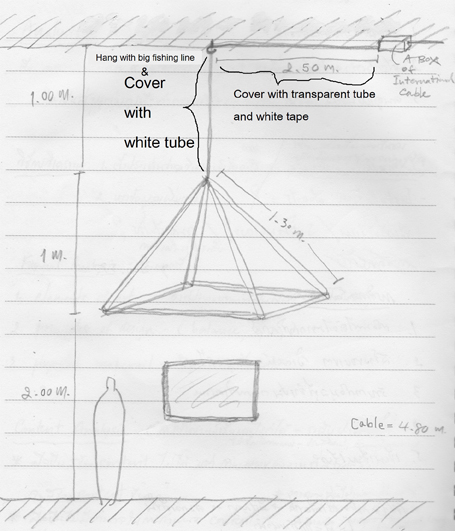
Sketch for the installation FAITH and FAIRY TALES: New Media Art for Thailand (ADM Gallery, Nanyang Technological University, Singapore, 2014)
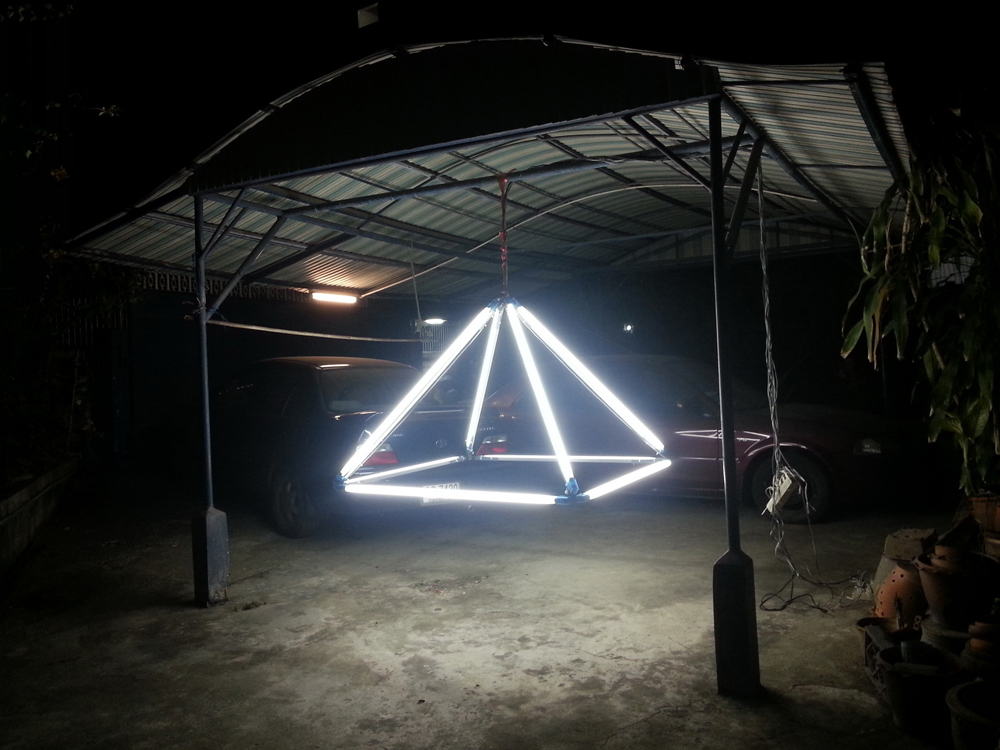
Installation test of the fluorescent pyramid, 2014
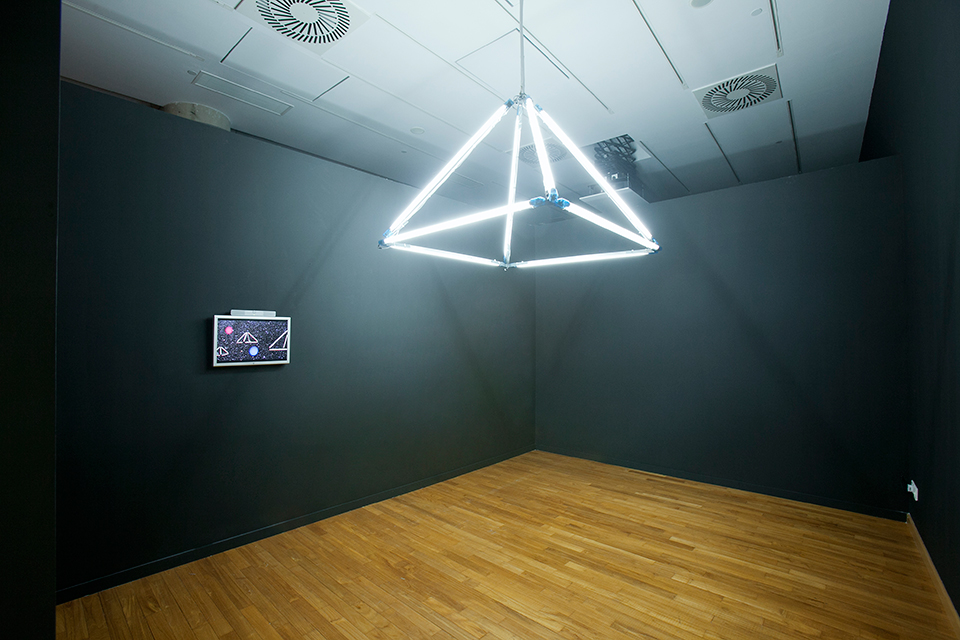
Installation view, FAITH and FAIRY TALES: New Media Art for Thailand (ADM Gallery, Nanyang Technological University, Singapore, 2014) (courtesy of the ADM Gallery)
“In Thailand, between late 2013 and May 2014, there was a huge demonstration against the Thai government that came from the elections of 2011. The protesters claimed the government was corrupted and, for that reason, blocked the main streets of Bangkok for months. The strike became known as "Shutdown Bangkok".
Even after the government dissolved the parliament and made new elections, the protesters were still unsatisfied. They believed the election itself could be a cause of corruption, so they were against it.
I tried to answer my questions by joining the protest and listening to their leaders, who claimed being good people because they were Buddhists who loved their nation and their king. All they wanted were good politicians, clean politics and a peaceful country, but not through elections, not from the people's voice, they said.
This political situation was very interesting, and I decided to document it as a documentary video. It started with some questions I had about the protesters. What were their political beliefs? Why were they against election? And since they were against election, what kind of political system did they want in place?
For me, their political beliefs were kind of idealistic and reminded me of the Buddhist beliefs. The Buddhist cosmology is composed of three worlds and it is called 'Tribhumi' ('Tri' means three; 'bhumi' means world or land), which means that the human world is in between hell and heaven. According to this philosophy, if you are a good person, after you die, you go to heaven. On the other hand, if you are a bad person, you go to hell. Tribhumi was originally from ancient India, and this Buddhist belief was spread out to South East Asia and East Asia.
In Thailand, there are three main pillars of the country. The first one is Nation, the second one is Religion (mainly Buddhism) and the last one is Monarchy. The protesters who come out to the street believe that they are protecting these main pillars. Meaning, they think they are protecting Thailand from corruption and are conserving constitutional monarchy. They thought they did the right thing for their country and they were good people who would go to heaven for that. So, in the end, they were kind of nationalist.
I researched more about the influence of the Tribhumi belief and I found out that it also appears in traditional Thai painting and architecture. Thai traditional architecture imitates heaven in order to establish a connection with the human world. These architectures include pagoda, palace and crematory, and modern architects developed the traditional architecture based on the triangle form. Nowadays, there are many buildings, such as cultural centers, parliaments, and city halls, with a triangular roof. These buildings claim having a Thai identity, but they are actually nationalistic buildings.
All of this is reported in Myth of Modernity, which is a mixture between documentary and fiction, uncanny and marvelous. I call it "magical realism", because it is not absolutely fantasy, since it is still based on reality.”
Chulayarnnon Siriphol in a statement to PLATFORM:VB (July 2015)
Myth of Modernity, 2014 | Video, 16’
Chulayarnnon Siriphol
The book Architecture and Modern Thai Society, by Chatri Prakitnonthakan, which discusses the development of Thai architecture, from traditional to modern, was a reference to Chulayarnnon Siriphol.