My Maps

Southern Territories: Experiences, cities and borders
Sabrina Moura
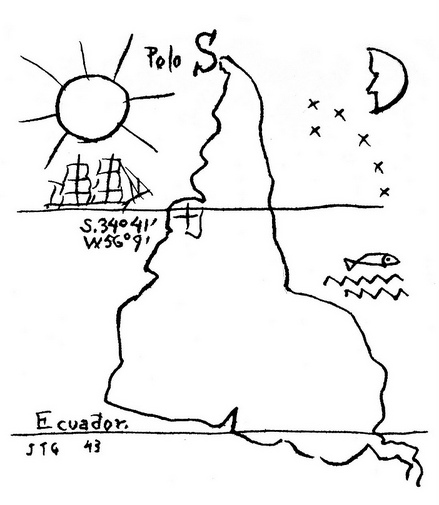
América Invertida (1943), Joaquín Torres García
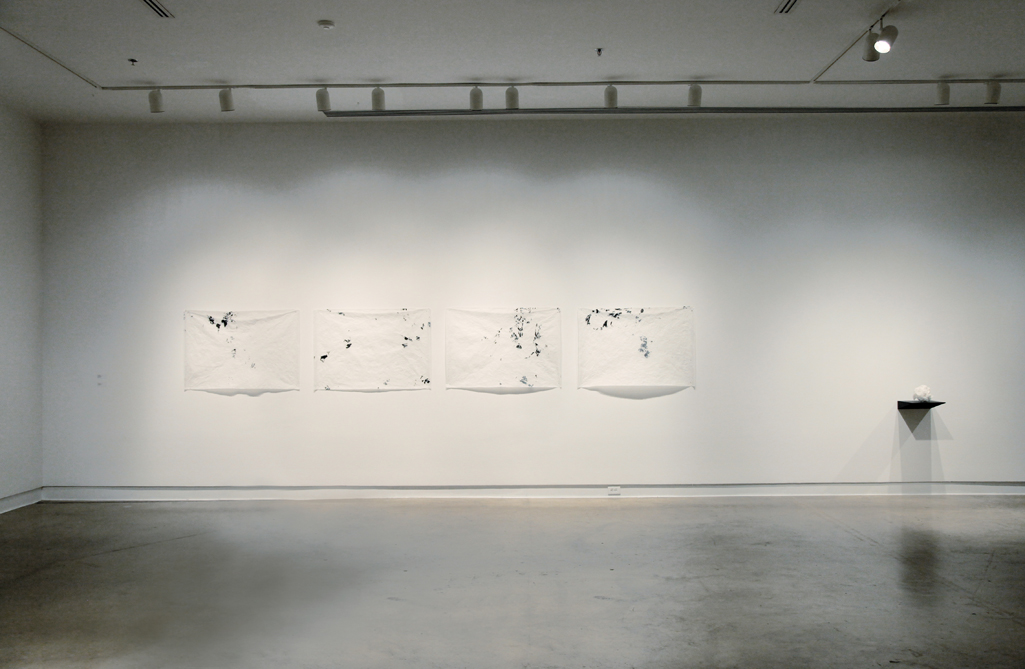
Unmapping the World (2011)
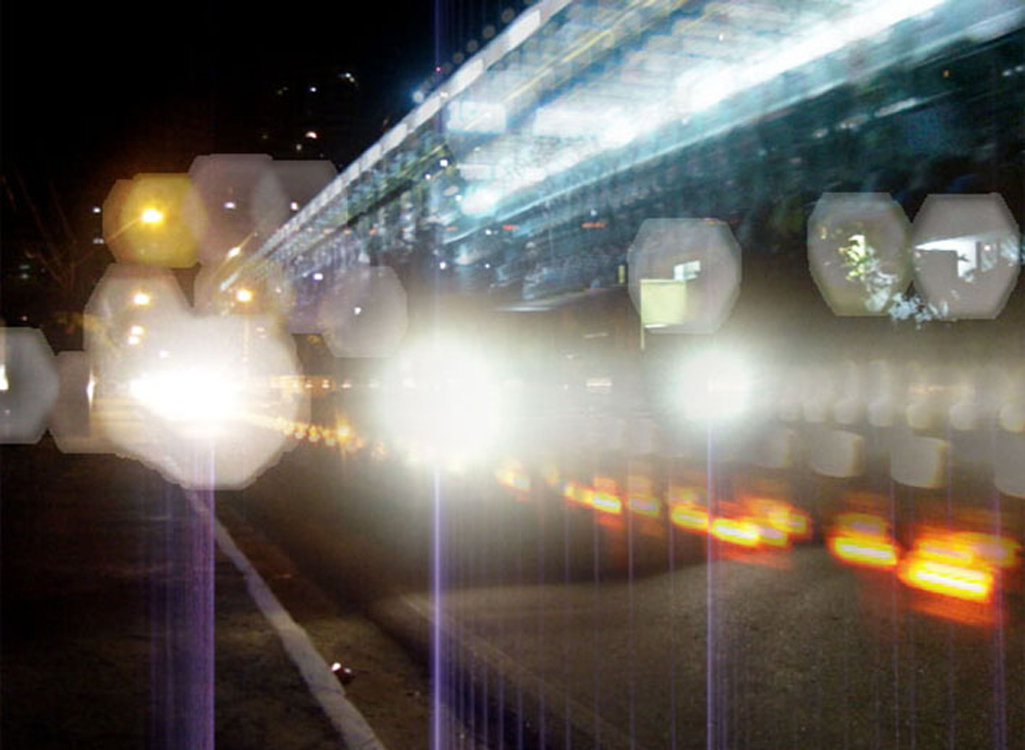
Espécimens II (2012), video still
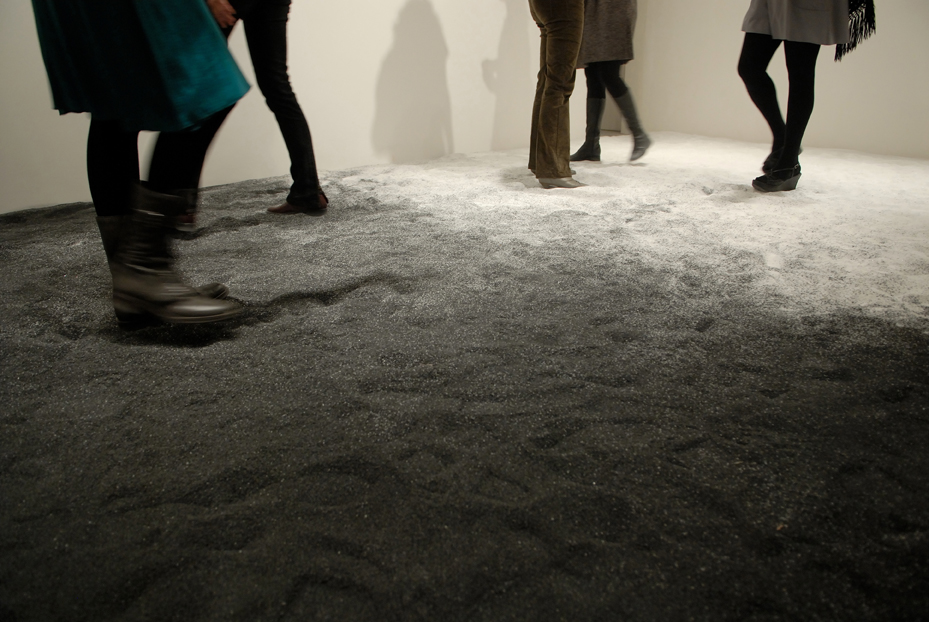
Teoria das Bordas (2007)
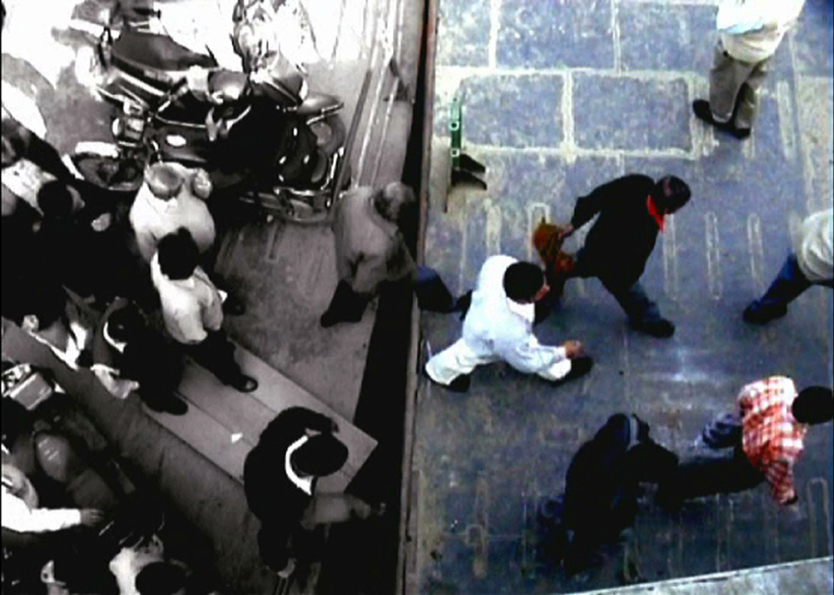
Suara Putra Brahma (2010), video still
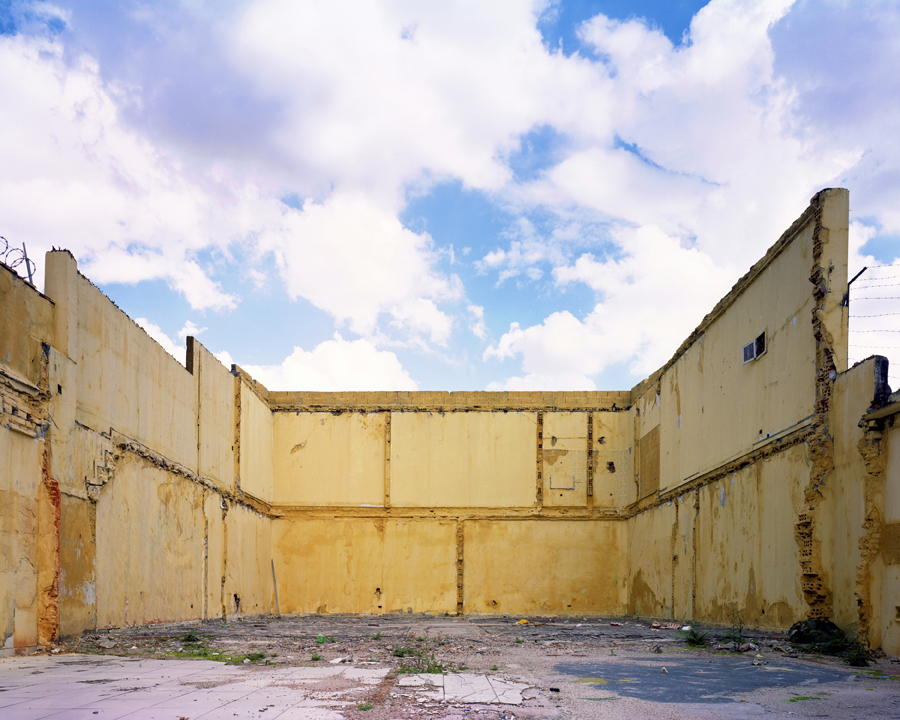
Escultura do Inconsciente #32 (2011)
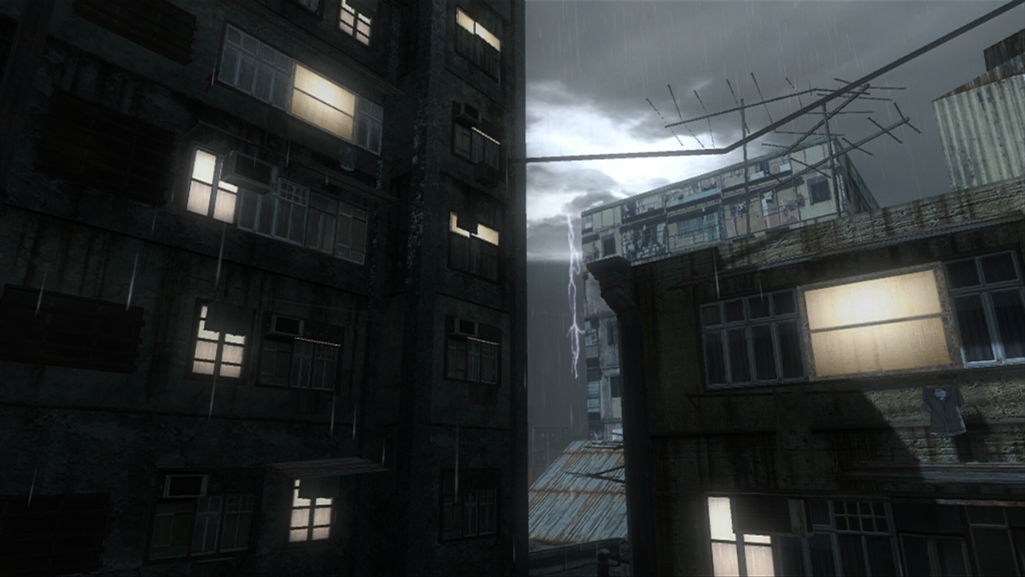
Another Day of Depression in Kowloon (2012). video still
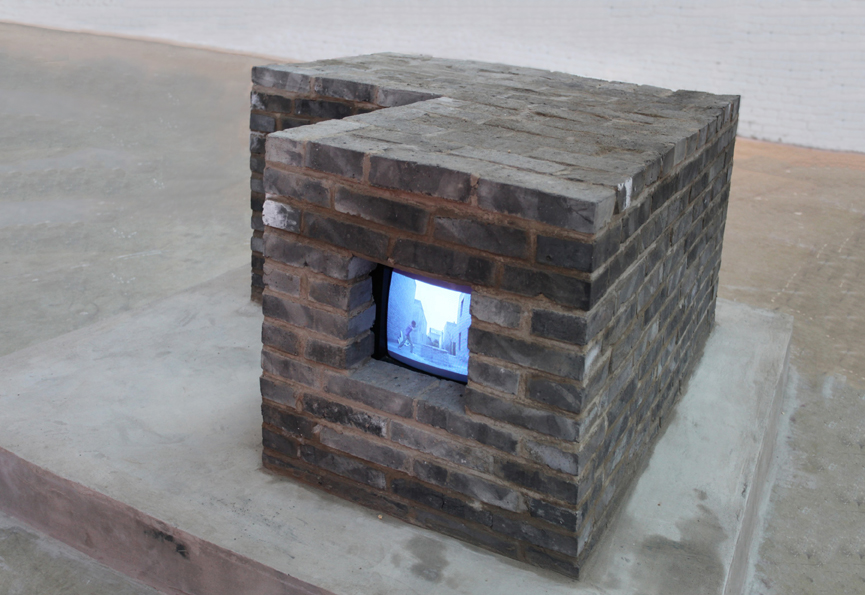
Demolishing Rumor (2010), video still
In response to the European post-war avant-gardes, the Uruguayan artist Joaquín Torres García created La escuela del sur: “The North must not exist to us, except in opposition to our South. That is why we now put the map upside down. [...] America’s tip extends and insistently points to the South, which is our North.” In 1943, he drew a map in which he inverted the positions of the American countries cut by the Equator and the Tropic of Capricorn. At the top, the far South of America was located.
Displacing imaginary lines, redesigning territories, reorienting cardinal points. Many artists foray into the cartographic field not only to express a “counter-discourse”, but also to establish renewed views of the world.
Conversing with the oeuvre of Torres Garcia, the artist Clarissa Tossin enunciates, in Unmapping the World (2011), the extent to which the cartographic projections we know go beyond the objective representation of space. In their contours, they bring ideological or political issues up, like the notion of center associated with the North/West of the globe. “My interest resides in subverting this format and questioning the naturalization of the ideas sponsored by these representations”, Clarissa explains.
Boaventura de Souza Santos, a Portuguese sociologist, reminds us that “no map is neutral". While the physical map examines topographies and the political map demarcates the administrative boundaries of a territory, insurgent forms of cartography open up a multiplicity of processes in their contours. In this case, discussing the South means questioning the neutrality of the territories we had formerly integrated as Southern, and it allows us to considerer the political, social and symbolical implications on which their images are founded.
In order to draft other “world maps”, one must express the specific forms of cartographies of each place, each body. “The world is what one sees from where one stands”, said Milton Santos, and only the validation of our experience as a means of knowing the world can teach us, for instance, that “a river, apart from being a stream of water, represents a sacred entity.”
The Brahmaputra is the river that divides the northern and southern portions of Assam, in India. It is the only Indian river with a male name (meaning "the son of Brahma" in Sanskrit), and the temple of Sukreswar, dedicated to Shiva, lies along its banks. Marked by ethnic and religious pluralism, the region has staged separatist conflicts for decades.
"Despite these conflicts, the people of Assam still manage to live in peace, and they use the Brahmaputra as a source of natural resources. It is a melting pot that allows the people who are directly connected to the river to exchange information, carry out commercial transactions and engage in strategic cultural mobilization", says the Indonesian artist Mahadikha Yudha, about the subject tackled in his video Suara Putra Brahma (2010).
If the crossing of the Brahmaputra is reminiscent of the human scale in the experience of borders, the body is also the means by which Lais Myrrha evokes the interpenetration of boundaries, in Teoria das Bordas. Here, the experience of dissolution of margins takes place as one walks across the premises, causing the piece’s geometry to “slowly come apart, and its edges [in black and white] to dissolve into a dark grey”. These movements extrapolate the disarray of forms in space: "We can question ourselves as to which borders the piece refers to. Is it simply a geometrical construct, or does it point to other realms? Could it be taken as a metaphor? For what?”, Lais asks.
A revision of the notion of maps is also relevant to understand the urban fabric. In times of continuous expansion of the megacities, Nelson Brissac inquires: “How does one chart out this geometry of economic activities in transition, the indefinite use of the soil, the constantly-moving informal economy, and the abrupt population changes?”
Resistances, occupations and disputes lend new horizons to the notions of belonging in the cities. The dissolution of polarizations between center and margin, public and private space, evokes the potency of contemporary urban reconfigurations. These dynamics are tackled by many of the pieces in the Southern Panoramas show (2013).
Artists like Francisco Dantas, Morgan Wong, Ip Yuk-Yiu and Tatewaki Nio approach destruction and erasure in urban centers, seeking to relate their local contexts to the phenomena that globalization entails. In her book Chai-Na, Otília Arantes comments on this process in Chinese cities: " Mao Tsé-Tung’s maxim that 'one cannot build without destroying [...]' — which served as an alibi for the de-urbanization of the country, has now come back to life in reverse polarity: it justifies the reconquering of cities and the creation of new ones [...], in a sort of avalanche of cyclopean proportions [...] The fact that mega-events like the Olympics and International Fairs provide an excuse is not exactly a new thing, were it not for the scale and speed at which this destructive creation takes place."
In 2010, two years after the Olympic Games, rampant real estate speculation persisted in Beijing, a case in point being the rumors of demolition of certain areas of the city, which, according to Morgan Wong, reveal “the side effects of China’s rapid economic growth [...] – a phenomenon that can be seen all over the world.” In Demolishing Rumor, Wong enables us to understand that even though it is located in the Northern Hemisphere, Beijing is closer to cities of Brazil than we had imagined.
This mapping was prepared as part of the research for the conception of the public program Southern Territories: Experiences, cities and borders, presented during the 18th Contemporary Art Festival SESC_Videobrasil. With Lais Myrrha, Morgan Wong, Mahadika Yudha, Akram Zaatari, moderated by Moacir dos Anjos. (November 2013)
La Escuela del Sur. El taller Torres-García y su legado, Joaquín Torres-García's exhibition (Museo Reina Sofia, Madrid, Spain, 1991). [esp]
Anais do Encontro Internacional para um Pensamento do Sul (SESC, Rio de Janeiro, Brazil, 2011). [pt]
Pour une pensée du sud, by Edgar Morin (Identités méditerranéennes et Francophoniefrancophonie, Synergies Monde Méditerranéen, 2010). [fr]
Chai-Na (2011), by Otília Beatriz Fiori Arantes. [pt]
O território em tempos de globalização, por Rogério Haesbaert e Ester Limonad (Revista Eletrônica de Ciências Sociais Aplicadas, Niterói, Brazil, 2007). [pt]
Spaces of Transformation: Epistemologies of the South | Boaventura de Sousa Santos (2012)
The Portuguese sociologist Boaventura de Sousa Santos discusses, in a lecture at Tate Modern (2012), the need to validate the epistemologies of the South in order to span the multiple forms of knowledge that integrate man’s experience in the world.
A River's Story: The Quest for the Brahmaputra | Sanjoy Hazarika and Jahnu Barua
Encontro com Milton Santos: O mundo global visto do lado de cá (2006) | Sílvio Tendler
24 CITY (2008) | Jia Zhang Ke
Jia Zhang Ke’s film starts as a state-owned manufacturing plant in the city of Chendu (China) is demolished to give way to a luxury apartment complex known as 24 City.