My Maps

Ancient and new controversies
Ruy Luduvice
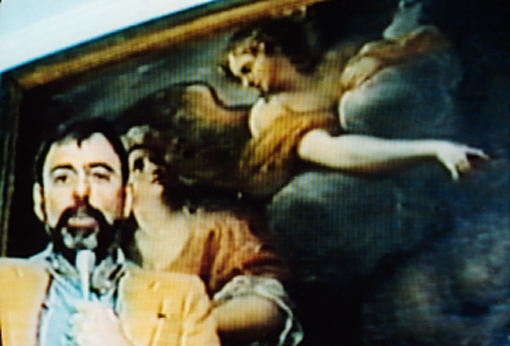
Duelo dos deuses (1988) video still
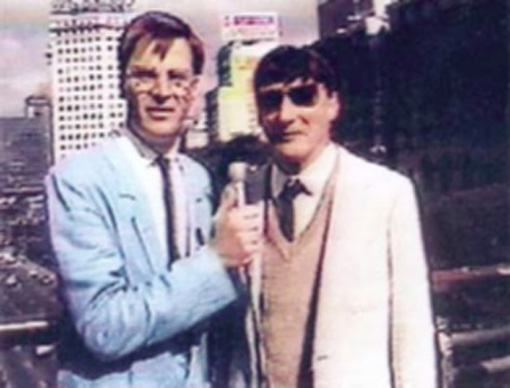
Heróis da decadên(s)ia (1987) video still
Marly normal (1983) video still
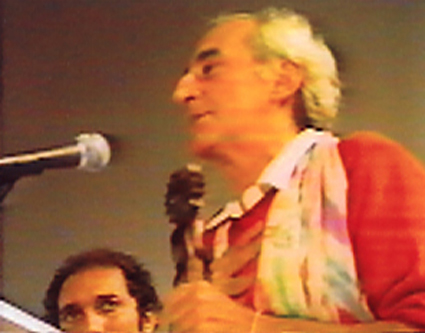
Frau (1983) video still
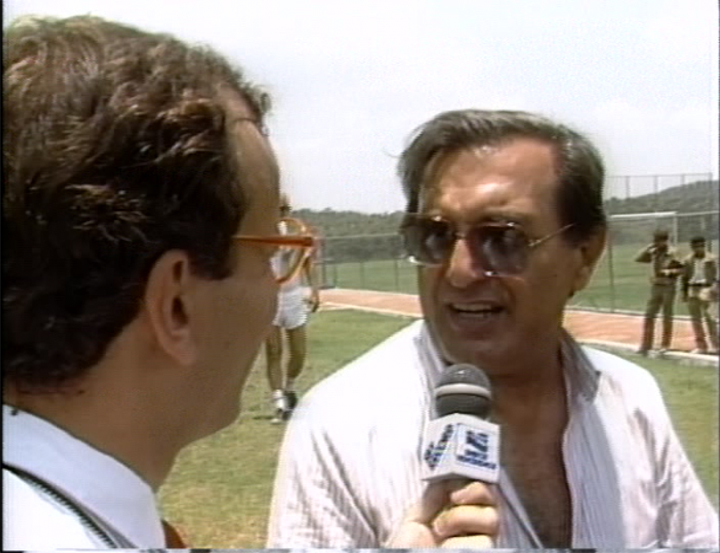
Varela na Copa (1986) video still
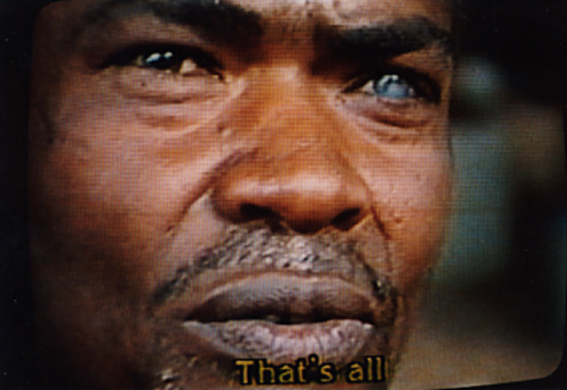
Do outro lado da sua casa (1985) video still
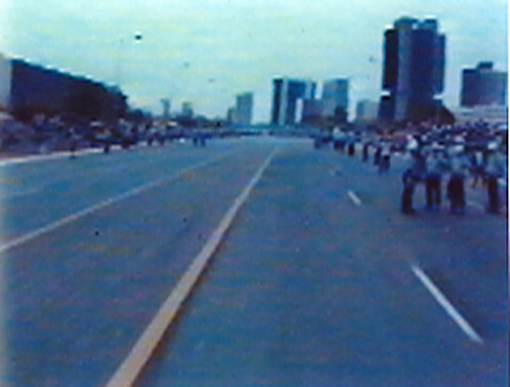
Brasília (1983) video still
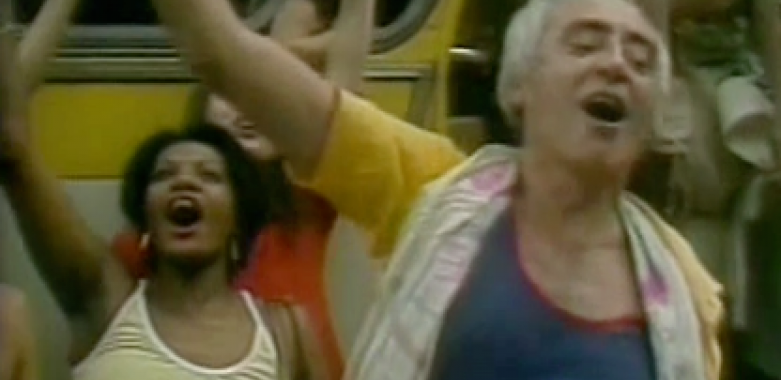
Caderneta de campo (1983) video still
Reports by TVDO and Olhar Eletrônico members bring to the present a situation that is very far from the current. It is with nostalgia that they speak of the difficulty of access, production and promotion of their videos. Nothing could be further from our contemporary life, with its profusion of images and a broad network of channels for communication and promotion. However, they show how much technological advances have yet caused few changes in our relations with digital images and their ambivalent development, which progresses both in the sense of critical relations and in a total rendition to the cultural industry.
To TVDO, it was necessary to seek the opposite of what was being done up to that moment, in the continuity of experiences like those of Chacrinha and Glauber Rocha in program Abertura, of the early 60s. Another great source of inspiration was director José Celso Martinez Corrêa, who worked with super-8 at Oficina theater.
This is clear in Caderneta de Campo, which shows the struggle of group Uzyna Uzona to survive the pressures of the real estate market. The video presents testimonials by group members, taken as true reports of the trenches and barricades, and scenes of conflict and police violence in urban areas.
Works like this were treated both by Zé Celso and by members of TVDO as strategies to fight. In Frau the director declares: “We are in a cultural war situation!” In this context, was sought to win the space and expanded possibilities for expression. The Videobrasil Festival, in this respect, was a means for this conquest, alongside graffiti, practiced in the same period by Tadeu Jungle and Walter Silveira, when they wrote poems on the walls of São Paulo.
The confrontation with an authoritarian television, therefore, was in the material itself, in the technical equipment, in a break of hierarchy in the qualification of images as adequate or inadequate for broadcasting on the national network. Such an arbitrary and authoritarian position was also the object of satire Heróis da Decadên(s)ia, in which Jungle, very well dressed, stops people walking down the streets of São Paulo, as do TV reporters. Instead of collecting testimonials, he goes on to the ‘popular’ side, to the cameras, explaining the action of constraint and harassment to which the characters of television news stories are subjected.
The opposite of this relation between electronic image and spectator was sought by the group responsible for program Fábrica do Som, directed by Pedro Viera, also a member of TVDO, and presented by Jungle, at SESC Pompeia. The program aimed to break with a transposition of the Italian stage to the television. The abandonment of the hierarchy between presenter and spectator would allow all to be considered players and authors in the program.
Vieira recalls that the experience of crowds, banned by the military regime, were a novelty in the 1980s. This phenomenon was explored in its ambivalence in documentary Duelo dos Deuses, which records the giant event of Edir Macedo’s Universal Church of the Kingdom of God (Igreja Universal do Reino de Deus), promoted at Pacaembu stadium, in 1988. Alongside the signs of emancipation brought by crowds, space was opened for the somber experience of massification and ideological manipulation. This new “protestant ethic” replaced the Calvinist austerity with the consumer frenzy and hedonist and immediate complacency, where the mystery of the holy trinity is revealed in a vehicle and the bet of faith is attested in a tube of ketchup. All of this, of course, is promoted and intermediated by the diffusion of electronic images and endorsed by the policy of concession of channels.
The producer of Olhar Eletrônico, in turn, had greater success in her insertion in television based on the doors opened by Goulart de Andrade. In the case of the group, it was not so much a formal operation, like TVDO (although it also existed), but more like showing the backstage of TV, revealing how programs were made. However, the idea of enactment and parody of the traditional genders of the television grid – especially television news – were essential for the group. As recalled by Fernando Meirelles, this strategy became standard at large television networks, like Globo itself, which has its television newsroom as the backdrop for its programs.
But if it is possible to find traces of Ernesto Varela (a character created by Olhar Eletrônico) in contemporary humoristic programs, the unveiling of the confection of the image and the search for a critical relation with the audience can hardly be found today. This shows how this assimilation caused a reduction in initial radicalism. Varela na Copa, for example, denounces in humor the hiding of important political events in the country as the media’s attention was turned to the Mexico World Cup.
Do Outro Lado da sua Casa, by Marcelo Machado, grants the character in the story a protagonist position, conducting interviews. The wise street dweller brings out the true existence of the reporter, from the eye that sees him, by making a reference to his body: “How much do you weigh, sir?" – he enquires – “I weigh 72” – comes the answers – “So you must carry 72 kilograms of yourself, 24 hours a day”.
It is understandable that the language of television journalism should have been the constant target of the criticism of both groups, as it is presented as absolute truth about the national reality. And is it not still like that?
It is true that we are viewing a relative decline in the power of television – or at least of the hegemony of the great telecommunication empires –, which might make the ancient desire of these production companies of modifying the television grid anachronic. But the dispute was transferred to other fields, like the internet or the multiple screens we are obliged to deal with in all moments of our lives.
If that is it, the task taken on by this generation of independent producers is yet to be completed.
Mapping elaborated by Ruy Luduvice, from the focus Counter-TV: Experimental practices in video in the 1980's, consisting of the public encounters Tudo pode ser um programa de televisão (Everything can be a TV show) and Invadir a programação (Invading the grid), presented during the 18th Festival of Contemporary Art SESC_Videobrasil. (December 2013)
Datena tomando nabo em pesquisa! Passe Livre. Histórico!
TV host is frustrated in his attempt to manipulate an opinion poll during the protests in 2013. An exchange of information on the internet broke the hegemony of biased coverage of television networks.
Protesto contra a Rede Globo
Protesters intervene in a Globo TV news program in July 2013. The story – the same as in the early 1980s – was the democratization of media.