My Maps

Video as a listening device
Mariela Cantú
“Listening is considered something given: it is believed that neither ability nor learning is required to listen, as if it was a natural gift; it is taken for granted in dialogue, in theories of the discourse, in theories of communicative action. It is not even pertinent to ask what it means to listen.”[1]
As Michel Chion has already suggested, most studies about cinema have chosen its visual characteristics as their primary focus. In his own words, “[e]ven though some researchers have provided highly valuable viewpoints about this matter, their contributions [. . .], have not yet exercised enough influence so as to impose a reconsideration about cinema, in relation to the role of sound in it for the last sixty years.”[2] Even though Chion primarily focuses on film, the need to expand these considerations into the audiovisual field as a whole becomes clear. In this context, video can be regarded as a highly fertile field for experiences with sound, as proposed by a group of video makers during the late 1980s and early 1990s in Brazil. In correspondence with an agitated political context, which witnessed the transition between the Brazilian military dictatorship and the recovery of democracy, they have deepened a particular use of that medium, which I propose to call video as a listening device. Conceived as a counter-information medium, video was used by several video makers as a political way of approaching reality during those years, resorting to dialogue and interviews on the streets as its main strategy for including a diversity of perspectives.
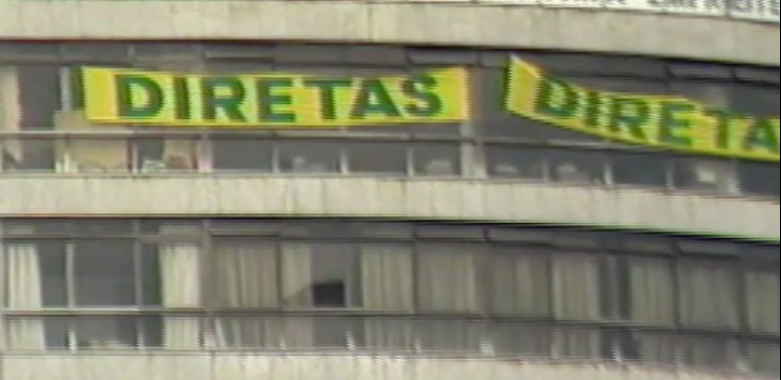
Not by chance, the relevance of the figure of “the reporter”, as in the famous characters of Ernesto Varela (Olhar Eletrônico), Brivaldo (TV Viva) or Tadeu Jungle (TVDO), was a distinctive feature of the time. However, it is worth noticing that even when people on the streets would be included as a vital part of their interviews, the figure of the reporter as presented in the aforementioned cases would become an extremely visible protagonist. A different though complementary strategy was used by other video makers, where people’s speech would be put at the fore. In Diretas na Sé (Roberto Elisabetsky, 1984), for instance, the reporters would present themselves and the situation at the beginning of the video, and withdraw themselves from the image and the sound during the rest of the piece. This strategy brings the issue of representation into the spotlight, even more when the context of this work is acknowledged—the video was made during a massive and powerful manifestation of more than 300,000 people in São Paulo, demanding the restoration of direct elections and the return of democracy in Brazil. If silence is a necessary requirement for dialogue, withdrawing the reporter’s relevance can be equated with the act of allowing ourselves to listen to what others have to say, and avoid considering them as characters that are spoken for.
One distinctive feature of video as a listening device is the way the microphone is used. As opposed to the reporter’s more traditional action of placing the microphone close to the interviewees’ mouths, Castelo de Areia (Nilo Diniz, 1987) resorts to a different strategy. In this work, the reporter’s preeminence is replaced by the leading role of the community, whose members are making their statements directly to the microphone themselves hold.
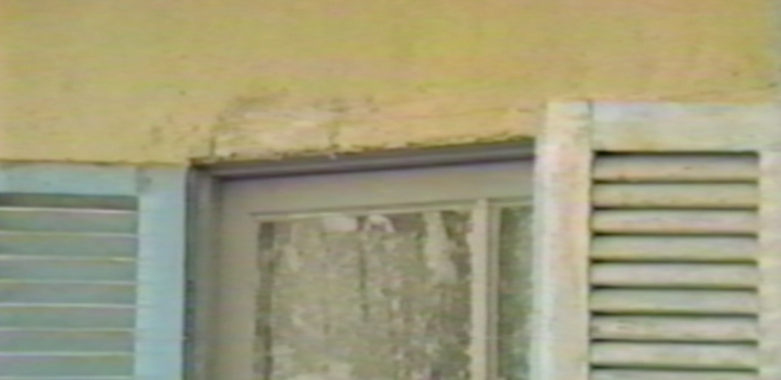
As in the case of Diretas na Sé, the listening strategy in this video also incarnates what is at issue: the houses of a residential complex in Santos (State of São Paulo) were built in the context of a fraudulent operation by the BNH (Housing National Bank), which resulted in serious danger of collapse, floods, and unhealthy living conditions for the community. Even when holding the microphone could be considered a minor issue or a mere aesthetic choice, the truth is that whoever controls the mic is allowed to interrupt, mute or alter the interviewee’s words. In this context, the fact that the members of the community can decide on the use of the microphone can have a potential impact in their transformation from victims to political agents, thus empowering them with the choice of the words, the time and the pace in which they want to speak up. In the words of Nilo Diniz, video could be considered in this work as “an instrument for mobilization and transformation, but also for educommunication, whenever videos, photos and the very process of creation would be shared, as well as be useful for gathering, informing, creating leaderships and better preparing the communities for their fights in favor of a better life for everyone.”[3]
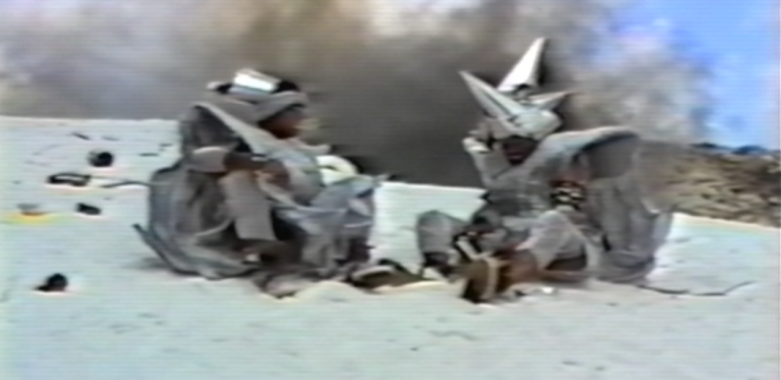
The performative aspect of listening is also at stake in VT Acidentado: PQ?/PN! (Rosana Almeida Salvador, 1988). As opposed to Diretas na Sé and Castelo de Areia, Almeida Salvador does place the interviewer as a central figure of her video. However, the two men who are in charge of asking questions in the streets of Salvador (State of Bahia) can hardly be called “reporters”. In this case, interviews on the streets are part of a larger narrative, which tells the story of two aliens whose spaceship crashes in Brazil, while they were looking for NYSP—a metropolis mixing New York and São Paulo. Dressed up with striking costumes, the two aliens wander through the streets of Salvador, trying to find out in which place they have arrived. Even though it becomes evident that they are neither reporters, nor aliens, the fictional strategy becomes the perfect excuse to ask Salvador’s residents (and visitors) what they think about the city. Thus, more optimistic statements such as “It’s a wonderful city”, or “Better than this? Only in another world!” would clash with others such as “It’s a city which is growing in the wrong way”, or “It is becoming a dictatorship of Axé[4]”.
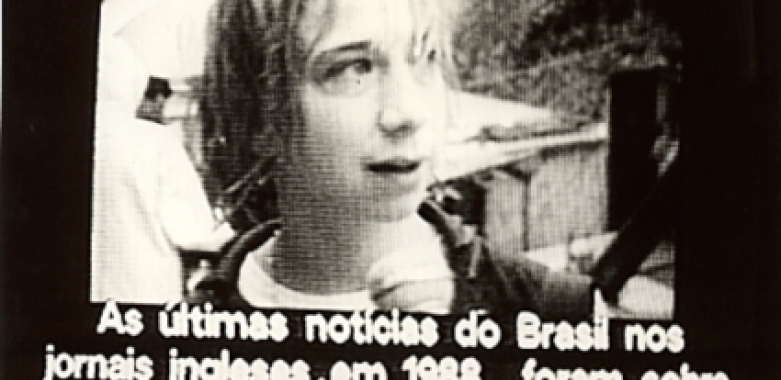
Using video as a listening device can, therefore, allow for the emergence of contradictions. Far from the will to establish a categorical viewpoint, videos such as O inglês que o Brasil vê (Sergio Sbragia, 1990) and Sussuarana Street - Um vídeo de múltipla escolha (Rosana Almeida Salvador, 1989) deal with the possibility (and the desire for) disputable discourses. O inglês que o Brasil vê collects statements from English visitors and tourists, as well as from Brazilians, in the streets of the famous city of Rio de Janeiro. As expected, the type of questions that are proposed to the interviewees aim at rising controversial issues: “Who leaves more money, the English or the Brazilians?” or “If you had money, would you like to be a tourist?”
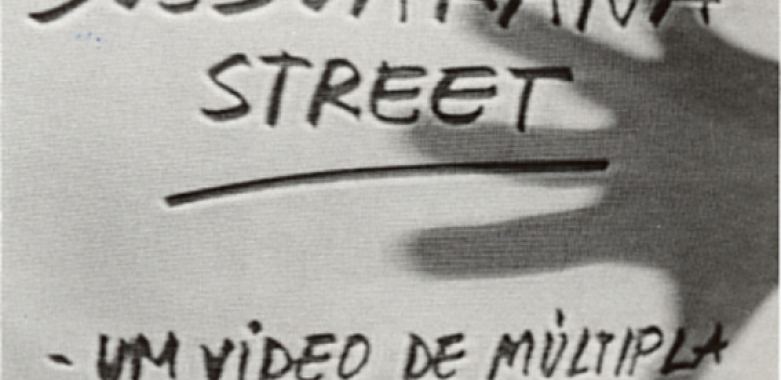
Sussuarana Street also deals with existing disparities between the foreign and the local in a specific city, although with a different focus. In this video, processes of gentrification (resorting to a contemporary term) are examined, by discussing the potential reasons for new buildings to have foreign names—mainly English, French and Italian. Again, the reporters are not part of the image—their voices are barely heard when they ask the questions. And again, the fact of remaining silent towards people’s statements avoids the temptation of becoming an explicit guidance for the audience. In this sense, the video’s subtitle – Um vídeo de múltipla escolha, reinforces the task that is left for the spectator. As Mariflor Aguilar Rivero[5] suggests, there is always risk in listening: the risk of changing one’s opinions.
Even though video has been mainly studied from the perspective of visuality, its sound qualities also deserve to be highlighted. Within a present time marked by information overload, contradictory discourses and enormous confusion rooted in deep misunderstandings, considering the ways in which video has contributed to listening as a political tool for social change becomes vital. By regarding listening as the initial phase of dialogue, of exchange and of potential understandings, considering video as a listening device—as elaborated by the works of Roberto Elisabetsky, Nilo Diniz, Rosana Almeida Salvador and Sergio Sbragia—can certainly help in finding possible methodologies and listening practices. Overall, there is no need to give others the permission to speak, but rather the space to feel free to do so.
Mapping elaborated by Mariela Cantú based on the research carried out in the Videobrasil Historical Archive between the months of August and December 2016.
[1] Mariflor Aguilar. “¿Qué significa escuchar?”. Revista Carta Psicoanalítica, 4, 2004. Accessed December 2, 2016. http://www.cartapsi.org/spip.php?article184. (Author’s translation)
[2] M. Chion. La audiovisión. Introducción a un análisis conjunto de la imagen y el sonido. Barcelona, Paidós Ibérica, 1993. p. 10. (Author’s translation)
[3] Nilo Diniz, statement for VB:Platform. November 2016.
[4] Axé is a Brazilian music genre, originated in the State of Bahia during the 80s.
[5] Mariflor Aguilar. “¿Qué significa escuchar?”. Revista Carta Psicoanalítica, 4, 2004. Accessed December 2, 2016. http://www.cartapsi.org/spip.php?article184. (Author’s translation)