My Maps

The “South” Is Everywhere
André Fernandes, João Batista Teodoro, Márcia Talento, Vinícius Santana
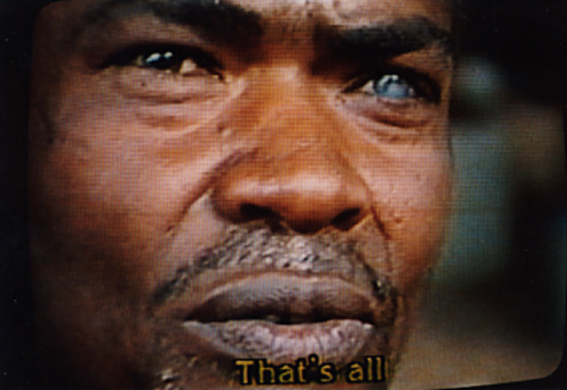
Do outro lado da sua casa (1985) video still
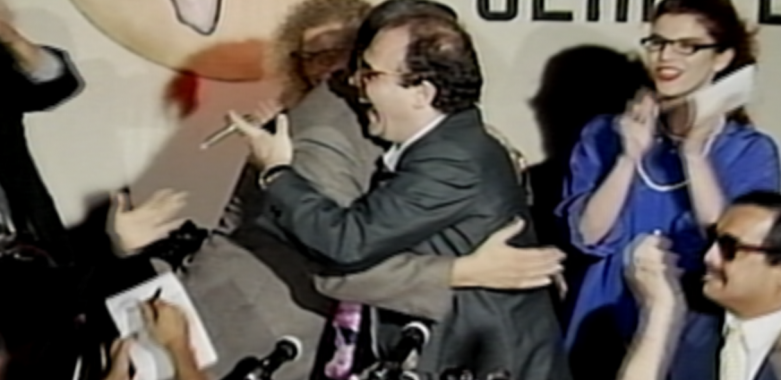
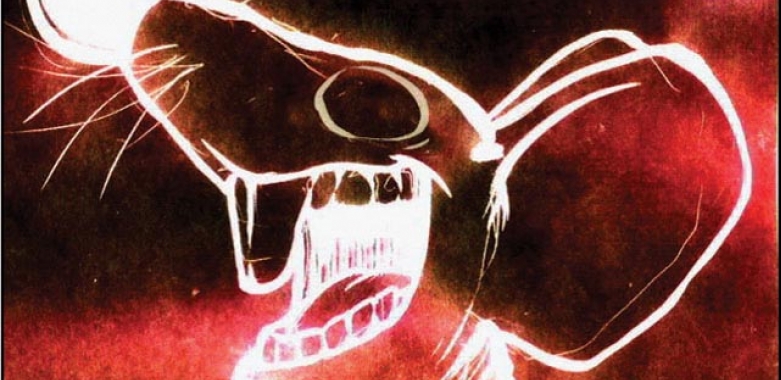
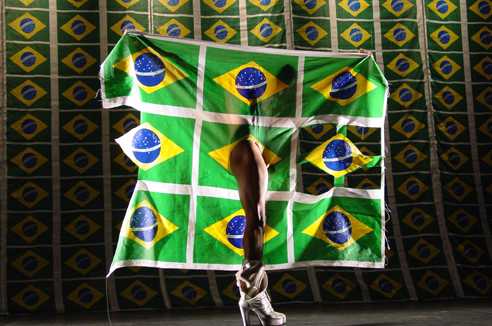
O Samba do Crioulo Doido
The mapping proposition The “South” Is Everywhere arises from the challenging of one of Associação Cultural Videobrasil’s guidelines through which its collection is organized. It is about questioning the use of the expression “geopolitical south.” Why use the metaphor “geopolitical south” to talk about exclusion and poverty if the content is the same, and only the taxonomy was changed? Or, why is this expression used as a metaphor-concept, whose euphemism results from a figurative meaning of poverty and exclusion? The thematic choice was guided by three factors: the political crisis, the concept of organization of Associação Cultural Videobrasil’s collection around the concept of “geopolitical south,” and JAMAC’s exhibition space.
There is poverty and exclusion everywhere. Whether a country is rich or poor, there are always degrees of poverty and exclusion. In this sense, some sort of “flattening” of the issue is noticeable. The metaphor-concept might be justifiable, on the one hand, because it acts as an ethical attenuation for the economic difference, fabricating a reality of peaceful coexistence in class distinction, and on the other because, once attenuated, the term turns poverty into a cultural commodity whose value can be negotiated. One way or another, even understood within Videobrasil’s organizational bases, the metaphor-concept must be broken down and seen only as a criteria for political, economic, and social framing of a comprehensive collection of around 10,000 items. In order to approach some facets of the concept of “geopolitical south,” we considered three forms of representation of poverty and exclusion:
- metaphorical, close to “fiction”[1] (Política and Ratos de rua);
- non-metaphorical, close to “documentary” (Do outro lado da sua casa);
- midway between “fiction” and “documentary” (O samba do crioulo doido and The Same Old Choice).[2]
Metaphor is a figure of speech that says one thing to point out another. Metaphor might be the main vehicle of poetry. It takes the reader, in the slightest of instants, to the complex understanding of the approximation between “a” and “b.” However, when used in the political field to describe a reality, it seems that language, as representation of the world, envelops it. It has already been seen in scattered moments in history, such as in the Estado Novo, with the expression “Getúlio, father of the poor” to attenuate his role as dictator. Through metaphor, several operators of a fable detrimental to the concrete life of each person spring into action. In this case, the metaphor “geopolitical south” operates, through a cultural and social difference, the economic exploitation of the countries in the southern hemisphere by those of the northern one. But we are in the field of art, where metaphor is a near imperative, therefore the breaking down of the types of representation offered to the exhibition was assumed to be productive.
It occurs, nonetheless, that, when theory signifies an action in reality, the economic, social, and cultural differences give place to the organized and beautiful image, whose operation flattens differences. In this type of simplification, everyone can grasp otherness without detaching themselves from their own time and space, usually resulting in the reinstatement of a preconception of the past under historicist regimes. If this form of organization expressed by “geopolitical south” fulfills the superstructure, it crumbles when in contact with the reality that passes through it. If poverty is everywhere and nothing is effectively done to change the living conditions for most people, the theorization about it may turn it into a kind of contemporary universal to define the position of the bodies, the mode of production and circulation of images, as well as educate sensibilities. The culturalization of poverty seems to result in the confinement of material and symbolic goods.
The approaches to the Associação Cultural Videobrasil’s collection could be varied, but considering the place of exhibition, JAMAC (Jardim Miriam Arte Clube), this questioning seems justified. Otherwise, we could have risked falling into a picturesque approach. Asking for community’s values and not its definition (which is dead letter in a dictionary) may be a key for comprehension. Thus, five works addressing aspects of varied living conditions are featured. Because this is not a theme, but a way through which representations lay out a defined imagery.
What we intend is to raise questions among the spectators of the works in order to pinpoint what are the potentialities and limits that are allowed to unfold into changes in the concrete living conditions. The main issue is perhaps how the Jardim Miriam residents perceive the influence of images produced by difference and how the others perceive them in the context of the city. In this sense, we selected works that place difference and otherness in the constitution of identities and the transformation of realities. Whether from the artistic, political, economic, or social point of view, the image estranged in regard to any reality builds viewpoints which are often incorporated in such a way that preconceptions and atavisms prevent from giving other names to this reality, flattening it down.
Besides the indisputable filiation of the works to the Associação Cultural Videobrasil’s concept of “geopolitical south”, the selection allows us to visualize how some aspects of the Brazilian thinking are organized, from critique to the official politics, to the imagery of the most peripheral class, such as homeless people and transvestites, who display remarkable clear-thinking to their own practical and existential living conditions.
Mapping conducted by André Fernandes, João Batista Teodoro, Márcia Talento, and Vinícius Santana, under Professor Cauê Alves’s guidance, for the project “PUC-SP’s Incursions into the Videobrasil Historical Collection”, in which students from the course Art: History, Criticism, and Curatorship at PUC-SP assemble video exhibitions from the Videobrasil Collection as an interdisciplinary exercise in the course’s final semester. (December 2016)
[1] The quotation marks were used to evince the ambiguity and impurity present both in fiction and documentary. After all, no genre is pure or free from being contaminated by others.
[2] It is clear, however, that such categories do not describe the phenomenon, rather attempt to offer tools to comprehend the works dealing with poverty and exclusion.
Mônica Nador + JAMAC Paço Comunidade, organized by Mônica Nador e Priscilla Arantes (Paço das Artes, São Paulo, 2015) [port]
A partilha do sensível, by Jacques Racnière (Editora 34, São Paulo, 2005) [port]
Mônica Nador/JAMAC, organized by Thais Rivitti (Pinacoteca do Estado de São Paulo/Luciana Brito Galeria, São Paulo, 2013) [port]