My Maps

If you don’t fight, you’re dead!
Jaime Lauriano
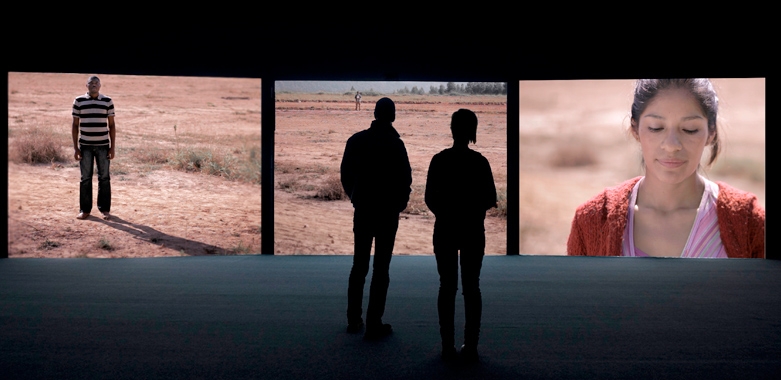
Image from the video installation As Pérolas, como te escrevi (2011), performed by Regina Parra on the occasion of the 1st Ateliê Aberto Prize, and displayed at the 17th International Festival of Contemporary Art SESC_Videobrasil.
If you don’t fight, you’re dead!*
The core of the exploratory and genocidal relationships established and imposed by the colonial empires upon the first peoples inaugurates a new global historical period, later defined as modernity. Created from the alliances between the merchant bourgeoisie and the nobility, the missions invaded the lands of the “New World”, exterminating peoples and instating new customs.
These power structures permeate the experience of formation of the American continent, invigorated in many other historical periods. The civil and military dictatorships sprawling throughout Latin America, the racial segregation in the United States, and the Falklands War are only a few examples of how the actuality of the colonial violence stands strong in the sociabilization of the American countries and in their current conflicts and disputes: police vs. the black population; the power of owners of large agrarian property vs. native and traditional peoples; immigration services vs. immigrants; property speculation vs. housing movements etc.
The movements fighting for the right to decent housing in Brazil are an example of this contradictory dichotomy. Luiz Kohara, a popular educator and executive secretary at the Gaspar Garcia Center for Human Rights, states that the origin of these movements is closely related to the abolition of slavery in the country and to the lack of public policies to incorporate this population in society. The refugees and immigrants that arrive in Brazil seeking new opportunities end up being part of these groups faced with the lack of efficient services capable of meeting the demands of the immigrants in the country.
Coming into contact with these social experiences, some artists dedicated part of their artistic production to examine the violent territorial and cultural formation forced by the union of new “nations.” In As pérolas, como te escrevi, a video by Regina Parra, we are faced with immigrants from Bolivia, Peru, Colombia, Argentina, Congo, and Guinea reading, in Portuguese, excerpts from the letter Mundus Novus, by Amerigo Vespucci. Through this action, the artist evinces how the violences that consummated the process of “invention of America” still underlie the construction of societies in the American continent. On the other hand, in Centroamerica Now, Regina Aguilar makes use of several resources such as news footage, short testimonials, fragments of political speeches and the bodies of victims of violence to protest against the murder of more than one thousand young Hondurans over the last years.
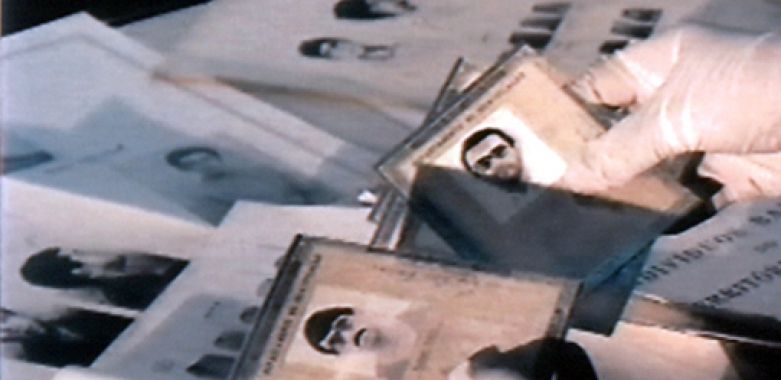
By inverting the hierarchy of domination Europe vs. New World, the 1960s witnessed a new type of domination spread over the continent. With financial aid from the United States of America, the military dictatorships reinvigorate the strategies of violence and domination of bodies established in the colonial period. In her documentary Clandestinos, which revisits the late 1960s, Patricia Moran remarks the resistance, dreams, ideals, fears, and mistakes of the young people who fought for social equality and had their right to freedom denied in this grim period of Brazil’s history.
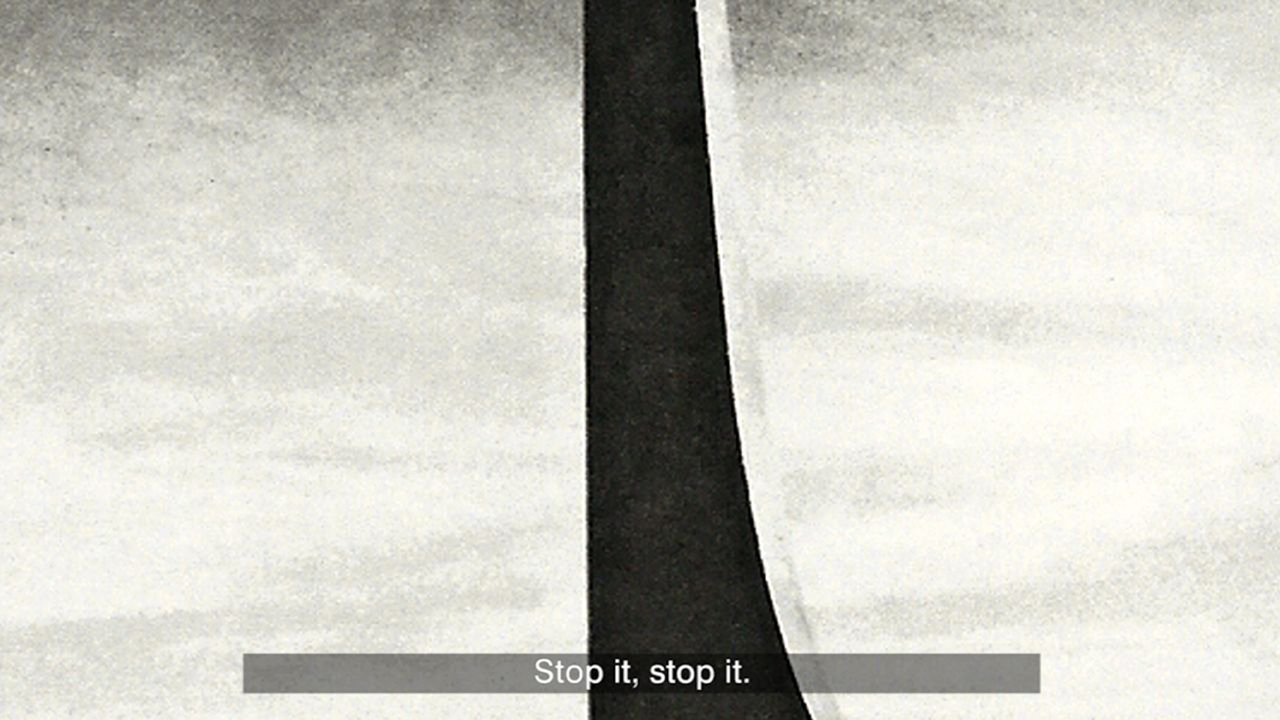
Symbol and monument of the Brazilian modernism, the city of Brasília is problematized in Forma Livre, a video by artist Clara Ianni. From sketches and audios from interviews in which the architects Oscar Niemeyer and Lucio Costa are questioned about the slaughter of native candango workers during Brasília’s construction, Clara Ianni reveals the contradictions between discourse and practice, project and reality, monument and ruin underlying Brasília’s plan of occupation and power.
The last work to displace the geographical axis of this mapping, Chulayarnnon Siriphol’s Myth of Modernity examines the impact of modernism in the Thai culture. Through special effects and a narrative built as science fiction, the artist analyses how some power structures perpetuate throughout history, including by means of the architecture imposed by the State.
Thus, If you Don’t Fight, You’re Dead! seeks to outline possible relationships between the violences forced upon the process of “invention of America” and the social problems that prey on a continent that preserves itself by maintaining inequalities.
*Motto intoned by activists of MST (Brazil’s Landless Rural Workers’ Movement) and FLM (Fight for Decent Housing Front).
Mapping conducted during the months of June and November, 2016 during the Cambridge Artistic Residency, a project for the development of artistic and cultural proposals at the Hotel Cambridge Occupation, located in central São Paulo, with emphasis in collaborative practices developed in dialogue with the local community and partners, and whose research is related to issues regarding the everyday life in the occupation, its story and the ways through which it inscribes itself and acts within the city’s dynamics. Therefore, all questions raised here are permeated by the context of the fight for housing. (November 2016)
Por uma estética do precário: antimonumentos e a arte de ‘desesquecer’, by Márcio Seligmann-Silva (Fórum Permanente, 2016) [port]
A fúria contra o estranho, by Moacir dos Anjos (Revista Zum, 2016) [port]
O ensino de História do Brasil: Cruzamentos possíveis entre currículo escolar e práticas artísticas, by Sabrina Moura (Fórum Permanente, 2016) [port]
Zumbi Somos Nós - O Documentário (2007) | Frente 3 de Fevereiro
Full documentary realized by the collective Frente 3 de Fevereiro.
Novo Apocalipse Recife (2015) | Ocupe Estelita
Music video produced by the Ocupe Estelita movement.
Aqui viven genocidas (2001) | Grupo de Arte Callejero (GAC)
Conversation in Ações Artísticas e Ocupação: Perspectiva Histórica e Outros Agenciamentos (2016) | Residência Artística Cambridge
The meeting included the screening of the documentary "Zumbi Somos Nós" from the collective of research and artistic action Frente 3 de Fevereiro, followed by a conversation with the guests and the audience present. This video contains only the record of the conversation that took place after the screening of the film.
The fight for the right to live in dignity in the center (2016) | Luiz Kohara, Residência Artística Cambridge
Record of the lecture "The fight for the right to live in dignity in the center: historical rescue of the dispute for the land, the contradictions and injustices of the urban expansion and the construction of the popular struggle", with Luiz Kohara, 2016, at the Cambridge Hotel Occupation.