My Maps

Contiguity and incompleteness
Viviane Tabach, Simone Nunes, Rachel Balassiano, Isabella Guimarães
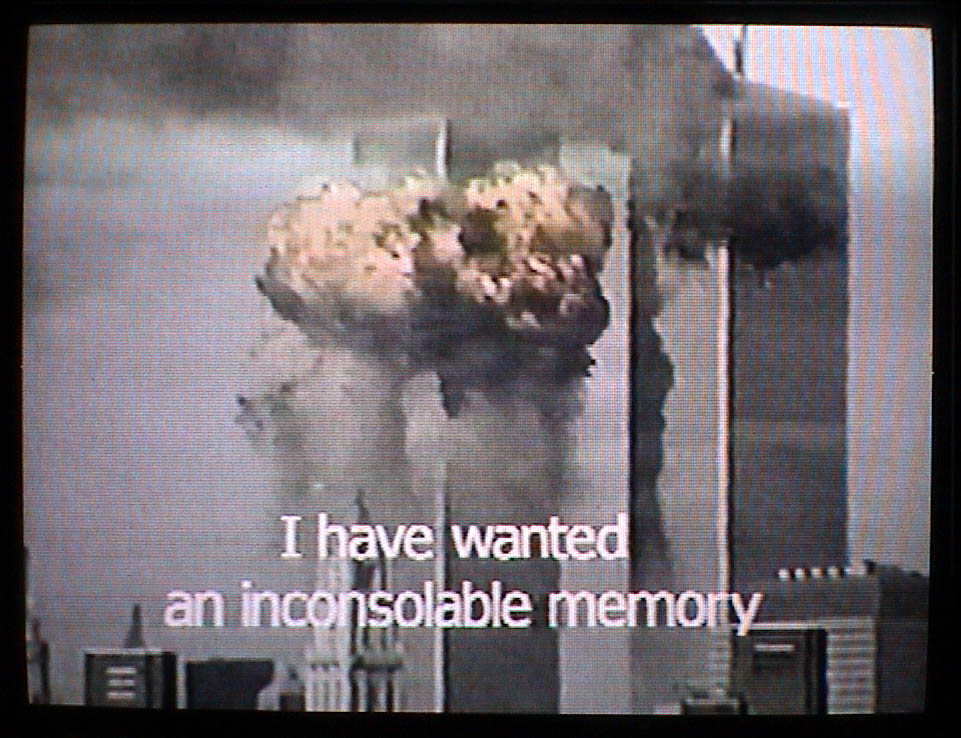
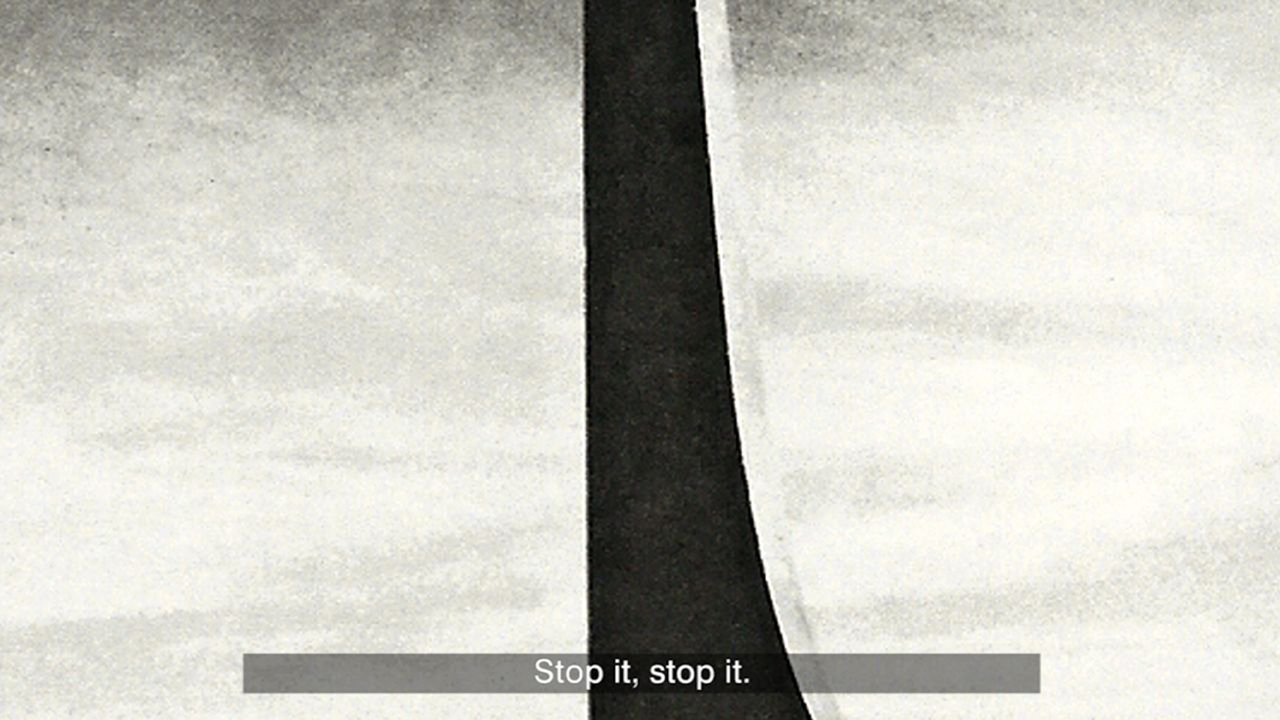
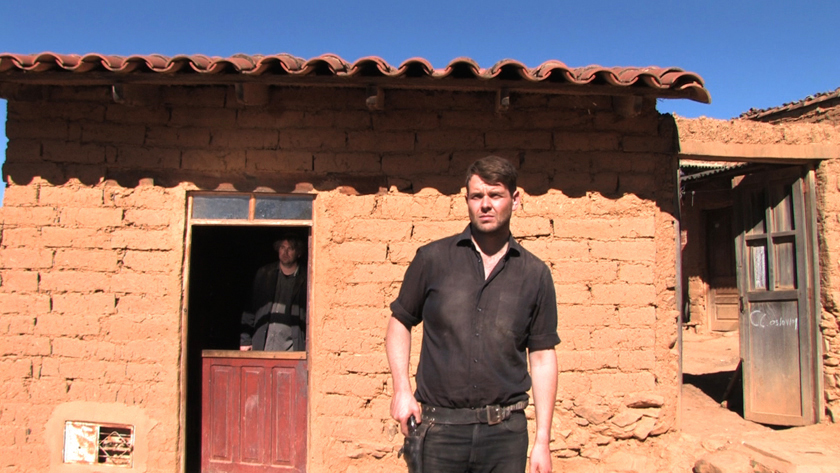
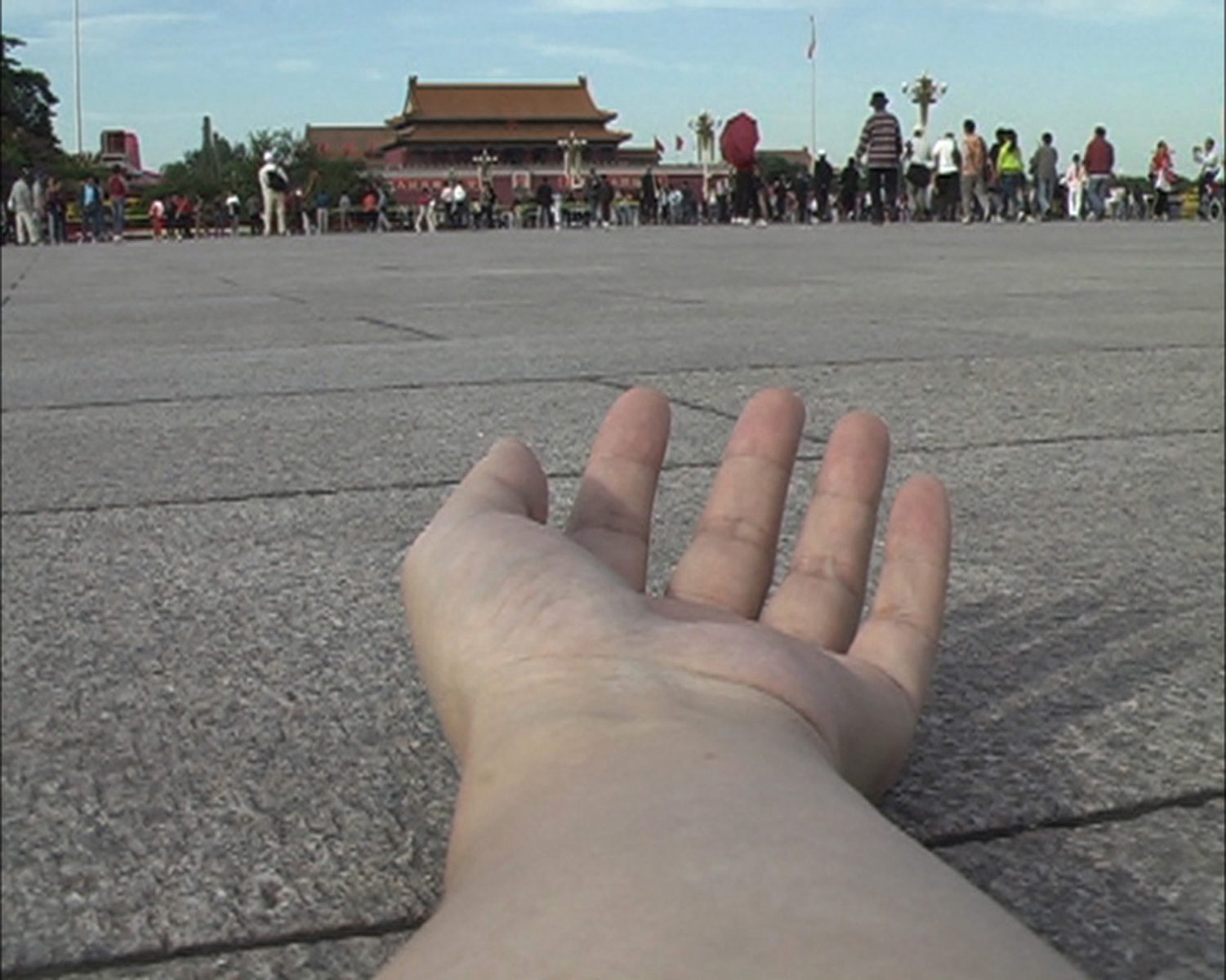
Contiguity and Incompleteness is a selection of the artistic production shown in the last three installments of the SESC_Videobrasil Contemporary Art Festival, and whose inspiration and guideline for this selection of works fall on the geopolitical south—Latin America, the Caribbean, Africa, the Middle East, Eastern Europe, Southern and Southeastern Asia, and Oceania—and their humanitarian, social, political, and historical issues. Opposed to the perspective of the narratives of a pragmatic, homogenizing North comprised by the colonizing axis of Western Europe and the United States, the set of works presented here points to distinct ways to analyze particular realities of countries such as Bolivia (Claudia Joskowicz), Brazil (Clara Ianni), Chile (Claudia Aravena and Jonathas de Andrade), China (Liu Wei), North Korea (Mihai Grecu), and Zimbabwe (Dan Halter). These works address issues on specific contexts, and simultaneously mirror realities of other geographic settings, allowing us to perceive both local and global aspects. They reveal a present that acts as transition and alludes to the apparently disconnected stories which, once juxtaposed and superimposed, reveal symptomatic relationships.
Issues such as memory; migration flows; the social fabric; the failure of social and economic models and of the modern project; the passage of time; historicity; repression and resistance; visibility and invisibility of ideological, political, and historical issues; and social and political conflicts all permeate the artwork and validate the relevance of bringing to light subjects that systematically converge towards vulnerable, recurring aspects of History and our contemporary world. The contribution to such inflections favors the visibility of ways of thinking and understanding of others and the same realities presented here. A possible way to interpret the conceptual articulation of the selected works is in line with Walter Benjamin’s statement: “The true image of the past flits by. The past can be seized only as an image that flashes up at the moment of its recognizability (. . .). Articulate the past historically does not mean recognizing it ‘the way it really was.’ It means appropriating a memory as it flashes up in a moment of danger”[1]. Testimonials at times attempting to be traces of stories about to fade, and at others trying to question, denounce, and unveil the version of a historical fact ideologically crystallized and perpetuated through time. They guide some works and shed light on their complexities. The political dimension underlying the current selection considers practice situations that cross the tensions originated in society. History operates as the place of art and politics.
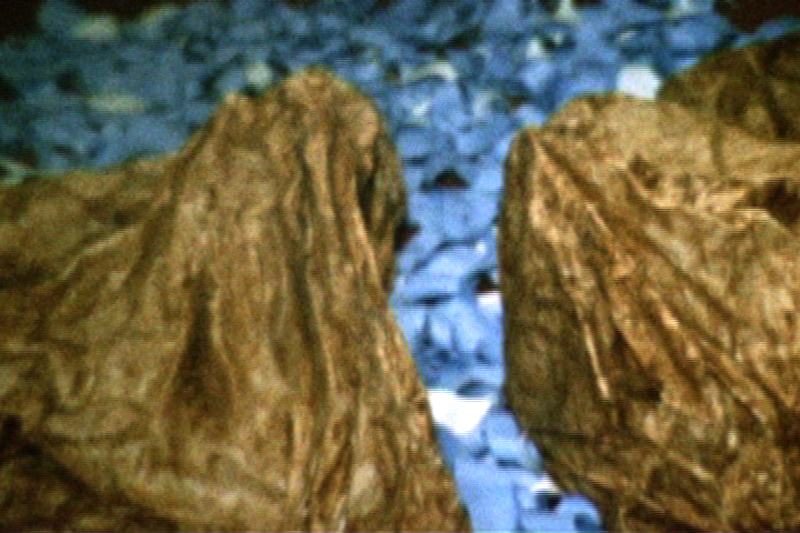
In Clara Ianni’s Forma Livre, the monumentality of the images of Brasília’s plan is accompanied by the omission of Oscar Niemeyer and Lucio Costa, registered in an interview, about the slaughter of native candango workers. Both dodge the interviewer’s questions and try to minimize the issues addressed, claiming that the occurrence was an overstatement. The manipulations of television broadcast of Claudia Aravena’s 11 de septiembre bring closer two historical facts that took place at the date which gives the work its title (September 11), giving them the same significance while immediately confronting the different meanings they are assigned. The ways the memory is inscribed on the body and in the subjective experiences are narrated in a way that links historical images and situations that have reframed the scenario of power relations, both local and global. By questioning the material as media itself, appropriating the cinematographic resources, Claudia Joskowicz’s Round and round and consumed by fire alludes to the American Western movie Butch Cassidy and the Sundance Kid, starred in 1969. In a single shot, imbued in the wait of an event yet to unfold, time is extended, and its pace slowed down. The siege by the Bolivian police of criminals from the United States is reenacted, within a particular social context of the South American reality, unveiling situations and tensions associated to hegemonic and peripheral powers. In Liu Wei’s Unforgettable Memory, the iconic photograph of a man facing alone a row of tanks is a resource to take on the memories of the Chinese people of the massacre in Tiananmen Square, in Beijing, in 1989. However, the scape from this memory prevails. Silence overshadows grieve, pain, and solidarity; censorship and fear mediate memory.
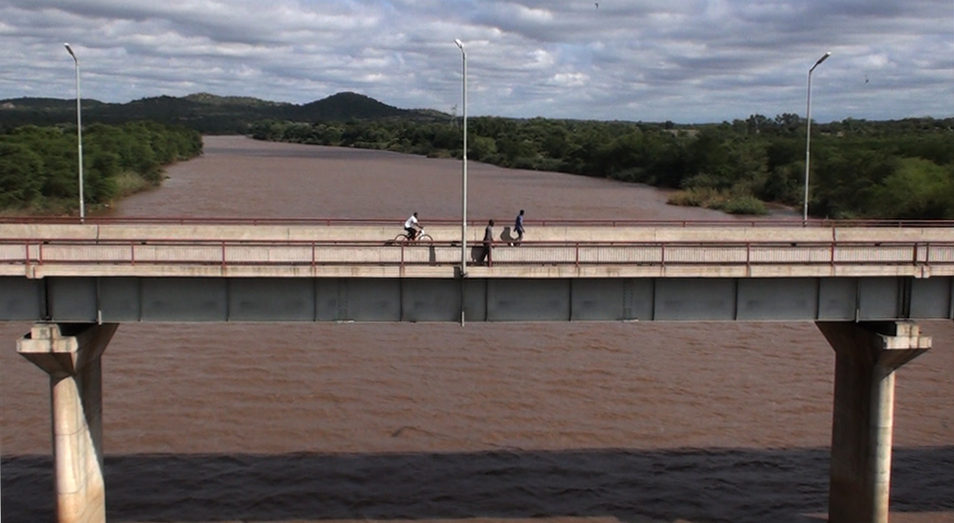
Dan Halter’s Beitbrigde Moonwalk reveals the social tensions and conflicts between migration flows through the subject walking backwards, crossing the border between Zimbabwe, in the city of Beitbridge, and South Africa. The single-shot scene, inspired by accounts of immigrants in constant movement pierces through notions of territoriality, invisibility, and social tensions present in both African realities. These aspects are also present in the animation Pacífico, by Jonathas de Andrade, that presents two historical moments in Latin America: the peace fiction, constructed by Chile under the auspices of Pinochet, and Bolivia’s loss of its coastline, linking apparently disconnected stories. Past and present are flattened on the same plane, evoking both the memory of the military dictatorship and the earthquake that detached Chile from the South American continent as traumatic experiences of the social body. The earthquake is a metaphor of a possible and constant instability of the terrain, hinting at the construction of truths, ideologies and historical sentiments.
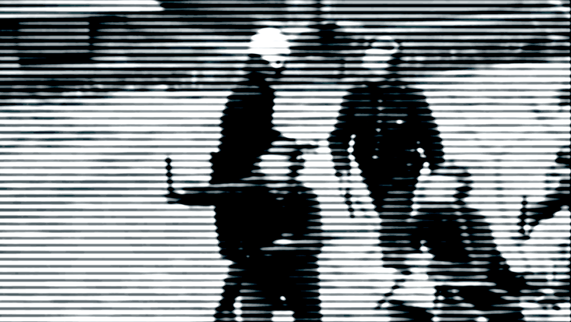
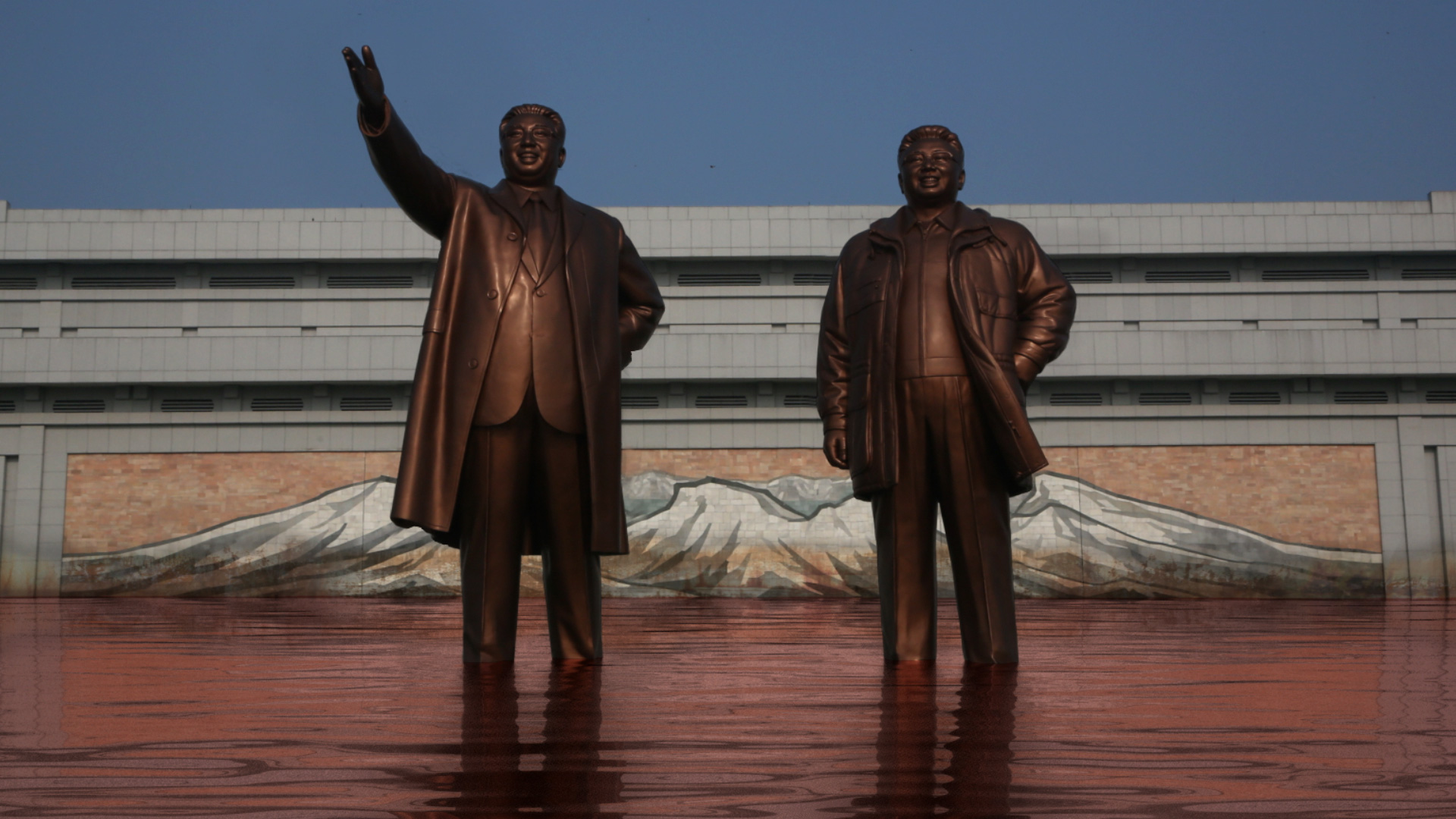
In another aspect of formulation for the critic and the politicization of art, the symbolic power of music, monuments, and photography in a social context is put to test. In Carlos Guzmán’s Sitiado, policemen try to eliminate not only the speakers emitting fragments of songs censored by the military regimes in Latin American countries, but everything they represent. They are imprisoned in a cyclical process in which repression and demonstration correspond each other ceaselessly. The work originates from the 1972 film State of Siege, by Costa-Gavras. Mihai Grecu’s The Reflection of Power portrays a moment between an end and a possible new beginning, the thin line between triumph and failure. The frailty of ideologies is explored through the monumentality of the political apparatus and cultural assets, validated by totalitarian and barbaric regimes.
Contiguity and Incompleteness offers possibilities to apprehend the world and brings into question a concept of history that shows itself as an object of deconstruction and whose place is not the invariable, empty time, but a time saturated with “nows.”[2] Thus, narratives become unstable, arousing dormant issues through an angle different from the dominating version of the story, relating to the awareness of what is a state of exception and what is the general rule—it is appropriate to recall Jean-Luc Godard, who approaches the culture as rule and art as exception. The issues that the chosen works put into question allow us to deduce from the understanding of historical issues, in which the time past is experienced as remembrance, denouncement, and interference of a previously established place. It is thus possible to give a new meaning to what happened by writing History against the grain, as Walter Benjamin’s central demand, to live the construction of the present critically, widening the possibilities of seeing and interpreting the world beyond the cultural legacies that permeate the contemporary referents surrounding us.
Mapping conducted by Viviane Tabach, Simone Nunes, Rachel Balassiano, and Isabella Guimarães for the show Contiguity and Incompleteness, the result of a curatorship effort by students in the Postgraduate Specialization in Art: History, Criticism, and Curatorship at PUC-SP from works in the Videobrasil Historical Collection, under Professor Cauê Alves’s guidance. (December 2016)
[1] Walter Benjamin. On the Concept of History; in Walter Benjamin: Selected Writings, Volume 4: 1938-1940
[2] Idem.
Candangos falam sobre pesada carga horária e o massacre de 1959, Revista de História (2011) [port]
Resenha de Estado de sítio, de Costa-Gavras, 50 anos de filme (2010) [port]
Oscar Niemeyer - A construção de Brasília e a revolta dos operários
Trecho extraído do filme Conterrâneos Velhos de Guerra, de Vladimir Carvalho, 1991. Entrevista com Oscar Niemeyer sobre massacre de candangos nos canteiros de obra de construção de Brasília.
Las ultimas palabras de S. Allende - 11 de septiembre de 1973
El 11 de septiembre de 1973 era derrocado el gobierno de la Unidad Popular en Chile. El presidente Salvador Allende expresó dramáticamente por Radio sus últimas palabras al pueblo chileno y latinoamericano.
1989 Raw Video: Man vs. Chinese tank Tiananmen square
A CNN crew covering the June 5, 1989, protests in Beijing recorded a man stopping a Chinese tank in Tiananmen Square.
SOBRE EL MAR BOLIVIANO Documental de la Guerra del Pacifico de DIREMAR
Bolivia perdío una parte de su territorio por la inmensa cantidad de guano y Salitre existente en el mismo y por interés de las transnacionales que trabajaban en Chile. Este video explica como se desarrollaron los hechos en esa época