My Maps

Cartographic urgencies
NEC.IAU.USP
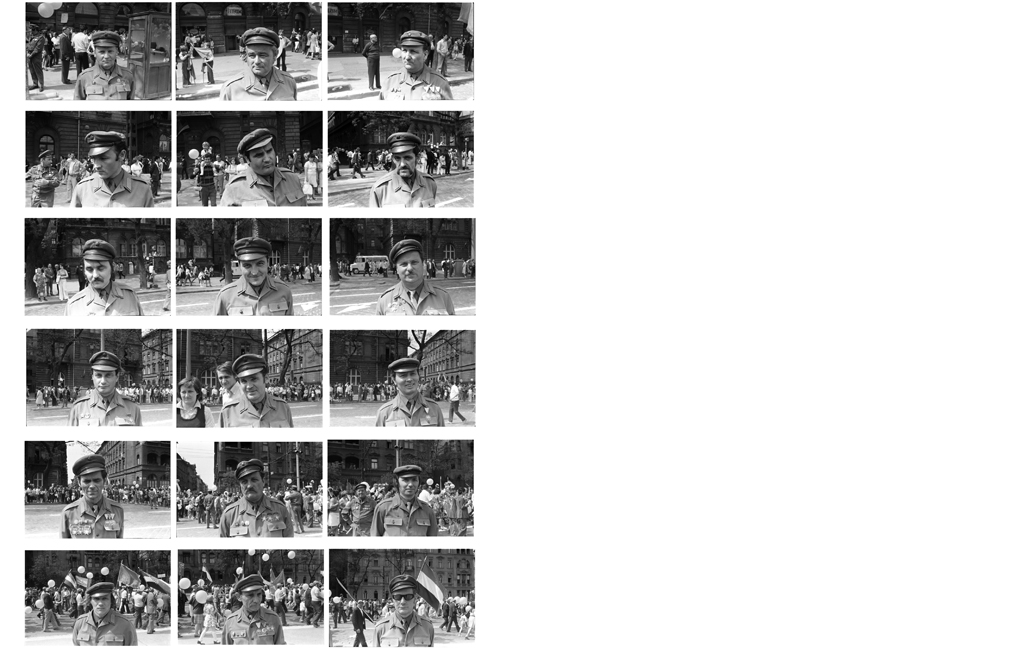
Video still of Iossifofna, one of the nine imaginary cities of Hidden Cities (2012)
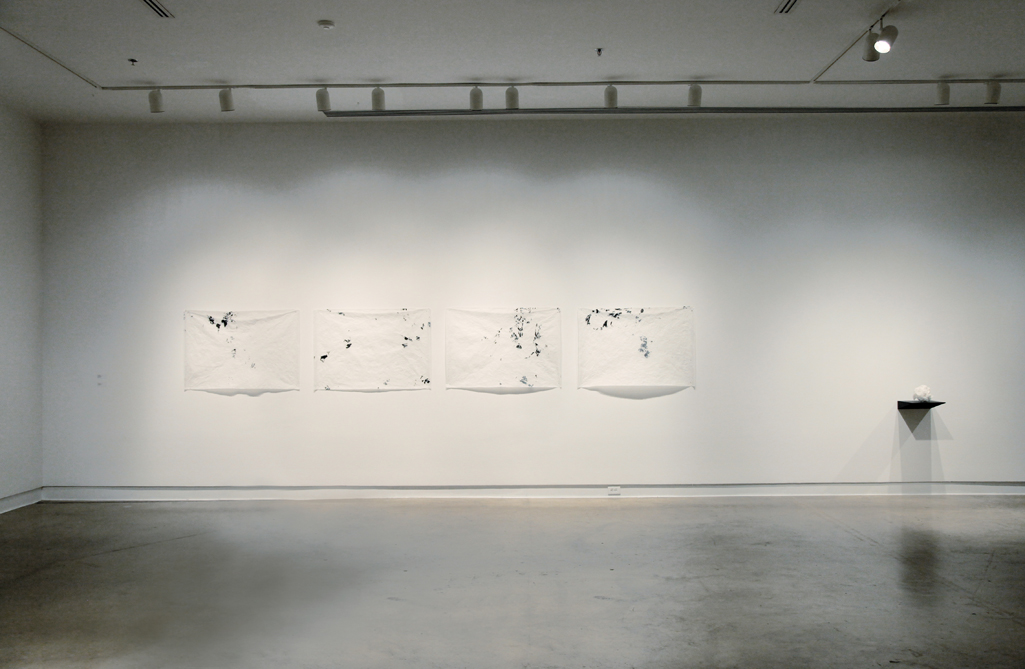
Unmapping the World (2011)
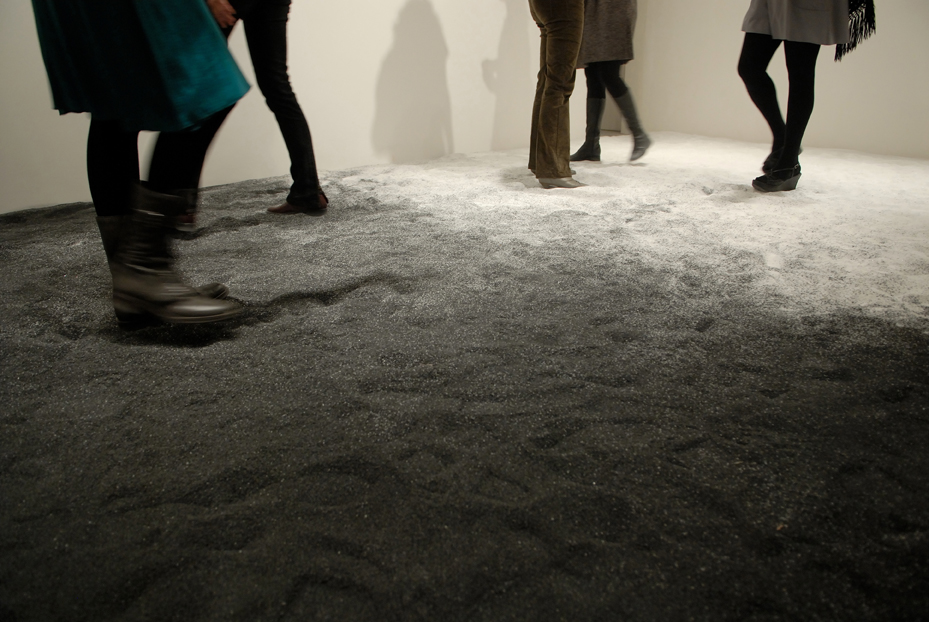
Teoria das Bordas (2007)
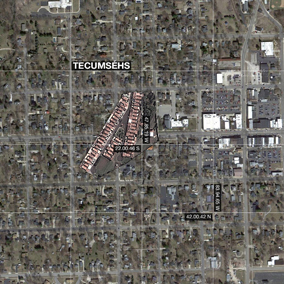
Latitudes/Longitudes (2013) | Ana Maria Beraldo, André Regitano, Bruna Donadeli, Marco Murillo, Pedro Meneghel| 8 images 100 x 100cm | Work created under the course Linguagem da Arquitetura e da Cidade (Language of Architecture and the City) – IAU-USP: profs. David Sperling and Fábio Lopes de Souza Santos
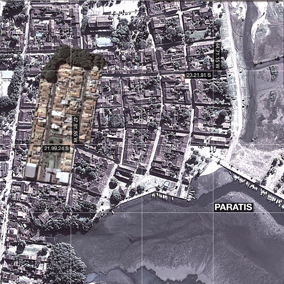
Latitudes/Longitudes (2013) | Ana Maria Beraldo, André Regitano, Bruna Donadeli, Marco Murillo, Pedro Meneghel| 8 images 100 x 100cm | Work created under the course Linguagem da Arquitetura e da Cidade (Language of Architecture and the City) – IAU-USP: profs. David Sperling and Fábio Lopes de Souza Santos
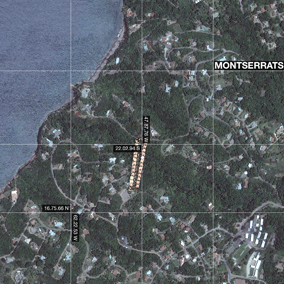
Latitudes/Longitudes (2013) | Ana Maria Beraldo, André Regitano, Bruna Donadeli, Marco Murillo, Pedro Meneghel| 8 images 100 x 100cm | Work created under the course Linguagem da Arquitetura e da Cidade (Language of Architecture and the City) – IAU-USP: profs. David Sperling and Fábio Lopes de Souza Santos
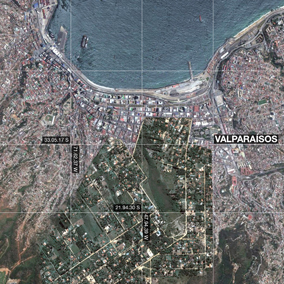
Latitudes/Longitudes (2013) | Ana Maria Beraldo, André Regitano, Bruna Donadeli, Marco Murillo, Pedro Meneghel| 8 images 100 x 100cm | Work created under the course Linguagem da Arquitetura e da Cidade (Language of Architecture and the City) – IAU-USP: profs. David Sperling and Fábio Lopes de Souza Santos
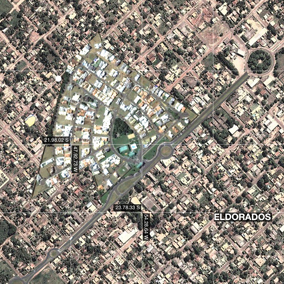
Latitudes/Longitudes (2013) | Ana Maria Beraldo, André Regitano, Bruna Donadeli, Marco Murillo, Pedro Meneghel| 8 images 100 x 100cm | Work created under the course Linguagem da Arquitetura e da Cidade (Language of Architecture and the City) – IAU-USP: profs. David Sperling and Fábio Lopes de Souza Santos
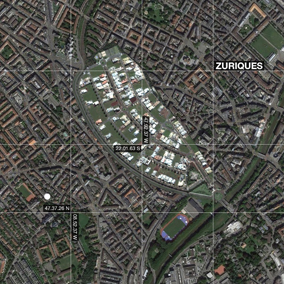
Latitudes/Longitudes (2013) | Ana Maria Beraldo, André Regitano, Bruna Donadeli, Marco Murillo, Pedro Meneghel| 8 images 100 x 100cm | Work created under the course Linguagem da Arquitetura e da Cidade (Language of Architecture and the City) – IAU-USP: profs. David Sperling and Fábio Lopes de Souza Santos
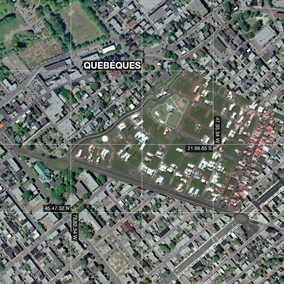
Latitudes/Longitudes (2013) | Ana Maria Beraldo, André Regitano, Bruna Donadeli, Marco Murillo, Pedro Meneghel| 8 images 100 x 100cm | Work created under the course Linguagem da Arquitetura e da Cidade (Language of Architecture and the City) – IAU-USP: profs. David Sperling and Fábio Lopes de Souza Santos
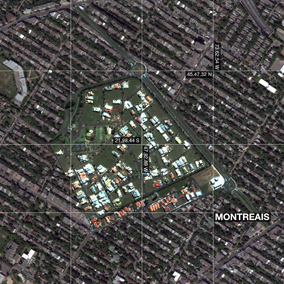
Latitudes/Longitudes (2013) | Ana Maria Beraldo, André Regitano, Bruna Donadeli, Marco Murillo, Pedro Meneghel| 8 images 100 x 100cm | Work created under the course Linguagem da Arquitetura e da Cidade (Language of Architecture and the City) – IAU-USP: profs. David Sperling and Fábio Lopes de Souza Santos
“The city, like other cities, has many inhabitants, each with a city map in their head. Each map has its empty spaces, even though they are different in different maps. The maps that guide the movements of different inhabitant categories do not overlap, but in order for any map to ‘make sense,’ some of the city’s areas must remain meaningless. Excluding these places allows for the rest to shine and become meaningful. A place’s emptiness lies in the eyes of the beholder and in the legs or wheels of passersby. Empty are the places one does not enter, where one would feel lost and vulnerable, taken aback and somewhat fearful of the presence of humans.”
Zigmunt Bauman wrote this passage based on the experience of having been in transit through a major European city. After a long trip from the airport to the city, chaperoned by a university professor to whom the city’s congested roads were unavoidable, he is surprised by how fast the route back to the airport is, driven by a taxi driver who takes alternate routes.
Here, the author reminds us of the connections established every day between subjects, territorialities, mental maps, and the meaningfulness and meaninglessness they produce. He also says a lot about the contemporary experience, which takes place in parallel or interweaving territorialities (two places together, friction), and in the constant transit between places (one place after another, acceleration).
We draw and rearrange our maps based on experience. We build meanings as we create erasures; and full spots are produced, leaving empty spots. Edges separate these full spots and empty spots, visible and invisible, meaningful and meaningless. And there are human beings inhabiting “empty spots,” which become “full spots” through the actions of their inhabitants.
In the face of this universe of multiple spatialities, one cannot help but think of the notion set forth by Fredric Jameson of the “aesthetics of cognitive mapping,” whereby forms of representation should be investigated that could spatialize our individual and collective positions within the diffused contemporary reality? Or, to borrow from Jacques Rancière, how can one not consider art as the “sharing of sensitive (space),” as a practice of endowing previously invisible spatialities with visibility? Based on these lines of thought, we have approached a few art practices as cartographies of sentient space.
Hidden Cities (2012), a video by Gusztáv Hámos, presents us with poetical conflicts that inhabit imaginary cities of the “in-between” that emerge from the montage of photographs taken between 1975 and 2010 in Berlin, New York and Budapest. Ella is a city marked by lines between opposites, drawn by curbs in between the flowing and the fixed; Felicitá lies between happiness and desire, represented by monuments under the sun; Klara, between statistics and secrets, revealed in postcards; Laurencia, between the past and the future, fixed in mannequins; Iossifowna, between the public-male space and the female-private space, revealed by civilian parades; Irita, between the power and the imagery of disasters, imprinted onto buildings and flags; Serafina, between imagination and memory, suspended on a roller coaster; Kassandra, between signs and significances, distorted in images mirrored on surfaces; and Anselma, between image and reality, replicated in the perspective of a hall.
The (un)world maps produced by Clarissa Tossin in Unmapping the World (2011), resulting from the flattening of globes drawn onto balls of crumpled waxed paper, oppose themselves – like the works of other artists which operate upon the maps – to cartography as a neutral, useful, effective, normative representation. In addition to the destabilization of codes and the demarcation of distances between real and representation, or even between representation and representation, what is at stake here is the revelation, through this stratagem, of the “impossibility to build the world map point by point” (to remember Jorge Luis Borges and Umberto Eco), and of entropy (an issue equally addressed by Lais Myrrha in her sua Teoria das Bordas, from 2007) inherent to the irreversibility of these un-maps into globes.
In the “re-orientation” of maps towards “counter-cartographies,” as discussed by Brian Holmes and Ole Bauman, topography gives way to topology as their spatial constant. This means that the selection and combination of data and connections start to gain relief in the face of the delimitation and the metric representation of areas. Hypothetical topological deformations of the globe based on Google Earth are produced, in eight images, by Ana Maria Beraldo, André Regitano, Bruna Donadeli, Marco Murillo and Pedro Meneghel in the piece Latitudes/Longitudes (2013), through the imaginary encounter of namesake cities with different latitudes and longitudes. In each of them, a condominium in the city of São Carlos, Brazil is superimposed onto the “original” city whose name it borrows, and with which the condominium becomes connected in imagination. The artificial production of cities, connected with the financialization of territories, equally produces its own physical, symbolic and subjective ‘fulls’ and ‘empties’.
As these distinct works attest, in the cartographies of sentient space, the poetical articulation of spatialities is the substrate from which contemporary experience gains visibility. They are suggesting, perhaps, within a context of acceleration of time, the need to consider the primacy of space and its sharing.
Mapping made as part of the research for the Opening Panel of the itinerancy of the 18th Contemporary Art Festival SESC_VideoBrasil at SESC São Carlos on May 6, 2014, featuring David Sperling and Diego Matos. (August 2014)
On Exactitude in Science (1975), by Jorge Luís Borges (in. J. L. Borges, A Universal History of Infamy) [eng]
On the Impossibility of Drawing a Map of the Empire on a Scale of 1:1 (1994), by Umberto Eco [eng]
Catalog of the 8th Mercosur Biennial – Essays on Geopoetics (Porto Alegre: Fundação Bienal do Mercosul, 2011) [pt]
Mapping and Contemporary Art (2009), by Ruth Watson [eng]
The Politics of Aesthetics: The Distribution of the Sensible (2000), by Jacques Rancière [eng]
Cartografias (2013) | NEC – X Bienal de Arquitetura de São Paulo