My Maps

The individual stories and shared histories of a global narrative
Selene Wendt
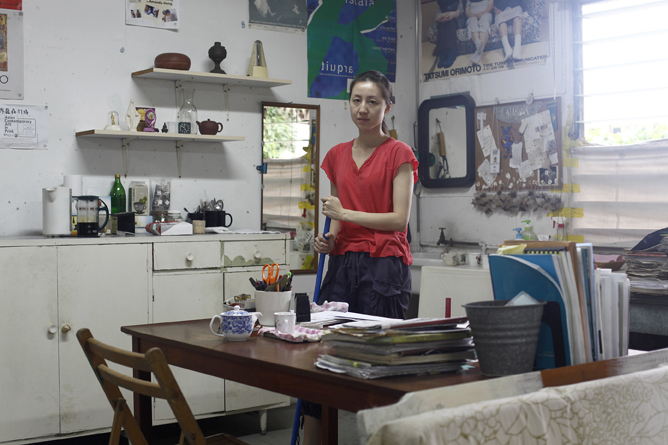
Motherland (2011), video still
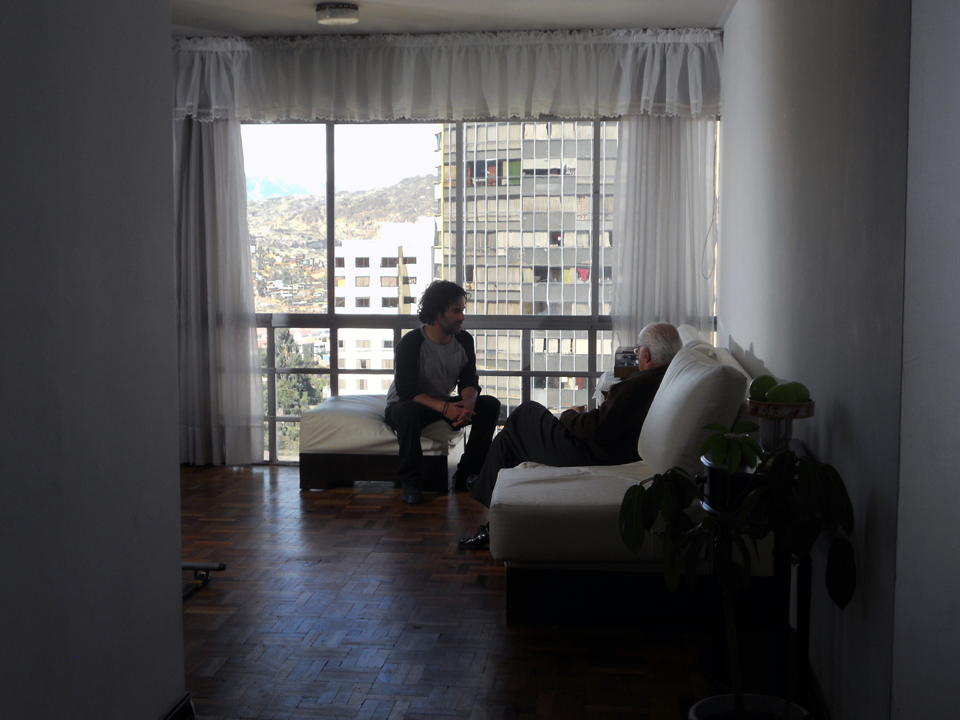
Sympathy for the Devil (2011), video still
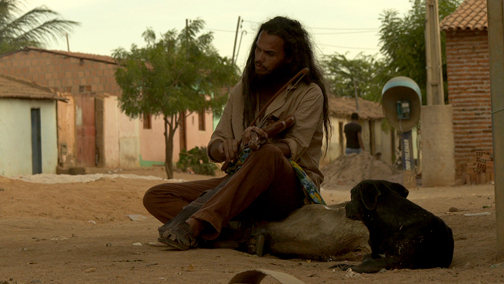
Rabeca (2013), video still
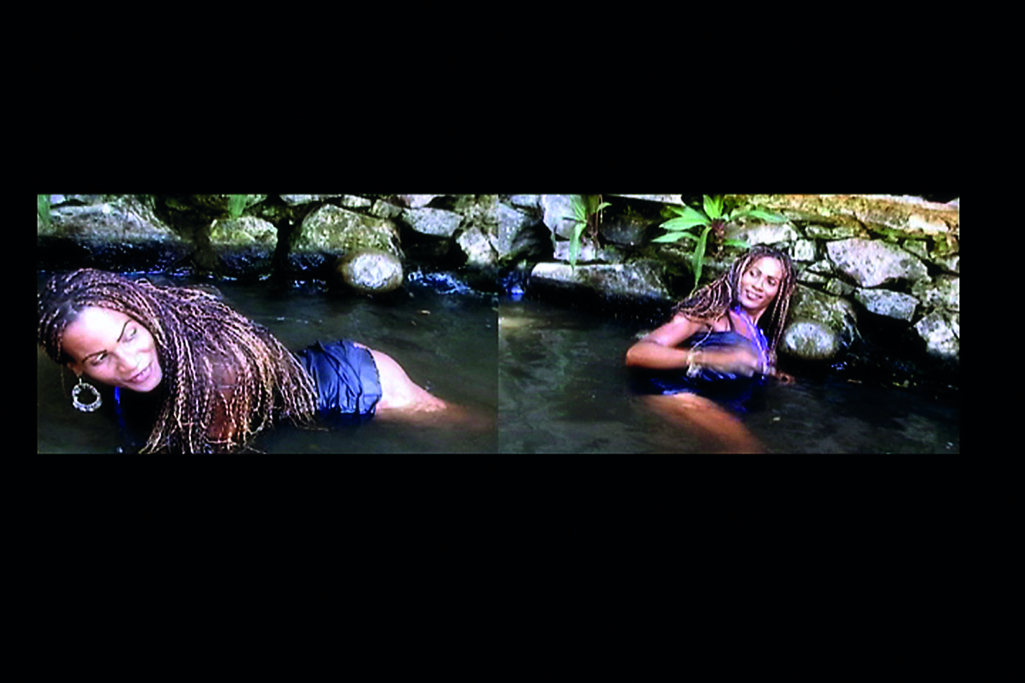
Sergio e Simone (2010), video still
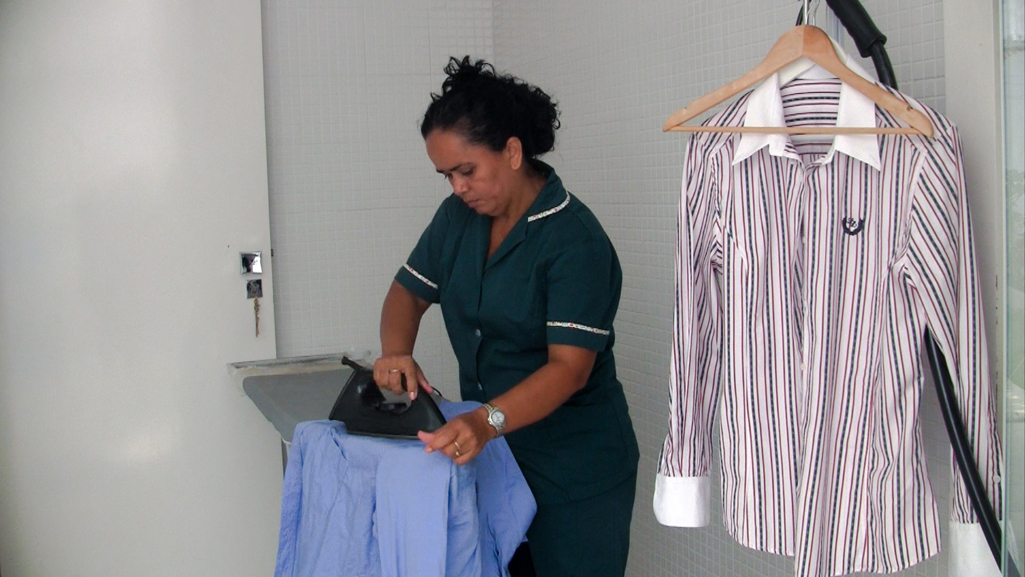
Doméstica (2012), film still
The intricate relationship between individual stories and shared histories reveals what might be described as a global narrative. A shared attempt to break free from injustice and poverty, the quest for a better existence, and an ongoing search for its meaning is conveyed in life stories that make the foreign seem familiar. The collective experience of humanity creates a powerful thread between works that address an individual’s place in society within the wider context of an ever-changing world.
From straightforward narratives of daily life, to magical journeys through time and place, the interconnectivity of seemingly disconnected situations and stories shapes a meaningful narrative that is simultaneously fragmented, overlapped, intertwined, highly accessible and completely invisible. This narrative exists both within and outside of time and space, reminiscent of what Michel Foucault described as being in the epoch of simultaneity, of juxtaposition, of the near and far, of the side-by-side, of the dispersed. We find ourselves in a moment in time when “our experience of the world is less that of a long life developing through time than that of a network that connects points and intersects with its own skein.”
Distinctions of power and class hierarchy are intrinsic to the network of humanity, and Gabriel Mascaro’s film Doméstica, 2012 reveals how notions of intimacy affect these power structures. Conventional boundaries of intimacy are blurred and confused, while the complexities of a tenuous balance of power are unveiled and questioned.
Each vignette conveys the life story of a housemaid, as filmed and interviewed by the teenage children of their employers. A full range of situations plays out as the details of their lives weave a complex story about life, love, tragedy, and happiness. There is a tentative familiarity between the housemaids and the teenagers that challenges the distinction between employer and employee, raising the rather uncomfortable question of whether there is true power in intimacy or if intimacy is nothing but an illusion of power. Scenes of housemaids crying about love, heartbreaking descriptions of how they have been physically and emotionally abused, glimpses into their daily duties, and a few scenes that reveal inappropriately intimate behavior, as well as moments of laughter and happiness are shaped into a story of interconnected fates and life stories.
An interest in the plight of those who are forced to live away from their family signals a distinct trend within contemporary art, as also conveyed in Sherman Ong’s ongoing project Motherland. Motherland features confessional portraits of various migrants to Singapore who all wrestle with a sense of rootlessness and disorientation. In the spirit of Edward Said, the topic of exile inspires innovative narrative forms that are solidly anchored in a specific type of storytelling that relates to stories of dislocation and loss.
A bourgeoning interest among contemporary artists in the consequences of dislocation is also exemplified in the work of Maria Magdalena Campos-Pons, who frequently investigates the implications of permanency versus migration. Her work is carefully woven together from the beautiful, yet often ragged, threads of daily life. Personal experience, history, religion, politics and cultural identity are all part of the intricate weave. In 53+1=54+1=55 Letter of the Year, created for the 55th Venice Biennale, the raw beauty of what plays out naturally on the streets is set against the documentary style of the personal stories, dreams, hopes and memories that are conveyed in the video vignettes. This work suggests that the existential predicament of feeling trapped is not strictly limited to those who have been left behind, it also extends to those who have left their familes and or homeland behind, as powerfully conveyed in both Mascaro and Ong’s works.
Moving back in time to the seventies, Claudia Joskowicz’s Sympathy for the Devil, 2011 tells the story of the daily encounter between a Polish/Jewish refugee who arrived in Bolivia during WWII and his upstairs neighbor, the former Nazi Klaus Barbie, evoking a strong sense of the complicated politics of dislocation. Her approach encourages us to reflect upon the specificity of ones personal experience within a wider historical context. Joskowicz describes the work as a reflection on space and its influence on the human social dimension, yet again bringing to mind Foucault. The long-term effect of history and its implications on what plays out in the present, and the constant ebb and flow between the two is made quite evident.
Returning again to a contemporary context Virginia de Medeiros’ work Sergio e Simone, 2010 conveys the story of a transvestite who, as a result of a crack overdose, found God, returned home to her family, gave up on being a transvestite and reverted to become Sergio. The two personas are played against each other in an extraordinary life story and compelling visual narrative. The impact of Virginia de Medeiros’ work lies in her ability to capture a sense of familiarity in the foreign from an almost anthropological standpoint.
Again and again, scenes from everyday life reveal stories of human interconnectivity, as also seen in Caetano Dias’ film Rabeca, 2012. Caetano evokes an almost painterly vision of rural Brazil in a narrative that is expressed through images and music, bringing to mind Eder Santos’ work Janaúba, 2012. The slow, almost painful beauty of both Rabeca and Janaúba read as a haunting journey through the hostile backlands of Minas Gerais, where existential questions linger in the dust, reminiscent of João Guimarães Rosa’s famous book The Devil to Pay in the Backlands.
Santos creates vibrant, poetic works that merge personal experience, cultural observation and technical proficiency as a means of expressing themes that are specifically Brazilian yet also globally relevant. With a gift for evoking the rhythms and textures of memory and history, he understands the power of moving images to tell stories that deserve to be told and retold. Janaúba is inspired as much by poetry and literature as it is by basic “life stories”, quite similar to works by fellow Brazilian artists Cao Guimarães, Pablo Lobato and Guilherme Vaz, to name only a few. These artists share a unique ability to transform the stories of life into visual narratives that ultimately emphasize the interconnectivity of humanity.
Walter Benjamin wrote that, “All great storytellers have in common the freedom with which they move up and down the rungs of their experience as on a ladder”. These artists move back and forth, up and down, between here and there, constantly navigating the landscapes of their mind that are as rooted in the local as the universal. Influenced by memory, shaped by history, and driven by dreams, these artists translate the stories of life into a rich visual language that has no geographical boundaries.
(February 2014)
Illuminations (1936), by Walter Benjamin. [eng]
Reflections on Exile and Other Essays, by Edward Said. [eng]
The Devil to Pay in the Backlands (1994) by João Guimarães Rosa. [eng]
The Global Art Project website. [eng]
Janaúba (1993) | Eder Santos
Artist Breakfast with Maria Magdalena Campos-Pons
The Cuban artist Maria Magdalena Campos-Pons comments her piece for the 55th Venice Biennale (2013), 53 +1 = 54 +1 = 55 Letter of the Year