My Maps

About means of seeing
Fernanda Albuquerque
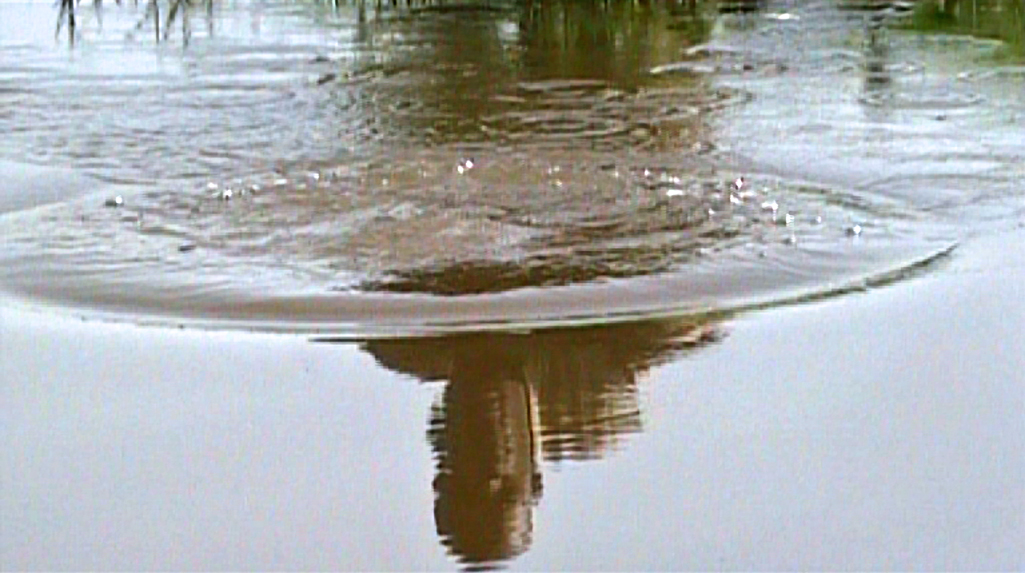
Mirror (2012), video still
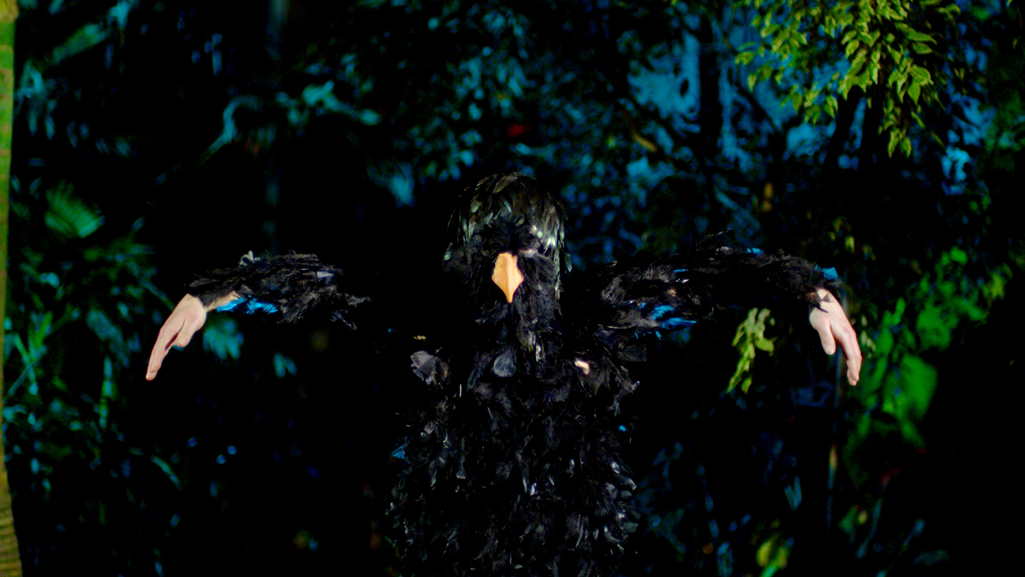
Journey to a Land Otherwise Known (2011)
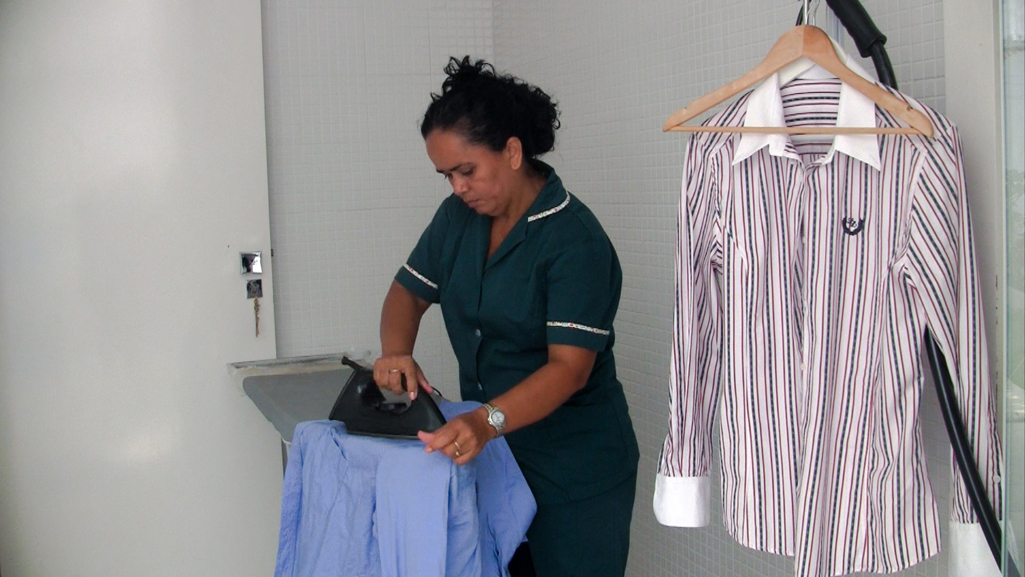
Doméstica (2012), film still
If truth will always be a construction when captured by a camera, that is, if it makes no sense investing in the possibility of a neutral outlook in the face of the real, capable of reporting it in an objective and uninterested manner, it may be the methods of seeing themselves and of interpreting the only themes possible of a documentary. Following this logic, the focus would no longer be on the other, but on meeting this other: in the modes of coming closer to what is different and investigating and narrating this difference. What will always speak, both of those who “document” and about those being “documented”. Or those who mutually recognize each other and are built in front of the camera.
For one of the aspects that attract the greatest attention in Doméstica (2012), by Gabriel Mascaro (Recife, Brasil, 1983), is an option to center the movie not as a report of the other, and of the maid, but in an essay about close relations with the latter. Seven adolescents are invited by the artist to film their maids for a week, and it is from the material collected that the film is built. Thus, Doméstica ends up showing the complex work, power and affection relations that reveal the conditions, conflicts, desires and daily life of maids, while also speaks about those who record them and the way they address them.
The strategy of centering the look more on the object, creating a theme of relations and meetings – or methods of seeing – and questioning the documentary device itself – is common to a series of movies promoted in Brazil over the last decade. This is the case with Rua de mão dupla (2002), by Cao Guimarães, in which people who don’t know each other change house for a day with the mission of promoting a kind of report on the others, and Santiago (2007), by João Moreira Salles, in which the director questions his own way of reporting the life of the former family butler, just to mention two examples. Regarding the relations that are established in this exercise for observation of the real or the other, Cao Guimarães ponders: “If my topic is reality, I am not free from it and it is also not free from me. In this exercise of reciprocity, in generosity of delivery, several degrees of subjectivity are integrated among themselves. The question is not to make objective the outlook on reality, but to mix its subjectivity with the subjectivity of the other.”
Ways of seeing are also the central theme of Journey to a Land Otherwise Known (2011), by Laura Huertas Millán (Bogotá, Colômbia, 1983). Inspired on reports of the first explorers of America, the film investigates the ethnographic outlook and its construction in an exotic and distant otherness. Although evoking the untouched nature of the tropics, the images are captured in an artificial environment, a tropical greenhouse set up in Lille, in northern France. It is, therefore, a reality built based on a specific reading of a place in which, here, it is represented on another outlook. The camera flows over the landscape in planes that are not very open, but always slow, without narration or any attempt at translation of what we see. It is in the hands of the viewer to relate images and to build their portrait or reinterpretation of the place – based on an outlook that will also carry what is seen.
In Mirror (2012), in turn, by Tiécoura N’Daou (Mopti, Mali, 1983), the image itself of the artist is the object of a delicate study on vision. Reflected in the waters of the river, it presents itself deconstructed and unstable, like the image of another who lets himself be shot. In this exercise of recognition, Tiécoura offers us a comment on the fragility that accompanies all attempts for closeness and enunciation – of the other and of oneself.
If the indignation of the other will always reveal something about us, be it our questions, our desires, or maybe what works like this remind us of, beyond the accent in ways of seeing, it is that all identity construction is due to meetings, to dialogue, and will never constitute a fixed organization, homogenous, stable, but “a route, a dynamic process, a coming to be”, as say the curators of the Southern Panoramas exhibition, whose works originated the platform. It therefore covers works that reflect not so much on the other, but on policies for representation of others and for the construction of narratives based on meetings or mixtures of subjectivity.
(February 2014)
O cinema documentário e a escuta sensível da alteridade (1997), by Eduardo Coutinho. [pt]
Documentário e subjetividade: Uma rua de mão dupla (2007), by Cao Guimarães. [pt]
O artista como documentarista: Estratégias de abordagem da alteridade (2008), by Paula Alzugaray. [pt]
Identity/ Alterity: Mirrors (2009), by Paula Alzugaray. [eng]
The location of culture (1994), by Homi Bhabha. [eng]
Santiago (2007) | João Moreira Salles
Rua de mão dupla (2002) | Cao Guimarães