Malleable Tracks
2012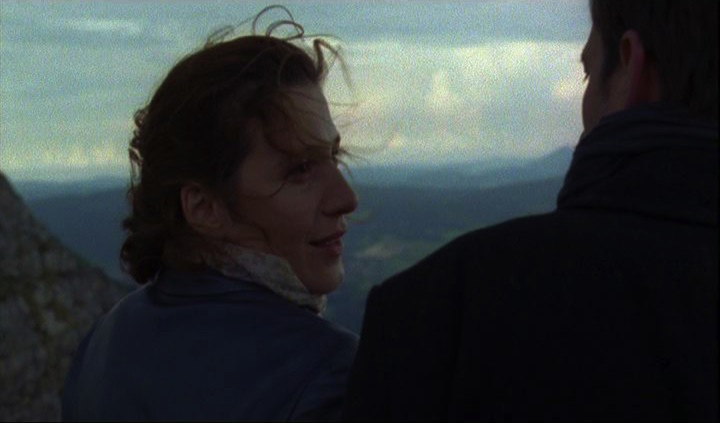
Malleable Tracks (2012)
"The film was inspired by a train journey I was doing very regularly, from Paris to the art school where I teach, in Switzerland. High-speed train can be monotonous and the journey takes 6 hours. However, there are some very impressive stops along the route, the old customs station on the Franco-Swiss border and the Buffet de la Gare in Lausanne, which became the film main protagonists. Slowly, these places and the experiences of this long-distance lifestyle fed the development of an idea for a film.
I tried to write a script which is at once going very quickly, but also provides richness and lyricism to its basic elements – the dialogues, the decors and the characters. The film plays with the viewer's relationship with the cinematic image and the possibility of accessing this emotional link with past images. Drawing the viewers' desire and intuition with minimal elements was the central idea of the film.
At that time, I was thinking a lot about accelerated life rhythms and the difficulties of finding a sense of grounding in an unstable world, what Zygmunt Bauman calls liquid modernity. I guess I’ve always had an issue with time. In my production, there’s an urge to create an awareness of the natural rhythms and capacities of the body, and to present the strengths of human intuition.
During the creative process, the most interesting dialogues I had were with my cameraman, Javier Ruiz, and the main actor, Hippolyte Girardot. Malleable tracks was made within the cinema context, and people who work with cinema always want details of the projects they are doing, whereas artists deal with more abstract ideas. This created a curious tension. I was happy that they were excited to do the film even though I couldn't provide all the answers they required.
Malleable tracks addresses the advanced stage of globalization, where there is a great deal of mobility and life is lived increasingly through mediated information rather than direct experience. The film presents direct experience and chance encounters as both seductive and threatening. The film also looks for a way to move forward in this imbalance between mediated experience and direct contact, by seeking to engage the highly sophisticated vocabulary of the moving image, which I believe all people have inherited."
Gregg Smith in a statement to PLATFORM:VB (October 2013)
Malleable Tracks (2012) | Gregg Smith
Video | 22’52”, copy from the original 35mm film, stereo, color, 16 : 9
Excerpt from Malleable Tracks (2012)
Testimony Gregg Smith | 18th Festival
The South African Artist, a regular at the Festival since the early 2000s, discusses his video. The idea for which came to him during stops along his constant train rides between France and Switzerland
Excerpt from Malleable Tracks (2012)
L'avventura (1960) | Michelangelo Antonioni
Antonioni's trilogy, L'avventura (1960), La notte (1961) and L'eclisse (1962), gave the artist "the awareness that we are much less victims to the forces of modernization today than the protagonists of these films were".
La notte (1961) | Michelangelo Antonioni
L'eclisse (1962) | Michelangelo Antonioni
The self as the centre of narrative gravity (1986), by Daniel Dennet, brought references to Gregg Smith regarding the fictional aspect of human perception and identity.