Lucharemos hasta anular la ley
2004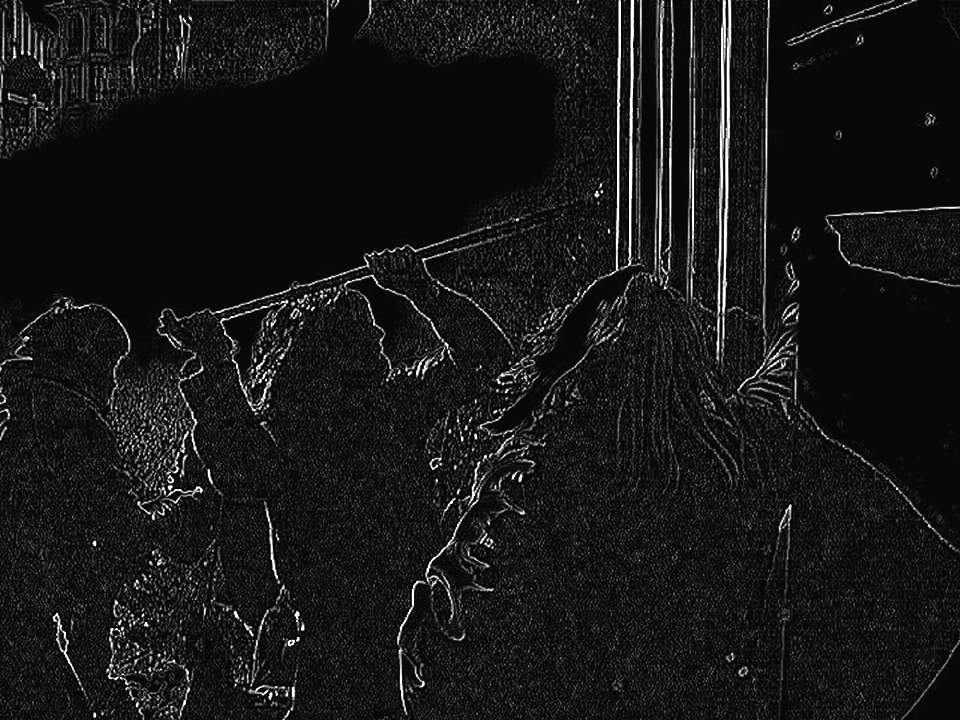
Video still
Video still
Video still
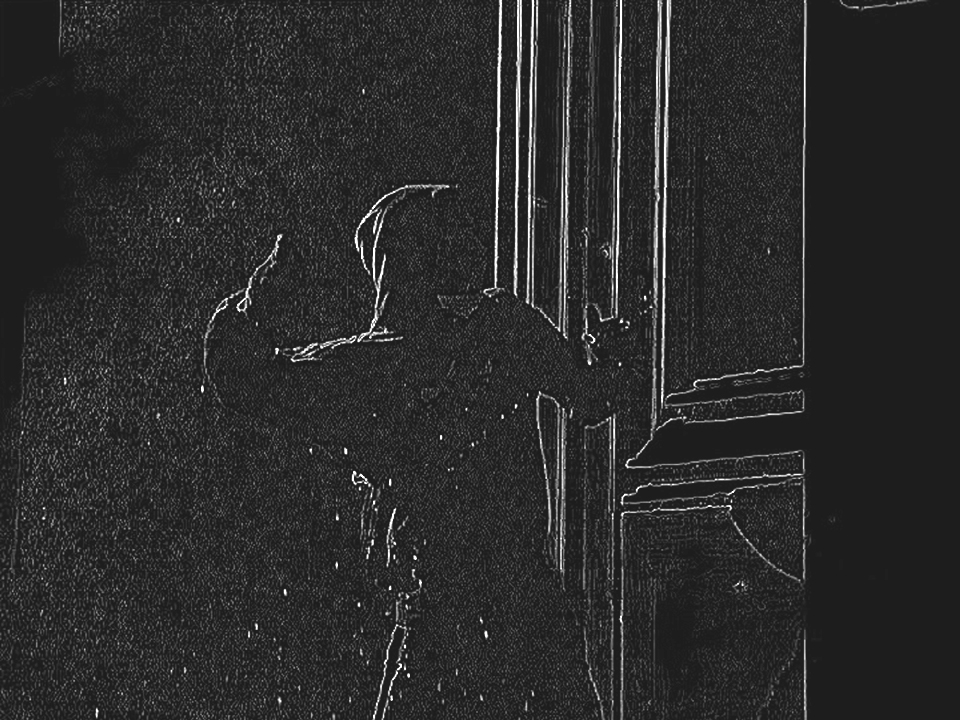
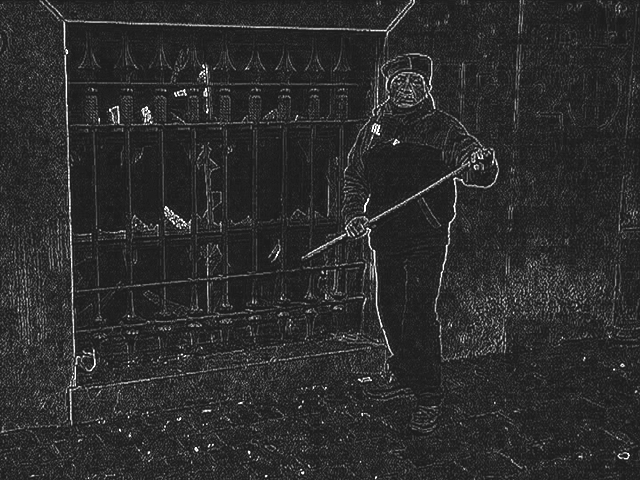
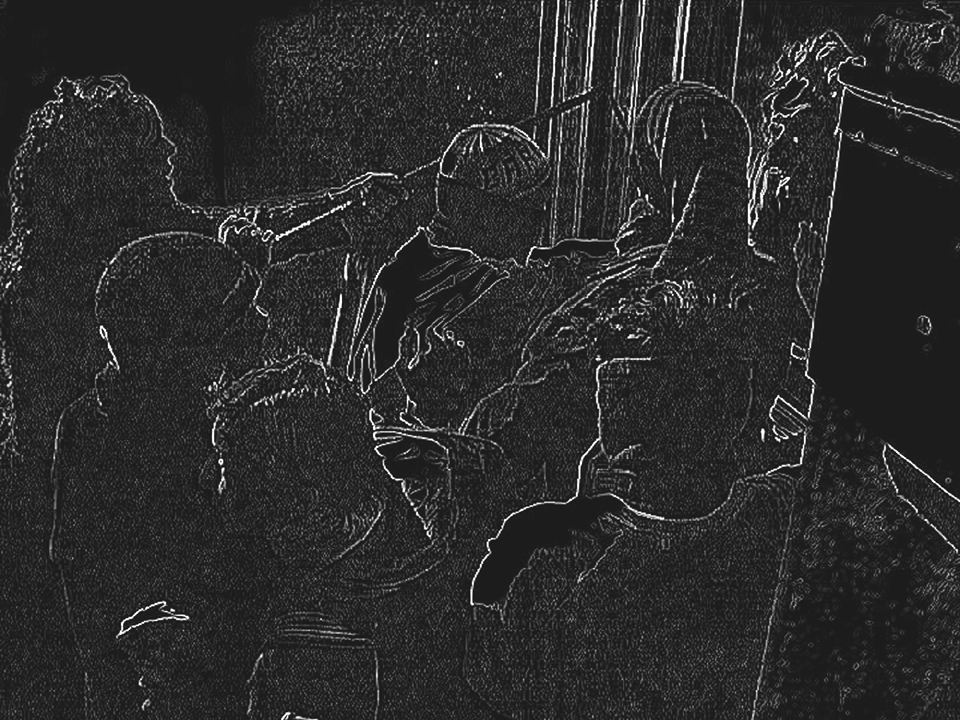
"In mid-2004 my brother Emanuel filmed a protest in front of the Buenos Aires City Legislature, where they were passing a law which, among other points, prohibited street merchants, prostitutes and transvestites from working the streets within a certain perimeter. Emanuel filmed the demonstration from up close, protected by a media enclave created by several other cameras that were broadcasting the events live. Surrounded by people from media outlets, my brother’s camera went unnoticed, whereas in a different situation he would probably be unprotected and vulnerable. Television cameras in Argentina enjoy a status unlike any other place, whereas a smaller camera can be construed as intrusive and suspicious.
The protest had a specific reason to be taking place in the country at that time, but as I viewed the material, I was interested in de-virtualizing it, removing it from the box where it might have been placed. Disconnecting those demonstrations from the media newscast images and from a political context is extremely difficult. And that was exactly what I planned to do: create some distance from the protest so I could reposition the footage in a different terrain, and thus reencounter an image that could help me ponder about those demonstrations, about the struggle between the interests of the power and the people, and the modes of representation.
Television and its interests distort and make a spectacle out of actions of this sort, using them to commercial and political ends. Television as a medium is a very powerful tool, and as such is often misused. It directs people’s gazes upon reality with intentions that are seldom neutral. Due to its visibility and reach, it creates a parallel reality. This reality entails a very big responsibility, but there are other interests involved and moral responsibility gets lost, when it should be the main concern.
Television image has a very unique feature. It usually does not reflect to the necessary extent about a situation of conflict like the one portrayed in the video. It is a good thing to have multiple perspectives, and perhaps one of them – the one I am interested in here – is the protest’s de-virtualization from the media context.
Reality today is orchestrated by this manipulation of language. The means of communication generate a good amount of material that enables a reading of our times. Our reality, in turn, provides the material to the reading of the means of communication.
I believe a political action can be represented in different ways, but it is always harder to find an accessible format that is free from clichés and classifications, one that tries an approach based on an original discourse. I think this is the only way one can open new doors through which an action can be received, whenever a register attempts to be something more than merely informative or documental. My idea was to dissociate the protest from any specific action. The treatment applied to the image is designed to situate the manifestation in an abstract time, which could be in the future or in the past.
Since my earliest works, I have had the need to reflect about certain images that are politically allusive to reality. I may not always deal with subjects that are ‘politically classifiable,’ but they are definitely political in their conception. Again, maybe a political piece of work can be created without directly addressing a political fact or trying to be literally political. There are certain interests, decisions and even ways of viewing and framing an image that can also be rooted in a political conception.
Showing the video in Buenos Aires is different than showing it in Amsterdam [the artist was born in Argentina and currently resides in the Netherlands]. Lucharemos addresses a specific situation that an Argentinean might isolate or recognize better. Elsewhere, it can only be connected with the crisis of the year 2000.
Lucharemos converses with an epoch, a moment at which the struggle against power seems to have been rekindled. The struggle in Lucharemos is a protest, a rebellion that might have taken place elsewhere, beyond this time and beyond Argentina. But there is not much of a difference between the protesters tearing down the doors to the Legislature building, and the people bringing down the gates of Middle Age tyrants. By disassociating the image from the television footage we are accustomed to, we enable ourselves to conceive other options of reality."
Sebastián Diaz Morales in a statement to PLATFORM:VB (August 2014)
Lucharemos Hasta Anular la Ley (2004) | Sebastián Diaz Morales
Video | 10'04"
Lucharemos Hasta Anular la Ley (2004)
TESTIMONY SEBASTIAN DIAZ MORALES | 14th Festival
Testimony Sebastián Diaz Morales | Unerasable Memories, 2014
Argentina’s Sebastián Diaz Morales elaborates on his Lucharemos Hasta Anular la Ley (2004), a video shown for the first time by Associação Cultural Videobrasil at the 15th Festival (2005)
LETTER TO JANE (1972) | JEAN-LUC GODARD AND JEAN-PIERRE GORRIN
The film by Godard and Gorrin is an investigation of the connection between images and political struggles.
The concept in Lucharemos bears a philosophical seed that converses with Jean Baudrillard’s ideas of simulacrum and hyperreality, and an aesthetic reminiscent of Argentina’s comic books with political and social contents.