Kwa Baba Rithi Undugu
2010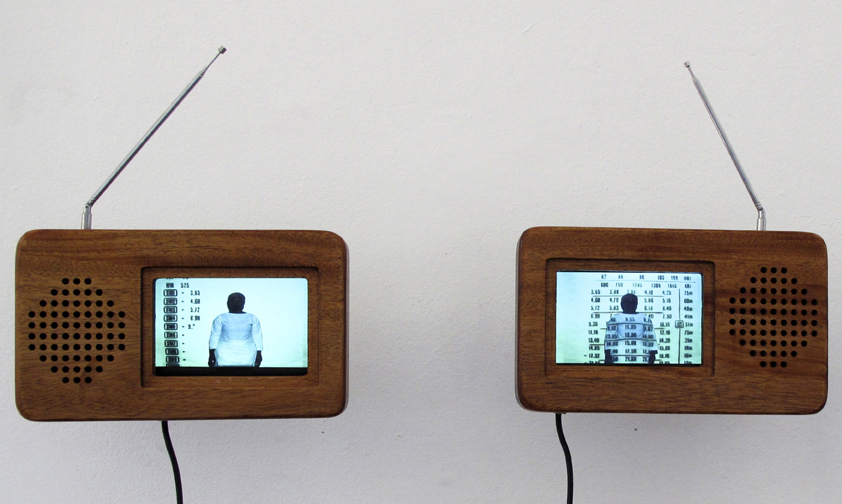
Kwa Baba Rithi Undugu (2010)
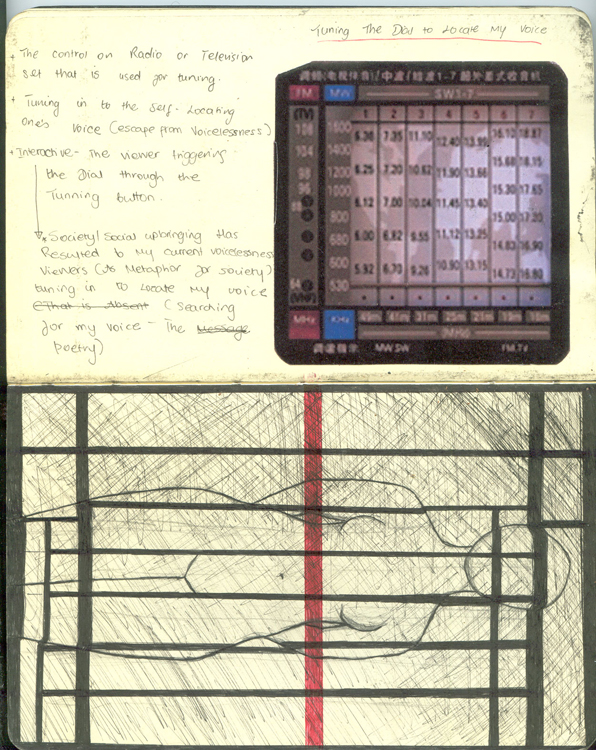
Studies for Kwa Baba Rithi Undugu
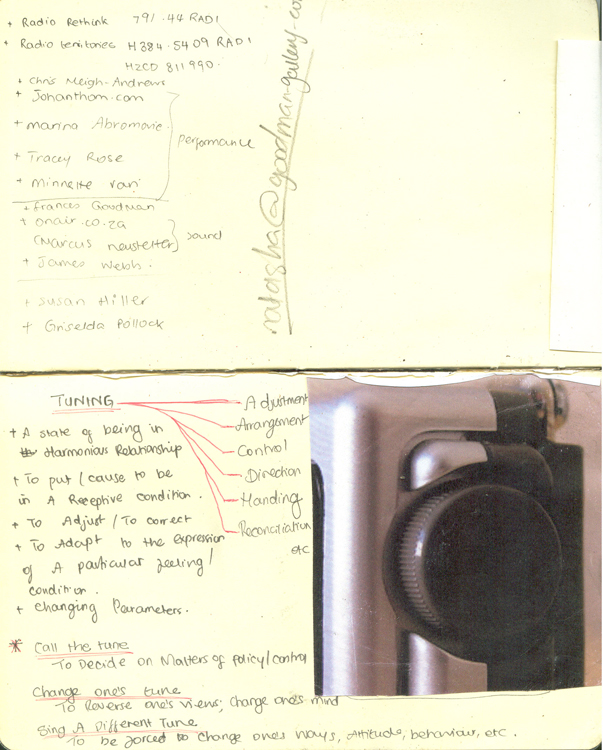
Studies for Kwa Baba Rithi Undugu
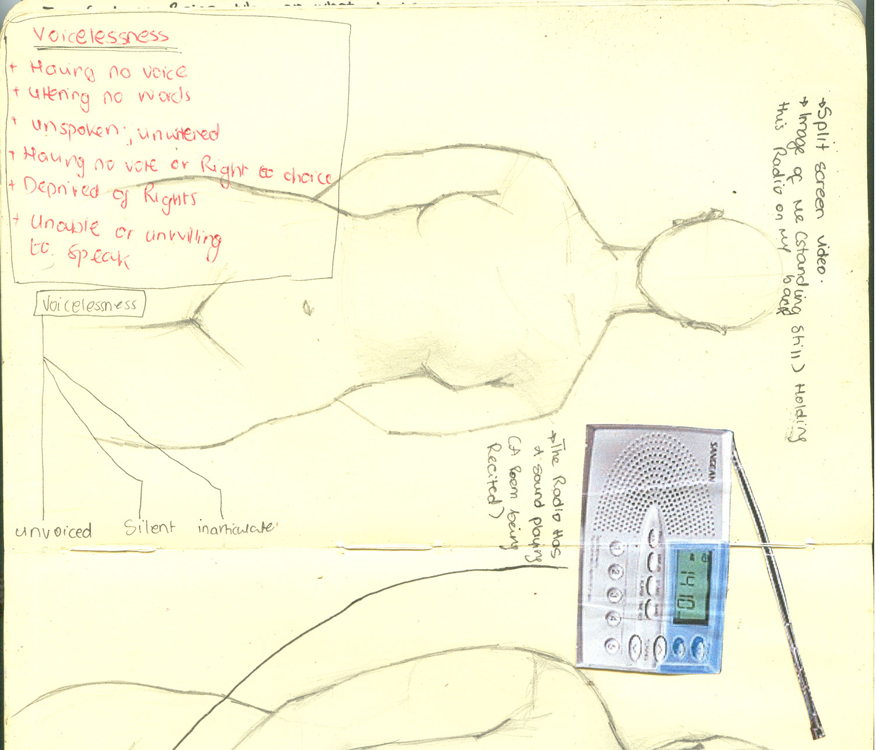
Studies for Kwa Baba Rithi Undugu
Studies for Kwa Baba Rithi Undugu
Studies for Kwa Baba Rithi Undugu
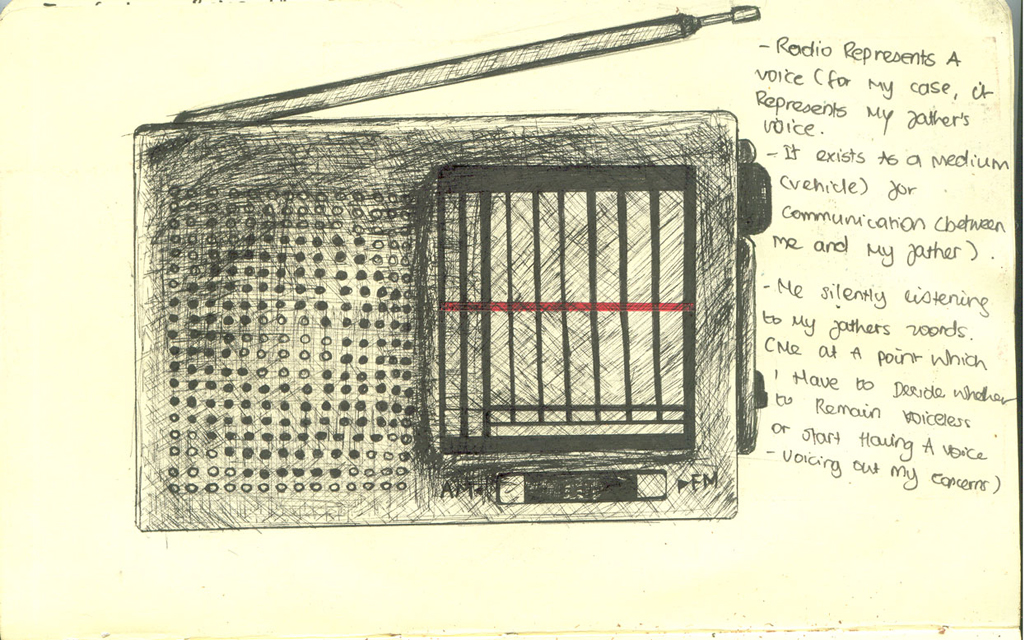
"For Kwa Baba Rithi Undugu, I extensively looked at issues of race, gender and social status as source for oppression, marginalization and often voicelessness. I was interested in how this state of being ‘voiceless’ could amount to one resorting to the use of popular media, such as the radio, as an alternative means, or a tool, to be heard and be given voice.
This piece plays around with the idea of ‘tuning in to a voice’— phasing out outside voices that may try to speak for you or on your behalf; and phasing in (tuning in to) your own voice so it can be heard with more clarity.
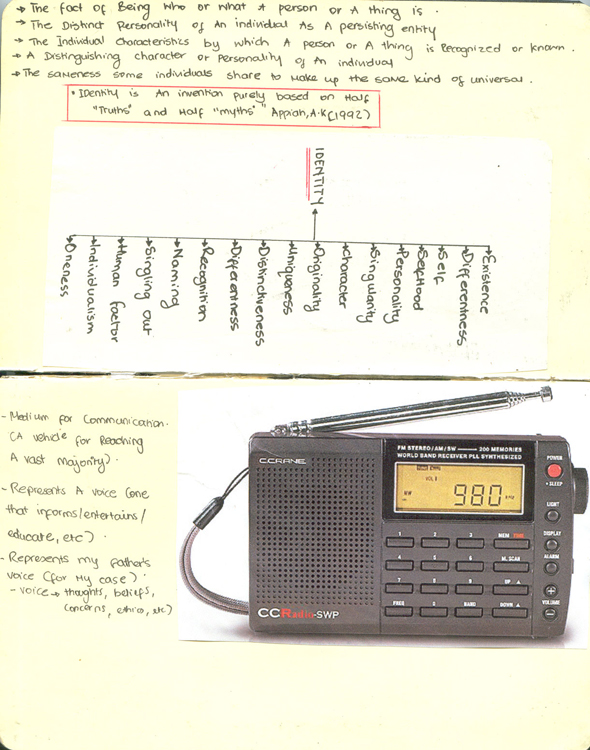
The soundtrack of Kwa Baba Rithi Undugu takes after a style of poetry recitation that is very specific to the coastal side of Tanzania. The work originally started as a conversation between me and my deceased father, and the idea behind it was inspired by a transistor radio from his collection of items, that are now in my possession.
Although the work has extensively evolved, it still carries the same title that it was originally intended to have, Kwa Baba Rithi Undugu, which in English basically translates as: 'we inherit our relations/relatives from our parents'.
At the time it was created, the piece spoke to my own situation as a stranger. The outsider, the other, an alien, often voiceless, brought about by the social alienation experienced in South Africa, a ‘foreigner’, a black female student in a white middle class oriented institution.
I think that the radio medium knows no boundaries. In fact, it can even be argued that instead of setting boundaries, the radio tries to redefine these boundaries. Its primary concern is the transmission and reception of the word, rather than the preoccupation with the racial, social or cultural contexts in which these people voicing the word are from."
Rehema Chachage in a statement to PLATFORM:VB (October 2013)
Kwa Baba Rithi Undugu (2010) | Rehema Chachage
Video installation | 2 channels, 13’30”, stereo, color, 4 : 3, loop; sculpture, 36 × 20 cm
Kwa Baba Rithi Undugu (2010) details and setup at the exhibition space of the 18th Contemporary Art Festival SESC_Videobrasil
Testimony Rehema Chachage | 18th Festival
The Tanzanian-born artist speaks out on her experiences in South Africa, the feeling of being a foreigner and not being fully welcomed to the country, which prompted her to use the idea of voice in her piece. Being in tune appears as a metaphor to inadequacy
The relations between race and gender which are discussed by some activists and exponents of post-colonial critics, such as Homi Bhabha, Frantz Fanon, Steve Biko, Gayatri Spivak and Bell Hooks, are also questioned by Rehema in her work.
The artist quotes Thembinkosi Goniwe, curator and editor of Space: Currencies in Contemporary African Art, when discussing the role of art in the construction of other historical narratives: "Artists are reclaiming space through art… exploring different creative forms of rewriting their histories, identities and desires, with the hope that they can successfully reorder these historically imposed, subordinating arrangements”. (2006).
Rehema makes reference to a series of readings, exhibits and works that lead to a better understanding of the diversity in the African artistic and cultural production: 10 years, 100 artists: Art in a democratic South Africa (2004), edited by Sophie Perryer; Reading the Contemporary: African Art from Theory to Marketplace (1999), by Olu Oguibe e Okwui Enwezor; The Luggage is Still labeled: Blackness in South African Art (2003), video by Vuyile Voyiya and Julie McGee; Olivida quien soy - Erase me from who I am (CAAM, Las Palmas, 2006), Elvira Dyangani Ose's exhibit.
"Works by artists such as Berni Searle, Minette Vari, Thando Mama, James Webb, Nandipha Mntambo, Indgrid Mwangi Robert Hutter and Maria Magdalena Campos-Pons are among my main references", says Rehema.