Mitumba
2015
Sketches for the development of the piece

Sketches for the development of the piece

Sketches for the development of the piece

Sketches for the development of the piece

Sketches for the development of the piece

Sketches for the development of the piece

Sketches for the development of the piece
Reference for the development of the piece

Reference for the development of the piece

Reference for the development of the piece

Reference for the development of the piece
Reference for the development of the piece

Reference for the development of the piece
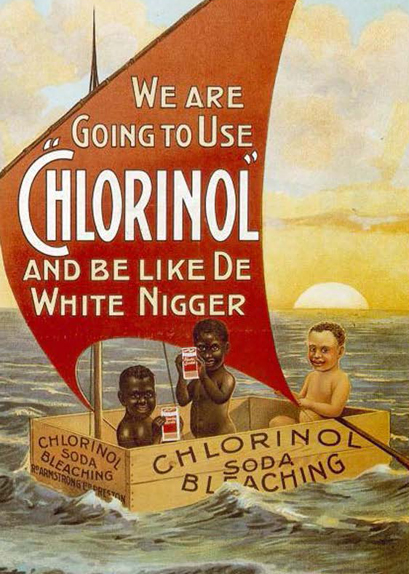
Reference for the development of the piece: soap advertising from the Victorian age
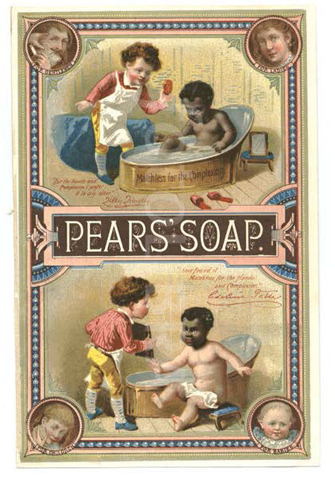
Reference for the development of the piece: soap advertising from the Victorian age
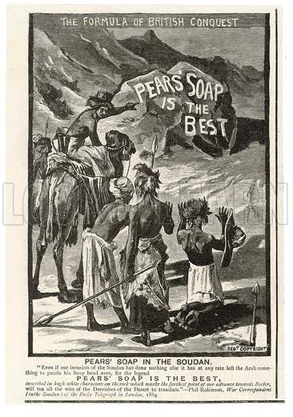
Reference for the development of the piece: soap advertising from the Victorian age
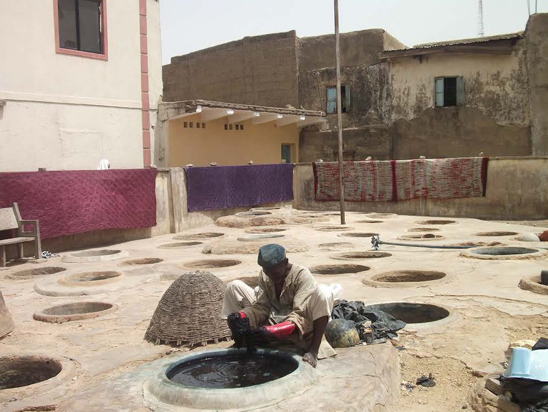
Reference for the development of the piece
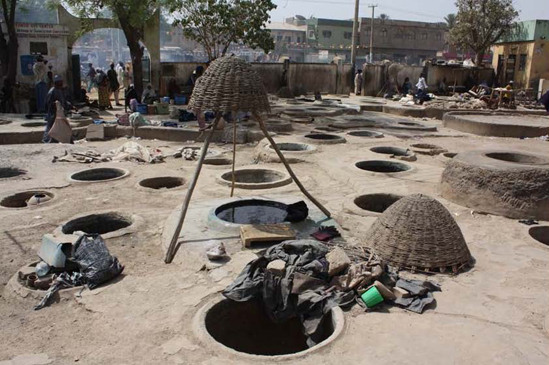
Reference for the development of the piece
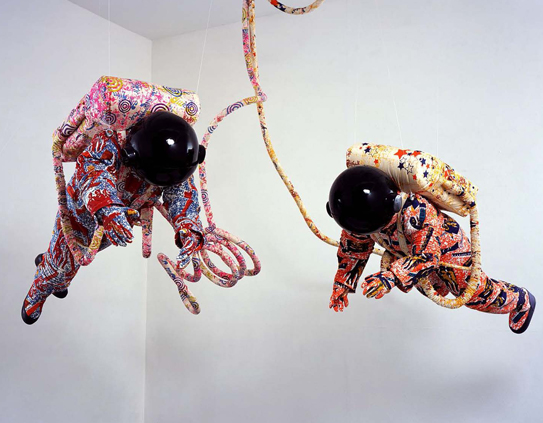
Reference for the development of the piece: Yinka Shonibare´s sculpture at the Yorkshire Park
Julia Rebouças: In your art project, you have referred to historical circumstances, related to the colonization period in Kenya, when bleaching was connected to ideas of purification and hygiene in order to create a market for soap, besides all racial and social submission intents. Many cosmetic companies are selling, nowadays, products that are supposed to lighten the skin, and they are very popular in Caribbean, African, Latin American and Middle Eastern countries. I would like to know your thoughts about this phenomenon, considering your investigation of soap dating back to the early 19th century.
Keli-Safia Maksud: We cannot talk about soap without talking about the trade of hygiene and the type of advertising that made this trade possible. When soap was first introduced into the market in the early 19th century, it was advertised domestically (in Britain) and internationally (within the British empire) as a social purification agent. Victorian advertising was explicitly shaped around regeneration, reinvention and spiritual salvation. Typical advertising pieces of the time would usually consist of images of black and white children, monkeys, white clothing, and mirrors, and the message would be that soap could offer some kind of magical metaphoric transformation. If you look at some of these ads, you see the black child magically becoming white after bathing, and you see inscriptions that read “We are going to use chlorinol so we can white nigger” — you can do a quick Google search of such Victorian advertising to see what I am talking about. These images of cleanliness, appearance and beauty were used to define social hierarchy and difference and the British Empire could legitimize its colonial position at home through the stance of social purification.
When we fast-forward to contemporary advertising, we see that not much has changed except that the blatantly racist images have been taken out. However, the message is still the same — the white skin is superior. There are still products in many regions in Africa like Fair and Lovely, Pears and Nivea, which have been on the market since the 19th Century and continue to dominate African market through a more nuanced message of purification. Even more disturbing are these local homemade concoctions that are applied on the face to lighten the skin. This homemade mixture — mkorogo in Swahili — is made by mixing all kinds of products such as bleach, hair relaxers, creams, etc., and after using it, the skin is left so tender that it burns if you are in direct sunlight!
Yet, this ideal of beauty is not confined to just the global South but it's really part of a system of white superiority that affects us all. In North America, for example, you can see these divides between light skinned and dark skinned black people, where light skinned black people have more power within the existing social structure. Anne McClintock describes this perfectly in her book, Imperial Leather, where she says (I am paraphrasing here) that imperial Victorian advertising of soap allowed for the marketing and distribution of racism on an unimaginable scale that reached a large and differentiated mass. For me, this is something that continues to shape the reading and understanding of the global south, as well as North American black people and, subsequently, how these regions view themselves and ideals of beauty.
JR: Diaspora is an important issue for colonial and post-colonial countries’ histories. One can see different but still relevant contemporary migration movements. As an artist who lives partly in Kenya, partly abroad, how do these themes come to you and how do you stand on them?
KSM: The issue of migration and diaspora is something that I experienced long before moving abroad. While I grew up in Kenya, my family is from Tanzania. I mostly spent time in Kenya, but every single holiday was spent in Tanzania. In Kenya, I was considered Tanzanian, and in Tanzania, they considered us Kenyan due to little things, like the way we spoke Swahili or the fact that we are fluent in English. Kenya and Tanzania have two different postcolonial histories in that one adopted a pro-Western stance and the latter, a philosophy based on socialism, where Swahili was the national language. There were a lot of people from Tanzania living in Kenya while I was growing up, so I would say that we did grow up in some form of a diaspora, where most of my parents’ friends were Tanzanian. In Kenya, I studied in a British system school, taught by British teachers, and we mostly spoke English, but when we would visit Tanzania, the language was Swahili. Kenya was full of people from all over the region, including Somalia, Ethiopia, Rwanda, Uganda. So, in a sense, there were lots of diasporas functioning at the same time. In this way, I feel that I was always shifting between different cultures, tribes, languages and religions, which I later came to understand as Diasporas.
When I moved to Canada, two things happened simultaneously. First, there was this process of immediately becoming something else — black. I was suddenly part of this thing called the black diaspora, which for me negated different nuances between black people, and basically flattens things out into this neatly packaged oneness. While this was happening in this kind of macro way, there was also this expectation for me to know into an authentic ‘African’ culture, and I was expected to produce a work that easily falls into this projection, even though the idea of some kind of fixed identity belonging to an authentic culture is quite foreign in my experience. This was when I first started questioning these ideas of authenticity and identity.
Living abroad provides me with the distance to critically think about Kenya and Tanzania, especially when it comes to the effects of colonialism and post-colonialism in those regions. Growing up in Kenya, colonialism wasn’t part of any kind of collective memory or conversation. Yet, it has very much impacted the national identity. For example, if we look at the education system in Kenya, we will only learn about the European history, we will only read European books, we will only learn about European artists — the system is set up in this way, whereby Europe is more important to learn about. This is not necessarily the same in regions such as West Africa — but I don’t know if I would be able to see this so clearly if I had never left.
JR: In a previous conversation, you have mentioned how the clothing tradition in Africa, whose greatest symbol are the wax printed fabrics, was closely related to British and Dutch commercial interests, who were exporting textile to the colonies. I would like you to explain how your artwork brings this discussion of identity, constructed tradition and memory along to the investigation of “African fabrics”.
KSM: The fabrics that I used in this piece are known as African wax print fabrics, or Dutch wax. Since the late 19th Century, these fabrics have been manufactured in Europe for sale in Africa. These wax prints have origins in Indonesia (Javanese batiks) and are industrially produced in Holland and Manchester for export to Africa. By the mid-1960s, they had gained such popularity throughout the continent, that they were used by locals as signifiers of an independent African identity free of colonial rule. Today, they are quintessentially perceived (globally) as an expression of African authenticity. The paradox here is that this very cloth that symbolizes a connection to an African heritage also signifies a separation from the historical culture of that homeland. It is the result of this complex globalization process that created a constructed image of "Africanness". It is key to note that Dutch wax fabrics speak to an overall African identity, negating the notion of identities tied to territories or tribes. What is interesting for me is that, as these fabrics move from one place to another, they acquire different meaning and identities. In different regions in Africa, they can be seen as a medium of communication where certain patterns or colors communicate things locally. In the West and in the Diasporas, they are worn as a sign of Afro pride.
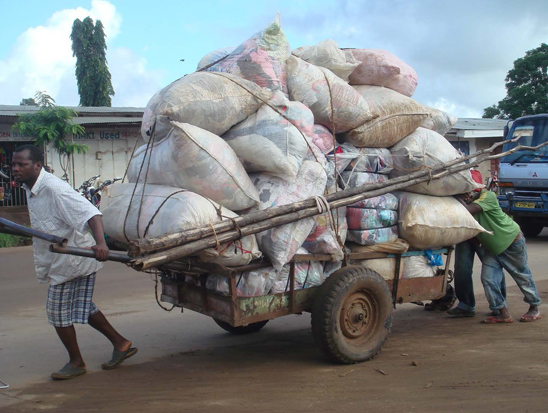
In recent years, there has been a different type of trade happening between North America, Europe and Africa, in the form of second-hand clothing known as Mitumba. These clothes are shipped in bundles in freight crates, and they were initially meant for sale to the lower class. However, everyone buys these clothes.
One major receiving port for Mitumba is in Tanzania. From there, the clothing is widely dispersed into the interior of Africa. The transportation and sale of Mitumba are responsible for many jobs, both in wealthy donor companies and in the African countries, where Mitumba is bought and sold. Critics of the Mitumba trade note that the influx of cheap clothing is responsible for the decline of local textile industries. Proponents of Mitumba point out that the clothing is beneficial in that it stimulates economic activity and allows people with limited means to afford fashionable clothing. In cities like Nairobi, you will hardly find anyone in any traditional form of clothing.
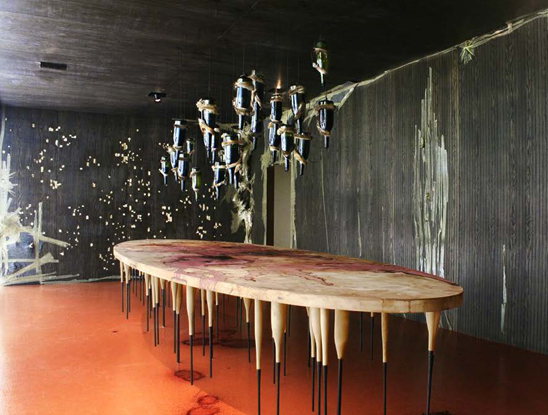
This piece really looks at these economic and cultural exchanges between Africa, Europe and America, specifically through the lens of clothing and their impact on identity. The question of ownership and control is quite fascinating, especially when I ask myself who controls these networks of trade. The largest company that makes African fabrics is Vlisco, and they are located in the Netherlands. If you navigate their website, you will notice that they use only black models and tell a romantic story of its origin and designs. The fabrics that I use in this piece were purchased from Vlisco, and I almost couldn’t believe how expensive they were.
For me, there is always a disconnection between the representations of Africa and the Africa that I know. I spent time trying to research origins, or how these perceptions were built, but it’s an impossible task. So, in this installation, through the symbolic use of bleach as a decolonial act, this work tries to get back to an origin that can never be attained — the fabrics will likely never turn white, but they will turn into something else, and the same can be said of identity.
Keli-Safia Maksud in a interview to curator Júlia Rebouças, member of the Curatorial Committee for the 19th Festival (July 2015)
Mitumba, 2015 | Installation
Keli-Safia Maksud