Journey to a Land Otherwise Known
2011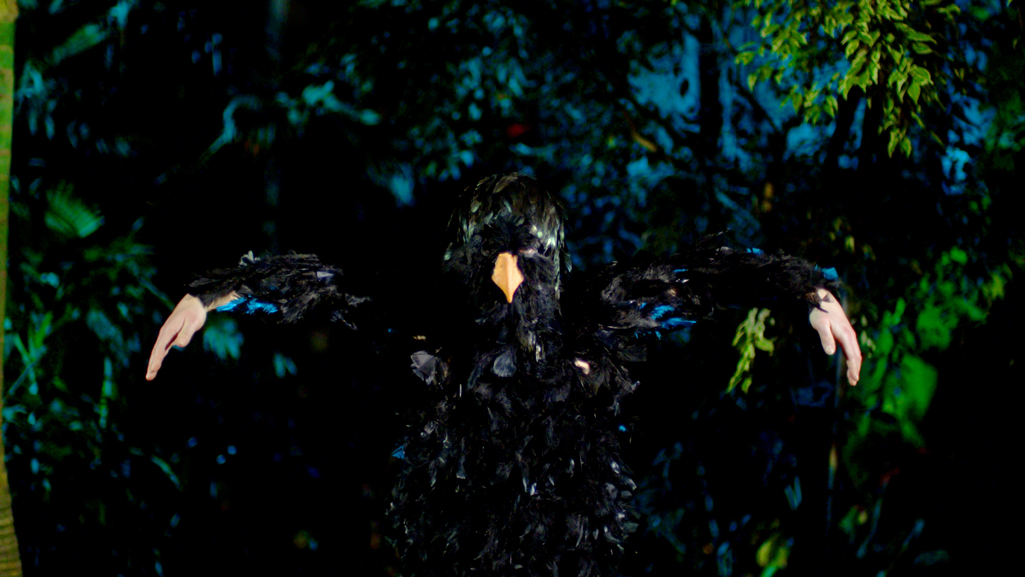
Journey to a Land Otherwise Known (2011)
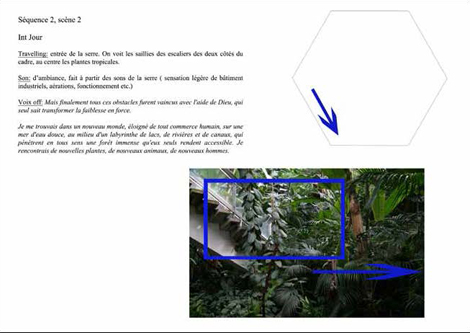
Journey to a Land... storyboard
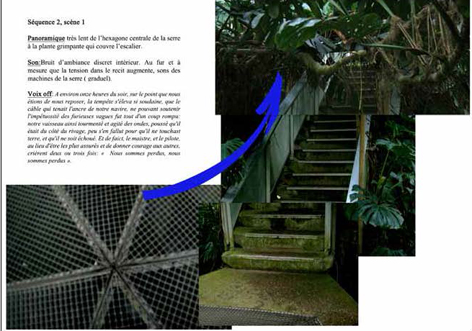
Journey to a Land... storyboard
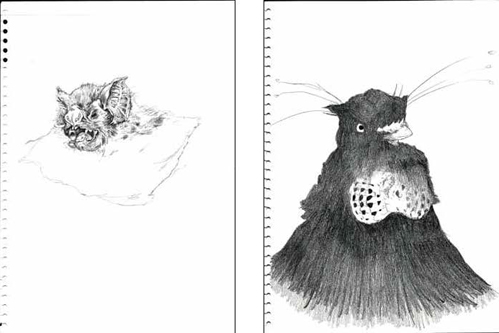
Costume sketches for Journey to a Land...
Journey to a Land... collage, first version of the script
Journey to a Land... collage, first version of the script
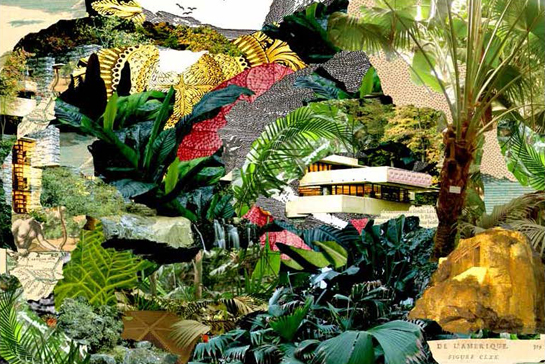
De l’Amérique (2011), collage for Journey to a Land...
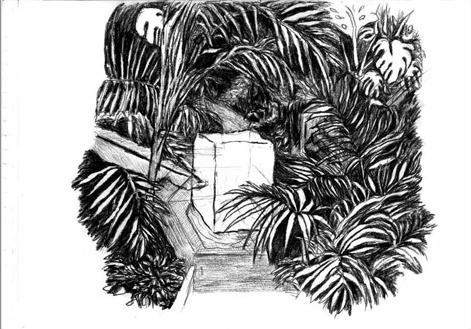
Sketches for Journey to a Land...
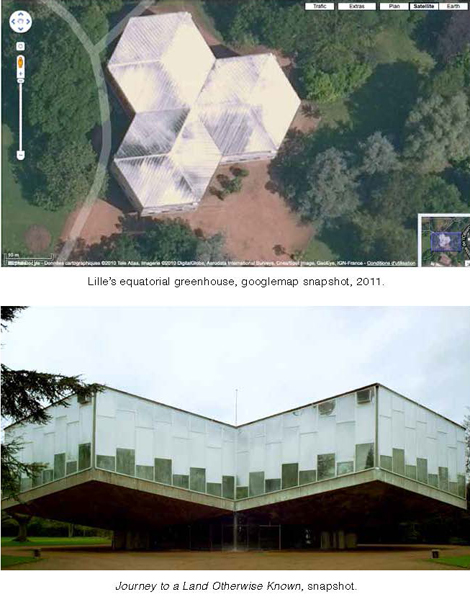
Lille's equatorial greenhouse, Google Maps snapshot (2011), and Journey to a Land... video still
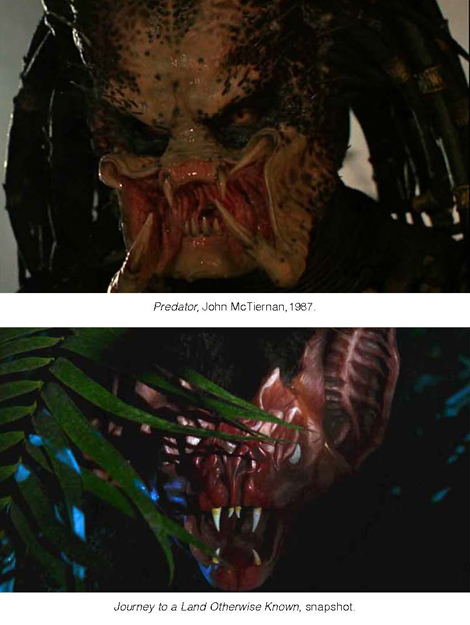
Relation between Journey to a Land... and the film Predator (1987), John McTiernan
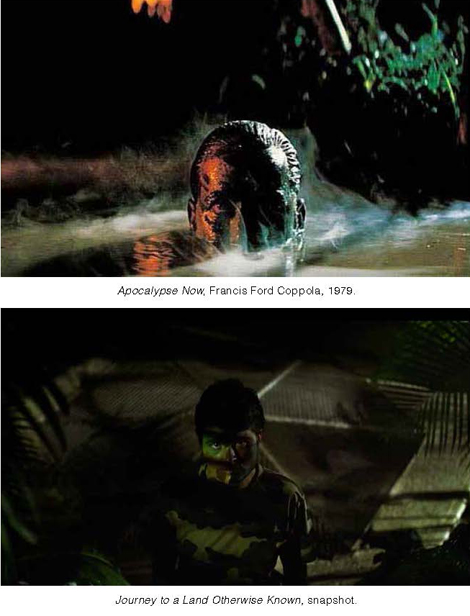
Relation between Journey to a Land... and the film Apocalypse Now (1979), Francis Ford Coppola
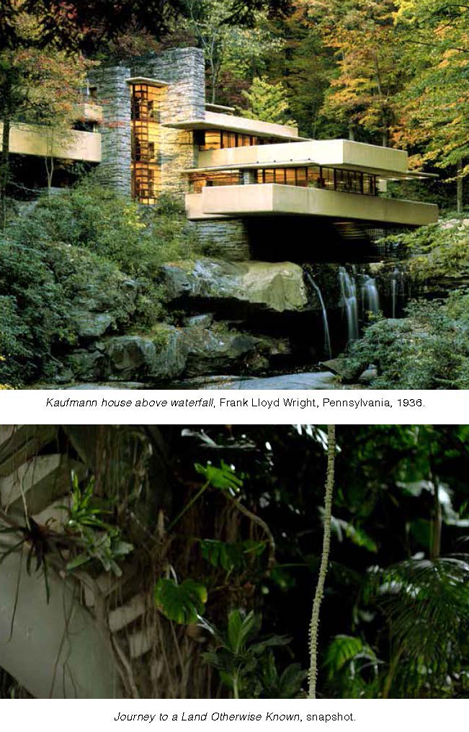
Relation between Journey to a Land... and the Kaufmann house above waterfall (1936), Frank Lloyd Wright
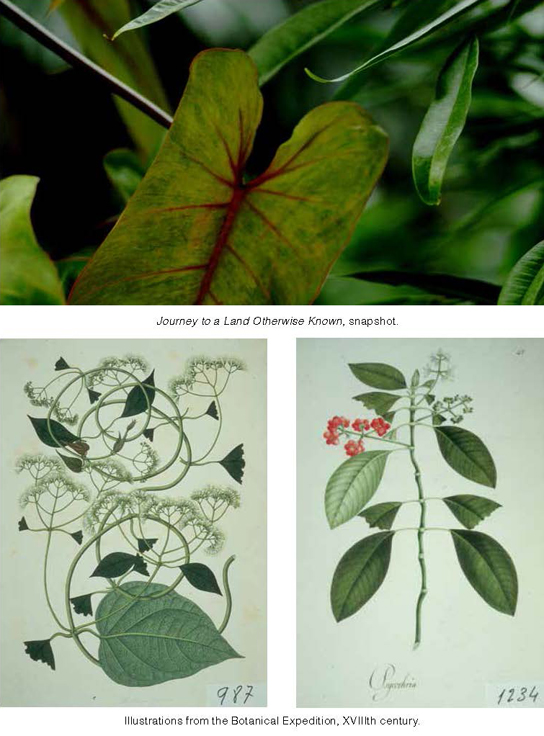
Relation between Journey to a Land... and the illustrations from the Bothanical Expeditions, in the early XIX century
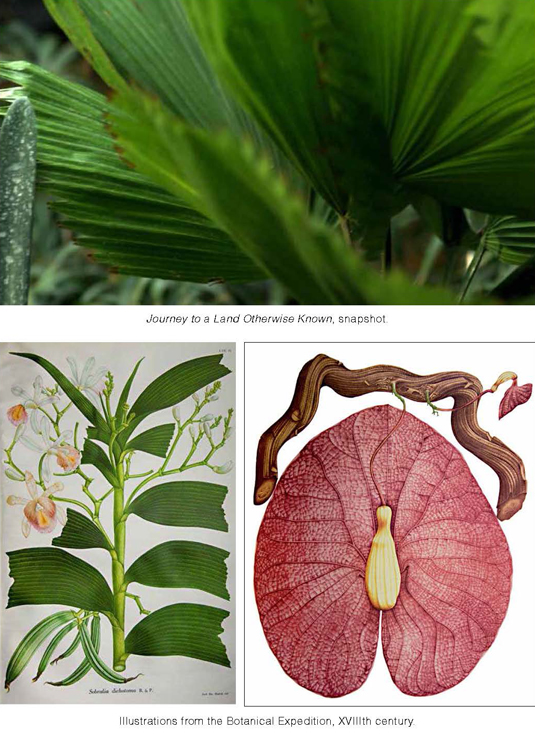
Relation between Journey to a Land... and the illustrations from the Bothanical Expeditions, in the early XIX century
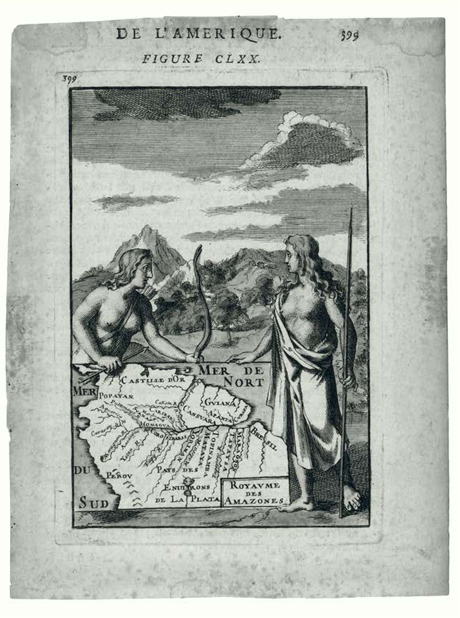
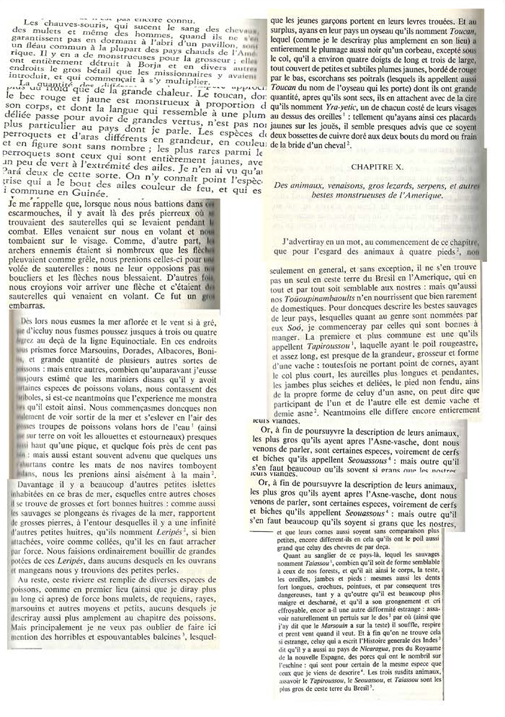
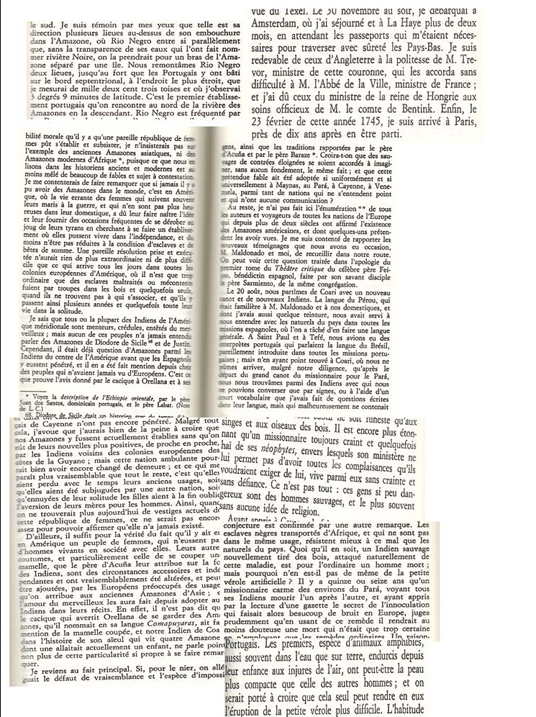
Reference to Journey to a Land...: De l’Amérique, Figure CLXX, image from Luis Angel Arango’s Library
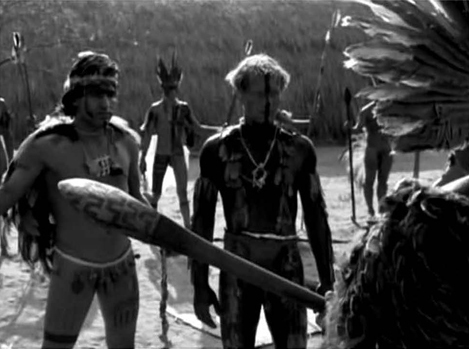
Reference to Journey to a Land...: How tasty was my Little French Man (1971), Nelson Pereira dos Santos
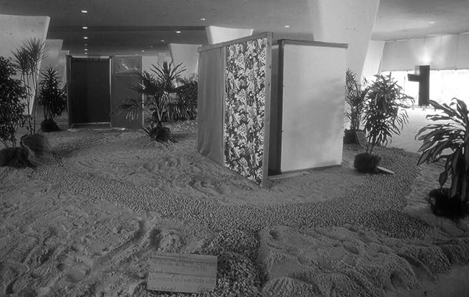
Reference to Journey to a Land...: Tropicália-Penetráveis PN2 and PN3 (1967), Hélio Oiticica
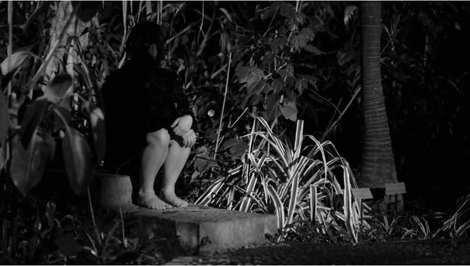
Scene suppressed from Journey to a Land...
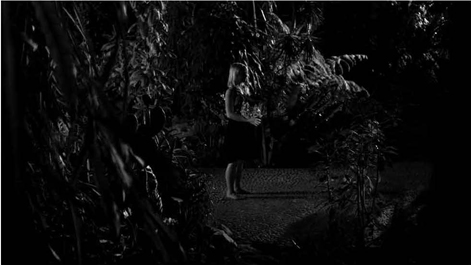
Scene suppressed from Journey to a Land...
"Journey to a Land Otherwise Known is part of a series initiated in 2009, around the notion of 'exoticism’. The source of the series – which includes Sin Dejar Huella (Without Leaving a Trace) (2009) and Aequador (2012) – lies in a discovery of a book of photographs depicting Mapuche natives in the Jardin du Luxembourg, in Paris, in the early 20th century. The poignant memory of these vanished people, forced into exile and exposed in France, has haunted me for many years.
This work was inspired by the first accounts of the natural and ethnographic explorations in America by Conquistadores, missionaries and scientists. The film is entirely shot in the Tropical Greenhouse of Lille, a building constructed in 1970 by Jean-Pierre Secq, a sort of reinforced concrete botanical Crystal Palace.
The architecture and the plants of this enclosed place are used as narrative supports for an initiatory journey, presenting the speech of an 'explorer' and his visions. The plants materialize traces of the history of this botanical knowledge, made of appropriations, displacements and exiles. As an allegory of the conquest itself, Journey to a Land... ends with the first orange trees (European seeds) planted in America.
The fantastic and onirical side of the film was a way to contradict all rationalistic discourse, even my very own discourse about it. I wanted to highlight the power of hallucination with plants in a literal and figurative sense, by letting strange and unusual images emerge.
Literal and figurative journeys took me to the cinema as a medium but also as a subject. I'm particularly interested in its representation of otherness: ethnological representations, historical archives, the iconography established by the mass cinema. The porosity between documents and representations, short news item and collective history, knowledge and perversity, narration and delirium, is at the heart of my writing.
The film proposes a pastiche of an ethnographical film in an enclosed space, an artificial jungle in an European tropical greenhouse, with a voice over of a white man describing the discovery of the 'other', the 'strange'. By deconstructing the ways of the classical ethnographic films (male voice over, explaining what we see), I wanted to cast doubt on the veracity of the taxonomic discourse used by the Western culture to describe otherness. Journey to a land... evokes the violent origins of the 'New World' and the subsistence of the imagery that it engendered.
When I made Journey to a Land..., the political environment in France (the country where I have been living for 12 years) was becoming more and more aggressive towards foreigners and immigrant people, with new immigration laws, the acceptance of extremisms, and political discourses trivializing xenophobic remarks and attitudes. I recognized the political discourses of that time as a revival of the 'savage' figure. Unfortunately, racism is still an important issue in Western culture nowadays, present in all the wings of the political panorama.
Similarly, in those years, the survivors of kidnappings by the FARC have published books about their captivity in Colombia. The iconographic construction around these facts, in Colombia and France, has marked me. I felt that both cultures were still mired in a colonial discourse, missing a new syntax, and the right words to articulate our current and contemporary dramas, instead of a merely dichotomy between the 'civilized' and the 'savage'."
Laura Huertas Millán in a statement to PLATFORM:VB (October 2013)
Journey to a Land Otherwise Known (2011) | Laura Huertas Millán
Video | 22’17”, Dolby Surround Prologic 1, color, 16 : 9
Journey to a Land Otherwise Known (2011)
Testimony Laura Huertas Millan | 18th Festival
According to the artist, the video, shot in a tropical greenhouse in the French city of Lille, positions viewers along two poles: political questioning and sensory, fictitious experience
How tasty was my Little French Man (1971) | Nelson Pereira dos Santos
"The main reference that led me to Journey to a Land... comes from the Brazilian cinema: How tasty was my Little French Man (1971)", says the artist.
Cannibal Holocaust (1980) | Ruggero Deodato
References to Journey to a Land...: "Hollywood and European fictions that represent the rainforest in an exotical manner", explains the artist.
First blood - Rambo (1982) | Ted Kotcheff
Predator (1987) | John MacTiernan
Apocalypse Now (1979) | Francis Ford Coppola
Avatar (2009) | James Cameron
The Emerald Forest (1985) | John Boorman
Tropical Malady (2004) | Apichatpong Weerasethakul
Aguirre, the Wrath of God (1972) | Werner Herzog
The Thin Red Line (1998) | Terrence Malick
Panis et circenses (Live French TV - 1969) | Os Mutantes
Os Mutantes, Caetano Veloso and Gilberto Gil have also influenced the artist.
Alegria Alegria (1968) | Caetano Veloso
Caetano Veloso sings in 1975
Back in Bahia (1972) | Gilberto Gil
Laura Huerta Millán's work joins the anthropophagical legacy of Brazil by using carnivalistic aesthetics: masks and costumes as a way to travesty an historical archive. "Hybrid, whimsical, politic and crossbreeding approaches, as the Brazilian Tropicalism, the Afrofuturism and the postcolonial studies are still great inspiration for my work.", explains the artist.
On to the film How tasty was my little French man (1971), by Nelson Pereira dos Santos, one of the main influences for Journey to a Land..., the artist says, "It’s a free, carnavalistic adaptation of Hans Staden’s True Story and Description of a Country of Wild, Naked, Grim, Man-eating People in the New World, America (1557). In the original, Hans Staden is a survivor of several months of captivity among the Tupinambas, a tribe of the pre-colonial Brazil. But in Pereira dos Santos’ film, the European is truly eaten by the Tupinambas"
Jungle travel accounts that were a reference for Laura Huertas Millan include:
Heart of darkness (1902), by Joseph Conrad.
La Vorágine (1924), by José Eustacio Rivera.
Horacio Quiroga’s short stories, travel accounts as the diaries of Christopher Columbus and Alexander von Humboldt, and ethnographical texts linked to shamanism as Wade Davis’ One River: Explorations and Discoveries in the Amazon Rain Forest (1996).
Oswald de Andrade’s Manifesto Antropófago and Helio Oiticica’s Tropicalia were the main influences from the 'art world'. Os Mutantes, Caetano Veloso and Gilberto Gil influenced the artist as well.
Other influences include the botanical representations from the colonial era in Colombia, specially the images from the Expedicion Botanica, from the early XIX Century, and the work of Mauricio Nieto Olarte, Remedios para el imperio. Historia Natural y La apropiación del Nuevo Mundo (Uniandes, 2009), "that connects the botanical expeditions, the classification of American native species and the story of colonialism."