Inimigo Invisível
2011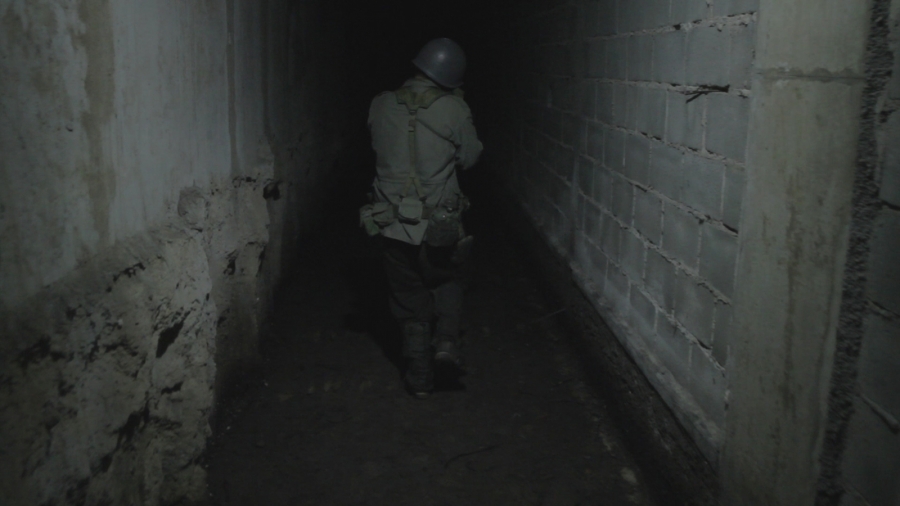
Image of the video Inimigo Invisível (2011), made by Guilherme Peters on the occasion of the 1st Ateliê Aberto Prize, and displayed at the 17th International Festival of Contemporary Art SESC_Videobrasil.
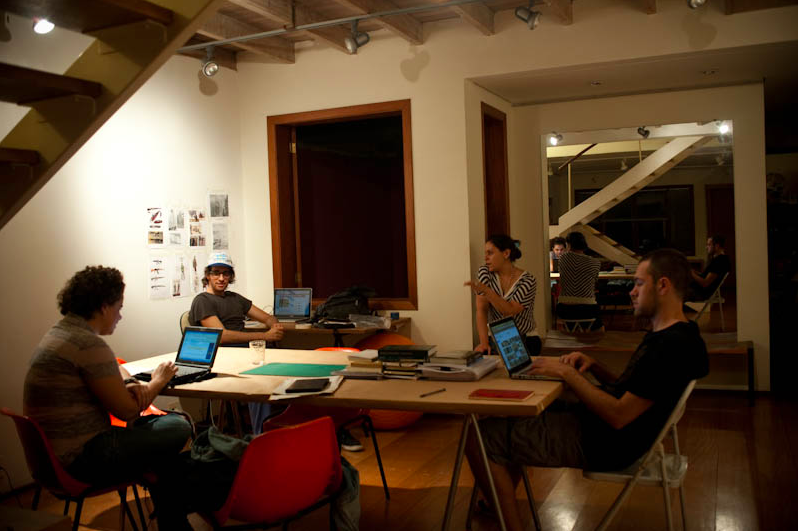
In residency.
Gui, over the course of a few meetings here at Casa Tomada, including one day with Bernardo Mosqueira, we spoke a lot about militant art, about the positioning of artists in the face of the issues of contemporary times. You and Carol talked a lot about the revolutionary aspect of some works, and about how to outline questionings in art. I think we are living in a time when it’s very difficult to convert rhetoric into results, after having experienced half a dozen disillusions, failed plans, and a few fruitless attempts. The dynamics of utopias seems to have become diluted into vague, frustrating projects. Art does not come out unscathed. According to Claire Bishop, art seems to have become the last realm in which to make claims and discuss, and still it remains unable to live up to these pretensions, in a way. During the residency, it became very clear that these issues punctuate your production. How does your work deal with these themes, and these suppositions of emptying of urgencies?
I question myself about it all the time: is a revolutionary action still possible? Or building something that will change the world and people? At times I think accepting this impossibility is a conformist stance. It has become the norm to not think about what might be possible. No one knows how to have a political attitude anymore. Is the art market expecting it from a work of art? Or does the market expect political work because it sells? It seems like the pretensions of revolutionary action have been incorporated as well. And then I ask myself how one can do something in order to work around this entire situation. Sometimes I can’t see many ways to act in this world where everything can be incorporated by the market. It’s a question that I am putting put out there and I don’t even know the answer to it.
Do you really think exceptions in art are becoming the norm and that, in that sense, your work needs to happen as a detour?
I think it’s nearly impossible to think of exceptions that are not quickly absorbed. And I am not on the outside, or else I wouldn’t be in here, I wouldn’t agree to exhibit at Galeria Vermelho, I wouldn’t be inserting myself into a circuit.
So does your work build itself while inserted in these circuits? How do you elaborate an opening?
I don’t intend to create a specific project, nor do I want to set forth any rules on how to act upon the world. I don’t want to depart from anything, because I still don’t know what should be there instead. I don’t have “my own” project; I don’t have a “utopia.” I get the feeling that something needs to change, but I don’t know why, or where to begin. I don’t know how to fight the system yet. Maybe I wasn’t too clear, but everything is still cloudy to me. These are issues which I explore, I have no certainties.
Yes, that much is clear. I think we’ll find ourselves through conversation. When we talk to one another, sometimes it ends up resignifying everything. The title of your work says a lot about that, about these perceptions that you haven’t mastered yet, as you said it yourself.
I still have doubts regarding the title. Don’t you think it looks a bit didactical? Or that the title can be just one inroad to the work?
Interview conducted by the researcher Galciani Neves with the artist Guilherme Peters during the residency program Ateliê Aberto #4, a partnership among SESC, Videobrasil and Casa Tomada.
[download the whole interview below]
Read the whole interview published at Convivências #4, launched on the occasion of the residency program Ateliê Aberto #4. [pt]
Inimigo invisível (2011), vídeo realizado por Guilherme Peters em ocasião do 1º Prêmio Ateliê Aberto Videobrasil, e exibido no 17º Festival Internacional de Arte Contemporânea SESC_Videobrasil.
The Making Off of Inimigo Invisível.
In residency - week 2.
Galciani Neves blog on the project.
Guilherme Peters channel on Vimeo.
"The interview with Guilherme Peters happened after the shooting of his video. We talked surrounded by his drawings of soldiers, War poems, Liquid fear, by Zygmunt Bauman, Welcome to the Desert of the Real by Slavoj Zizek, The red book , Mao Tse-Tung; Ensaios sobre o medo, by Adauto Novaes. Next to us were also notes on the seminar Revolutions (April/2011) - a kind of open notebook. "