Here and There – São Paulo Edition
2017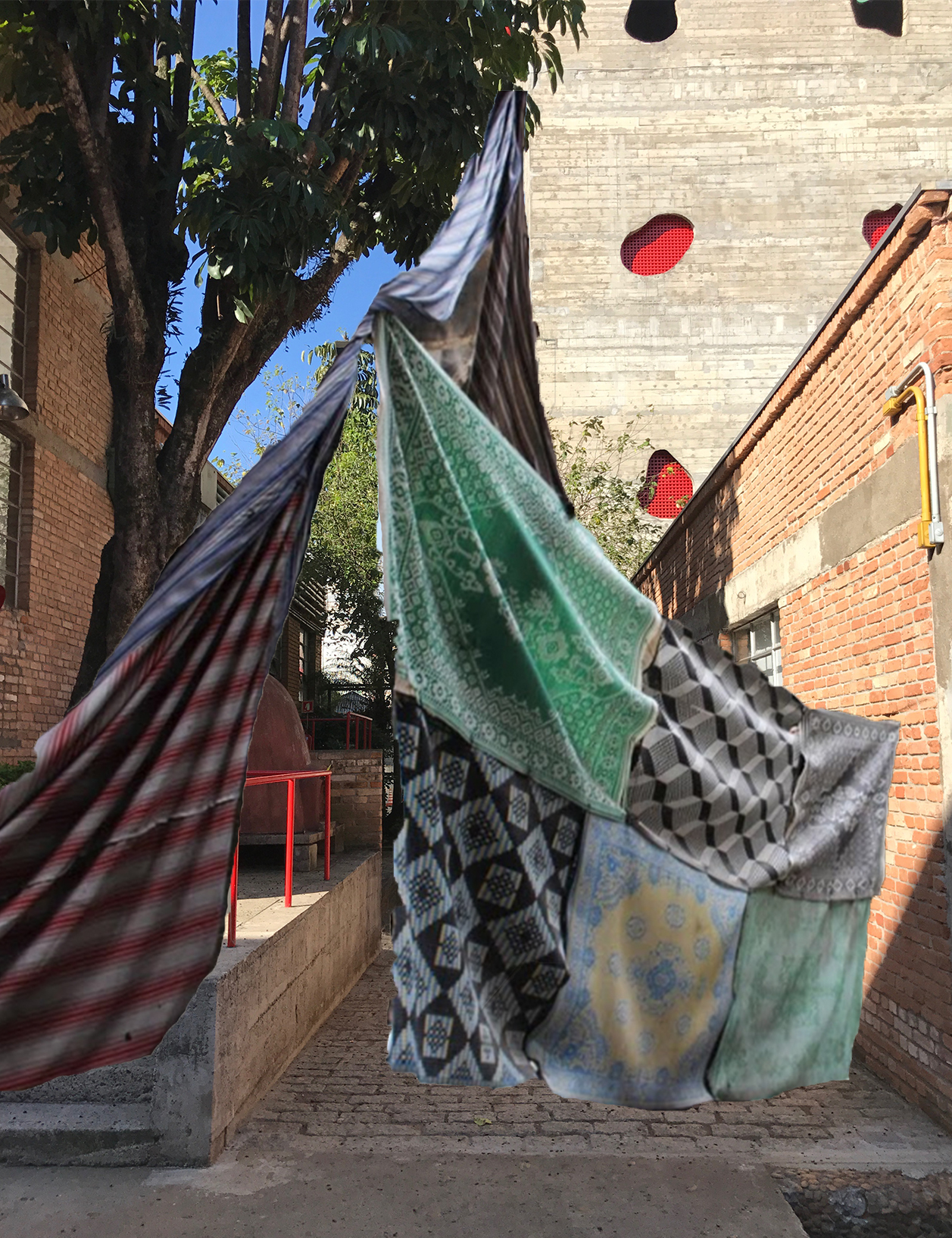
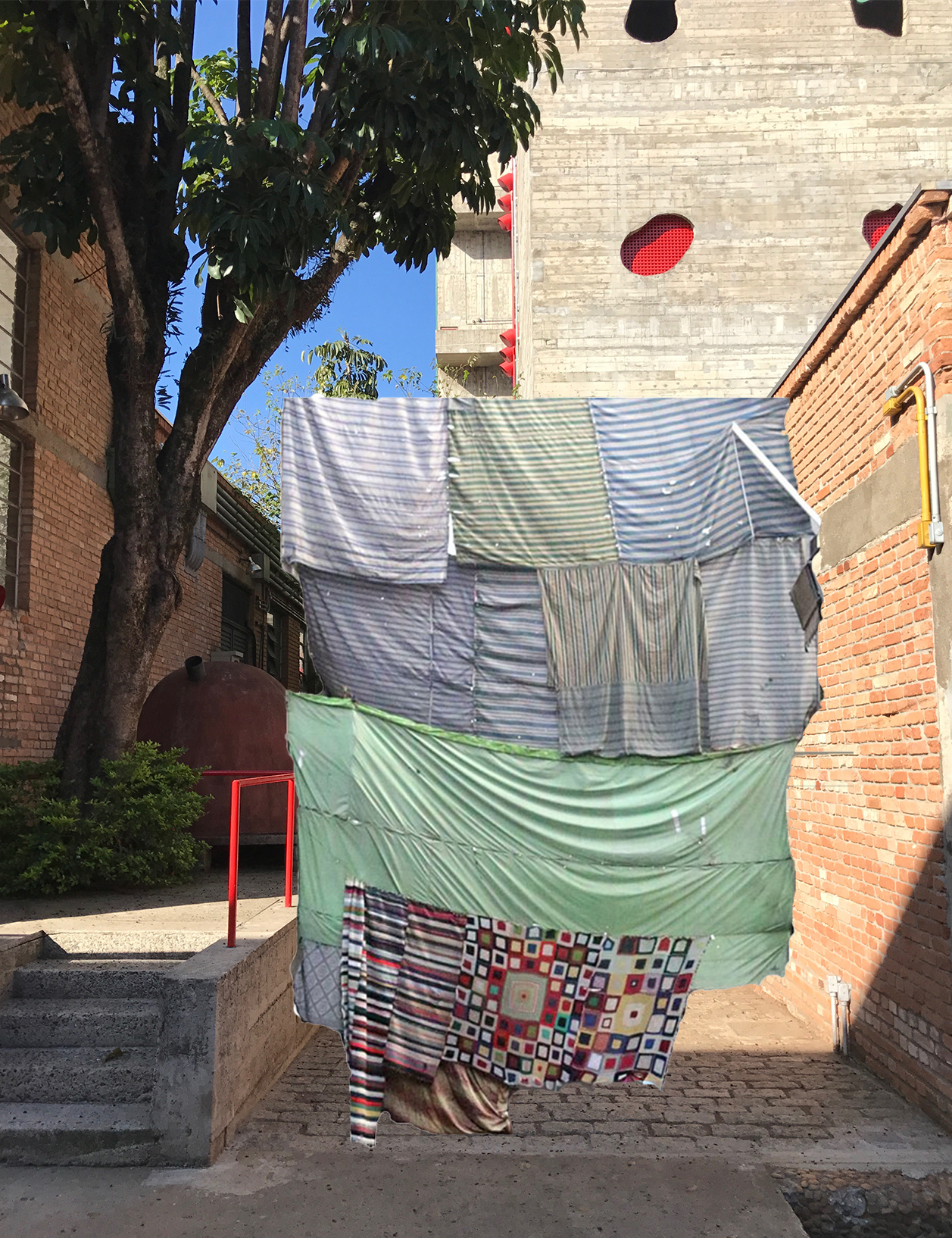
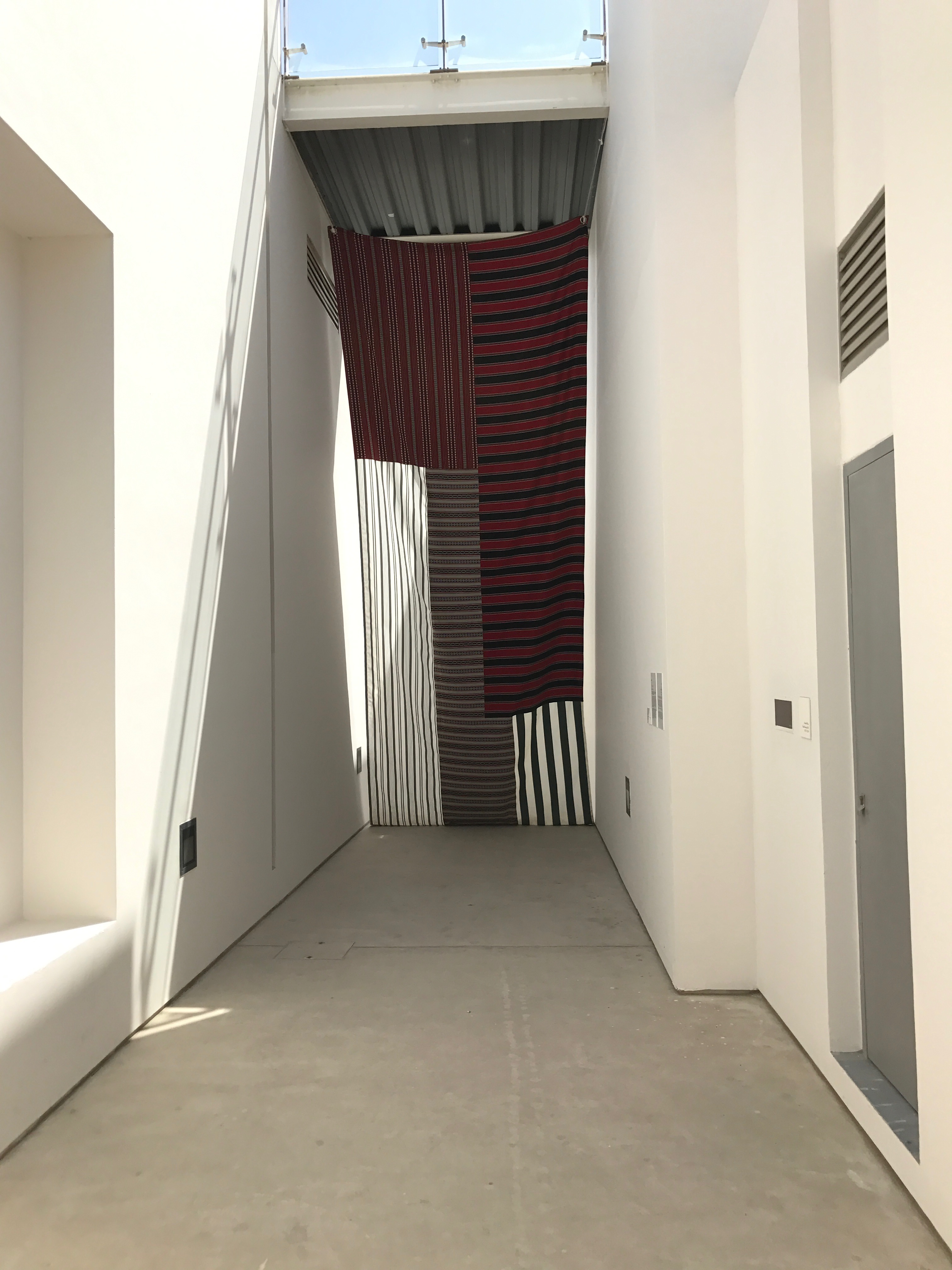
In 2013, it was the first time I saw on the Internet a photo of curtains and carpets sewed together and suspended between bombarded buildings. I was taken by this photo and started searching further until I discovered that the people of Aleppo—in zones divided by wars and full of snipers—to protect themselves, took down the curtains from their balconies, sewed them with carpets and hung them between the buildings to create safe passages in the streets. From all the images on the media and on the Internet that we are getting from lands of wars, I believe that those images, that have no blood, dead bodies or decapitated heads are the most expressive about the atrocities of wars.
Those curtain walls are beautiful as artworks, but they are not executed for their aesthetics, but to protect from death.
Those curtain walls are very fragile and can be traversed by a simple bullet, but not by the sight of the sniper.
Those curtain walls are sewed like an act of catharsis that belongs to the fatality of the tragedies.
Those curtain walls with their beauty, fragility and fatality separate the killer from his victim. They create two spaces: Here and There. Two spaces between life and death. This 'Here' and 'There' do not exist only in Aleppo—they can be anywhere.
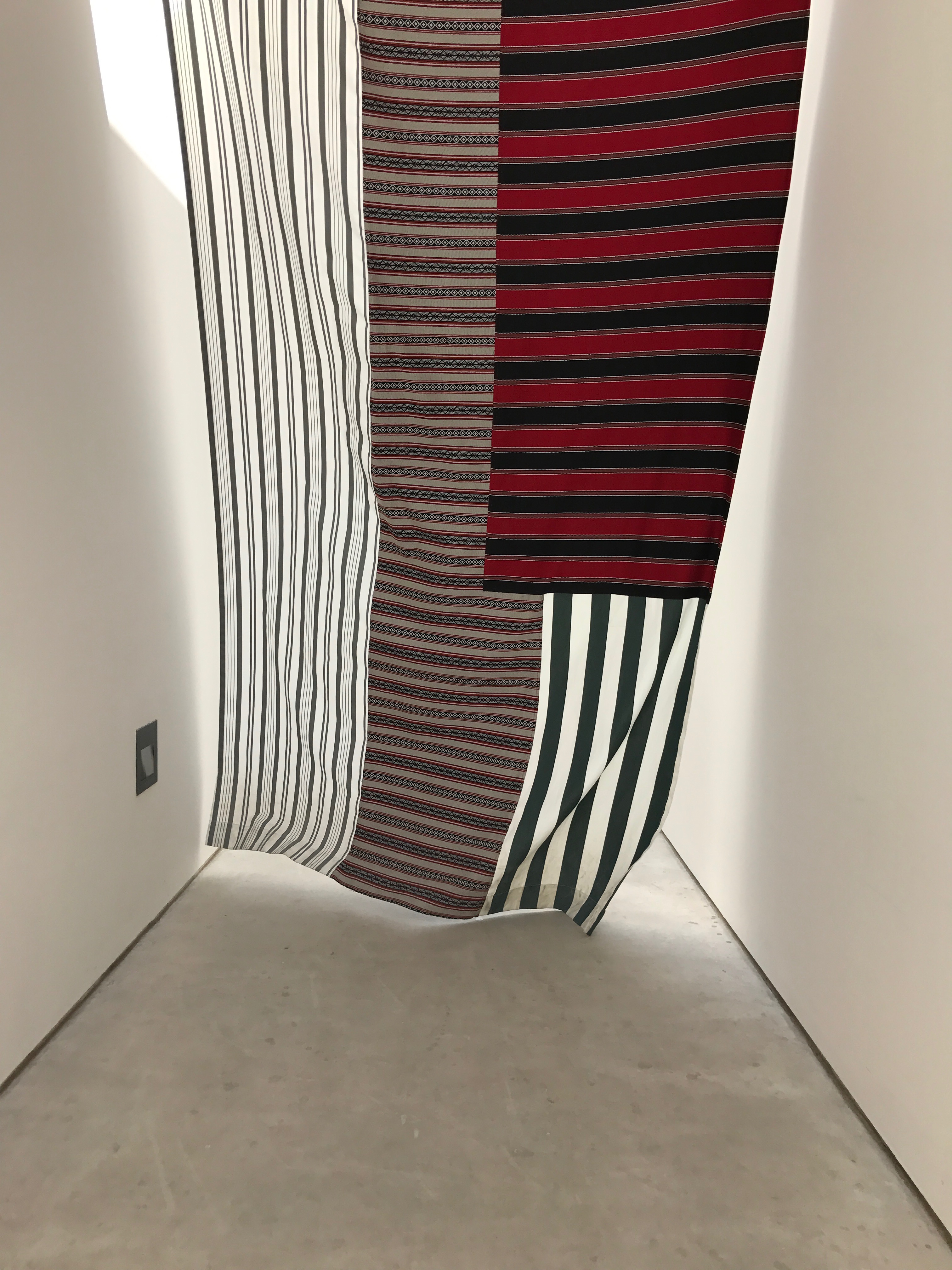
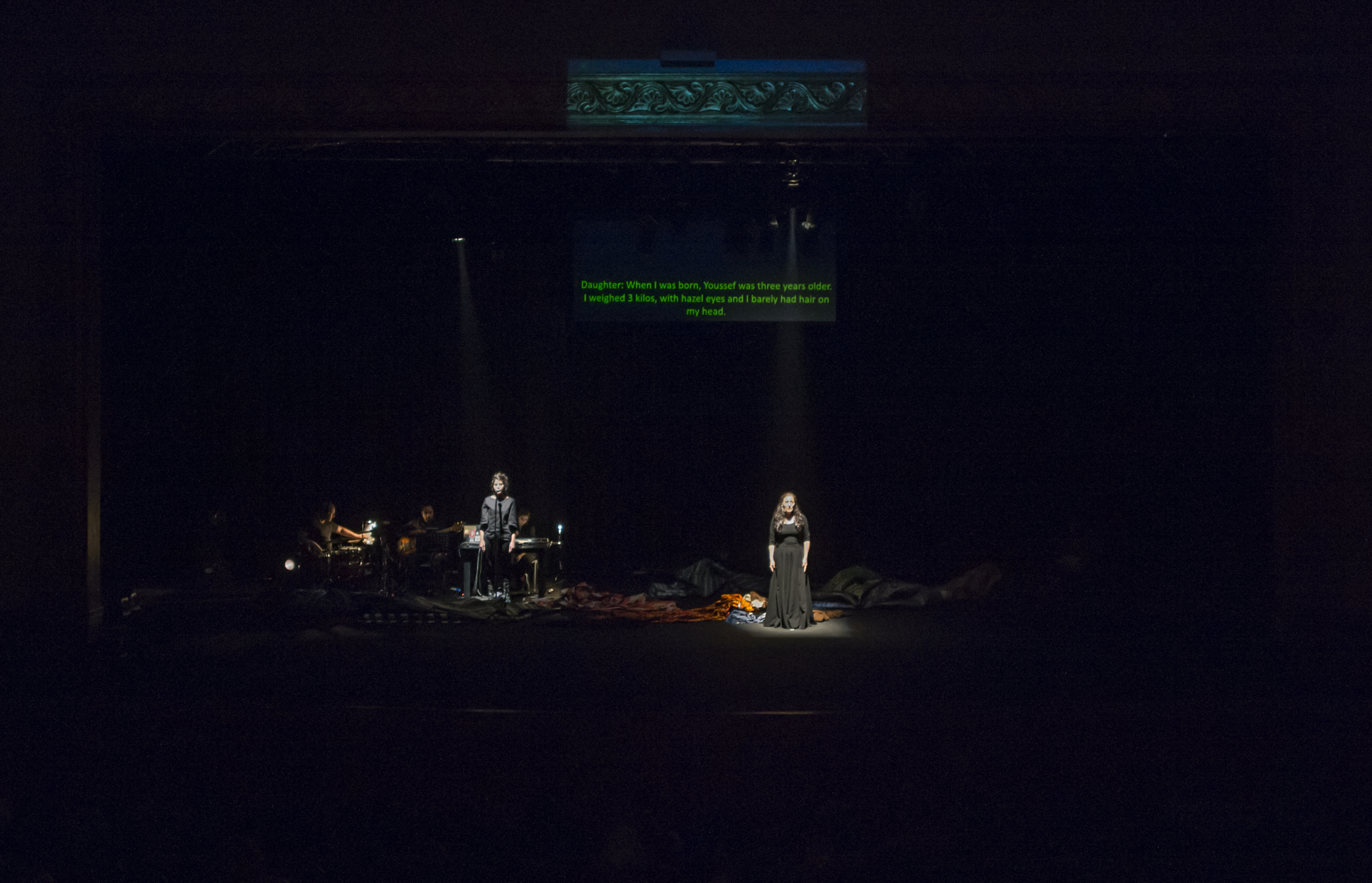
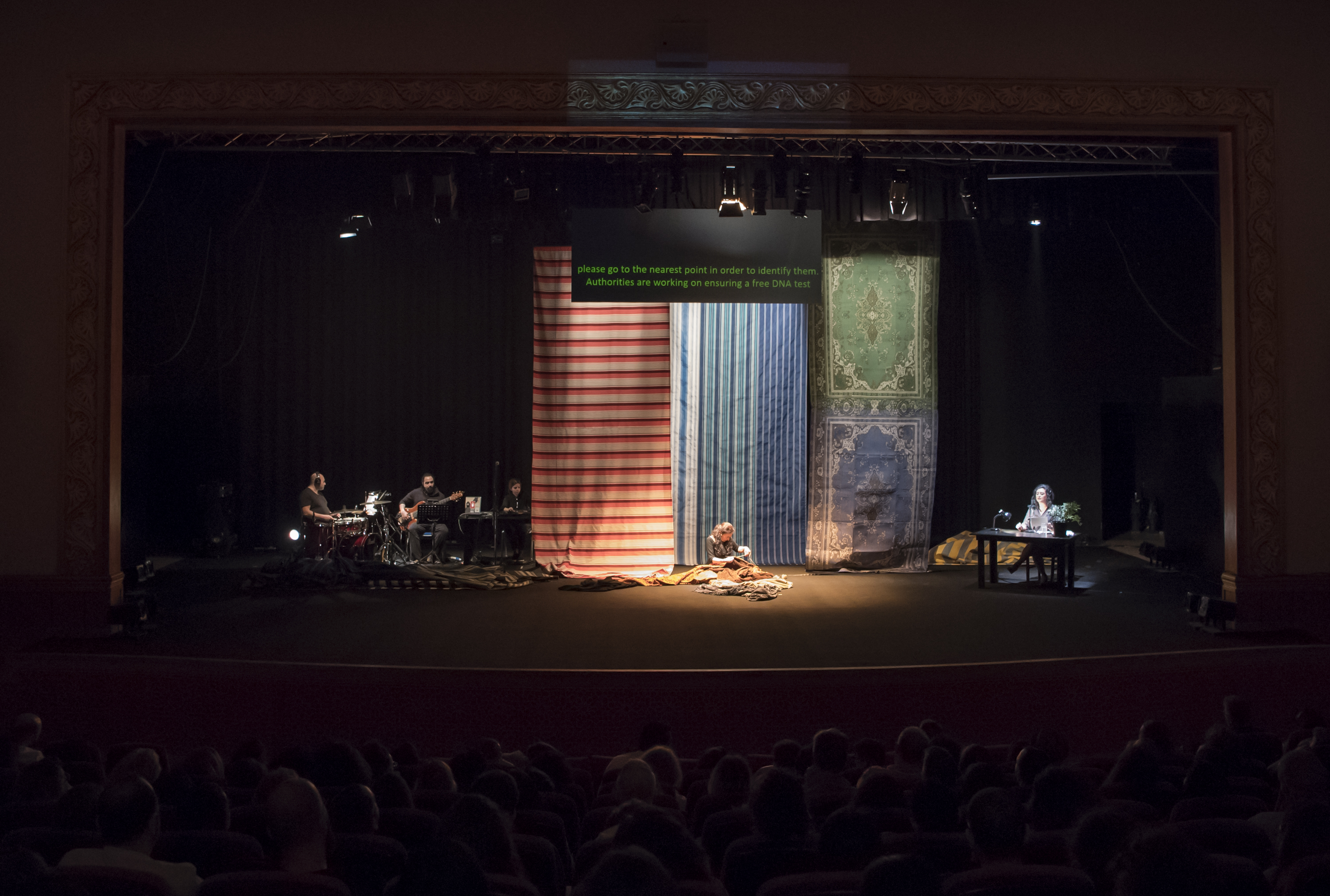
Those photos were the starting point of a series of Projects I’m working on. The first work was presented and commissioned by the 2017 Sharjah Biennial, a theater play: Close to Here. It explores an enduring sense of longing, loss and absence in the face of the uncertain return. The theatrical work is set in a nearby city, where times of peace are few and far between. Most inhabitants go to war; some die in battle, while others disappear, their presumed fate only marked by their absence. For those who remain in these cities, a tradition has emerged, in which funerary rehearsals are performed the night before loved ones depart. Close to Here is a play trapped in a story of a city captivated by the infinite melancholy of its own people. I worked on this play with three actresses (Julia Kassar, Lina Sahhab and Sandy Chamoun) and three musicians (Liliane Chlela, Fouad Afra and Bashar Farran). It was presented for the first time at the Sharjah Institute for Theatrical Arts at the opening night of the 13th Sharjah Biennial. In parallel, and in one of the Sharjah Art Spaces' corridor, I installed the first installation Here and There - Sharjah Edition. A monumental curtain was sewn together from durable outdoor materials used for awnings and balcony shades that shield people from the sun in Levantine countries. Echoing the set for Close to Here, this curtain, remained installed throughout the duration of the biennial, functioning as both a relic of the performance and an homage to those cities where such fabrics have been raised in the streets between neighboring buildings. A ubiquitous sight in the urban landscape of cities not far from here, the curtains now offer cover to residents from a far more imminent threat than the sun.
While working on developing Here and There - São Paulo Edition for Videobrasil, I was participating in an artistic residency at Villa Sul (Goethe Institute) in Salvador, Bahia. As part of my research about the history of slavery, I was interested in the Revolt of the Malês: a black slave revolt in 1835 against the government that was led by Arab Muslim black slaves known in Salvador, at that time, as malês. The presence of this community of Arab Muslim slaves in Salvador intrigued me, and I started researching further the contemporary reminiscent of their existence there. I found many connections, but the most interesting was how they brought the culture of amulets with them from the Arab world to Brazil, and how it is very present across Brazil to date.
Amulet in Arabic is hijab, and the word in Arabic comes from the verb hajab(a), which means to block. In the case of the amulets, the meaning bears the sense of blocking the evil, or more specifically to block the evil eye. In parallel, the curtains raised in Aleppo were used to block the sniper's eye. This connection became inevitable in working on developing Here and There - São Paulo Edition. This is why the performative part of the project went into the direction of creating two objects:
- A big curtain that divides the space between Here and There, with all the social and political connotations that those two spaces embed.
- The amulets that are distributed to the audience.
Roy Dib in a statement to PLATFORM:VB (August 2017)
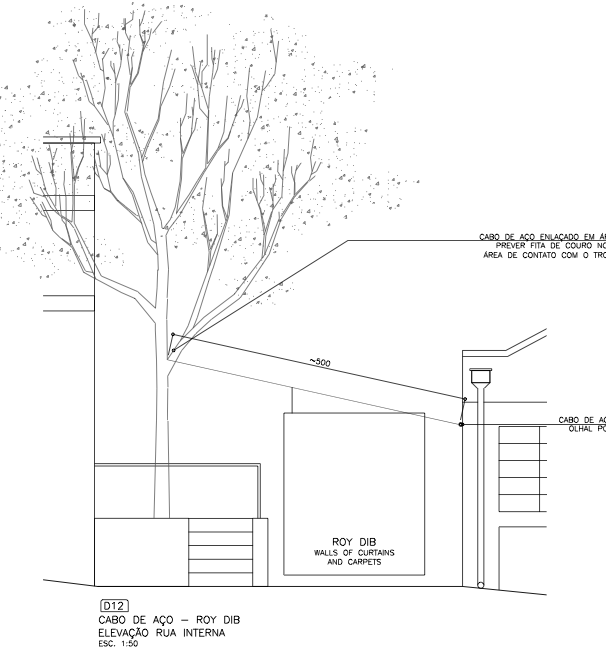
Here and There – São Paulo Edition, 2017 | Performance/Installation
Roy Dib