Ghost Looking for its Spirit
2012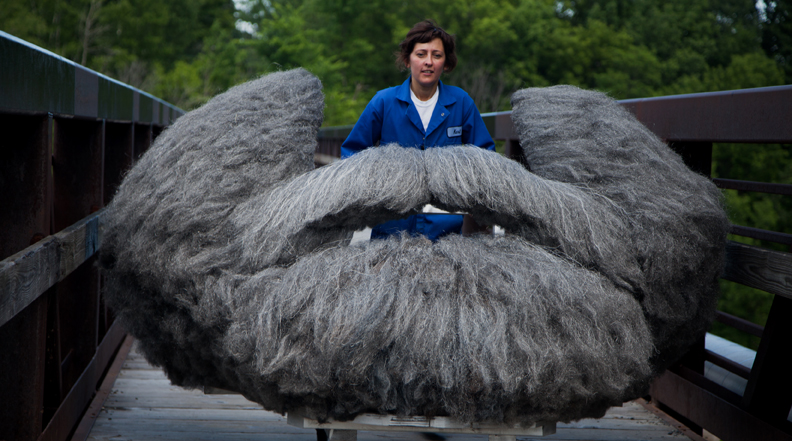
Ghost Looking for its Spirit video still
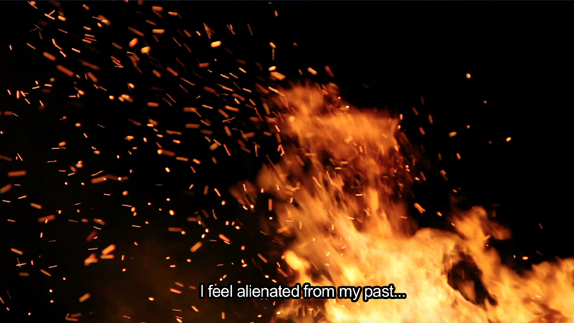
Video still
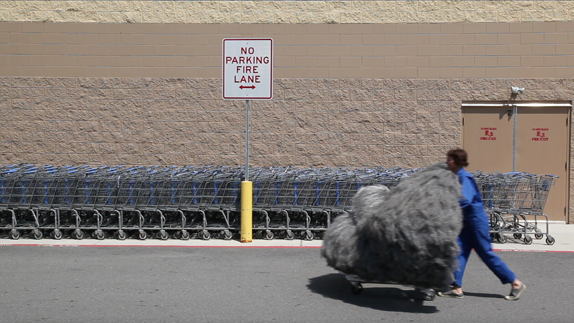
Video still
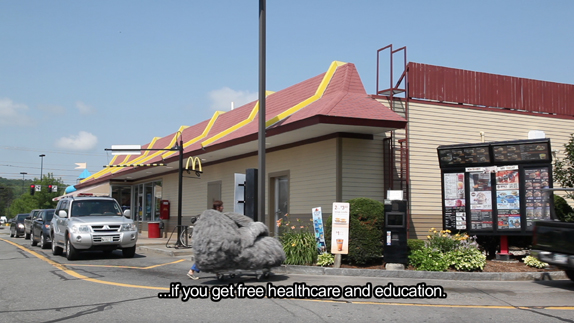
Video still
Video still
Video still
Video still
Video still
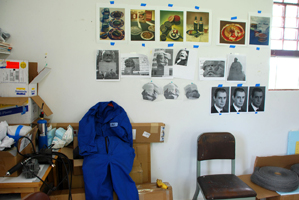
Production details of the piece
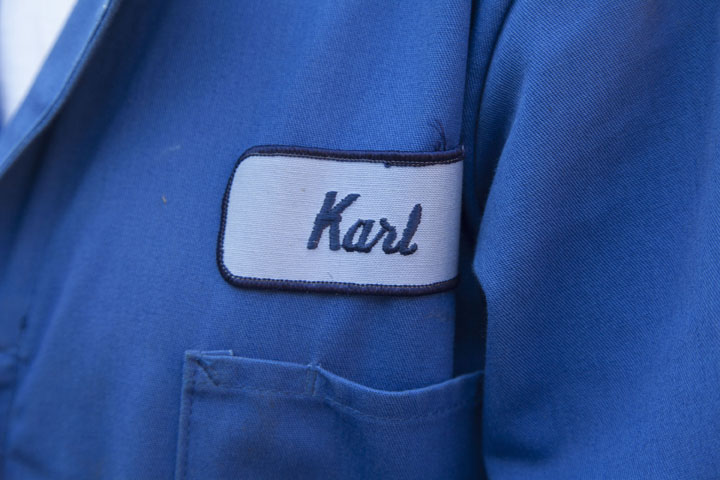
Work overalls used in the video
Production details of the piece
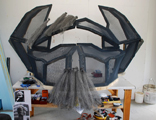
Production details of the piece
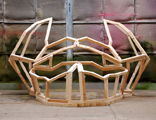
Production details of the piece
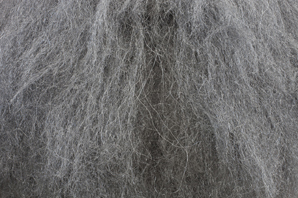
Crowd-Pleaser detail — steel wool, wood framing, hardware, cinderblock, charred wood
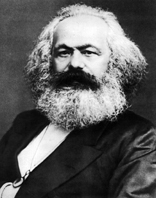
Karl Marx (1875), portrait by John Jabez Edwin Mayall
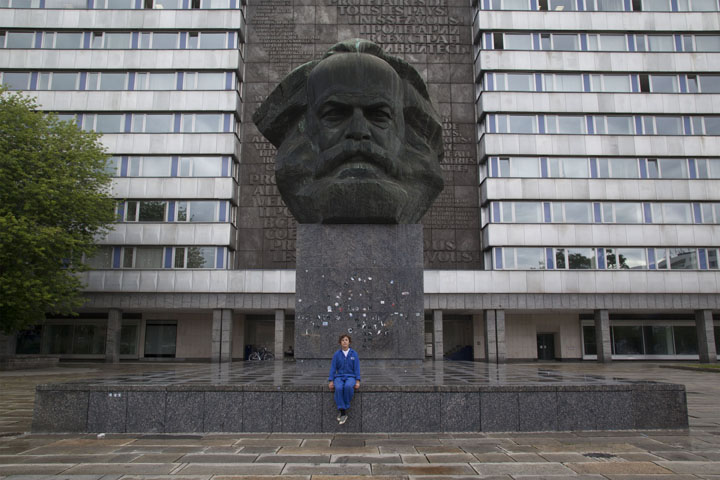
Karl Marx & Slinko (2012), sculpture by Lev Kerbel, Chemnitz, Germany
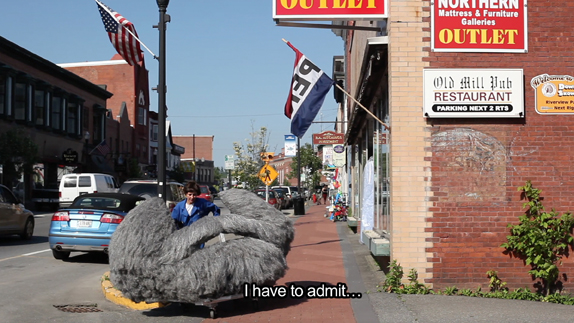
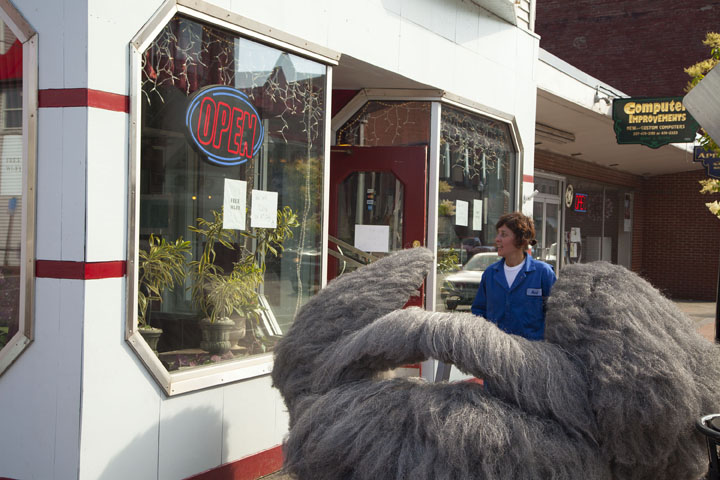
"The video Ghost Looking for its Spirit opens on a small person in blue overalls standing under the monument to Karl Marx in Chemnitz, former East Germany. Then, it cuts to the same character, a worker with the nametag ‘Karl’ pushing a giant steel wool beard through a small American town. While the worker pushes the beard by a ubiquitous Walmart and McDonald’s, the voice-over recalls a personal history of growing up in the Soviet Union, and asks Marx for answers about failure, hope, doubts and convictions.
The title came from Marx’s writing, The Eighteenth Brumaire of Louis Bonaparte, in which he compares the French revolutions of 1789 and 1848, and writes that 'The awakening of the dead in those revolutions served the purpose of glorifying the new struggles of finding once more the spirit of revolution, not of making its ghost walk about again.'
I initially conceived Ghost Looking for its Spirit as a public performance to engage the passersby by asking a question about a possibility of a socialist revolution. The performance failed entirely, not because ‘socialism’ is a scarecrow in the US, but simply because no one would approach me while I was pushing the beard around. After a while, I managed to edit the material into a short video. However, the work really originated a year before, while I was putting together a show explicitly addressing my Soviet background for the first time.
Someone said to me once that my work was political with a small ‘p’. I think political art is a heavy burden to bear, too much responsibility with too many constraints. On the other hand, I have issues with ‘art for art’s sake’ kind of approach. The poetics of my work fall somewhere between one’s sense of civic responsibility and desire for absolute freedom. It’s a contradictory place, and I often resolve to a comic relief. In Ghost Looking for its Spirit, I thought a lot about these conflicting affinities in my personal history. Born and raised in what used to be the Soviet Union, and now living in New York, I find no easy answers in search for more progressive ethical, political, or even aesthetic resolutions. To illustrate my point in the video, the voice-over asks, 'Most of the things I own are made in China, does that make me a communist?' This confusion of terms and ideas is intentional, as it points to the inherent conflict between China’s ideological stance and its role as producer and provider for global markets. There is a certain inseparability, mutual suspicion, and fascination between communism and capitalism. In terms of anthropology, they are each other’s ‘other’.
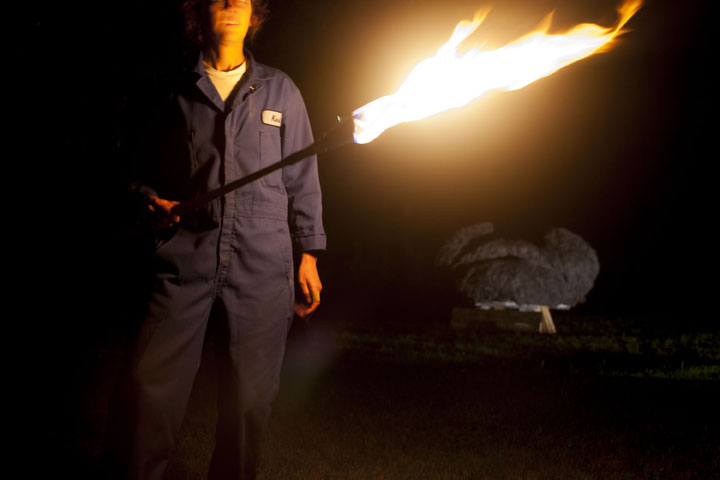
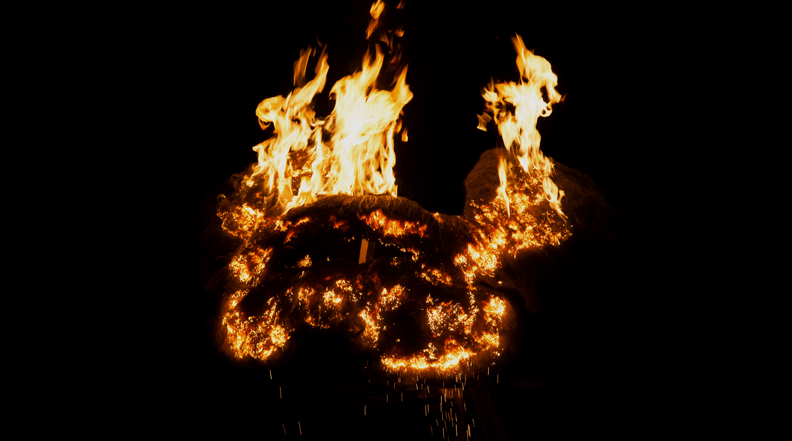
Just as historic events take shape through individual lives, a piece becomes embodied through specific locations, artifacts, and meshing personal journeys with historic contexts. A chain of smaller events affected what Ghost Looking for its Spirit became in the end. As mentioned before, I first made the piece Crowd-Pleaser, the steel wool beard, for a show, without ever seeing the original monument it was inspired by. The back of the piece was charred, so it looked like someone had been camping inside. One day, the maintenance crew had to repair a steel staircase nearby, and the steel wool caught on fire! Crowd-Pleaser came back damaged, but it gave me an idea. To give a spectacular farewell to the past, and to a sculpture I could not afford to store, I would set the whole thing on fire. When, eventually, I traveled to Chemnitz, Germany, to see Marx’s monument, I brought some ashes with me, and there was a moment of closure. I later learned that Karl-Marx-Allee, where the monument is located, is popularly referred to as 'Nischelgasse' ('Skull Alley'). I think it’s pretty funny."
Slinko in a statement to PLATFORM:VB (July 2015)
Ghost Looking for Its Spirit, 2012 | Video, 3’43’’
Slinko
"In general, I don’t think of my work as responding to any particular art world aspect. However, in this case, I have to admit Ghost Looking for its Spirit responds to the idea of a cultural worker out there, in a field, making immaterial art. As someone living, eating, and needing a place to sleep, I find the whole ‘immaterial’ discourse unconvincing. Even images and thoughts have very specific physical origins and properties, tracing them back to bodies, energy, labor. I’m very stubborn in believing that these things matter. My reflection on relationships among people, objects and ideas can be best described as an anthropological fieldwork within the aesthetic, economic, or political. I think someone like Michael Taussig poetically articulates these ideas in his I Swear I Saw This: Drawings in Fieldwork Notebooks, Namely My Own. It’s an indispensable little book, full of insights into the nature of drawing, socio- politics of landscape, and empathic understanding for Ghost Looking for its Spirit."