Forma Livre + Linha
2013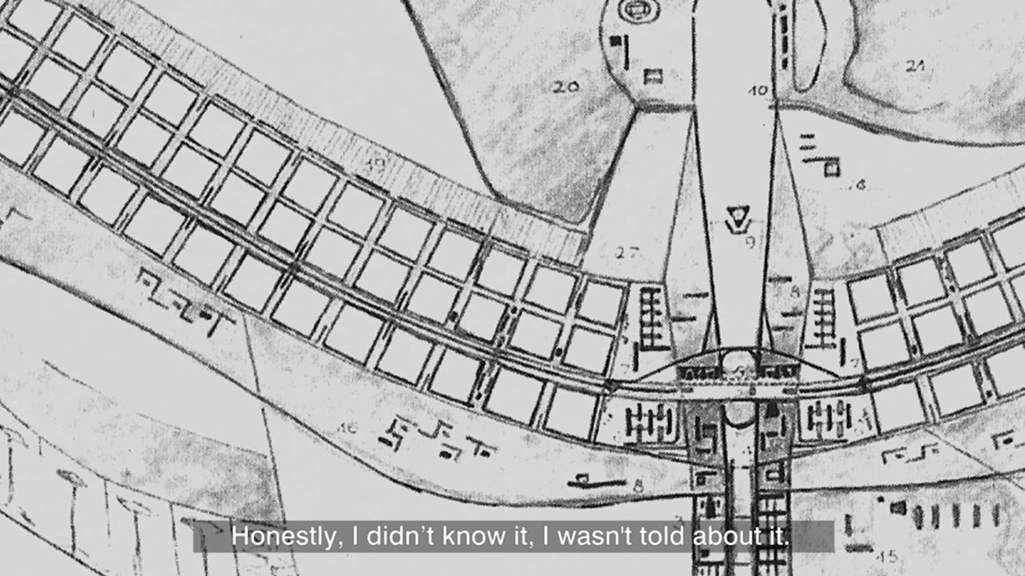
Forma Livre video still
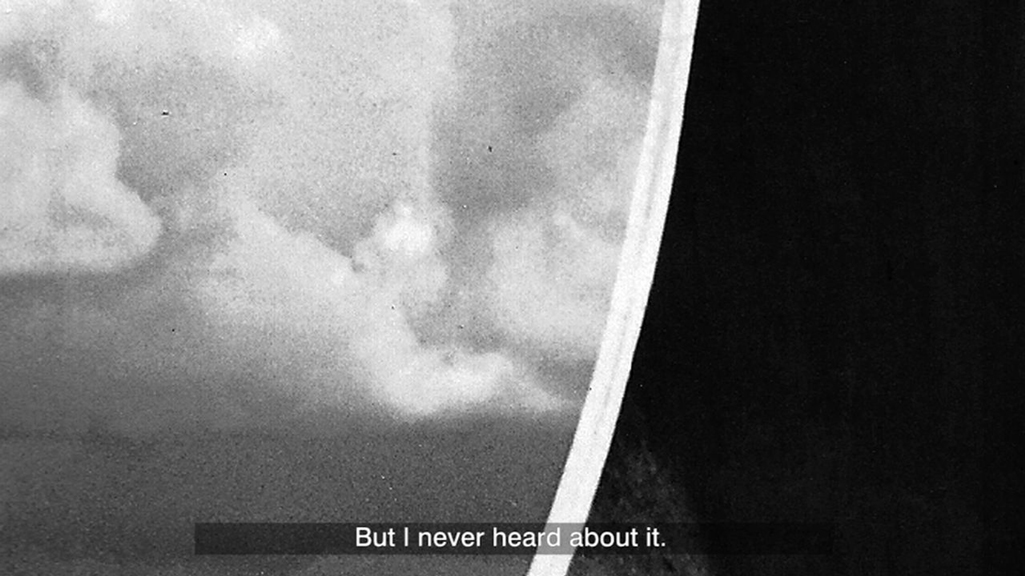
Video still
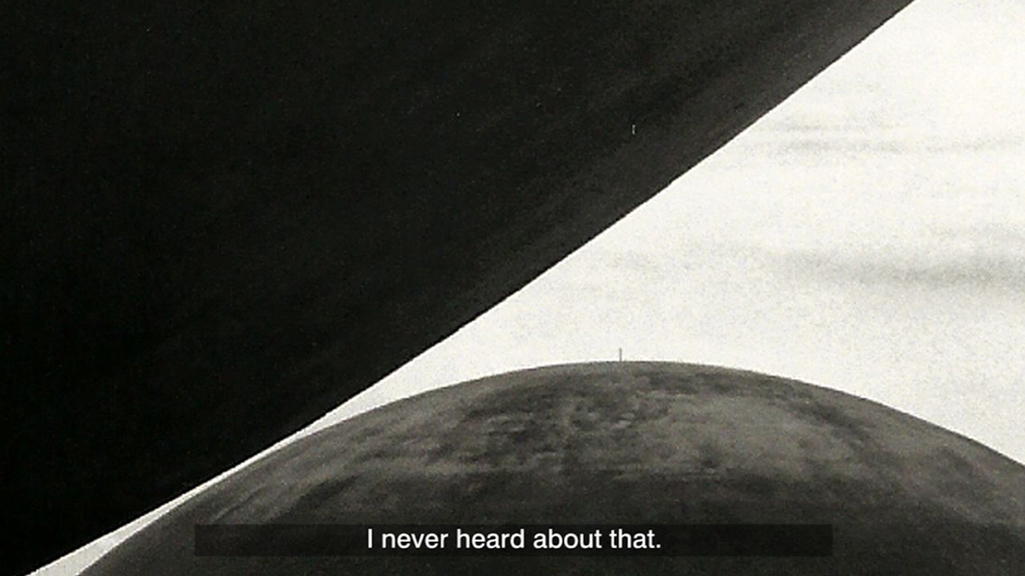
Video still
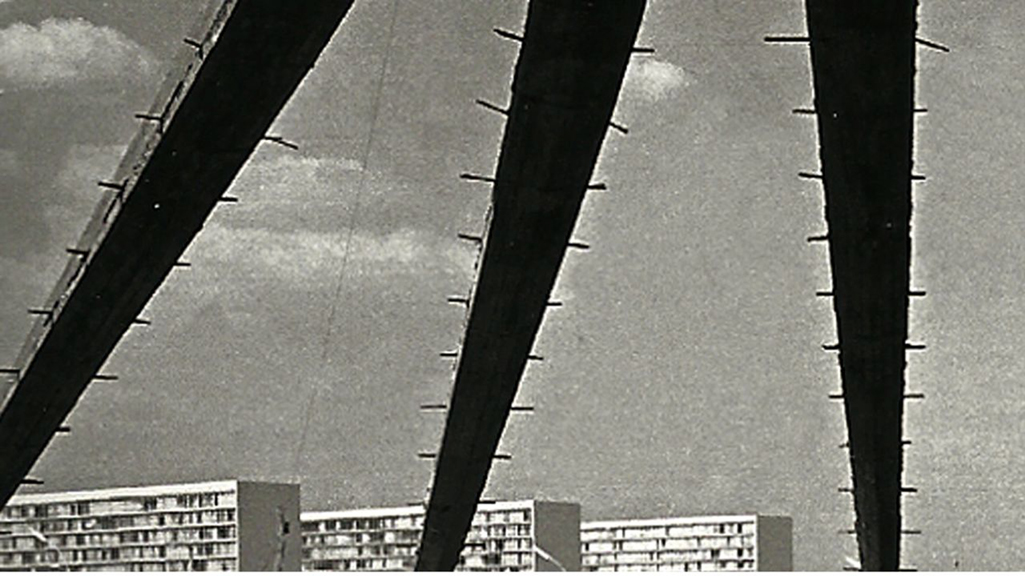
Video still
Video still
Detail of the piece Linha
Detail of the piece Linha
Detail of the piece
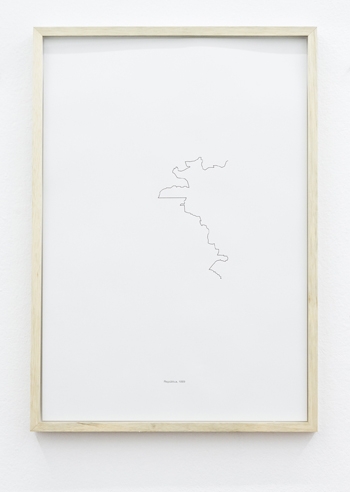
Detail of the piece
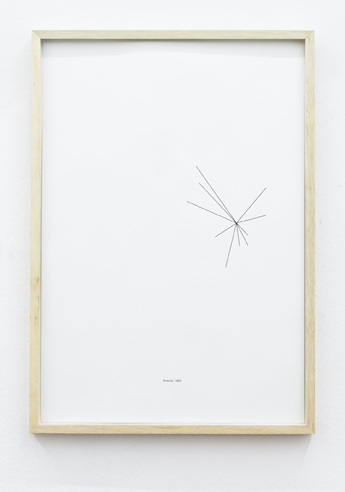
Detail of the piece
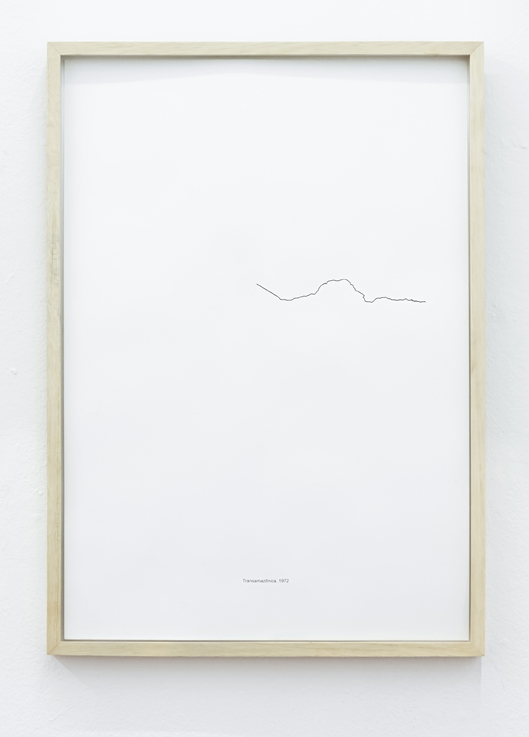
Detail of the piece
“Ethics and aesthetics, and their convergence, have always driven my research work. On the one hand, there is a concern with aesthetically elaborating a discourse that looks to be critical and self-reflexive in relation to the aesthetical repertoire of the arts. In this sense, I am interested in revisiting and responding to the aesthetical forms that have become institutionalized over time, understanding them as the ideological and political expressions of a certain context. On the other hand, there is also an ethical concern — over how these 'aesthetical forms' are built and maintained socially, and how they operate their circulation structures.
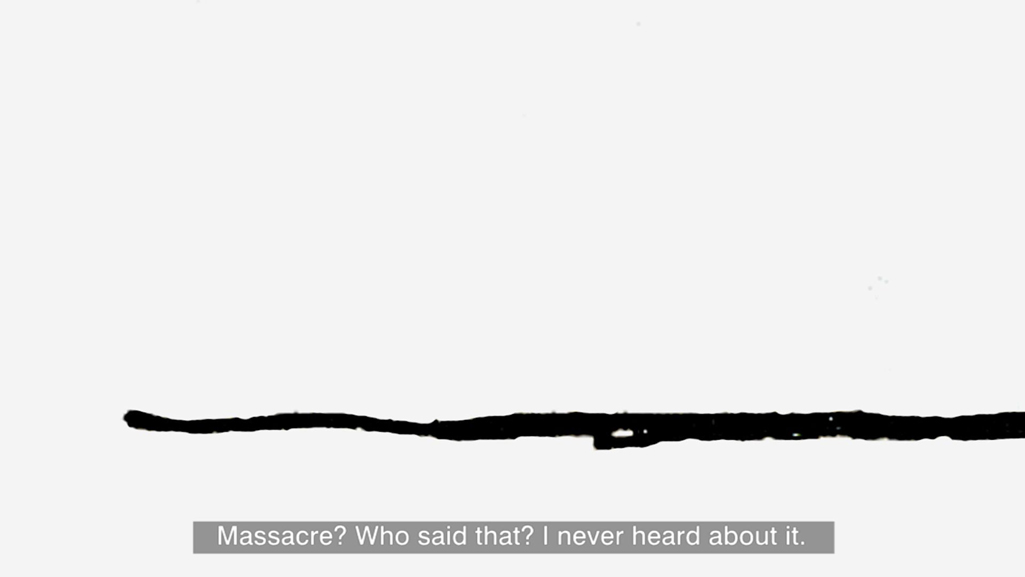
Forma Livre is part of these questionings. The video is a reflection on how the discourse of modernity in Brazil, with its daring architectural and artistic forms, manifested in the construction of Brasília, has succeeded not only in coexisting, but in being fed by extremely archaic social and political relationships that hark back to our colonial experience. This contradiction is the central point to this piece. The movement of opposites — modernization and archaic past, which, despite being seemingly opposed, do not cancel each other out — is the friction that fueled the production of this piece.
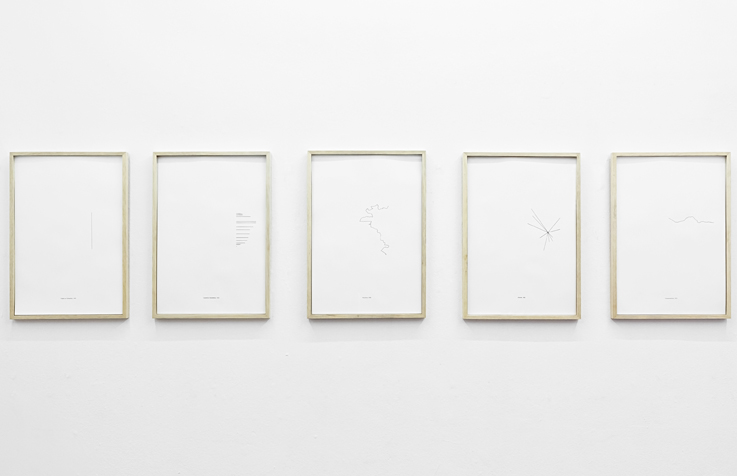
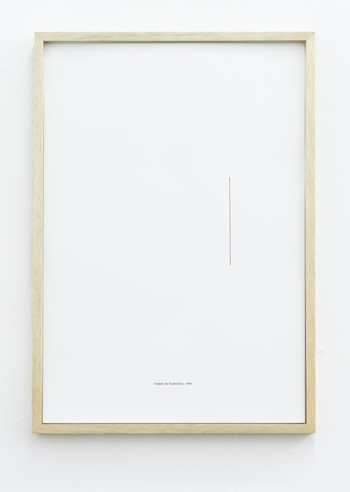
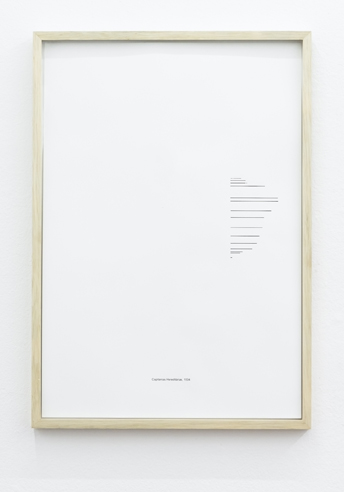
For its part, Linha, a series of engravings, sets out to consider form, in this case the line, beyond its purely aesthetical conceptions. The piece attempts to look into the line as a political construct that condenses and concretizes structures of power and dominance, revealing itself as a product of social and economic relationships. Revisiting pivotal points in the country’s history, from the division of South America by the Portuguese and the Spanish during colonization, to the construction of the Trans-Amazonian Highway during the military dictatorship, the piece makes use of this structure in order to ponder the political reorganization of the national territory.
I believe these are important works to my trajectory, for they develop, in a deeper way, some of the questions I had been going over for some time — like the art-politics connection —, and they point to a new horizon of reflection. They represent a moment when the need to historically situate the questions raised by the artworks becomes stronger, whereas my former works featured a broader, more categorical critique.
When I say 'historically situate', I do not mean a 'linear history' based on the notion of causality or on a false idea of progress; I mean a history that is built retroactively from the urgencies of the present. In this sense, the social, the cultural and the political interfere upon my work in a direct way — after all, forms are never separate from their surroundings. This includes both the context of production and the context of circulation and reception. I believe that, to a large extent, the artist’s job is to question himself and the world in a reflective way. To always look anew to the things that surround him, in order to problematize their normalization, critically unveiling the ideological structures that underpin them. And this ability to reflect, to interrupt the flow, is precisely what enables him to politically challenge the symbolical through a critical articulation of forms and discourses, in the sense of denaturalizing what is already known.
In Forma Livre, specifically, the current Brazilian scenario was a crucial factor in creating the piece. The neodevelopmentalist wave that spread throughout Brazil over the past few years allowed me to look at the national history of the 50s/60s and find several parallels. The sense of euphoria surrounding the future, development and economic progress was very similar at these two points in time. And so was the national development model.
The piece, then, deals with contemporary and historical narratives. In this attempt at building a history against the grain, to use Benjamin’s term, I resort to a certain definition of history as construct, as plasticity, liable to be shaped by the subject that enunciates it. In this sense, this is documental fiction, because it deals with something that took place, but is aware of its own constructive processes.
Form is the vehicle that enables a critical enjoyment on the spectator’s part. This is the place where contradictions and problematizations can materialize. I seek forms that carry a contradictory character, i.e. a certain language, and at the same time its denial or opposition. Seeking them, I believe, is a way of creating gaps that prompt the public to take a critical stand with regard to the work, rather than having me, the author, deliver a conclusive sentence.”
Clara Ianni in a statement to PLATFORM:VB (July 2015)
Forma livre, 2013 | Video installation
Linha, 2013 | Silkscreen
Clara Ianni
"The research that led to Forma Livre drew from various sources, such as books, academic papers, interviews, newspaper archives, photography and audiovisual archives documenting the construction of Brasília, such as:
Brasília: O outro lado da utopia (1956-1960) (1982), by Hermes Aquino Teixeira – Dissertation for a Master’s Degree in History – University of Brasília – Typed (1982).
No tempo da GEB (1956-1960): Trabalho e violência na construção de Brasília, Thesaurus, 1996.
A major reference is Sophocles’ Antigone, a Greek tragedy written in 442 BC. Antigone is the character who defies the King of Thebes in order to bury her brother and give him a proper funeral. Despite the distance that separates us from Sophocles’ Greece, the text is incredible, and I believe its political power is more current than ever. It deals with issues that greatly interest me, such as the right to History, to grieving, and the legitimacy of institutions and representations. This is a fundamental piece of work when it comes to pondering peripheral experiences, such as the Brazilian one, which do not necessarily conform to the Western hegemonic discourse. It bears great influence on my entire work, and not only on Forma Livre.
Furthermore, a few artists and video/filmmakers interest me for their critical, self-reflective dimension, such as Godard, Harun Farocki, Andrea Fraser, Hans Haacke, Artur Zmijewski, Hito Steyerl, and others.
I am also interested in psychoanalysis of Freud and Lacan, because in it I find ways and tools for reflection and intervention on broader social processes."