Father's Footsteps
2012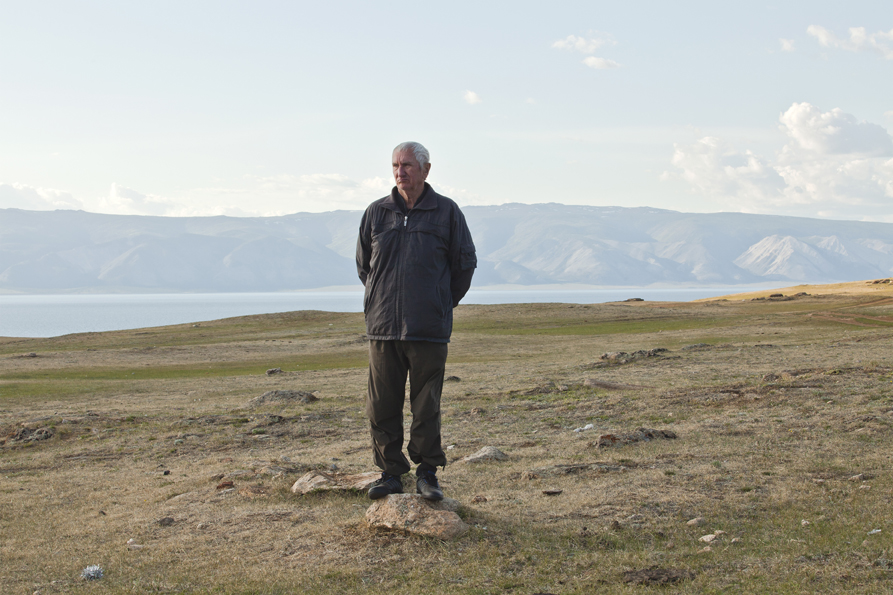
Father’s Footsteps (2012), video still
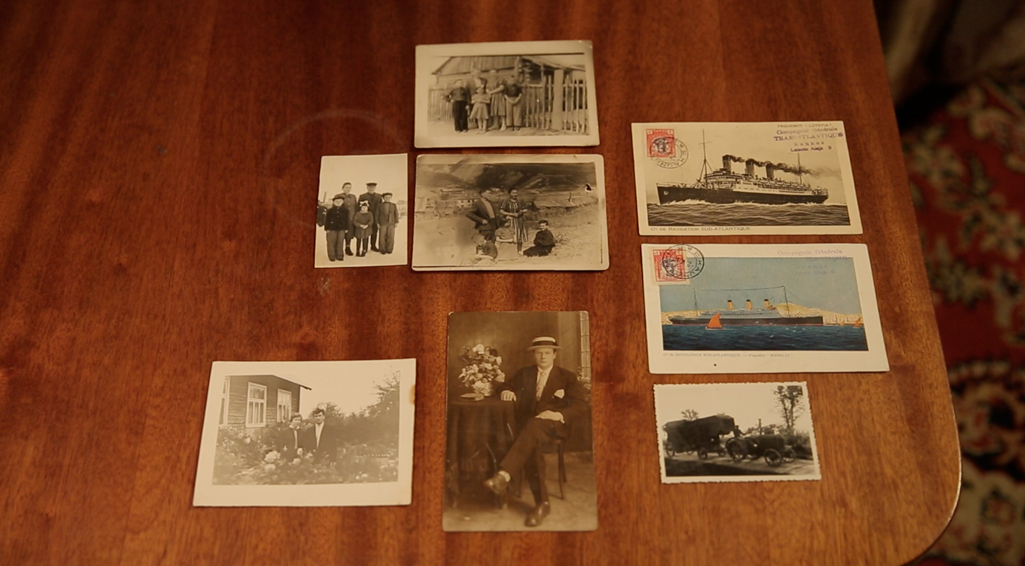
"Old photographs of the family, pictures of grandparents, postcards from South America, of a boat my grandfather sailed on to South America and back, in the beginning of the 20th century. Other photographs are from Siberia, where the family was deported to in Soviet times. One photograph was taken at the house in Lithuania that later was expropriated and demolished, as the whole village was destroyed by Soviets."
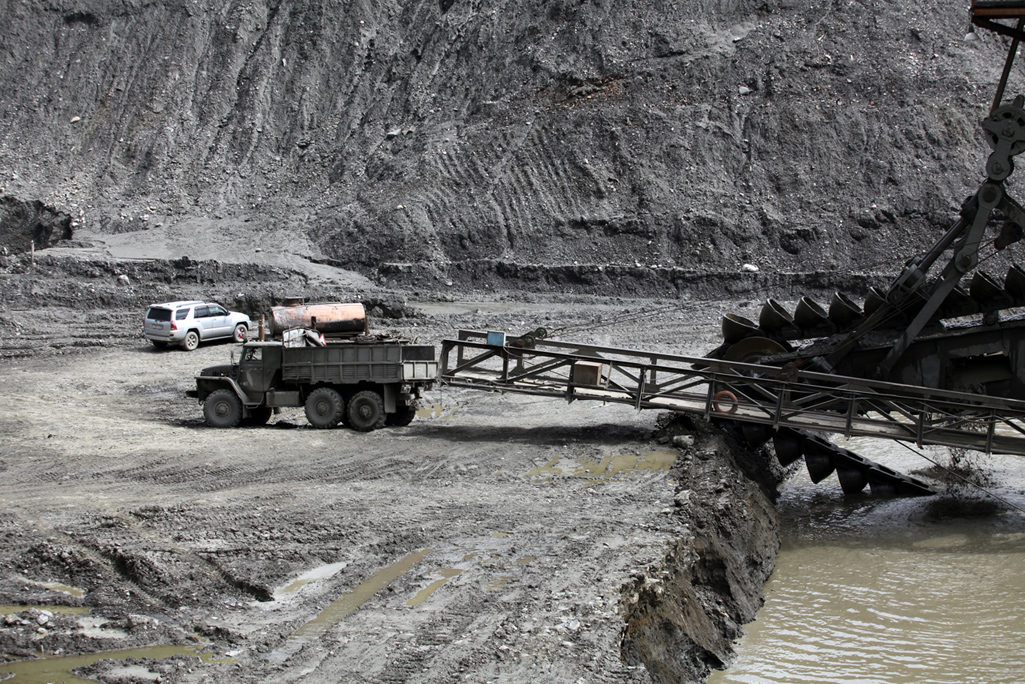
Still from the movie Father's Footsteps "showing the gold mining equipment in Bodaibo, where my family was deported to in Soviet times." (Jun. 2012)
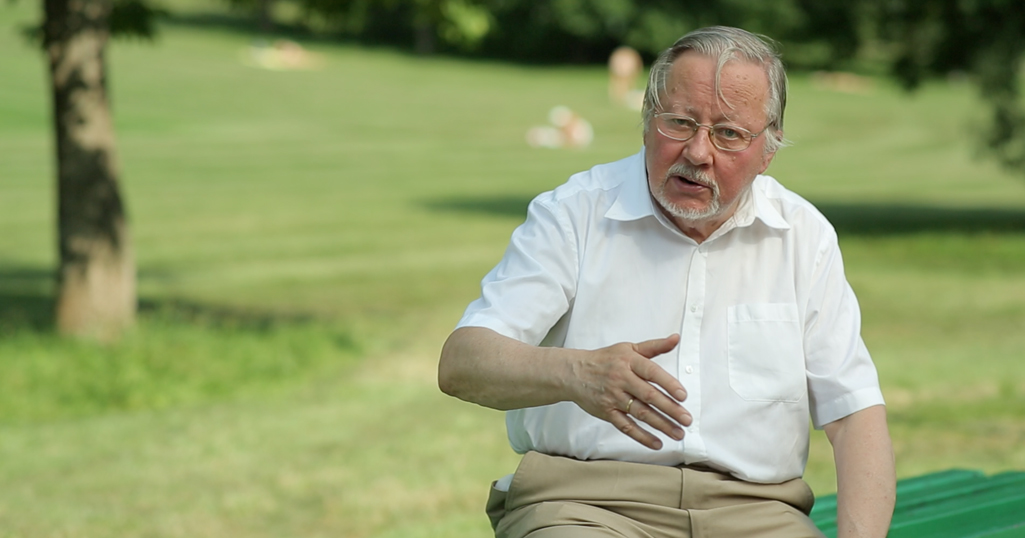
Interview with Professor Vytautas Landsbergis (Jul. 2013). "He was the main person of the Lithuanian revolution and independence from the Soviet Union. He was the first head of state of Lithuania after its declaration of independence from the Soviet Union, and served as the Head of the Lithuanian Parliament."
"The project reflects my family’s history and experience of being deported from Lithuania to Siberia (Russia) in Soviet times. It also involves my life and work between Sweden and Lithuania. In this piece, I try to combine these two personal stories, my family’s and mine, involving political and historical aspects of my home country.
Father's Footsteps was filmed in Siberia, in 2012, where my father, Leonas Simbelis, was raised. It is part of an ongoing artistic and research project, in which I collect content, interview deportees and other people directly connected to a migration discourse. The main person behind the Lithuanian revolution - Vytautas Landsbergis, who started the Lithuanian independence from the USSR - was recently interviewed.
Documentary images are a common method to measure and reflect upon the monumental scale of change in contemporary society. These images are also highly aestheticized. As a crossover between art and journalism, the documentary image also allows us to question the veracity of world events from multiple viewpoints, offering a number of uncomfortable realities instead of a single, easily digestible worldview. In an era of a massive data onslaught, documentary image continues to offer a human face to information, sometimes elegantly summarizing a complex situation.
My work tries to bridge the gap between conceptual art and documentary practices, focusing on political, economic and social themes, ranging to personal and family life. While putting some of the conventions of documentary into question, the work shows film and photography as a social practice, capable of responding to the world and its problems.
The project started just after I moved to Sweden. Distance is powerful. Leaving your country by force or through your own decision might make your feelings and emotions stronger. Perhaps it’s healthy to keep a distance in all cases, but leaving your home country might trigger some hidden reactions.
My father’s personal experience is shown in the movie. For a long period, the occupants’ language, Russian, became his first language. Singing in Russian in the place where he and his family were deported to raises questions on the tyranny and hopelessness of such political situations. Perhaps it affects not just my artistic practice, but also my personal life. Applying political stances to both art and personal life might be the only natural state."
Vygandas Simbelis in a statement to PLATFORM:VB (October 2013)
Father’s Footsteps (2012) | Vygandas Simbelis
Video | 4’54”, stereo, color, 16 : 9
Testimony Vygandas Simbelis | 18th Festival
The Lithuanian artist discuss his video, based on a trip with his father – deported to Siberia as a child during the Soviet invasion in his country –, where they retraced the paths travelled by his family during the forced exile
In the wild steppes of Transbaikalia | Pyatnitsky Choir
Russian folk song
"As my father was not able to sing part of the song, the missing part was replaced with material from the journey and an original song from those times, Over the wild steppes of Trans-Baikal, interpreted by the Pyatnitsky State Academic Russian Folk Choir."