Escultura do inconsciente
2007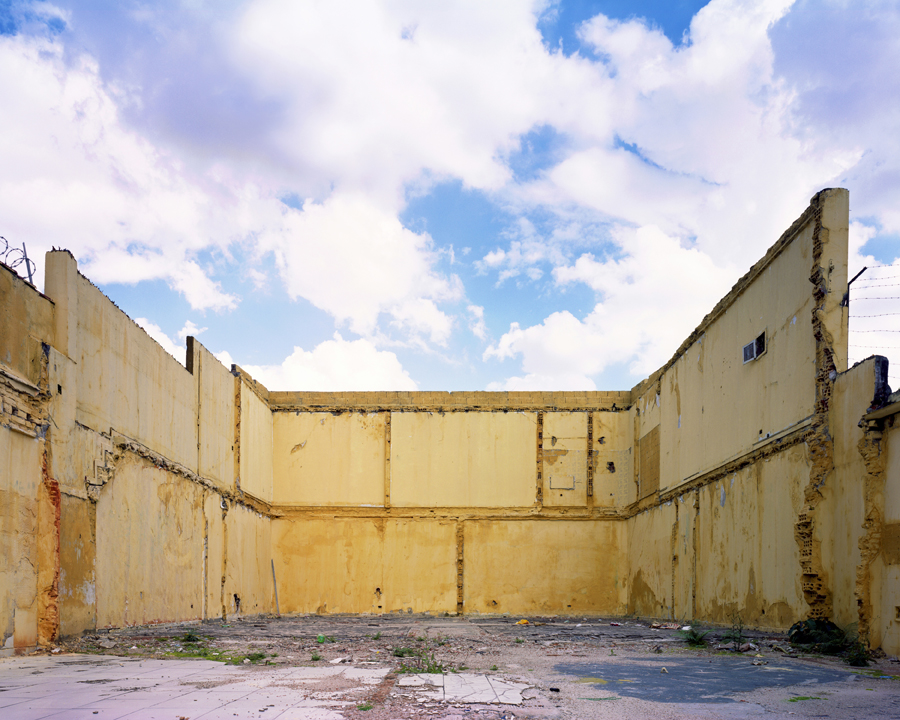
Escultura do Inconsciente #32 (2011)
“Escultura do Inconsciente is a long-term piece initiated in 2006 with no set date for completion.
At present, the project comprises over 60 finished images, originated from different researches. Images #02, #04 and #32, shortlisted for the Southern Panoramas show (2013), were created through the same process: walking around the city with no particular destination.
The technological progress of the means of communication and the popularization of access to private transportation deprive us from the possibility and the interest to intently observe the city in which we live. The fast pace of urban living renders us unable to stop and think about what surrounds us, the world we belong in, and where it is taking us. I find that important.
Even though I take photographs of physical aspects of urban landscapes, the primary aim of my work is to capture the passing of time. The 'passing' I refer to is not the one that happens from yesterday to today. It is a passing that precedes the Modernist period, and which is revealed in my project through the combination of vestiges from different ages in architectural landscapes. This work captures the time of today within the flow of time, and it is currently the pivotal point of my creation.
Whenever I take photographs of the city’s actual and current landscape, I do it through a fictitious imagination of the past and the future.
One of the most important references for the Escultura do Inconsciente project is the set design of the movie Metropolis (1927), by Fritz Lang.
Although the film’s set looks fictitious, I see a few similarities between it and the pictures I see from the 1920s downtown São Paulo. At that time, the city of São Paulo was still thriving on wealth obtained from coffee farming. That was when the Martinelli Building and the Altino Arantes Building (Banespa) were erected. It is known that the urban planners and architects of that time dreamed of building an idealized metropolis modelled after European urbanization.
In an excerpt from the essay Hojo-ki, written in 1212, the Japanese poet Kamo no Chomei claims:
'Though the river's current never fails, the water passing, moment by moment, is never the same. Where the current pools, bubbles form on the surface, bursting and disappearing as others rise to replace them, none lasting long. In this world, people and their dwelling places are like that, always changing.'
[The Hojoki (My Ten-foot Hut): 1]"
Tatewaki Nio in a statement to PLATFORM:VB (October 2013)
Escultura do inconsciente #02, #04, #32 (2007 - 2011) | Tatewaki Nio
Photography | Inkjet print on cotton paper, 83 × 101 × 4 cm
Testimony Tatewaki Nio | 18th Festival
Born in Japan and living in Brazil since 1998, the photographer comments on the creative process leading up to his series, walking along São Paulo streets, were he stumbled upon buildings either abandoned, left unfinished or under construction
Metropolis (1927) | Fritz Lang
The Spaces of Kamo-no-Chomei’s Record of the Ten Square Feet Hut (Hojoki, 方丈記) (2011), article by Maggie Leung OnYuk (University of Hong Kong), about the piece Hojoki. [eng]
Tatewaki Nio's website.