Drive-thru
2010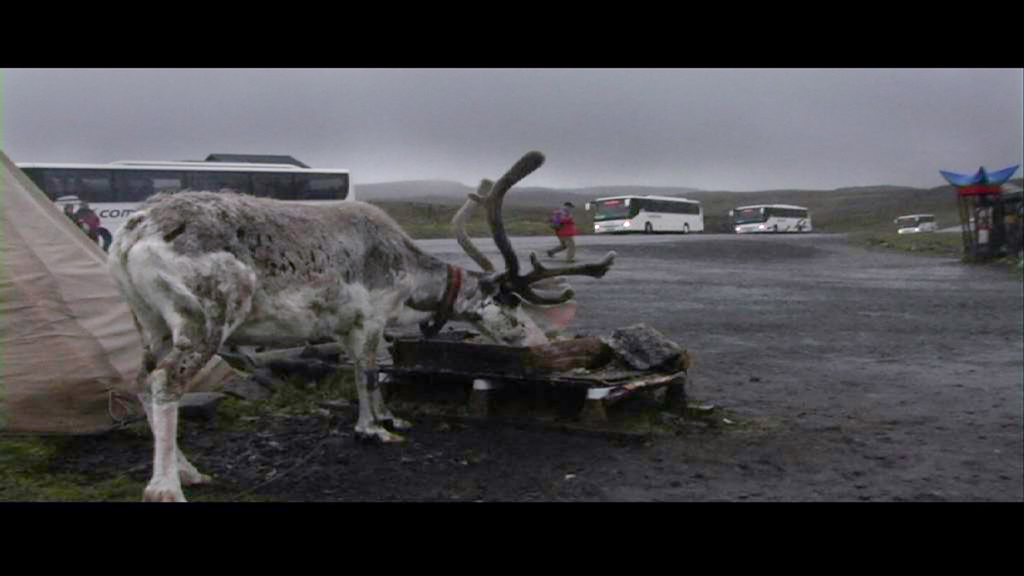
Drive-thru (2011), video still
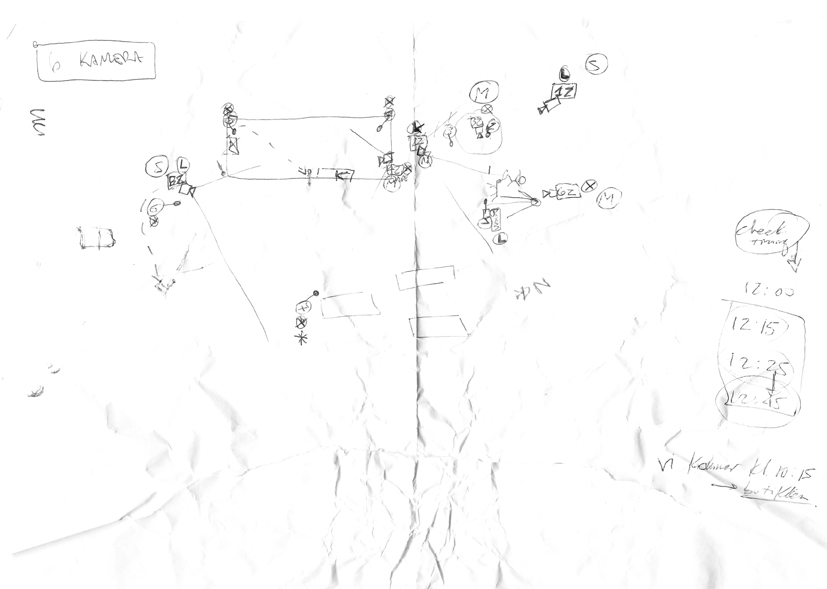
Shooting plans (sketches) for Drive-thru
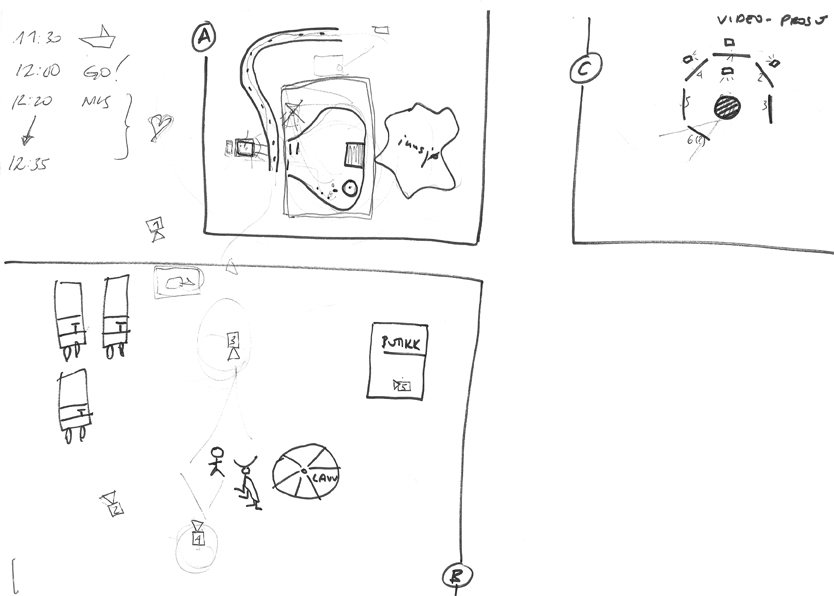
Shooting plans (sketches) for Drive-thru
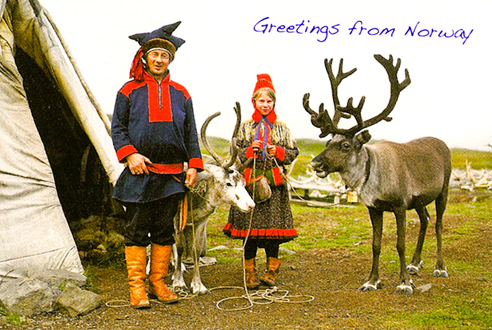
"Postcard where Nils appears next to his reindeer. I can't remember exactly when/where I bought it. I think it was some years after meeting Nils for the first time and I'm almost sure I bought it in Oslo, around 2000 km south from his home. I think this is where I got the idea for Drive-thru."
"The Sami people are the indigenous people of Northern Scandinavia (often known as Lap, Lapp, or Laplanders). They have been historically portrayed in photography as exotic tourist attractions or mere ethnography documentation.
I met the Samis for the first time in 1999, and years later I spent two summers working as a guide in North Cape, Norway – a place that is both a tourist destination and a grazing land for reindeers. This experience allowed me to observe how Samis and tourism coexisted in the same territory. I got fascinated by how tourists behaved as a group, and how their patterns got repeated everyday, although unique individuals performed them.
Being born in Costa Rica but living and working in Norway has definitively marked my artistic production. The fact that I don't belong here has also allowed me to address issues, with Drive-thru, that would probably be politically incorrect for a white ethnic Norwegian or for an ethnic Sami.
According to the photography historian Michael Frizot, every traveler with a camera becomes an ethnologist. With Drive-thru, I wanted to get the roles inverted, and instead of taking pictures of the Sami I turned my cameras towards the tourists. What the audience sees most of the time is Nils' back [the film’s main character], and how the landscape becomes a scene. We all have been in the same situation that the film presents, either in front of or behind the camera.
Nils' picture can be found in thousands of photo albums around the whole world, and, once he retires, Nils assures, he will travel the world taking pictures of every local he meets. In any case, the film is less about Nils and more about being observed and looking at the observers; while, at the same time, it is a humor-filled anthropological study on the contemporary tourism industry and traveling in the 21st century.
In 2009, when the film was shot, most of the consumer video cameras were of the same quality, which is the HDV format. I wanted the film to stand as a record of how travellers documented their journeys at that time and this is why the film was intentionally not made in HD. Besides, the film, that was shot in the 16:9 format, visually owes a lot to landscape painting."
Christian Bermudez in a statement to PLATFORM:VB (October 2013)
Drive-Thru (2011) | Christian Bermudez
Vídeo | 20”, stereo, color, 16 : 9, loop
Drive-Thru (2011)
Testimony Christian Bermudez | 18th Festival
A native of Costa Rica filming tourists visiting European indigenous people, making a formal ethnographic document on the tourism phenomenon. The artist, whose work featured in the Southern Panoramas show, discusses this unusual situation
Zidane, un portrait du 21e siècle (2006) | Douglas Gordon, Philippe Parreno
Bermudez considers this film Drive-thru's main influence.
Don Snyder reviews Michel Frizot's A new history of Photography (1999). The book was mentioned among Bermudez's references. [eng]
Sami Council's website in Finland. [eng]
According to the artist, the subject of 'belonging' is central in his trajectory. Bermudez adresses this question in the films Dear Neighbor (2006) and The birdhouse project (2011).
Christian Bermudez' blog.