Dito escuro. Projeto arquivo mestiço
2014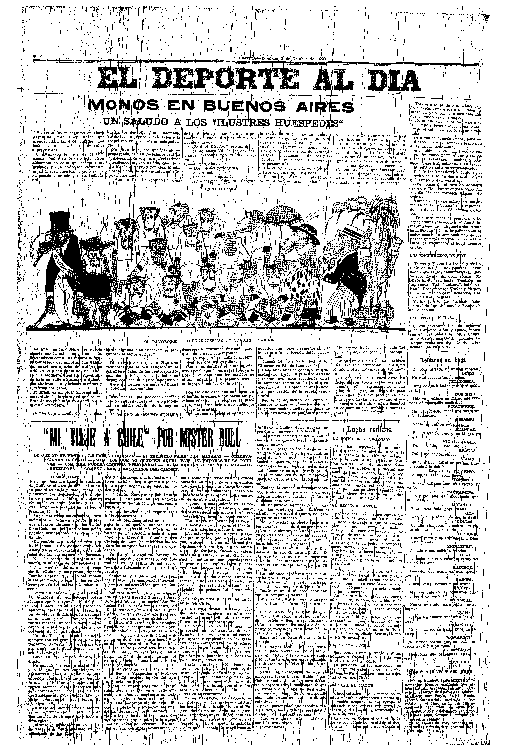
Cartoon from the Argentinian daily newspaper Crítica, depicting Brazilian footballers as monkeys [1920]
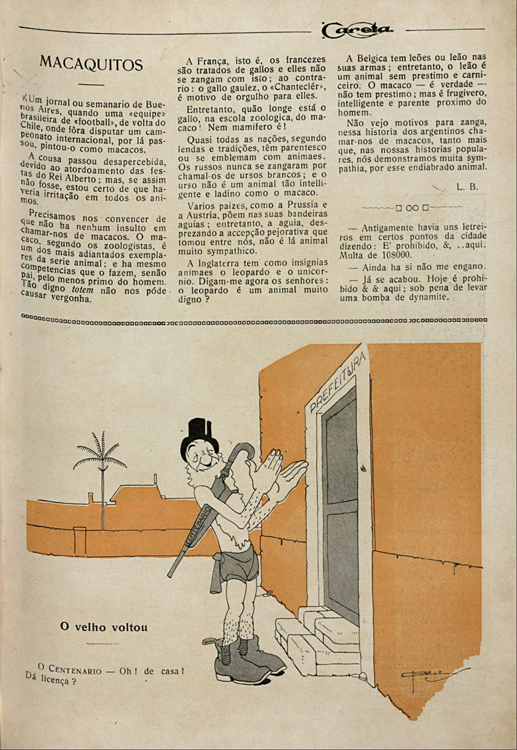
Lima Barreto’s reply to the Argentinian cartoon, published in the Careta magazine. [1920]
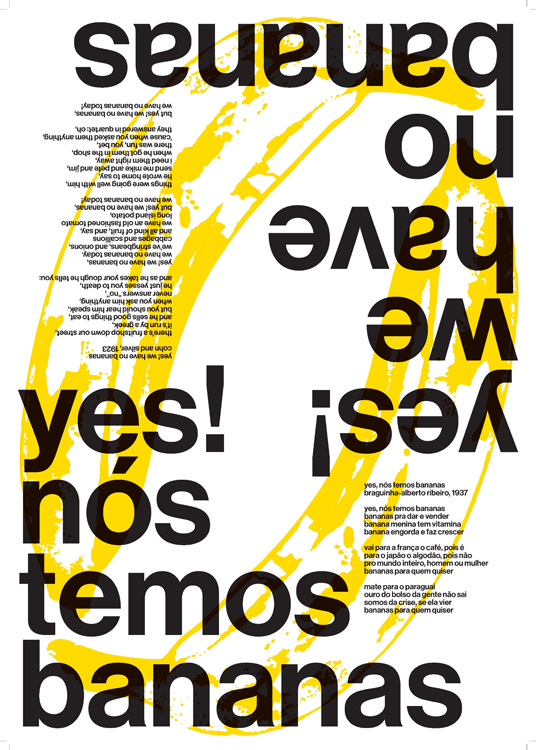
Poster created within the context of the piece’s first exhibition, featuring graphic design by designer Ilana Tschiptschin [2014]
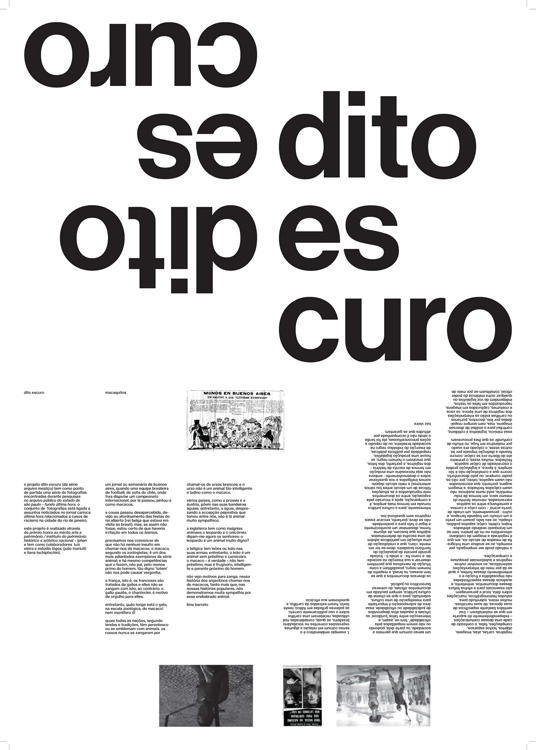
Poster created within the context of the piece’s first exhibition, featuring graphic design by designer Ilana Tschiptschin [2014]
“Since 2011, I have frequented and researched the collections of the Public Archive of the State of São Paulo on a regular basis, particularly Rio de Janeiro’s Última Hora daily newspaper, founded in 1951 by Samuel Wainer. In 2013, I chanced upon eight images that make up the piece Dito Escuro (loosely translated as "Said to be Dark"). They were in a folder labeled "anti-Semitic" – "racism", and featured black subjects. The back of each picture contained notes from the photographers about the context, and all of them related to situations of racial prejudice.
At first, I wasn’t sure about what to do with that material, and I kept the digitized files in my personal archive for quite some time. Finally, after a first-hand experience of prejudice, I realized that the best response to the situation was to discuss it in a work of art.
Even as the first showing of Dito Escuro was scheduled, I added new elements to it, based on events and personal experiences of mine during that time. Unlike the photos, which I found by chance, I searched and researched this material. I had read a text that mentioned a cartoon from the Argentinian daily newspaper Crítica, and in 2014, during a month-long residency in Buenos Aires, I went to the National Library of Argentina to look for the material. This is the earliest record of the use of the term 'monkey' in a prejudiced way, to describe black footballers. Another piece of material I incorporated into my work was an article by Lima Barreto, published on the Careta magazine, as a direct reply to the Argentinian newspaper’s cartoon. I found it at the digital newspaper archive of the Brazilian National Library. Moreover, a few weeks before the show’s opening, during a football match, a fan threw a banana into the pitch as the player Daniel Alves prepared to take a corner kick. This fact also influenced the exhibition poster.
From the moment I started working with these images, I have made a point of presenting them under a more traditional logic, and I have received some criticism for it. I went for a setup that resembles the way documentary photos are shown in museums, with flawless, elegant frames and professional Fine Art printing. I was interested in creating a direct confrontation with the public, in such a way that, at a glance, people would see a photo exhibit on any theme, but those paying a bit more attention would soon realize the contents were not 'comfortable' or 'pleasant' to see. There’s this dichotomy between the inherent beauty of the materials, this vintage archival aesthetics, and the content that points to a current problematics that creates conflict in our social lives.
This piece deals with the silence and oblivion that exists in the art field whenever the legacy of African heritage in our history is brought up. I feel that, shortly after I created this piece, its subject came to the forefront among artists from the Rio – São Paulo set. Sometimes, I even get the feeling that it’s trendy to talk about it. Anyway, we are far from resolving, or better yet, minimizing the vacuum that’s in place in our professional art medium when it comes to what we might call the 'Afro-Brazilian production'.
With my work, I’m interested in activating and embodying sociopolitical and emotional situations, as well as recent historical processes that still reverberate in our present, and which we access only through text, documents, or orality. I look for a way to find potential genealogies of myths, behaviors and historical-social facts present in our current life.”
Rafael RG in a statement to PLATFORM:VB (July 2015)
Dito escuro. Projeto arquivo mestiço, 2013-2014 | Installation
Rafael RG
Daniel Alves come banana atirada por torcedor racista
Video of football player Daniel Alves eating the banana that was thrown at him in the football pitch during the game
Yes, We Have No Bananas (1922) | Louis Prima
The song Yes, we have no bananas, which served as a reference for the poster of the piece
Yes! Nós Temos Bananas (Carnaval de 1938) | Almirante
The song Yes, nós temos bananas was a reply to the song Yes, we have no bananas
"The reading of the book Nem preto nem branco muito pelo contrário – Cor e raça na sociabilidade brasileira (Neither black nor white, quite the opposite – Color and race in Brazilian sociability, 2013), by the anthropologist Lilia Moritz Schwarcz, was certainly a decisive factor in creating this piece. It gave me access to the primer of politically incorrect terms that are featured in the project. Sasha Huber, a Swiss-born artist of Haitian descent, is another reference for me."