Desolation I-V + Of Nationhood
2015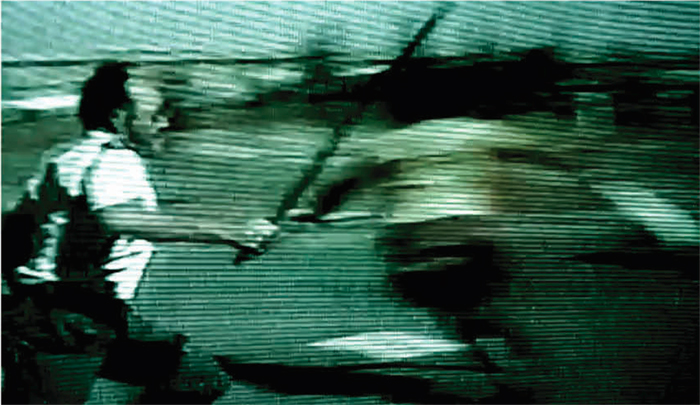
The research leading up to my artworks was self-driven and, in a way, is a work in progress. I had to look at literature, the South African history of our national anthem (with three parts in Xhosa, Sotho, Zulu, English and Afrikaans) but really look at the former liberation struggle African part.
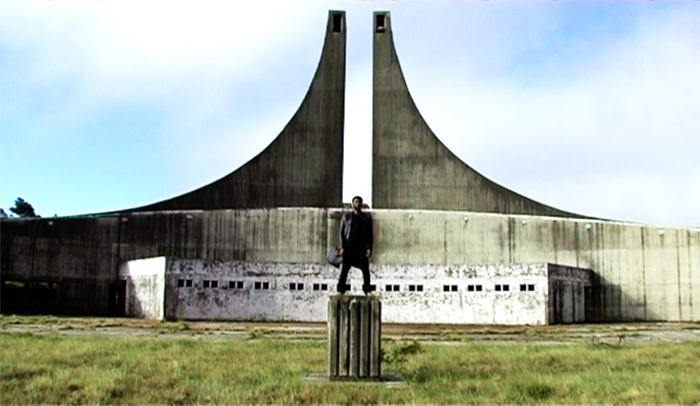
Over the last five to six years, I have been interested in issues of nationhood and self-reflection of who we—South Africa—are. I looked at a particular site, just a few kilometers away from my home, known as Ntaba KaNdoda (the Mountain of Ndoda) and the monument there that was unveiled in 1981, in the former Ciskei (an apartheid self-governing state within South Africa). At the same time, there were a lot of civil and public protests for service delivery in mostly black poor townships—these were met with brutal police actions, that resulted in civilians or protesters being killed. This culminated in the notorious Marikana Massacre, where dozens of miners were shot dead for a minimum wage. So I looked at the history of police brutality during the apartheid, and police brutality under a democratic state in South Africa.
Performative body, and being on the site have been important for Of Nationhood, while the archival aesthetics of the series Desolation, to look at the archive as a performance—either political or social—has also had an impact in my creative process.
Thando Mama in a statement to PLATFORM:VB (August 2017)
Desolation I-V, 2015 | Video installation
Thando Mama
Of Nationhood, 2015 | Video, 4'07"
Thando Mama
Nkosi Sikelela iAfrica | The Mighty Wits SDASM Choir
Of Nationhood’s start off was influenced by the music originally composed by Enoch Sontoga, and later added by S.E.K. Mqhayi to Nkosi sikelel’iAfrika (God Bless Africa), which was first a religious hymn, then a choral music, and turned into a struggle song, and then adopted as South Africa’s national anthem.
Archival and heritage research influence the Desolation video—and a strong political heritage of Southern African struggle and post-apartheid have also contributed. And in the art world, I will mention my long-time fascination with video art history.