Superquadra-Saci
2015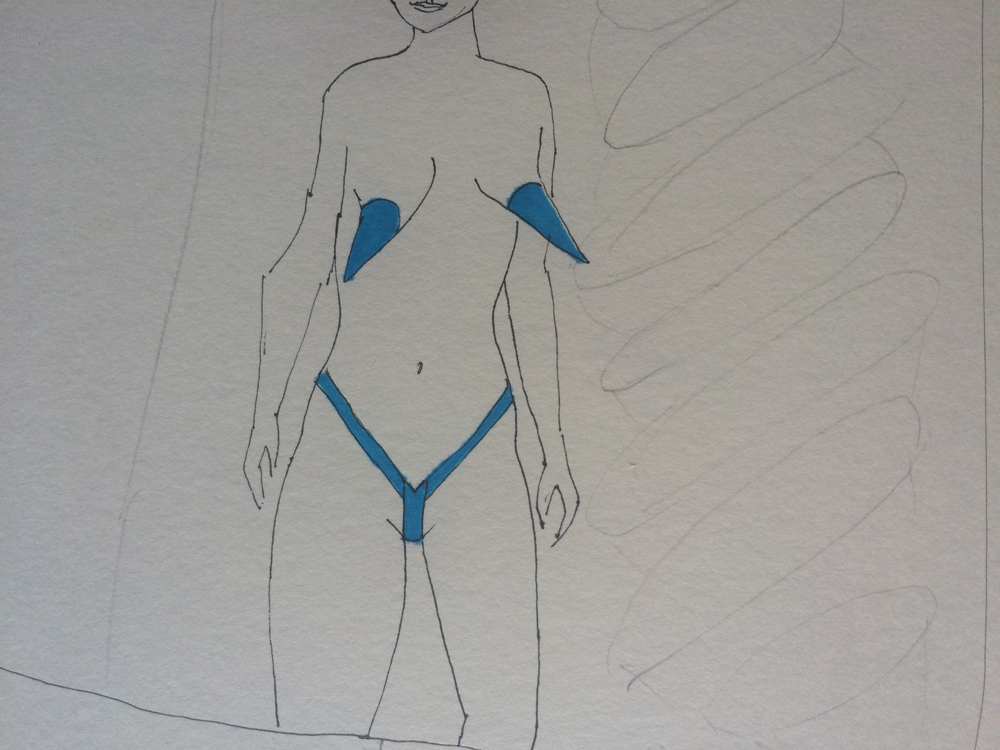
Study for the work
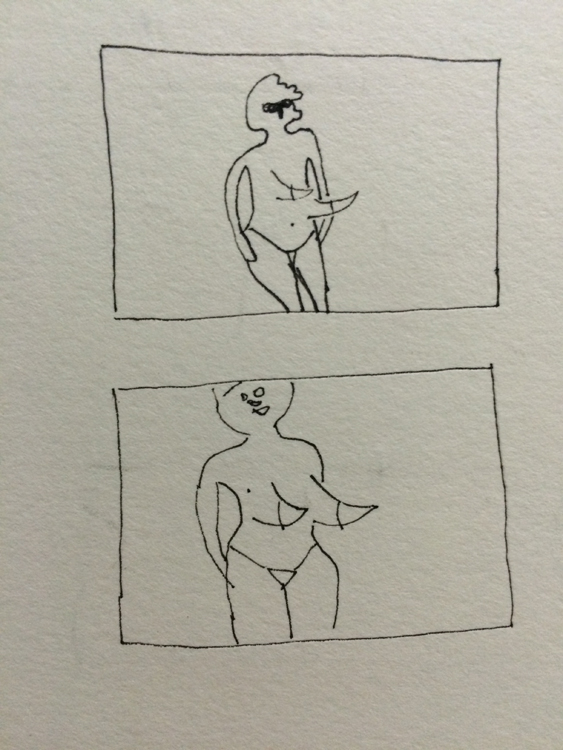
Study for the work
Bitu Cassundé: Behind every modernist column, there lurks a “Saci-Pererê,” a Brazilian-city-landscape, manioc, tree dwellers, wanderers, politics, delirium, sex, indigenous cosmology, a rural/urban amalgam, a mestizo, a ghost. Superquadra-saci cuts through several layers of fictional confrontations, exercises oriented by a politics of freedom and utopian rebuilding efforts. How are these distinct architectures composed?
Cristiano Lenhardt: I try to constantly connect with the idea that originated the project. This is a difficult task, because it’s woven from dreams, and it eludes me all the time, It’s not made of matter. I find peace in remembering what a different society would be like, and I look upon the one we share with humor. My work exists in the building of things I wish I had seen. More and more, I am certain that poverty is our greatest asset. It’s not comfortable, but I like how my bedroom ceiling’s leaking, the neighbors make noise late at night, and how they don’t even know they aren’t supposed to. The savage is me, and the monstrous too, for how many times must I startle myself with my own violent actions? If God is me, I go back to breathing and living just like anybody else. This is why shrill bird calls come out of the human throat, breaking the protocol.
BC: If your work is driven by the desire to see things you wish you had seen, how do the mestizo and the ghost in Superquadra-saci materialize into images? And what ambience do these characters inhabit?
CL: They materialize through the people with strong personalities and morphing visualities that I call upon to act. The ambience is the fringe: roadsides, abandoned city squares, trees and parallel dimensions.
BC: In your work, the screams destabilize the environment, they reaffirm a territory, they’re a latent rejoicing that fills up and reaffirms a condition. Do those who cry out cry something out, or do they cry out about something? What is it?
CL: In the film, those who cry out wound. They cry out a matter-based cry; they cry for freedom or love, for joy. It’s a bird’s cry. I called on Tetê Espíndola to do these cries; she has this beautiful voice and can hit some uncommonly high notes. I’m working with the idea of a divine voice, a voice that creates and also destroys.
BC: There is a latent duality in the film’s title: "superquadra" (superblock) is an urban organization structure that abides by a certain logic, whereas "Saci" comes from a mythological construct from the 18th century, that relates to an idea of delirium. Moreover, this mythology straddles indigenous cultures (the term "Saci" comes from the native Brazilian language Tupi), African cultures (the pipe), European cultures (the skullcap — the source of the Saci’s magical powers). Thus, we can weave together America, Africa and Europe. In its curatorial platforms, Videobrasil discusses the geopolitical South, its new redesigns, its rearrangements. I’d like for you to articulate these layers. How does reality flow into and contaminate the fantastic in your film?
CL: Superquadra-Saci is the idea that something was done with hard thinking, the best in its time; but its inhabitants or users, or the dynamics that these elements create through their personalities and cultures, make it wobbly, less than ideal. Because of its freer condition, this reality has no boundaries to separate it from the supernatural, the monstrous, the different. There is a coexistence of worlds, and they visit each other. It seems to me that this other reality is fairer, for its organicity and the way it defines what is natural.
BC: I’d like you to tell me about the structuring of the characters.
CL: What populates my mind comes into contact with what the actor suggests to me through his image and physicality, in combination with the setting that’s chosen and its peculiarities. The Guaracys and Jussaras are two groups with their own systems; they are outlaws and outcasts, respectively, and their interaction is not particularly friendly, but it can be a very rich one.
Bitu Cassundé: Your work is very polished when it comes to the actual production, and it achieves maximal potential through your command of effects and manipulations. You always say that “anything can change in postproduction, nothing is a given, everything that is right now can eventually no longer be”. How do you deal with these two inversely proportional vectors — rationality and the structuring of a schedule versus poetical freedom?
CL: I create a full storyboard one day before shooting each scene, and I have no script; what I have is a story that I tell everyone who asks about the film, and it grows and changes each time.
Cristiano Lenhardt in a interview to curator Bitu Cassundé, member of the Curatorial Committee for the 19th Festival (July 2015)
Superquadra-Saci, 2015 | Video
Cristiano Lenhardt
O Saci (1951) | Rodolfo Nanni
First audiovisual adaptation of the work of the Brazilian writer Monteiro Lobato, based on his book O Saci (1921). [pt]
Somos Todos Sacys (2005) | Rudá K. Andrade e Sylvio do Amaral Rocha
Documentary about the myth in oral tradition and its re-signification today. [pt]