Llorando se foi. O museu da lambada. In Memoriam de Francisco “Chico” Oliveira
2015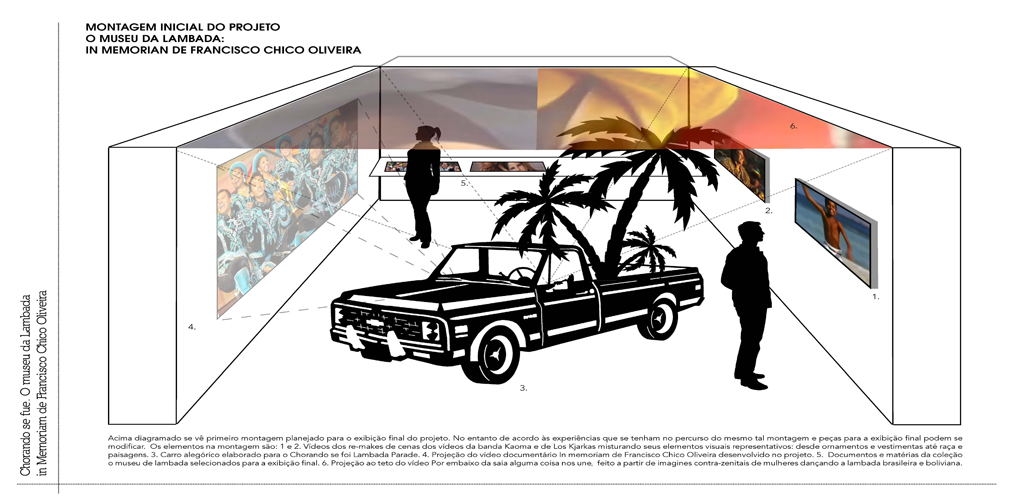
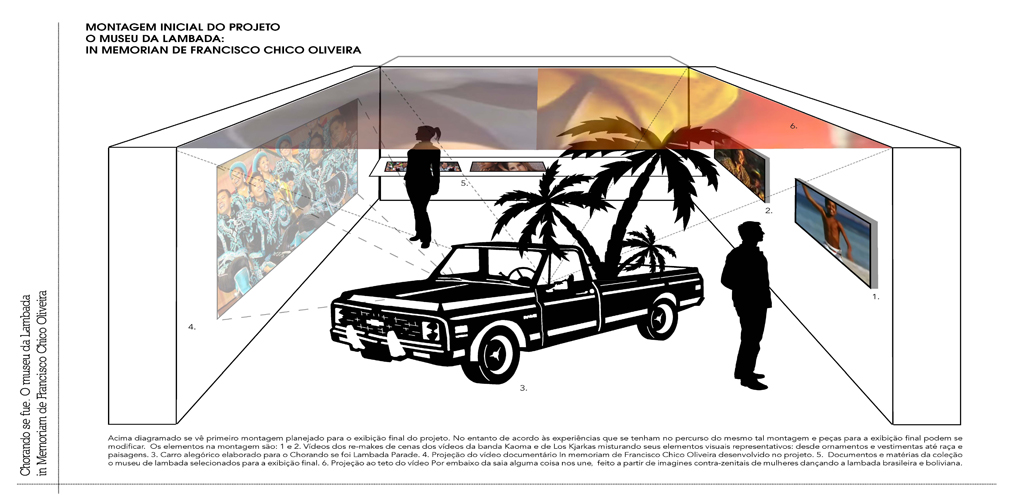
Sketches for the installation of the piece
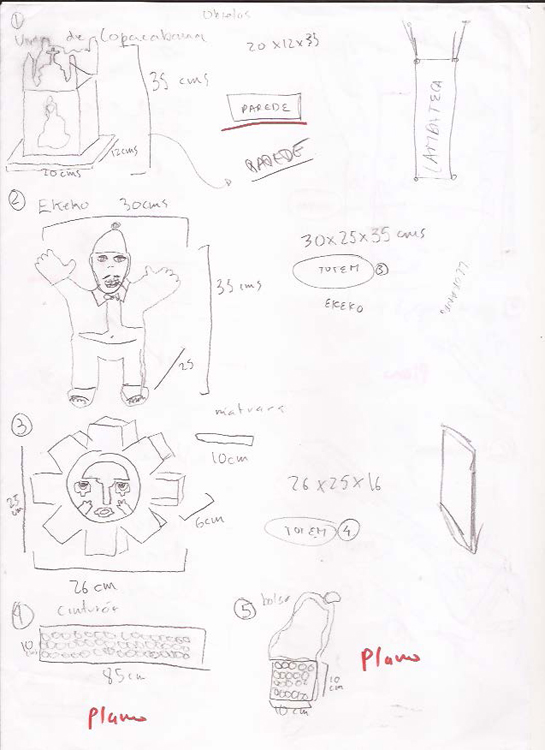
Sketch for the development of the piece
Sketches for the development of the piece
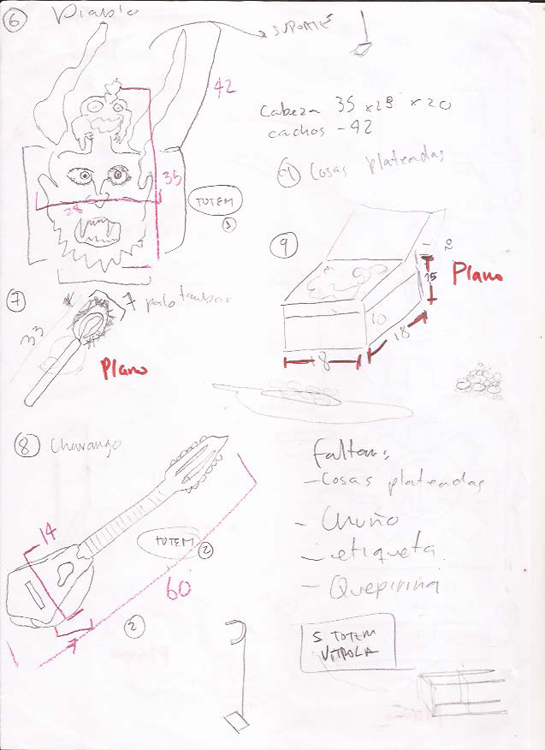
Sketches for the development of the piece
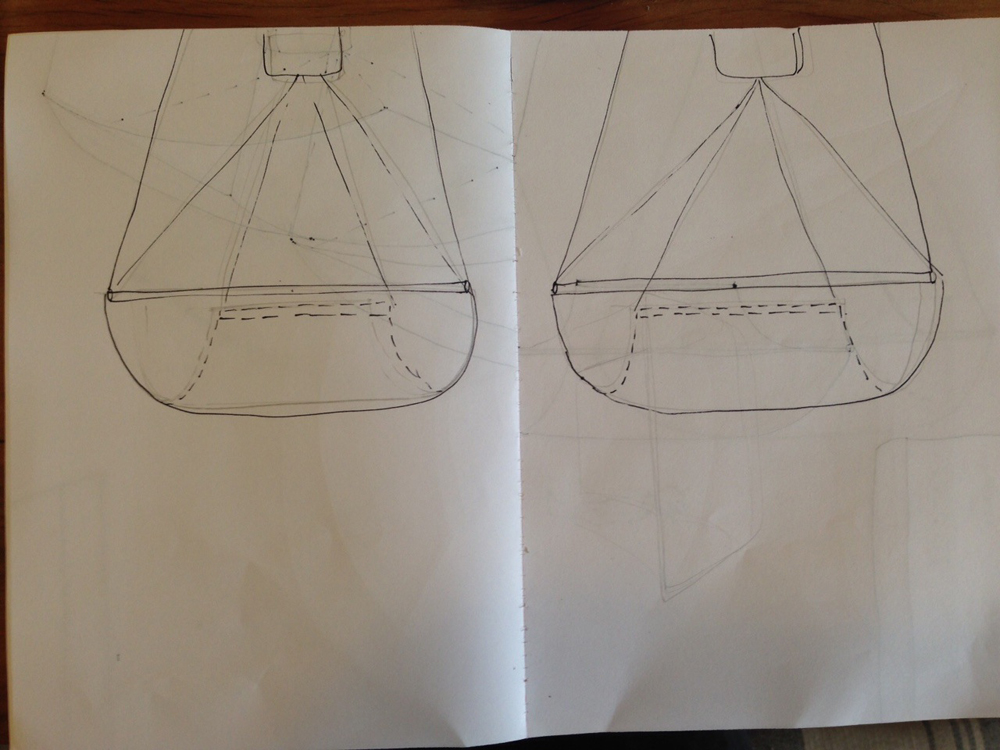
Sketches for the development of the piece
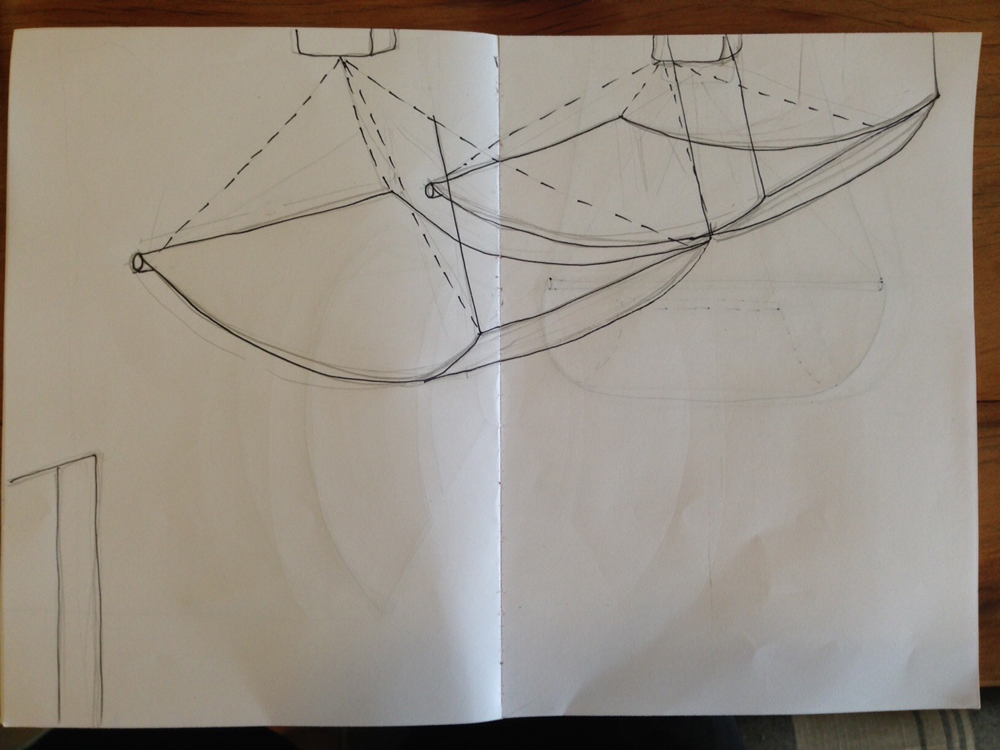
Sketches for the development of the piece
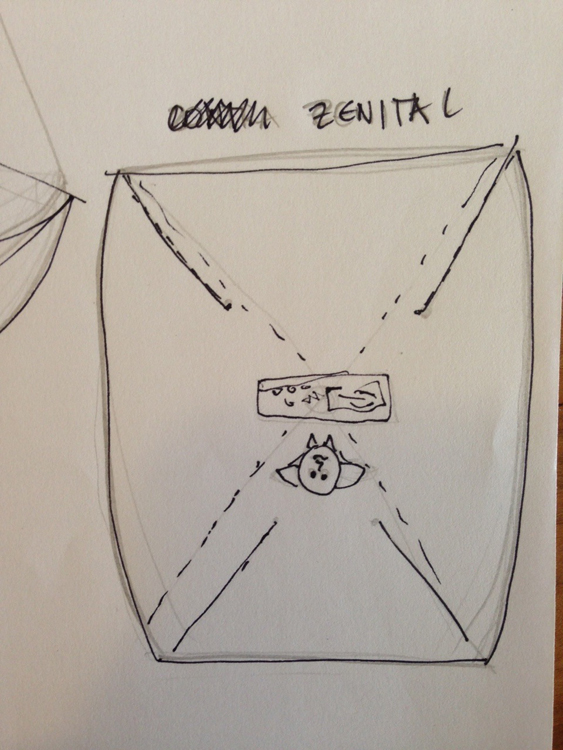
Sketches for the development of the piece
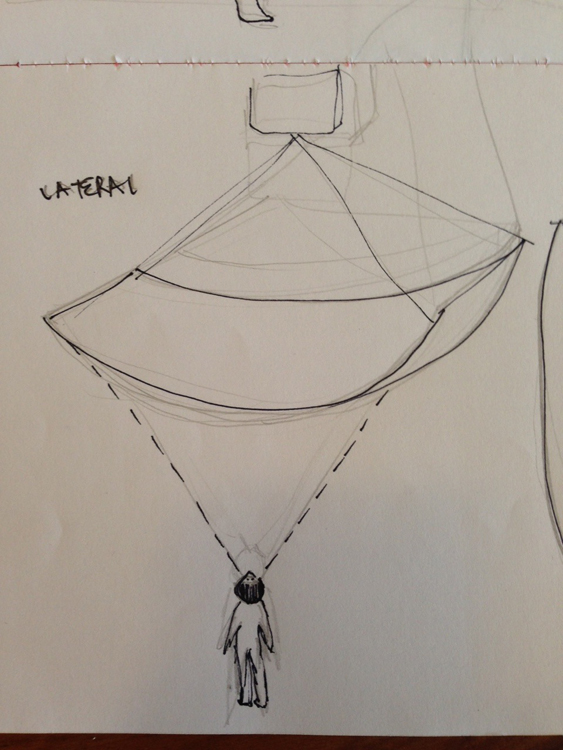
Sketches for the development of the piece
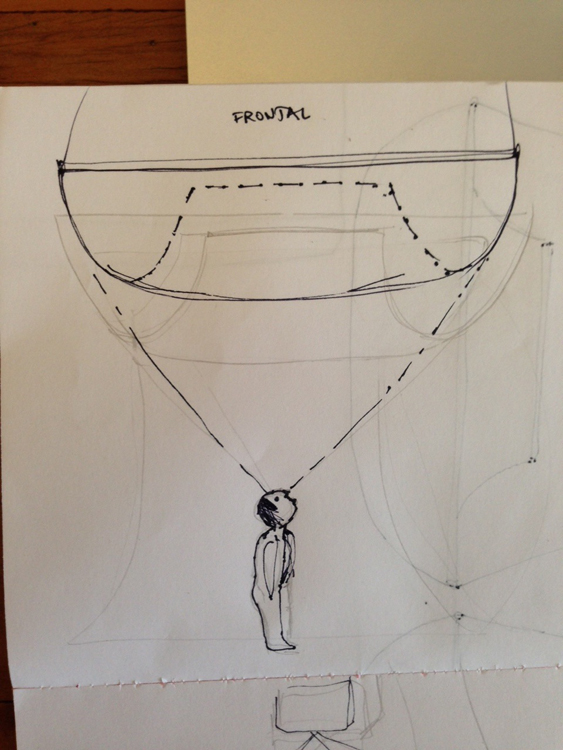
Sketches for the development of the piece
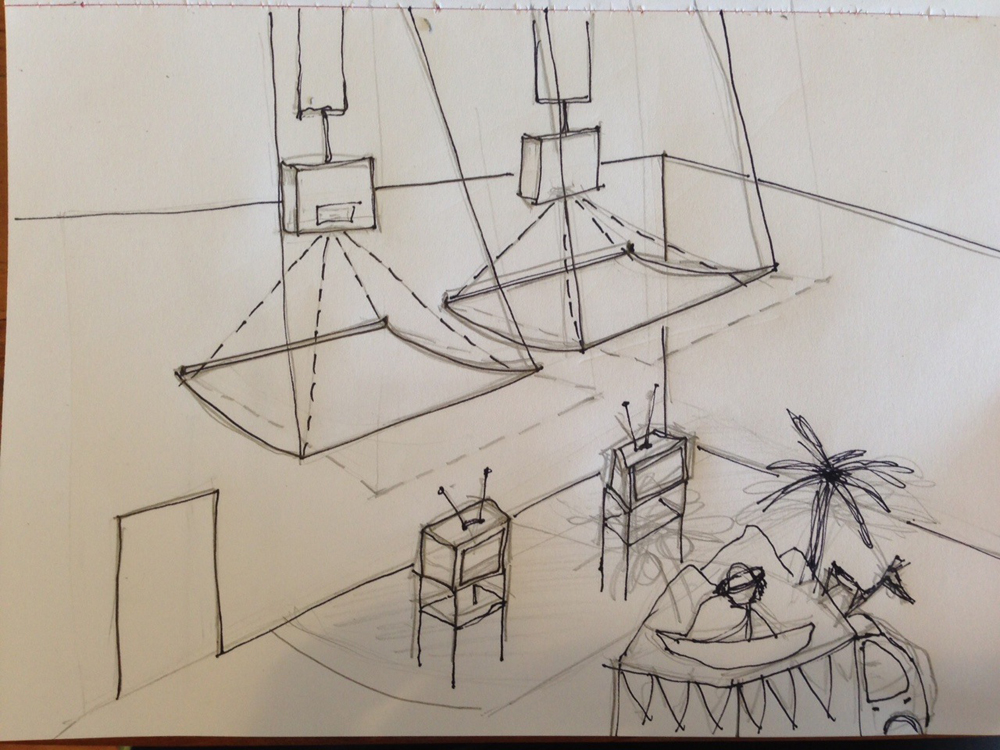
Sketches for the development of the piece
Bernardo José de Souza: How do you see the relations between Brazil and the other countries in Latin America? How does Brazil’s emergence as a major economy in the early 21st century influence cultural ties among these countries?
From the perspective of the other Latin American countries, Brazil is the “numbed up giant,” and not the sleeping one. In Hispanic America, we know that Brazil is huge and its economic and political decisions affect our economies and markets, with effects proportional to the economic and political relations we have built with this giant that lies beside us. However, far from their ideal form outlined in agreements with the Mercosul, these ties are channeled into Brazil’s urgency to come off, especially among the big powers, as the leading emerging economy in its hemisphere.
The country is numbed up, with help from the thousands of people who cross the Amazonian borders from neighboring countries. The giant keeps chasing the ideals of a powerhouse, seeing progress as growth from a capital-based perspective. This stance, far from leading to improvements, builds a smokescreen that enables it to ignore its domestic problems. The World Cup and the Olympics are cases in point, tokens of the euphoria of one who would rather host the party although one doesn’t have the means to do so.
This situation is absurdly paradoxical, and my coming to Brazil as a student is part of this expansionary policy, typical of world powers, that offers scholarships to third-world students. This smokescreen has led to a cultural misunderstanding between Brazil and Hispanic America. Whenever we discuss Brazil, we set ourselves apart; and whenever you discuss us, you set yourselves apart too — you, the Latinos; we, the Brazilians. The country has no identity forged from a sense of collectivity with the countries in Latin America or cultural or social policies designed to build said sense, even though this was the purpose of projects such as the Memorial da América Latina. And the strangest thing about it is to consider that this Latin identity extends to not-as-peripheral places such as Spain, which, for colonial reasons, feel like part of it. Especially now that Donald Trump has expressed his prejudiced opinions regarding the Latino community in the United States, discussing this identity has become fashionable, be it to champion it or to bash it. But the Brazilians dismiss us as exotic and pack us up just like the colonial policies still in place do to them. The numbed up Brazil reproduces discourses of progress without carrying out its due political and economic anthropophagy, failing to see that the “other” that could truly belong to it is right next to it. Sometimes, I wonder what Oswald (de Andrade) would think if he was alive!
Since there are no true bridges of connection, the relationship is a mirror of distorted reflections. Instead of recognizing ourselves in the problems we share, we end up perceiving our differences in the stereotypes we see on Netflix: Brazil is about football and butts; Bolivia, about llamas, indigenous people and insalubriousness; Colombia is all about the narcos. Migration brings back the dangerous prefabricated identities that, instead of attacking the actual problems, attack the individuals. But Brazil looks out at the world, measures itself up with a yardstick according to which it is always trailing behind, and moves on without being able to quit staring at its own navel...
BJS: The lambada craze (1990s), the subject of your research, arose from the Brazilian appropriation of a Bolivian rhythm, while ignoring copyrights issues. Would this in itself be an indication of an imperialistic stance on Brazil’s part within the Latin American chessboard?
CM: Not particularly. There are other resource appropriation phenomena that are seldom discussed in Brazil, but let us replace the word appropriation with plagiarism. Even in a subtly different way, appropriation is an artistic gesture inherent to fine art language, whereas plagiarism is taking credit for material created by someone else.
The song Llorando se fue, which became known around the world as Lambada, was the object of a multimillion-dollar plagiarism lawsuit. Los Kjarkas, its original authors, who remain the best-known Andean group until this day, wrote the melody and the lyrics in 1981. The melody was first created in order to tune up the Andean zampoña pan pipe, the lead instrument in the song, and its original rhythm is the saya, a traditional rhythm in the Yungas, an Afro territory within Bolivia. The song was an instant hit and spawned other versions in rhythms like merengue, salsa, and the most famous one, the cumbia version by Cuarteto Continental, released in 1984. In 1986, Marcia Ferreira, a Brazilian singer and radio presenter, re-recorded it as a lambada, which was the rage in the Brazilian Amazon at the time.
Lambada grew established as a rhythm from 1948 as FM radio arrived in the Amazon and North Brazil, allowing local musicians to get in touch with the Caribbean rhythms of neighboring countries. They added their Amazonian spice, and the result, known as guitarradas, were rechristened as lambada after the launch of the Lambada das quebradas, in 1978, due to its “Caribbean”, Latin dancing style. The rhythm travelled along the country’s coastline, stopping in Bahia, particularly Trancoso and Porto Seguro, then cut-off, hard-to-get-to places, which went crazy with the umbigada. There, it turned into a “somewhat racier dance,” with a dendê oil spice that was a perfect match.
So, this cultural phenomenon with deep-seated Latin American ties began in North Brazil, crossed the Northeast, and then landed in 1987 in the São Paulo music scene. But what is it about lambada that makes it global?
In 1989, the French filmmaker and producer Olivier L’orsac travelled to Trancoso. By all accounts, he was taken aback by lambada and bought the copyrights to some 500 productions off the local production company. Back in France, he got everything copyrighted under the name of Chico de Oliveira, whom he had met during that same trip, and changed the title of the song Llorando se fué to Lambada. There, he formed the band Kaoma with Caribbean and French musicians, featuring Loalwa Braz as singer and Brazilians as dancers. Sponsored by the soft drink brand Orangina, he shot 35 mm footage of an idyllic Brazil in Tago Mago, a small island northeast of Ibiza. Subliminally, the music video made to catapult lambada to stardom was filmed in a place replete with posters and bottles of the soft drink.
In late 1989, the video ushered in the lambada boom, first in France and soon al over Europe, like a cultural Tsunami. The lambada helped dissociate Brazil’s image from the memory of dictatorship. Movies, soap operas and videos were made depicting a democratic, free, sensual, sexual, tourist-friendly, interracial, beach-going, brand new country. It became the image of the country par excellence, it marked a generation, and I would go so far as to say it was more of an external phenomenon than it was an internal one. Overseas, lambada is not a rhythm; it’s this specific, Brazilian-Frenchicized music.
But lambada was a double-edged sword when it came to the postcolonial cultural policies of the nineties. The movement wasn’t just about Brazil plagiarizing Bolivia; it was more complex than that. It came about through French, European hands that took a regional product and cleansed, exoticized and colonized it. No matter how it struggles to portray the reality of what might as well be a village in Northeast Brazil, the video simplifies the relationships of the bodies rocking to the frantic rhythm of a foreign musicalization. All it takes is to listen to Marcia and Kaoma’s version to understand how the musical arrangements were changed around to become more palatable to European ears. Not to mention the cinematic strategies like using children so the world could identify, drink Orangina and join the dancing: if Roberto and Chica, who are only 10, can dance like that, so can you!
And behind all the smokescreen? Bolivia and Brazil! Los Kjarkas and Marcia won the lawsuit, but lost perhaps even more valuable things, like the recognition of their song as a masterpiece of Bolivian culture. Even though Don Omar and J-lo, Latino singers who made more recent versions of Llorando se fue, did give credit to the originators, their videos make reference to Brazil. Without Kaoma, lambada wouldn’t have made it big, but let’s not forget that, when we talk about music, we are also talking about artists, who are perhaps in the most vulnerable position of all in the culture market. Loalwa was a victim, and so were Chico, Roberta, Marilei, Didi and all the others. They were victims of colonial cultural cleansing, but winners when it came to life experiences.
In this case, it’s hard to speak of imperialism on Brazil’s part. Maybe if we consider the use of lambada for other purposes — bringing tourists to the beaches, selling the country’s image of sex and of a democracy free from racial problems —, we could touch upon this conformation of the new Latin American chessboard that you’ve mentioned. After all, the issue of the empire means having one’s front to some and one’s back to others.
BJS: The rise of lambada hinted at a music industry phenomenon that would later unfold into a series of other controversial musical manifestations such as dança da garrafa (the bottle dance) and funk carioca. One side effect of these rhythms, deeply rooted as they are in Brazilian popular culture, is a blatant sexualization of the body through a media-based appeal that knows no boundaries of age or social class. How do you see this scenario?
CM: I am a lover of every pop culture media phenomenon in Latin America and the world, from lambada to funk carioca. The urban salsa, the Colombian choque, the Mexican tribal, the Angolan kuduro, New York’s bone braker and, more recently, folk dances like the Bolivian caporales, among others. My research for the performance is covering these physical dance materials I have had since I was a child.
These manifestations have two principles that interest me: the use of the body as a countercultural, oppositional element; liberation from sexual and moral bodily precepts typical of the cultures that practice them. Usually, these cultural manifestations begin with the people, and take shape through the experience of bodies that simply want to have fun and express themselves, in a movement that breaks from the homogenization and stiffness of the typical bodies of mass and capital. This is how liberation is born. Consider the origin of tango, originally danced by male sailors and later emulated by prostitutes; or the liberating jokes in Brazil’s axé music lyrics of the nineties, “cuidado com o cabo da vassoura é pior do que cenoura” (careful with that broomstick handle; it’s worse than a carrot). Sexualization arose from this counterculture. It enchants me to consider that the Colombian choque, despite its literal sexuality, can be danced by two girls or two boys.
Dancing entails some level of sexualization of the body, since it evinces instincts and behaviors that are inherent to us humans, in the games of seduction: attraction, charm, copulation, orgasm. The media appeal is what constitutes a problem: sexualization becomes the package that’s used in order to manipulate mass media and mass crowds. That’s when you get children dancing and singing things that are “inappropriate” for their age. But it’s better for them to repeat those things as children’s games than to have children who don’t dance or sing... This is part of the moral cleansing and whitening of the bodies of children and the elderly. Children are not supposed to have access to sex, and the elderly body must not have sex… this is a bizarre thought if we consider that we’re sexual bodies from birth to death. We must consider how capital packages and sells countercultural modes as symbols of identity. This situation reminds me of something I wrote about the fine arts: what to do when the artist’s irreverence and countercultural stance become part of the package? What to do when the artist stops “being” to become as packaged a product as the cultural movements we describe?
BJS: How does the issue of copyright resonate in your work?
CM: I’m interested in the complications that result from the use of appropriation as a tool and method in the arts. In my master’s thesis, I tried to develop the concept of reformance. I don’t think it’s necessary to produce new or more images, but only to re-contextualize and reuse those we already have. Everything in our museums is a historical and cultural appropriation of symbols and discourses, which re-posits the problem of the Latin American conjuncture, Brazil’s pseudo-colonial overtures, the sexualisation of the body, etc. I try to use images that are already out there in order to show, not the "My Brazilian Brazil" of the 1990s, but the Bolivian Brazil of 2015.
Carlos Monroy in a interview to curator Bernardo José de Souza, member of the Curatorial Committee for the 19th Festival (July 2015)
Llorando se foi. O museu da lambada. In Memoriam de
Francisco “Chico” Oliveira, 2015 | Installation
Carlos Monroy
Lambada (Official Video) (1989) | Kaoma
Plagio La Lambada, by Autoria los Kjarkas
LOS KJARKAS (1981) THIS IS WHERE LAMBADA & ON THE FLOOR (J-LO) COME FROM (2010) | Bolivian MTV
Plagarism by Jennifer Lopez (2011)