Blood Earth
2013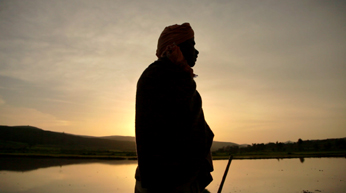
Blood Earth video still
Video still
Video still
Video still
Video still
Video still
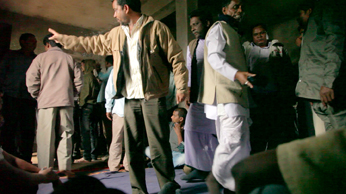
"Blood Earth relates to corporate mining on land inhabited by indigenous people and the changing nature of music and resistance to the mining.
The piece is part of a larger project of Word Sound Power, a Delhi-based trust that collaborates with South Asian artists on issues of social justice. Thus far, the outcomes that have resulted from the project include songs, an exhibition, gathering/discussions, and the video-piece Blood Earth. The initiators of the project are the vocalist Taru Dalmia (also known as Delhi Sultanate) and music producer Chris McGuinness. I had already talked to them about their music, for I worked on the radio, and they found out about my film and art-related work and invited me to partake in their project.
Their intention was to spend time in Kucheipadar, an Adivasi (indigenous) village in Odisha, in East India, that has been the site of resistance to efforts to mine the area of Bauxite, which is processed to make aluminium. The resistance, in which music played a role, attracted many individuals from outside the village, from different parts of the state and country — mainly activists and journalists –, and by way of this network, Taru and Chris heard of Kucheipadar. Prior to going there, our research involved meeting people who had lived there, and reading everything that was published about the area.
When we were making the piece, resistance was at a low, and the mine had further established its presence; there were new types of relationships in formation between people from the area and the mining company. The video portrays this as songs being forgotten, or being performed in manners that are different to the way they were performed when the movement against the company was at its peak. Though many people of the area have accepted the presence of the company, certain problems persist. That farmer, singer and leader Bhagwan Mahji, who features in Blood Earth, was imprisoned for a couple of months this year.
The interface between mining companies and indigenous communities is a fairly familiar one around the world, and narratives that surround such situations are often understood in ethical terms. It felt important to not take for granted the right and wrong of the situation, and to consider a complexity in relationships during our engagement there. By considering what constitutes value in our own work, which might include shots and combinations of shots that would normally be considered ‘not good’ in traditional cinematic terms, we have accepted that these complexities cannot, or need not, be presented as a pristine, easily digestible package.
Certain dialogues and exchanges make up the video-piece itself, as a network of micropolitics among people from Kucheipadar and the relationship they have with their songs, activists who stayed there earlier, those representing the company, and, of course, us. Dialogue and collaboration have been an ongoing mode by which we engage with the video-piece and the larger project — alone, individual pieces in the project may conjure as little sense of the situation as that which exists in reality, but when the video, the music and discussion have the opportunity to bounce off each other on shared platforms, it increases the familiarity of the referred situation and situations alike, in general."
Kush Badhwar in a statement to PLATFORM:VB (July 2015)
Blood Earth, 2013 | Video, 35’22”
Kush Badhwar
Protest song: Gaon chodab nahi (we will not leave our village)
This is a song originally written and sung by Bhagwan Mahji, who appears in Blood Earth, about his arrest. The video also represents the types of documentary images that serve as a reference to the piece.
Talking Movies (2014)
Television program that mentions the piece Blood Earth
Kashipur – Development at GunPoint
This documentary was a reference to the creation of the piece
Development flows from the barrel of the gun
This documentary was a reference to the creation of the piece
Kashipur 2010
This documentary was a reference to the creation of the piece
"Protest songs, reggae, dub and electronic music, academic and activist writing, and documentary images in various forms inform the larger project (the music from the project can be heard here). In this video, documentary images are a form whereby information about what is going on around Kucheipadar leaves that area and partakes in larger narratives, both around the country and the world, encompassing similar situations. Blood Earth is made in relation and in response to such documentary images. When I mention documentary images as a reference, and the video being made in response and relation to such images, I mean both documentary from the area but also documentary as a mode in, say, India, and its use in activism, propaganda, for information and education."